Personalized Therapy Boosts Anxiety Recovery by 30%

Research shows personalized therapy improves anxiety and trauma treatment effectiveness by up to 30% compared to standard approaches. Yet many expatriates in Madrid still settle for generic therapy that ignores their cultural background and unique emotional needs. This article reveals why personalization and cultural sensitivity accelerate recovery, which therapy methods work best, and how to find the right fit for faster emotional healing.
Table of Contents
Key Takeaways
Point | Details |
Personalized therapy addresses unique psychological and cultural needs for faster recovery. | Tailored treatment plans adapt to individual trauma histories and cultural backgrounds, improving outcomes significantly. |
Cultural sensitivity reduces dropout rates in expatriate therapy. | Language matching and cultural alignment keep clients engaged and committed to treatment. |
Integrative approaches improve treatment adherence and satisfaction. | Combining RTT, EMDR, CBT, and hypnotherapy based on client needs increases success rates. |
Common myths underestimate personalization’s impact on therapy outcomes. | Evidence shows personalized therapy delivers 30-50% faster symptom relief than generic approaches. |
Choosing the right therapist involves assessing cultural and language fit. | Evaluating therapist competency in your background and language ensures effective communication and comfort. |
Understanding Personalized Therapy: What Makes It Different?
Personalized therapy tailors treatment to your specific mental health profile rather than applying cookie-cutter techniques. Instead of following a rigid protocol, therapists assess your anxiety triggers, trauma history, cultural background, and personal goals to create a customized plan. This approach recognizes that what works for one person may fail another.
The assessment process examines how your unique experiences shaped your current emotional state. Therapists explore your cultural values, communication style, and past experiences with mental health care. This information guides the selection of psychotherapy methods most likely to resonate with you.
Personalized therapy significantly improves outcomes for anxiety and trauma by adapting treatment approaches to an individual’s unique psychological profile and cultural background. Research confirms this individualized focus accelerates healing and prevents the frustration of mismatched interventions.
Standard therapy often follows predetermined session structures regardless of client needs. You might spend weeks on techniques that don’t address your core issues. Personalized therapy adjusts in real time based on your progress and feedback.
Key differences include:
Treatment pace adapts to your emotional readiness rather than fixed timelines
Therapy modalities switch based on what produces results for your specific symptoms
Cultural factors inform every intervention to ensure alignment with your values
Session content responds to your week-to-week experiences and challenges
This flexibility means you spend less time on ineffective approaches and more time on strategies that produce measurable relief. The result is faster recovery and better long-term outcomes for anxiety and trauma symptoms.
Why Personalized Therapy Matters for Anxiety and Trauma
Meta-analysis research demonstrates that personalized therapy increases treatment effectiveness by up to 30% compared to non-tailored approaches. This improvement stems from addressing the root causes specific to your anxiety or trauma rather than applying generic coping strategies.

The therapeutic alliance strengthens when treatment reflects your individual needs. You feel heard and understood, which builds trust essential for deep emotional work. This connection accelerates progress because you’re more willing to engage with difficult material.
Patients receiving tailored treatments report 30-50% quicker symptom relief compared to those in standard therapy programs. This acceleration matters tremendously when you’re struggling daily with anxiety attacks or trauma responses. Faster relief means returning to normal life sooner.
“Personalized interventions reduce anxiety symptom duration by 30-50% compared to generic therapy, allowing clients to regain emotional stability in significantly less time.”
Your trauma history informs how therapists approach healing. Someone with childhood trauma needs different interventions than someone processing recent workplace stress. Rapid transformational therapy can target specific traumatic memories when therapists understand your unique background.
Individual anxiety patterns vary widely. Your triggers, physical symptoms, and thought patterns differ from other anxiety sufferers. Personalized therapy maps these specifics to create targeted interventions that address your exact manifestation of anxiety.
The evidence is clear. When therapy adapts to you rather than forcing you to adapt to therapy, recovery happens faster. You experience meaningful relief sooner and develop coping skills tailored to your real-world challenges.
The Role of Cultural Sensitivity in Therapy for Expatriates
English-speaking expatriates in Madrid face unique mental health challenges that standard therapy often overlooks. Cultural isolation, language barriers, and adjustment difficulties create stress that compounds anxiety and trauma symptoms. Without cultural sensitivity, therapy may miss these critical factors.
Standard therapy efficacy drops by approximately 15% for culturally diverse clients without adaptation. This decline happens because generic approaches fail to account for how your cultural background shapes your emotional expression and coping mechanisms.
Language concordance between you and your therapist dramatically improves outcomes. When you can express complex emotions in your native language, therapy goes deeper. Nuances that get lost in translation can be the difference between surface-level progress and true healing.
Experts confirm that culturally sensitive therapy reduces dropout rates by up to 30%, especially for expatriates. You’re far more likely to complete treatment when your therapist understands the expatriate experience and validates your cultural perspective.
Common expatriate stressors include:
Disconnection from family support systems and familiar social networks
Professional pressure to succeed in a foreign work environment
Identity confusion when navigating between home and host cultures
Guilt about leaving loved ones behind or not adapting quickly enough
These factors intensify anxiety and trauma but rarely receive attention in culturally blind therapy. A culturally competent therapist recognizes how relocation stress layers onto existing mental health challenges. Therapy for international clients must address both your psychological symptoms and your cultural context.
Pro Tip: Before starting therapy, ask potential therapists about their experience with expatriate mental health and their approach to cultural adaptation. Request examples of how they’ve modified treatment for clients from your background. This conversation reveals whether they truly understand the expatriate experience or simply claim cultural competence.
Online therapy for expats offers additional flexibility when you need sessions outside traditional hours due to time zone coordination with family or demanding work schedules. Cultural sensitivity extends to understanding these practical realities of expatriate life.
Therapeutic Approaches Within Personalized Therapy
Personalized therapy plans integrate multiple modalities based on your evolving needs. Rather than committing to a single approach, therapists combine techniques to address different aspects of your anxiety or trauma. This integration produces better results than rigid adherence to one method.
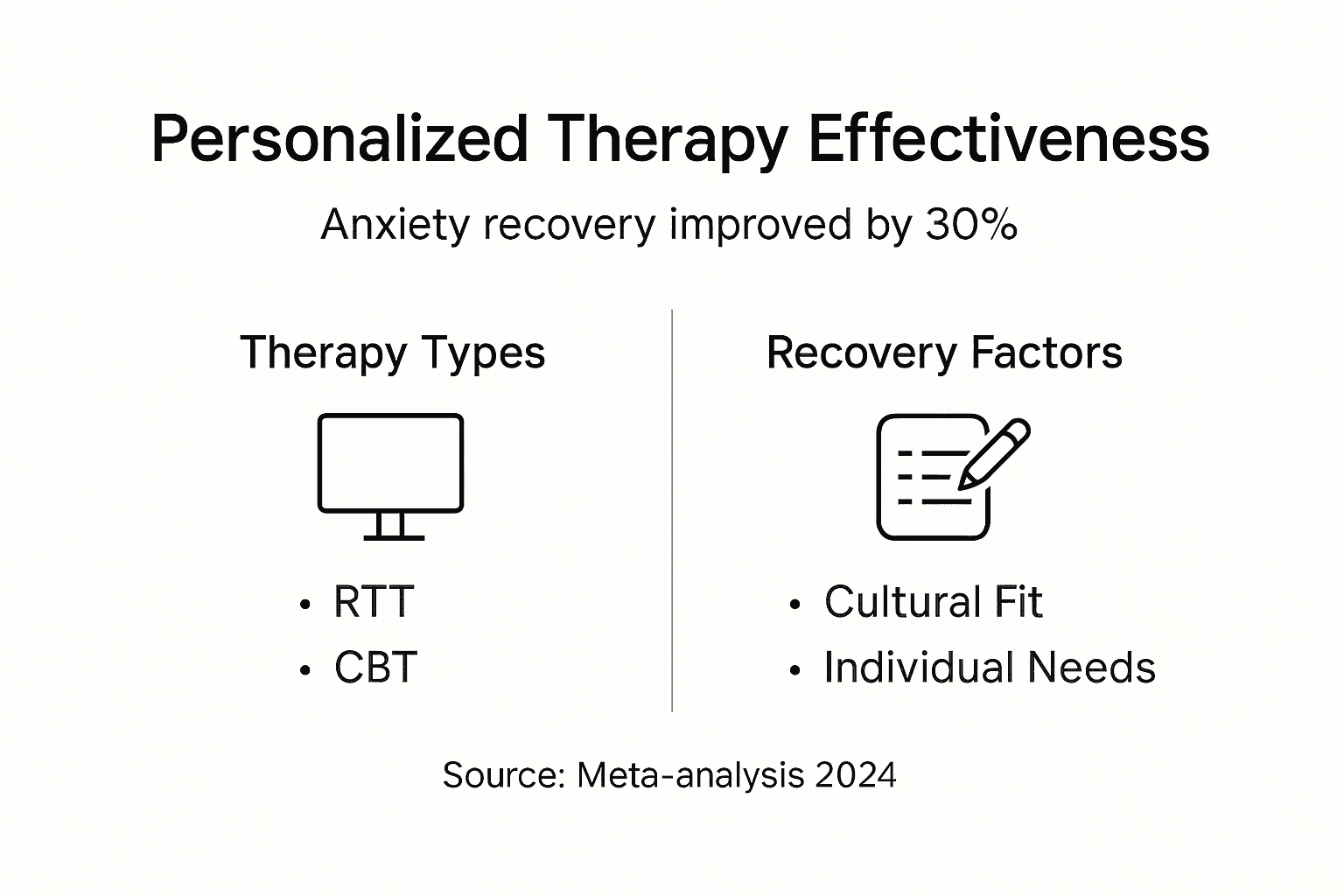
Rapid Transformational Therapy (RTT) uses hypnotherapy to access subconscious beliefs driving anxiety or trauma responses. Sessions target root causes quickly, often producing shifts in 1 to 3 sessions. RTT therapy for anxiety works especially well when you have identifiable triggers or patterns.
Eye Movement Desensitization and Reprocessing (EMDR) helps process traumatic memories through bilateral stimulation. This technique reduces the emotional charge of disturbing experiences without requiring detailed verbal recounting. EMDR therapy for trauma typically shows results within 6 to 12 sessions for single-incident trauma.
Cognitive Behavioral Therapy (CBT) addresses thought patterns maintaining anxiety. You learn to identify and challenge distorted thinking that fuels emotional distress. CBT provides practical tools for managing symptoms between sessions and works well combined with deeper modalities.
Hypnotherapy accesses your subconscious mind to install positive beliefs and reduce anxiety responses. It complements other approaches by working at a level beneath conscious resistance. Many clients find hypnotherapy surprisingly effective for symptoms that haven’t responded to talk therapy alone.
Therapy Method | Typical Timeline | Best For | Key Mechanism |
RTT | 1-3 sessions | Root cause resolution | Subconscious belief transformation |
EMDR | 6-12 sessions | Trauma processing | Memory reprocessing through bilateral stimulation |
CBT | 8-16 sessions | Thought pattern change | Cognitive restructuring and behavioral experiments |
Hypnotherapy | 3-8 sessions | Anxiety reduction | Subconscious reprogramming |
Research demonstrates that integrative personalized therapy increases adherence rates by 22% over single-method treatments. You’re more likely to complete therapy when your plan includes variety and adapts to what works for you.
Benefits of combining modalities:
Different techniques address different symptom layers simultaneously
You avoid plateaus common when using only one approach
Therapists can pivot quickly if one method isn’t producing results
Treatment remains engaging rather than repetitive over time
Pro Tip: Ask your therapist how they decide which modality to use in each session. Understanding their decision-making process helps you participate actively in your treatment plan and suggest adjustments based on your experience. The best therapists welcome this collaboration and see you as a partner in your healing.
Common Misconceptions About Personalized Therapy
Myth: Therapy is one-size-fits-all and any licensed therapist will produce similar results. Reality: Standard therapy efficacy drops by approximately 15% for culturally diverse clients without adaptation. The therapist’s ability to personalize treatment directly impacts your outcomes.
Myth: Cultural factors barely affect therapy success since psychological principles apply universally. Reality: Culturally sensitive therapy reduces dropout rates by up to 30%. Your cultural background shapes how you experience and express emotions, making cultural competence essential for effective treatment.
Myth: Personalized therapy takes the same amount of time as standard therapy. Reality: Personalized approaches accelerate emotional recovery by 30-50%, leading to quicker relief from anxiety symptoms. Targeting your specific issues rather than following generic protocols shortens treatment duration.
Myth: Language barriers have minimal impact if you speak functional Spanish. Reality: Therapy requires expressing complex emotional states and childhood experiences where subtle language differences matter greatly. Native language therapy enables deeper work and prevents misunderstandings that slow progress.
Key facts to remember:
Generic therapy protocols ignore individual differences that determine treatment success
Cultural background influences everything from symptom presentation to treatment preferences
Personalization speeds recovery by eliminating time spent on irrelevant interventions
Language precision directly correlates with therapy depth and effectiveness
Understanding these realities helps you make informed decisions about your mental health care. Therapy myths and facts often prevent people from seeking the specialized help they need, especially when relocating to a new country.
Choosing the Right Personalized Therapy in Madrid
Selecting a therapist requires evaluating both clinical expertise and cultural fit. Start by identifying therapists with specific experience treating English-speaking expatriates. This specialization ensures they understand the unique pressures you face living abroad.
Questions to ask during initial consultations:
What percentage of your clients are expatriates and what are their primary concerns?
How do you adapt treatment for clients from my cultural background?
Which therapy modalities do you integrate and how do you decide which to use?
Can you provide examples of how you’ve helped clients with similar anxiety or trauma symptoms?
What does a typical treatment timeline look like for someone with my presentation?
Multilingual therapy availability matters even if you speak Spanish. Emotional processing works best in your native language where you can access childhood memories and express subtle feelings without translation effort. Choosing an English-speaking therapist eliminates this barrier.
Consider both online and face-to-face formats based on your situation. Online therapy offers convenience and flexibility, especially if you travel frequently or have demanding work schedules. In-person sessions provide a dedicated space away from home distractions. Online therapy options for expats have proven equally effective for most anxiety and trauma treatments.
Assess therapist cultural competence through:
Their questions about your expatriate experience and cultural background
Examples of how they’ve modified treatment for international clients
Awareness of common expatriate stressors and adjustment challenges
Comfort discussing cultural differences openly without defensiveness
Pro Tip: Schedule trial sessions with two or three therapists before committing to treatment. The therapeutic relationship matters as much as clinical expertise. You need someone who understands your experience and with whom you feel comfortable sharing vulnerable material. A single session reveals whether the chemistry exists for effective work together.
Red flags include therapists who minimize cultural factors, seem unfamiliar with expatriate challenges, or push a single modality regardless of your needs. Trust your instincts about fit and keep searching until you find the right match.
Next Steps: Accessing Personalized Therapy at Heske Therapy
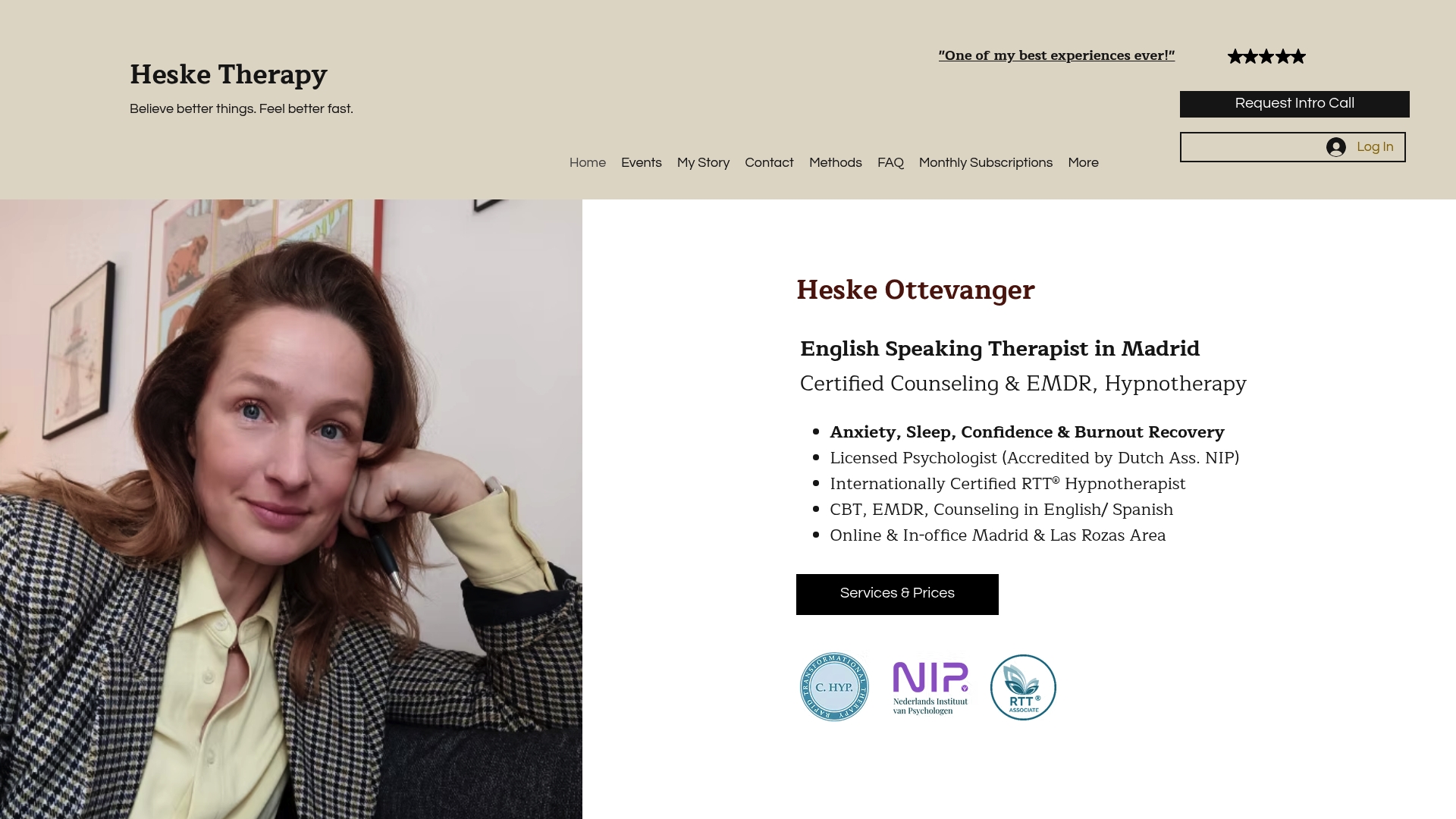
Heske Therapy specializes in providing culturally sensitive, personalized mental health care for English-speaking expatriates in Madrid. The practice understands the unique challenges you face and creates treatment plans addressing both your psychological symptoms and your cultural context.
Starting therapy involves these steps:
Schedule a free discovery call to discuss your concerns and therapy goals
Complete an initial assessment exploring your anxiety or trauma history and cultural background
Receive a personalized treatment plan integrating appropriate modalities for your situation
Begin sessions online or in-person based on your preference and schedule
Treatment plans at Heske Therapy integrate your cultural background from the start. Therapists consider how your expatriate experience influences your mental health and adapt interventions accordingly. This cultural sensitivity ensures therapy addresses your real-world challenges rather than generic anxiety or trauma protocols.
Therapy options include:
Rapid Transformational Therapy for quick root cause resolution
EMDR for trauma processing without extensive verbal recounting
CBT for practical anxiety management skills
Hypnotherapy for subconscious belief transformation
Counseling for ongoing support and adjustment challenges
Language options span English, Spanish, and Dutch to ensure you can work in your most comfortable language. This multilingual capacity serves Madrid’s diverse expatriate community and eliminates language barriers that limit therapy effectiveness.
Clients report meaningful anxiety reduction within the first few sessions. Testimonials highlight the relief of finally working with a therapist who understands both the clinical aspects of their symptoms and the expatriate context amplifying their distress. You deserve this level of specialized, personalized therapy plans tailored to your exact situation.
Book your session today to begin your personalized therapy journey. The free discovery call helps determine whether Heske Therapy’s approach fits your needs with no obligation to continue. This initial conversation often provides relief simply from speaking with someone who genuinely understands your experience.
Start Your Personalized Therapy Journey with Heske Therapy
You’ve learned how personalized, culturally sensitive therapy accelerates anxiety and trauma recovery by 30-50% compared to generic approaches. Heske Therapy brings this evidence-based personalization to English-speaking expatriates in Madrid through integrative treatment plans designed around your unique needs.
Whether you’re struggling with anxiety, processing trauma, or navigating the emotional challenges of expatriate life, specialized therapy makes the difference between prolonged suffering and rapid relief. Explore psychotherapy methods combining RTT, EMDR, CBT, and hypnotherapy tailored to your cultural background and psychological profile. Fast relief for expatriates starts with understanding your specific situation and building a treatment approach that works for you. Book a counseling session to discuss how personalized therapy can transform your mental health journey.
Frequently Asked Questions
What is personalized therapy and why is it important?
Personalized therapy tailors treatment to your individual needs, trauma history, and cultural background rather than applying generic protocols. This customization enhances recovery speed by targeting your specific anxiety triggers and symptoms. Research shows it improves outcomes by up to 30% compared to one-size-fits-all approaches.
How does cultural sensitivity improve therapy outcomes for expatriates?
Cultural sensitivity aligns therapy with your values, communication style, and expatriate experiences, making treatment more relevant and comfortable. Language matching improves emotional expression and prevents misunderstandings that slow progress. Studies show culturally adapted therapy reduces dropout rates by 30% for international clients.
What therapy methods are used in personalized plans for anxiety and trauma?
Personalized plans typically combine Rapid Transformational Therapy (RTT), Eye Movement Desensitization and Reprocessing (EMDR), Cognitive Behavioral Therapy (CBT), and hypnotherapy. Therapists select and adjust these modalities based on your responses and evolving needs. This integration increases adherence rates by 22% over single-method treatments.
How can I find a therapist offering culturally sensitive personalized therapy in Madrid?
Search for therapists specializing in expatriate mental health who offer services in your native language. Ask about their cultural competency, experience with international clients, and approach to personalizing treatment during initial consultations. Consider scheduling trial sessions with multiple therapists to assess fit before committing to ongoing treatment.
Recommended
Comments