Top 6 Therapy Tools for Emotional Blocks Providers 2026

Finding psychotherapy for expatriates that is transparent about methods, language support, and pricing can become overwhelming when most providers force you to call for every detail or hide core modalities behind vague listings. Many practices do not publish session formats, therapist credentials, or even basic costs online, which makes it impossible to compare options without committing significant time to direct outreach. This comparison covers program structure, language accessibility, clinical focus, and online readiness across providers so you can identify which therapy service aligns with your needs and lifestyle abroad.
Table of Contents
Heske Therapy
At a Glance
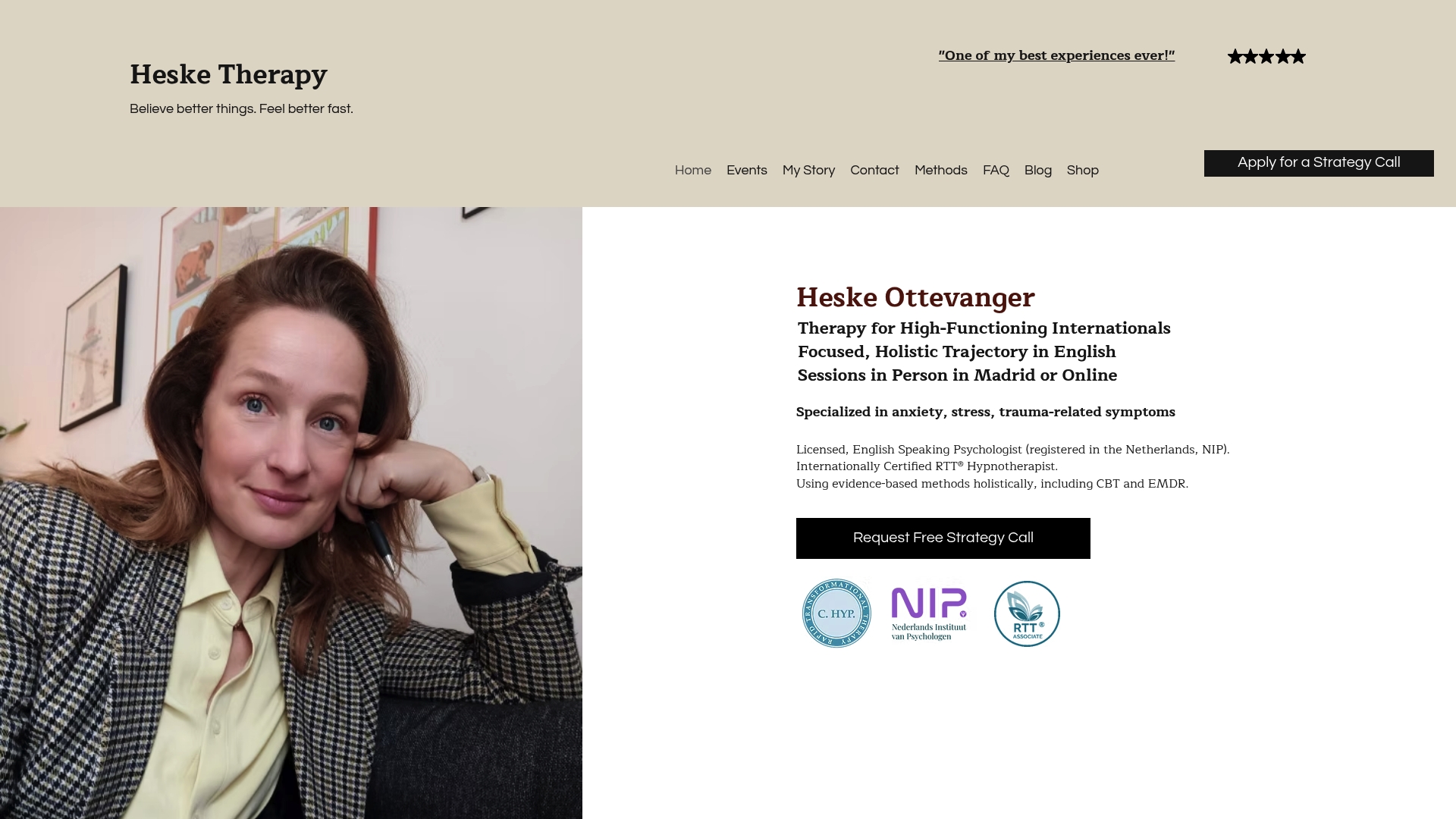
The practice’s marketing materials advertise a structured 3 month program priced at €600 per month that targets rapid, lasting change for anxiety, trauma, and emotional blocks. Sessions are offered both online and in Madrid for international clients.
Core Features
Hypnotherapy, EMDR, CBT and counseling combined into individualized treatment plans for faster shifts in subconscious patterns.
Flexible delivery with in-person appointments in Madrid plus secure online sessions for expatriates and remote clients.
A structured 3 month commitment that frames therapy as a concentrated program rather than open ended weekly visits.
Multilingual support in English, Spanish, and Dutch to match expatriate needs and cultural context.
Key Differentiator
Heske Therapy combines Rapid Transformational Therapy, EMDR, and CBT in a single, personalized program to accelerate subconscious change. That mix is assembled into a focused 3 month plan so the work targets root patterns rather than only surface symptoms.
Pros
Fast, focused program design. The 3 month structure gives clear milestones and keeps momentum when working on anxiety or low self esteem.
Therapist approach is explicitly compassionate and nonjudgmental, which helps clients who felt stalled by other modalities.
Bilingual delivery removes language friction for expatriates living in Madrid and clients who split time between countries.
The practice emphasizes measurable goals and practical strategies, so sessions produce immediate coping tools alongside deeper reframes.
Professional credentials and affiliations with RTT and NIP are listed, which supports credibility for clients seeking recognized training backgrounds.
Cons
The website provides limited detail on session counts and additional modules beyond the 3 month program, so scope and add on pricing require a discovery call.
Who It’s For
You if you are an expat or international adult in Madrid looking for a time boxed, results oriented therapy plan in English. Good fit when you want deeper subconscious work plus practical CBT skills within a predictable schedule.
Unique Value Proposition
The fixed 3 month program creates a predictable timeline and budget for concentrated change. For clients who need to schedule around a move, a job, or a limited stay in Madrid, that certainty turns therapy into an intensive, deliverable driven process rather than an open ended commitment.
Real World Use Case
A client living abroad struggled with persistent anxiety after several short term therapies. They book the 3 month RTT based plan, use a mix of hypnotherapy and EMDR over online sessions, and report sustained reductions in panic triggers while learning CBT tools for daily coping.
Pricing
The practice lists a 3 month minimum at €600 per month. Additional session packages or add on modules are not itemized on the site and should be clarified during a free discovery call.
Website: https://hesketherapy.com

At a Glance
The site currently returns 403 Forbidden responses for public pages, so direct inspection of services, therapists, or booking options was not possible. The accessible metadata suggests a Madrid psychology practice focused on mental health support, but specifics are unavailable.
Core Features
Public pages could not be viewed, so there is no verifiable feature set to describe from the site itself.
Restricted access: multiple attempts to load standard pages resulted in server access denial.
No visible listings of therapists, service pages, or community areas were accessible.
No third-party reviews or product descriptions were obtainable from the domain.
Key Differentiator
There is no observable differentiator because the site does not expose content to standard browsing. The only distinguishing characteristic for reviewers is the access restriction itself, which turns the domain into a pointer rather than a working community platform.
Pros
The domain points to a Madrid-centered mental health practice, which helps local searchers narrow options when other leads are scarce.
A live website address exists; that often indicates an established practice with offline contact routes such as phone or clinic visits.
Because public pages are blocked, there is no exposed personal data on the site at this time, reducing immediate privacy risk for casual visitors.
The limited surface means potential clients must contact the practice directly, which can lead to faster, phone-based triage rather than form-driven wait times.
Cons
No public content means you cannot verify services, therapist credentials, modalities, or language offerings before contacting the practice.
The 403 Forbidden state prevents booking, reading policies, or locating office hours online.
No third-party reviews or patient testimonials were available to help judge clinical fit or outcomes.
Lack of accessible information makes it impossible to compare this site against other mental health community platforms.
Who It’s For
This listing is relevant to people seeking psychology or therapy services in Madrid who prefer to follow up by phone or in person rather than rely on online booking. It also serves researchers cataloging local providers but not readers who need immediate online intake details.
Real World Use Case
A Madrid resident searching for English-language therapy spots finds the domain in a directory. The site blocks access, so the person calls the clinic number listed elsewhere or uses a directory email to request availability. That direct contact replaces an online intake workflow.
Website: https://mipsicologomadrid.es
IFS Institute
At a Glance
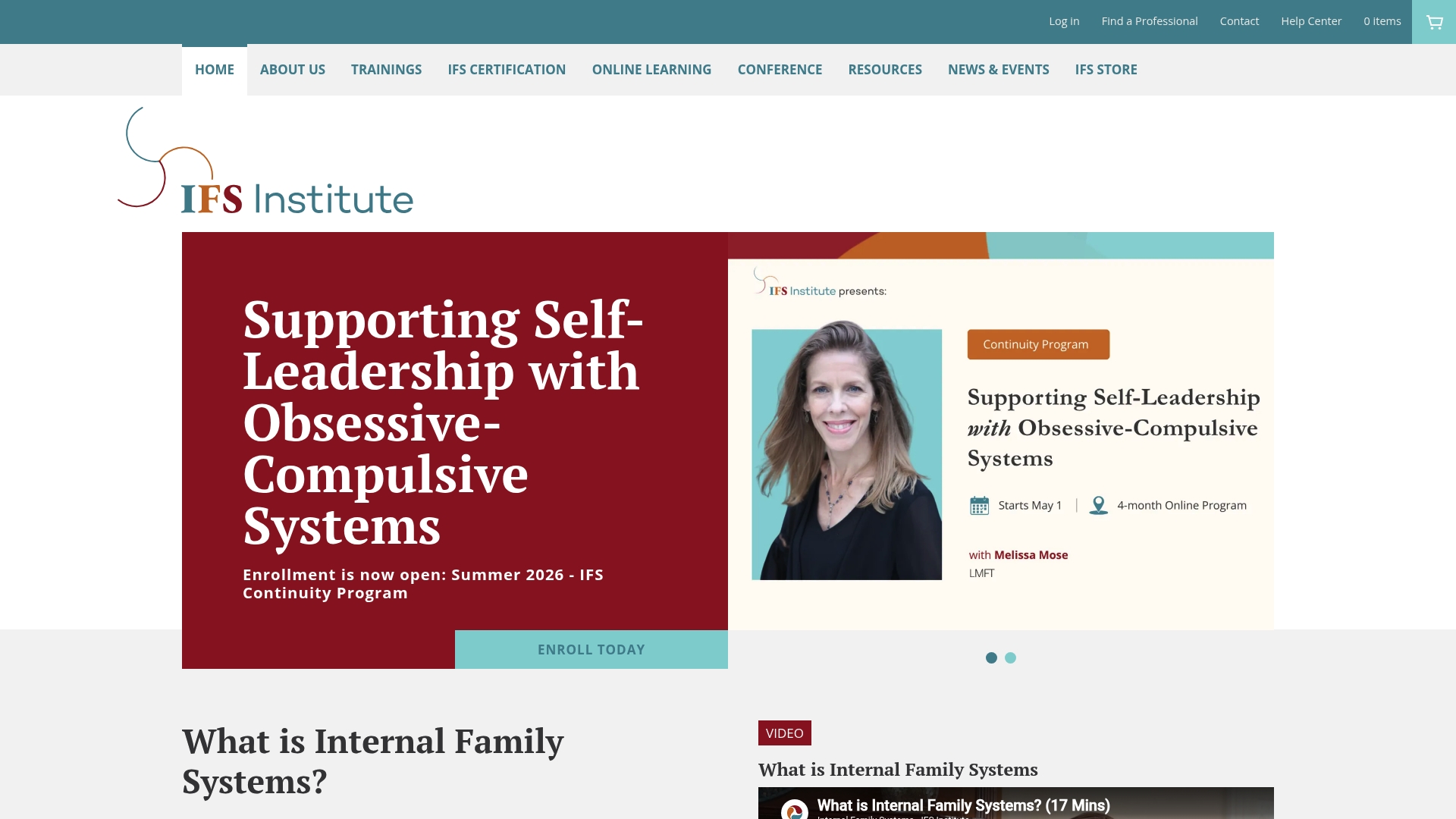
The organization positions itself as the sole official source for Internal Family Systems training, certification, and the central practitioner directory worldwide. That positioning shapes everything it offers: structured level training, an authoritative directory, and recurring conferences for clinicians and interested individuals.
Core Features
Progressive level training for clinicians and practitioners, from introductory to advanced coursework.
Certification pathways that lead to IFS Certified Therapist or Practitioner credentials.
Practitioner directory that serves as a referral hub for clients seeking IFS-based therapy.
Online courses, workshops, conferences, and a library of articles, videos, podcasts, and research updates.
Key Differentiator
The IFS Institute claims exclusive status as the official training and certification body for IFS, which centralizes credentialing and practitioner listings. That official focus makes it less of a clinical provider and more a standards and education hub compared with Hesketherapy, which delivers direct therapy services and clinician-led interventions.
Pros
Recognized training track. Clear stepwise levels guide therapists from basic competency to advanced practice and credentialing.
Strong referral flow. The practitioner directory provides a visible place for certified clinicians to attract clients looking specifically for IFS work.
Accessible learning options. Online courses and recorded resources let clinicians and nonprofessionals continue education without geographic travel.
Community and events. Regular workshops and conferences connect trainees with experienced IFS practitioners and peers for skill refinement.
Support for nonclinicians. Materials and courses welcome coaches and educators as well as therapists, widening practical applications.
Cons
Training intensity. Coursework and certification require substantial time and effort that can conflict with full caseloads or other commitments.
Risk of misapplication. Without adequate training, IFS techniques can be misused, which raises ethical and clinical concerns.
Evidence gaps for some uses. Certain clinical applications have limited research backing and need further study before broad adoption.
When It May Not Fit
Programs that demand rapid certification or minimal time investment will find the Institute frustrating. Its level-based model expects sustained participation across modules and supervised practice.
If you need immediate clinical services rather than training, this is the wrong place. The Institute focuses on education and standards, not on providing direct therapy to clients.
Who It’s For
Mental health professionals, graduate students, coaches, and educators who want formal IFS credentials or deep theoretical grounding. Individuals curious about Self-led personal work also benefit, though clinical certification targets licensed clinicians.
Real World Use Case
A licensed therapist completes Level 1 IFS training, pursues certification, and lists in the practitioner directory. Over a year they use online workshops to refine technique and send colleagues to the Institute for supervisory support and case consultation.
Pricing
Not applicable — informational only.
Website: https://ifs-institute.com
EMDR Institute
At a Glance
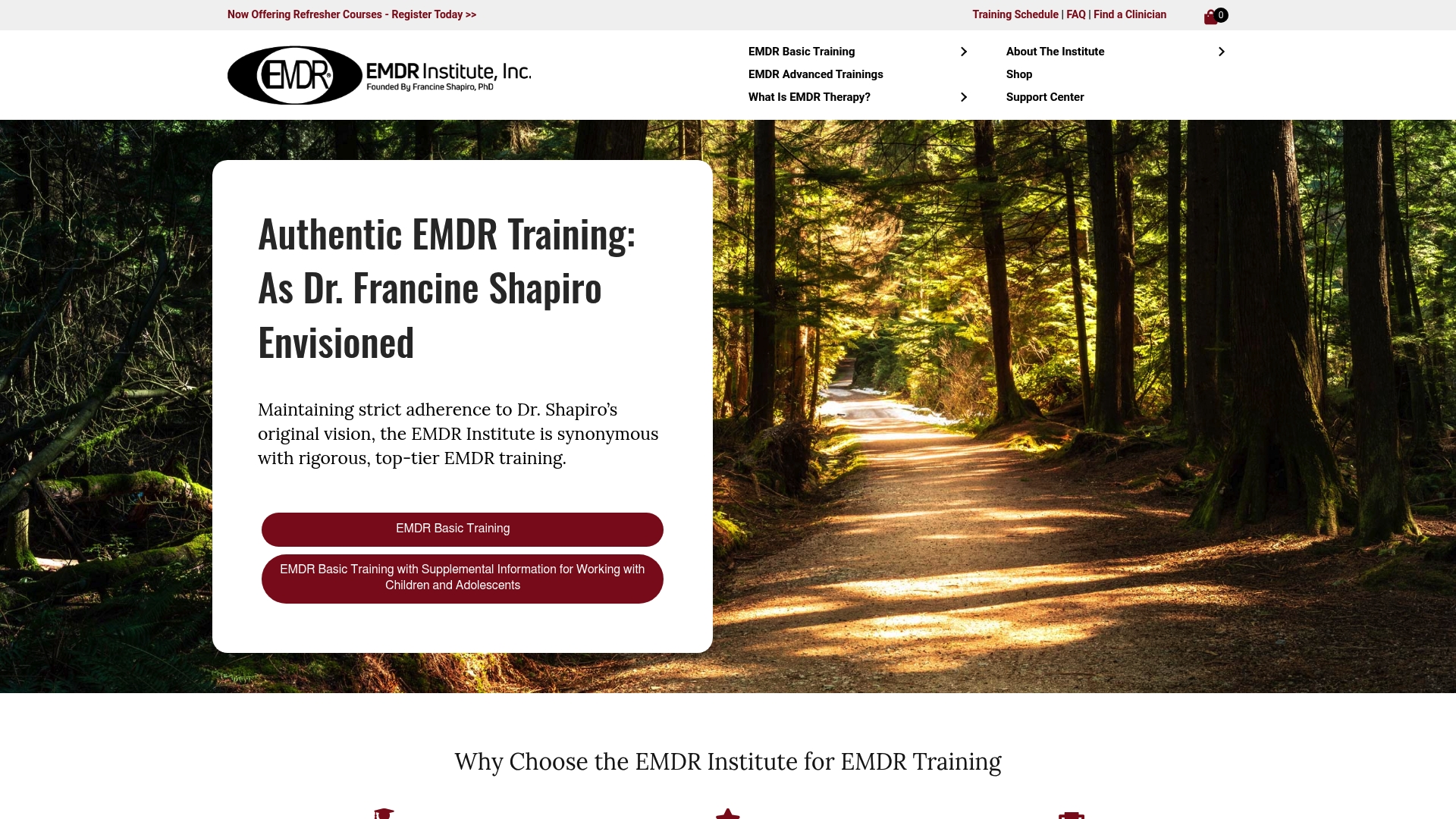
Founded by Dr. Francine Shapiro, the EMDR Institute positions itself as the original training body for EMDR and emphasizes strict fidelity to Shapiro’s protocols. The Institute’s marketing materials describe EMDR as an empirically validated trauma treatment and stress maintaining the original standards.
The organization runs both in-person and live online courses aimed at licensed clinicians, with basic and advanced formats and an emphasis on ongoing professional development.
Core Features
The Institute focuses on classroom-style training for clinicians, keeping curriculum closely aligned with the founder’s methods.
Official programs reported as approved by EMDRIA and structured around the original protocol steps.
Basic and advanced courses aimed at licensed mental health practitioners.
Delivery in both in-person workshops and live online formats for international access.
Continued professional support and a research emphasis embedded in course materials.
Key Differentiator
The single most defining feature is the Institute’s loyalty to the original methodology pioneered by Dr. Francine Shapiro. That historical continuity shapes curriculum, instructor selection, and quality checks. If you want training that traces directly back to the founder’s protocol, this is the institutional pedigree most tightly aligned with that aim.
Pros
Established lineage. Training traces to the founder, which matters when you want canonical instruction rather than an adapted variant.
Reputation for rigor. The course design and instructor expectations aim to keep clinical practice consistent with the original protocol.
Remote accessibility. Live online formats make the core curriculum available to clinicians outside major training hubs.
Progression path. Basic through advanced sequencing supports clinicians who intend to integrate EMDR into ongoing trauma work.
Research orientation. The Institute emphasizes scientific grounding and continuing education resources for practitioners.
Cons
No third-party negatives surfaced in the product data; the sources compiled for this profile list no consistent complaints.
Training requires multiple sessions and substantial time commitment, which can be a practical barrier for busy clinicians.
The strict fidelity to original protocols means less flexibility for clinicians looking for eclectic or heavily modified EMDR blends.
Who It’s For
Licensed mental health practitioners who want formal, historically faithful EMDR training and certification. This fits clinicians prioritizing protocol accuracy, research-grounded instruction, and a clear basic-to-advanced training pathway.
Real World Use Case
A licensed therapist completes the Institute’s basic EMDR training and then applies those techniques with clients presenting PTSD symptoms. The clinician follows the taught protocol in session and pursues advanced coursework to expand competence and case consultation options.
Pricing
The product data marks pricing as “Not applicable — informational only.” Course fees and enrollment details are not provided in the dataset. Contact the Institute or visit the site for current course schedules and tuition information.
Website: https://emdr.com
Havening.org
At a Glance
Havening.org centers on the Havening Touch® psychosensory protocol and pairs online certification with a global practitioner directory. Havening.org’s materials cite published studies that the site uses to explain mechanisms and training pathways.
Core Features
Educational resources including white papers, videos, and articles that explain the neuroscience claims and step-by-step protocols.
Practitioner certification program with listings in a searchable global directory for trained providers.
Self-Havening® tools for stress and anxiety management aimed at daily practice.
Training events offered both virtually and in person to support skill development and clinical application.
A research section that aggregates references the organization highlights in support of the method.
Key Differentiator
The platform teaches a protocol that intentionally combines gentle human touch with psychosensory steps meant to alter emotional responses. That hands-on component, paired with structured certification and a public directory, targets clinicians and coaches who want a tactile method to add to their toolkit.
Pros
Comprehensive curriculum. The site groups theory, demonstrations, and tests so trainees can move from reading to practice in a clear sequence.
Easy access to certified practitioners. The directory simplifies finding providers with listed training credentials in a given region.
Research references are centralized. The materials cite published studies, which makes it faster to review the evidence than searching journals independently.
Practical self-help tools. Self-Havening exercises give clients short protocols to use between sessions or during acute stress.
Global community and events support learning across time zones and languages, which helps clinicians who travel or work with expatriates.
Cons
The evidence base is still emerging; mainstream medical acceptance is limited compared with long-established therapies.
The method relies on touch, which creates boundary and cultural limitations for some clients and settings.
The site itself has few independent platform reviews, so prospective trainees must vet course quality through other channels.
Not a replacement for psychiatric care; complex or severe pathology requires integrated medical or psychiatric treatment alongside any psychosensory approach.
When It May Not Fit
If you treat patients with severe psychiatric disorders who need medication management or trauma-focused evidence with long clinical histories, this platform will not substitute for medical care. The touch component also makes it a poor match for remote-only clinicians who cannot safely or ethically use hands-on techniques.
Who It’s For
Mental health professionals, coaches, and clinicians curious about psychosensory interventions will find structured training and a pathway to certification. Individuals seeking alternative stress relief and practitioners building a tactile skills set also match the platform well.
Real World Use Case
A certified Havening practitioner adds short Self-Havening® routines between CBT sessions for a client with acute anxiety. The practitioner references the studies listed on the site when discussing mechanisms, and lists their credential in the directory so local referrals can find them.
Website: https://havening.org
Therapist Aid
At a Glance
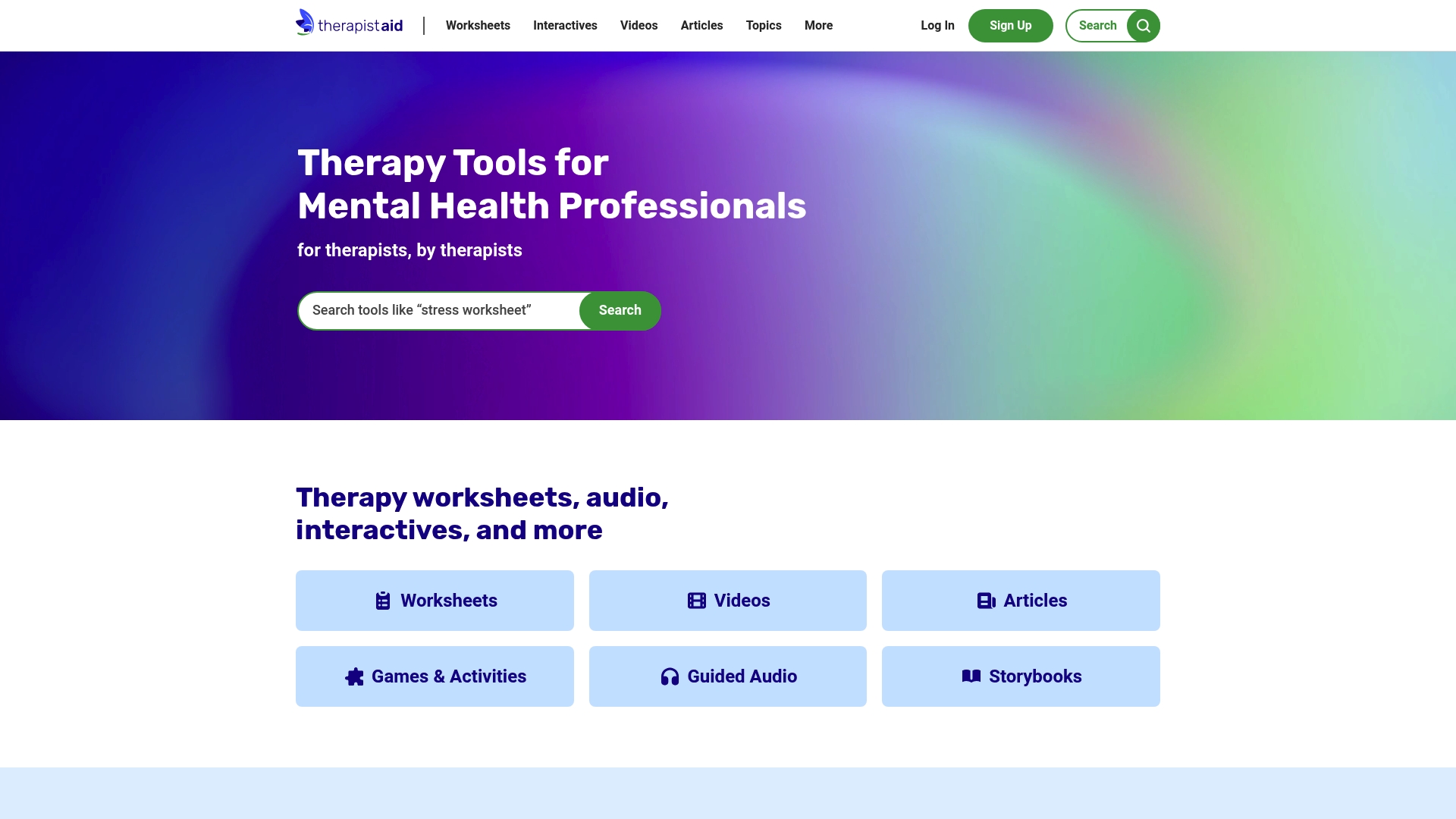
Free basic access with a professional plan listed at $6.25 USD per month makes a large library available on a small budget. The vendor describes its content as research-informed, positioning the site as a practical classroom for clinicians and clients. The collection spans fillable worksheets, audio exercises, and educational storybooks for children.
Core Features
A broad set of downloadable and digital resources for session work and homework.
Worksheets for clients and clinicians that are printable or fillable during teletherapy sessions.
Interactive activities and digital tools that can be shared in real time with clients.
Guided audio exercises for relaxation and mindfulness alongside educational stories for children.
Articles and psychoeducational content that explain techniques and intervention rationale for clients and professionals.
Key Differentiator
The vendor’s description above emphasizes a single strength: a wide range of professionally designed resources that work in both virtual and in-person settings. That scope makes Therapist Aid easier to adopt without building materials from scratch and speeds up session preparation for busy clinicians.
Pros
Accessible entry point. Free basic access lets clinicians test worksheets and audio files before committing to a subscription.
Time saved in session prep. Ready-made materials reduce administrative load so you can focus on clinical work.
Teletherapy friendly. Digital, fillable tools work in screen-sharing and remote sessions without extra conversion work.
Child-focused resources. Educational storybooks and games make teaching emotional skills to younger clients more straightforward.
Research-oriented presentation. The layout and citations follow common clinical approaches, which helps when explaining techniques to clients.
Cons
Some features sit behind the professional subscription, so consistent heavy use requires paid access.
The product data does not include detailed third-party user reviews to clarify long term strengths or weaknesses on major review platforms.
The site is content rich but not highly differentiated in format; many competitors also offer worksheets and audio, so uniqueness is modest.
Materials are informational and educational rather than structured treatment programs, limiting their use for stepped care that needs formal outcome tracking.
When It May Not Fit
If you need a platform that replaces formal outcome measurement, billing, or clinical record keeping, Therapist Aid will fall short. If your practice requires proprietary treatment modules with integrated progress metrics, this resource set is supplementary rather than core. It is not a substitute for licensed therapy.
Who It’s For
Mental health professionals who want ready-made, session-ready materials to speed up preparation and improve client education. Ideal for therapists, counselors, and psychologists running high-volume caseloads or offering teletherapy. Also useful for trainees who need structured worksheets and scripts.
Real World Use Case
A clinician running 10 teletherapy sessions per week uses Therapist Aid to assign fillable worksheets and play guided audio during sessions. Clients complete homework between appointments and the therapist saves an hour a week on preparation time. Child clients respond well to storybook activities shared on screen.
Pricing
Free basic access is available. The professional subscription is listed at $6.25 USD per month, with billing options annually or monthly. That low entry price makes a professional library affordable for solo clinicians and small clinics.
Website: https://therapistaid.com
Comparative Analysis of Therapy Options for Expatriates
In the modern world where individuals seek effective and accessible mental health solutions, choosing the right therapy platform or program can be a step toward personal growth and well-being. Let us analyze the strengths and trade-offs of the prominent psychotherapeutic resources reviewed in this article.
Focused Program Design for Specific Results
Heske Therapy offers a structured three-month program at a fixed cost of €600 per month, explicitly targeting rapid foundational change through a combination of hypnotherapy, EMDR, and CBT. This approach contrasts with IFS Institute and EMDR Institute, which primarily focus on professional training of clinicians in psychosocial methods rather than direct client-facing services. Furthermore, Heske Therapy personalizes interventions for expatriates through multilingual support and a clear program roadmap, making it distinct in its provisions for non-native residents in Madrid. However, the EMDR Institute excels in providing rigorous training programs aligned with empirical evidence, suitable for clinicians expanding their competencies in trauma-related therapy techniques.
Accessible and Versatile Resources for Clinicians
Conversely, Therapist Aid prioritizes providing tools like worksheets, interactive activities, and audio exercises for licensed mental health practitioners. It is a practical supplemental resource for therapists who require material to enhance their therapeutic methods but does not encapsulate a process as immersive or personalized as Heske Therapy. This offering is inherently different from Havening.org, which focuses on psychosensory techniques aimed at clinicians desiring specific tactile intervention methodologies.
Best Fit Recommendations
Heske Therapy: for expatriates in Madrid needing a predefined therapeutic commitment with multilingual sessions.
IFS Institute: Suited for clinicians aiming to gain training and certification in Internal Family Systems protocols.
Therapist Aid: Practical for therapists requiring ready-to-use materials for telehealth or in-session application, streamlining client engagement.
Our Pick
Heske Therapy distinguishes itself with its dedicated, results-oriented structure designed to produce measurable outcomes, particularly for expatriates managing life transitions or emotional challenges in Madrid. However, for therapists whose primary goal is to deepen their methodological expertise rather than seeking personal therapy, IFS Institute or EMDR Institute might fulfill those needs more effectively.
International Therapy Options Comparison
When evaluating therapy options for expatriates, consider focused programs that optimize for rapid, lasting outcomes.
Therapy Provider | Core Features | Best For | Pricing | Notable Limitation |
Heske Therapy | Hypnotherapy, EMDR, and CBT delivered online and in Madrid | English-speaking expatriates seeking structured therapy | €600 per month | Limited details on additional modules without consultation |
IFS Institute | Training and certification in Internal Family Systems (IFS) | Mental health professionals wanting IFS certification | Not applicable | Not suitable for direct therapy seeking clients |
EMDR Institute | EMDR training aligned to founding protocols | Licensed clinicians focusing on trauma treatment | Not disclosed | Strict protocol adherence may limit versatility |
Therapist Aid | Large library of free and paid therapy materials | Clinicians needing accessible session resources | $6.25 USD per month | Requires subscription for consistent heavy use |
Overcome Emotional Blocks with Proven Therapy Tools from Hesketherapy
Emotional blocks can stall your progress and affect your wellbeing in ways that feel overwhelming. The “Top 6 Therapy Tools for Emotional Blocks Providers 2026” highlights effective methods like Rapid Transformational Therapy, EMDR, and CBT that target deep subconscious patterns causing anxiety and trauma. If you are an expatriate or international client seeking focused, compassionate care in Madrid or online, Hesketherapy offers personalized programs combining these proven therapies to deliver rapid, lasting change.
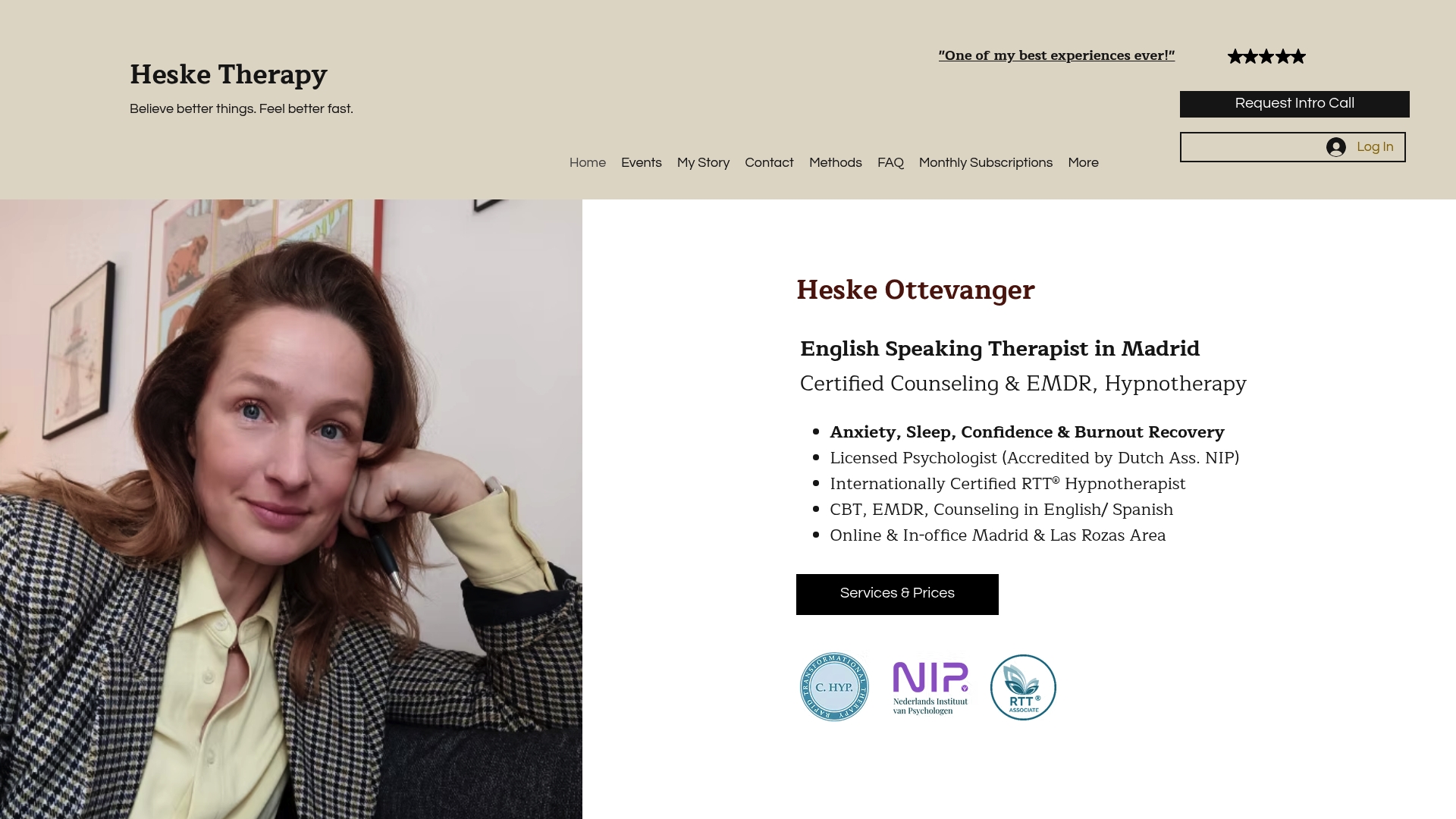
Take control of your emotional health today by exploring how Hesketherapy integrates cutting-edge tools into structured 3-month treatment plans designed for measurable results. Book a free discovery call to start reshaping your inner landscape with expert guidance and a clear path forward.
Frequently Asked Questions
How does Hesketherapy support expatriates with emotional blocks?
Hesketherapy offers individualized treatment plans that include Hypnotherapy, EMDR, and CBT specifically designed for expatriates. The practice’s unique emphasis on multilingual support in English, Spanish, and Dutch ensures that clients can receive therapy in a language they’re comfortable with. To benefit from this tailored approach, consider scheduling a free discovery call.
What is the difference between Hesketherapy and the EMDR Institute?
The EMDR Institute provides official training and certification in EMDR for licensed mental health practitioners, focusing on educational resources rather than direct therapy services. On the other hand, Hesketherapy offers a structured three-month therapy program aimed at rapid emotional change specifically for individuals, including expatriates dealing with anxiety or trauma. If you require immediate therapy services, Hesketherapy’s program may be more suitable for your needs.
Which platform focuses on rapid transformation for emotional blocks?
Hesketherapy specializes in a structured three-month program designed for rapid and lasting change regarding emotional blocks. This program integrates various therapeutic techniques to address root issues effectively within a predictable timeline. If you’re seeking focused and efficient therapy, Hesketherapy’s program is crafted to meet those needs efficiently.
Can I combine techniques from Hesketherapy with other methods?
While Hesketherapy combines Rapid Transformational Therapy with EMDR and CBT, the depth of its structured approach is specifically designed for a concentrated three-month commitment. If you’re interested in blending methods, it’s best to consult during your discovery call to see how this could fit into your personal therapy goals.
How does the pricing of Hesketherapy compare to other therapy options?
Hesketherapy has a fixed price of €600 per month for its three-month therapy program. This structured pricing creates a predictable commitment for clients seeking rapid change, which may vary compared to other therapy options that offer varying session rates without a fixed duration. For those looking for clarity in financial planning, this pricing structure might be beneficial.
Recommended
Comments