What is personalized therapy? 70% faster mental health

You’ve probably heard hypnosis is mind control or a parlor trick. It’s not. Modern personalized therapy uses hypnosis, Rapid Transformational Therapy (RTT), and integrative methods to access your subconscious mind, identify emotional blocks, and rewrite limiting beliefs in a fraction of the time traditional approaches require. For English-speaking expatriates in Spain navigating anxiety, burnout, and trauma, this targeted approach offers rapid, lasting relief tailored to your unique cultural context.
Table of Contents
How Does Personalized Therapy Work? The Role Of RTT And Hypnotherapy
What Makes Therapy Personalized? Tailoring Treatment For Expatriates
Common Misconceptions About Personalized Therapy And Rapid Methods
Comparison: Personalized Rapid Therapy Vs Traditional Approaches
Practical Application: What To Expect In A Personalized Therapy Session
Conclusion: Personalized Therapy As A Path To Lasting Mental Wellness
Key takeaways
Point | Details |
Personalized therapy uses rapid methods | RTT accesses subconscious beliefs to resolve anxiety, burnout, and trauma in 1-3 sessions, not months. |
Integrative approaches work faster | Combining RTT, CBT, EMDR, and hypnotherapy addresses root causes and symptoms simultaneously for comprehensive healing. |
Cultural sensitivity matters for expatriates | Therapy tailored to expat challenges like isolation and adjustment improves outcomes and engagement significantly. |
Hypnosis is safe and collaborative | You remain in control during hypnotherapy; it’s a focused, relaxed state that helps reprogram subconscious patterns. |
Rapid therapy is cost-effective | Achieving results in 1-3 sessions versus ongoing traditional therapy reduces time and financial investment. |
Introduction to personalized therapy
Personalized therapy is mental health treatment designed around your individual emotional needs, experiences, and cultural background. Unlike generic protocols, it tailors techniques to address your specific challenges, whether anxiety, burnout, or trauma.
For therapy for expatriates, personalization becomes crucial. Living abroad brings unique stressors like cultural adjustment, language barriers, isolation, and identity shifts. Generic therapy often misses these nuances.
Integrative therapy combines multiple evidence-based methods: CBT for thought patterns, EMDR for trauma processing, hypnotherapy for subconscious access, and counseling for emotional support. Personalized therapy addresses unique client needs by integrating multiple modalities like RTT, CBT, EMDR, and hypnotherapy, enabling tailored treatment plans that consider individual experiences and cultural context.
Speed matters too. Traditional therapy can take months or years. Rapid approaches like RTT target root causes directly, often achieving breakthrough progress in 1-3 sessions. This efficiency appeals to busy expatriates seeking relief without lengthy commitments.
Pro Tip: Choose therapy that respects your cultural and personal context. A therapist who understands expatriate challenges accelerates trust and healing.
You can customize hypnosis sessions to match your specific anxiety triggers. Personalization isn’t a luxury; it’s the foundation of effective, sustainable mental wellness.
How does personalized therapy work? The role of RTT and hypnotherapy
RTT combines hypnotherapy, CBT, and NLP to access the subconscious mind, which controls about 95% of your behavior and emotional responses. Most anxiety, burnout, and trauma stem from subconscious beliefs formed in childhood or past experiences.
Here’s the typical RTT process:
Initial assessment: Your therapist identifies specific emotional triggers, symptoms, and goals to tailor the session.
Hypnosis induction: You enter a relaxed, focused state where your subconscious becomes accessible. You remain fully aware and in control.
Belief identification: Through guided exploration, you uncover the origin of limiting beliefs driving your emotional challenges.
Reframing and reprogramming: Your therapist helps you reframe these beliefs, replacing them with empowering, healthier perspectives.
Reinforcement: You receive personalized recordings and exercises to solidify the new neural pathways over the following weeks.
Neuroplasticity, your brain’s ability to rewire itself, makes this transformation possible. RTT uniquely targets and identifies the root cause of emotional and psychological issues by accessing deeply buried subconscious memories and beliefs, unlike traditional therapies which typically focus on symptoms.
Rapid transformational therapy for anxiety demonstrates impressive outcomes. Clients report significant disruption of anxiety and trauma symptoms after just one RTT session, with improvements sustained or deepened over several months.
“RTT’s power lies in its direct access to subconscious root causes, enabling lasting change in 1-3 sessions rather than years of symptom management.”
The role of RTT in anxiety treatment specifically addresses panic attacks, social anxiety, and generalized worry by reprogramming the subconscious patterns that trigger these responses. You can explore advanced hypnotherapy techniques to understand how trauma-specific protocols differ.

What makes therapy personalized? Tailoring treatment for expatriates
Personalization starts with recognizing that your emotional challenges exist within a specific cultural and linguistic context. English-speaking expatriates in Spain face unique pressures traditional therapy often overlooks.
Integrative treatment combines multiple modalities to address your diverse needs:
CBT restructures negative thought patterns driving anxiety and depression
EMDR processes traumatic memories and reduces their emotional charge
Hypnotherapy accesses subconscious beliefs causing emotional blocks
Counseling provides supportive space for processing feelings and developing coping strategies
Personalized therapy addresses unique client needs by integrating multiple modalities like RTT, CBT, EMDR, and hypnotherapy, enabling tailored treatment plans that consider individual experiences and cultural context. This matters because expatriate stressors differ fundamentally from those faced by local populations.
Cultural and linguistic understanding ensures therapy resonates deeply. When your therapist grasps the isolation of living far from family, the frustration of navigating foreign bureaucracy, or the identity confusion of straddling two cultures, you feel truly seen. This validation accelerates healing.
Therapy in burnout recovery for expats requires understanding how career pressures combine with cultural adjustment stress. Counseling for burnout addresses this intersection directly, tailoring interventions to your specific circumstances.
Pro Tip: Ensure your therapist has direct experience with expatriate challenges. This expertise enables faster rapport building and more precise interventions.
Evidence consistently shows culturally sensitive therapy improves both adherence and outcomes. When treatment aligns with your worldview and lived experience, you engage more fully and progress more rapidly.
Common misconceptions about personalized therapy and rapid methods
Let’s clear up the confusion surrounding hypnosis and rapid therapy methods.
Hypnosis is mind control: False. You remain fully conscious and in control during hypnotherapy. It’s simply a focused, relaxed state where your subconscious becomes more accessible. You can’t be made to do anything against your will or values. Think of it as guided meditation with therapeutic intent.
RTT is an instant cure: Not quite. While RTT rapid results explained demonstrates how progress happens faster than traditional therapy, lasting change still requires your active participation. The 1-3 sessions provide breakthrough insights and subconscious reprogramming, but reinforcement through recordings and behavioral practice solidifies the transformation.
Lack of peer-reviewed research means it doesn’t work: RTT is relatively new, so extensive academic studies are limited. However, thousands of anecdotal success reports from clients and practitioners worldwide demonstrate consistent positive outcomes. The underlying techniques (hypnotherapy, CBT, NLP) each have robust research support individually.
You need to believe in hypnosis for it to work: Skepticism doesn’t prevent hypnotherapy from working. Your subconscious responds to the therapeutic process regardless of your conscious beliefs. An open mind helps, but faith isn’t required.
Rapid therapy skips important processing: Actually, rapid methods accelerate processing by going directly to root causes rather than spending months on symptom management. You still process emotions fully, just more efficiently.
The role of hypnosis in self-improvement extends beyond therapy into performance enhancement, habit change, and personal development. Understanding this broader application helps contextualize its therapeutic power.
Realistic expectations matter. Therapy requires your engagement, honesty, and willingness to change. The therapist provides tools and guidance, but you do the internal work.
Comparison: personalized rapid therapy vs traditional approaches
Understanding the differences helps you make informed choices about your mental health care.
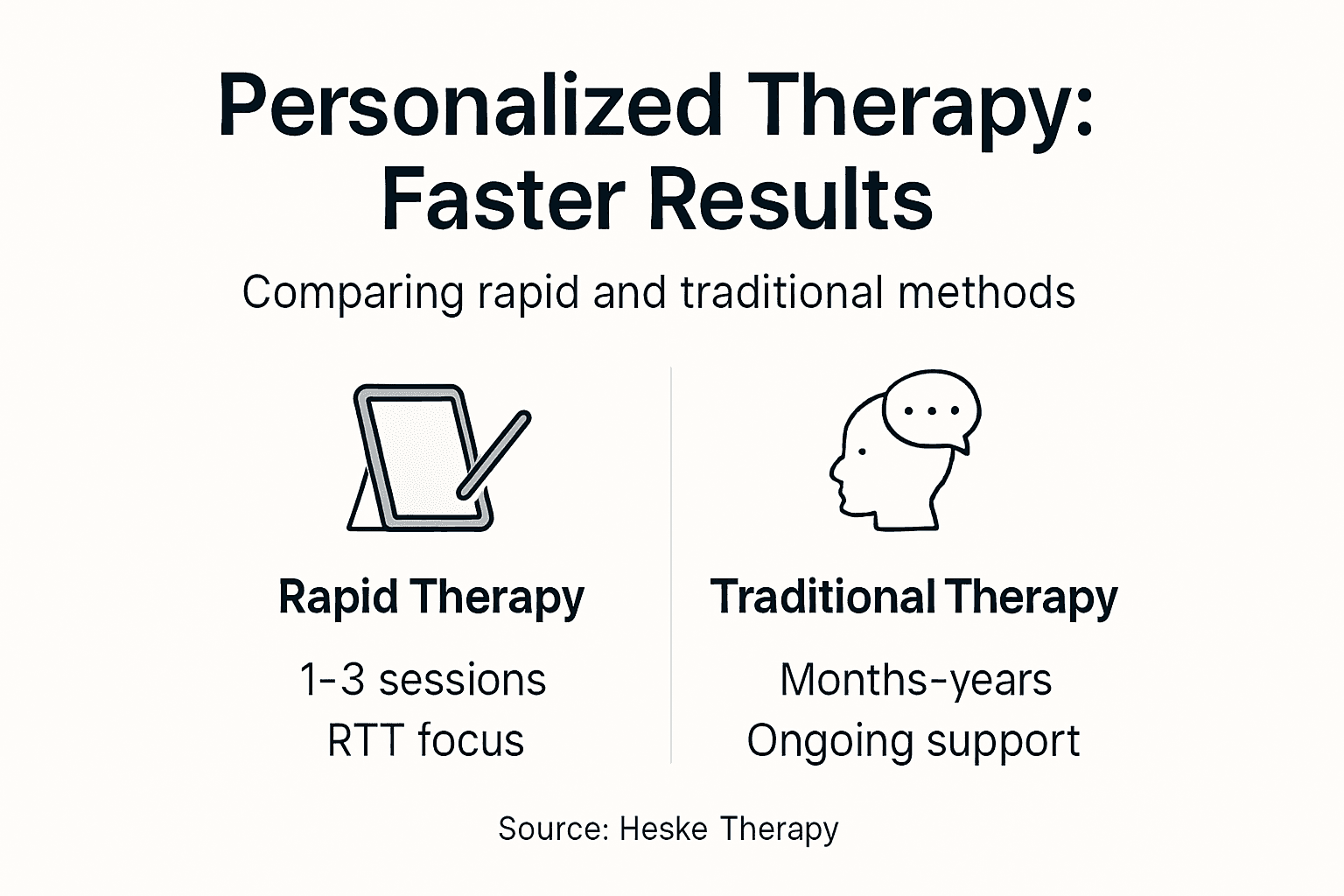
Aspect | RTT/Rapid Therapy | Traditional Therapy |
Session count | 1-3 sessions for breakthrough results | Ongoing weekly sessions for months or years |
Focus | Root subconscious causes | Symptom management and coping strategies |
Methodology | Integrates hypnotherapy, CBT, NLP for comprehensive change | Typically single modality (CBT, psychodynamic, etc.) |
Client role | Active participant in subconscious exploration | Discussion and cognitive analysis |
Cost efficiency | Lower total cost due to fewer sessions | Higher cumulative cost over extended treatment |
Time to results | Often immediate or within weeks | Gradual improvement over months |
Traditional therapy excels at providing ongoing support and processing complex, layered trauma over time. It suits people who prefer gradual progress and benefit from regular check-ins.
Rapid therapy works best when you want targeted relief for specific issues like anxiety, phobias, limiting beliefs, or burnout. RTT vs CBT therapy explores these distinctions in depth.
Key differences in practice:
Traditional approaches often focus on understanding why you feel a certain way, while RTT focuses on changing the subconscious programming causing those feelings
CBT teaches coping strategies; RTT removes the need for constant coping by addressing root causes
Traditional therapy builds insights gradually; RTT delivers breakthrough insights in single sessions
Ongoing therapy provides consistent support structure; rapid therapy frontloads transformation and requires independent reinforcement
Pro Tip: Choose based on your goals, timeline, and personal preferences. Some people combine both, using RTT for breakthrough progress and traditional therapy for ongoing support.
Neither approach is universally superior. The best therapy is the one that matches your needs, learning style, and life circumstances.
Practical application: what to expect in a personalized therapy session
Knowing what happens during your session reduces anxiety and helps you prepare mentally.
Pre-session consultation: Before your first RTT session, you’ll discuss your challenges, goals, and any concerns about the process. This assessment allows your therapist to customize the session precisely to your needs.
Induction phase: Your therapist guides you into a relaxed, hypnotic state through breathing exercises and progressive relaxation. You remain fully aware, just deeply calm and focused. This state resembles the moments before sleep.
Exploration and discovery: Through gentle questioning, your therapist helps you access subconscious memories and beliefs connected to your current challenges. You might revisit past experiences that shaped your emotional patterns. This isn’t about reliving trauma but understanding its origin.
Reframing and transformation: Once root causes surface, your therapist guides you to reframe these experiences and beliefs. You develop new, empowering perspectives that replace limiting ones. This neurological rewiring happens at the subconscious level.
Integration and reinforcement: After the session, you receive a personalized recording to listen to daily for 21 days. This reinforces the new neural pathways, solidifying the transformation. You might also receive specific exercises or practices tailored to your situation.
The RTT therapy process typically lasts 90 to 120 minutes for the initial session, longer than standard therapy hours. This extended time allows complete exploration and transformation in a single sitting.
Session pacing adapts to your comfort level. If you feel overwhelmed, your therapist adjusts the approach. Your safety and readiness always come first.
Most clients report feeling relaxed and hopeful after sessions, with insights continuing to emerge in the following days and weeks.
Conclusion: personalized therapy as a path to lasting mental wellness
Personalized rapid therapy offers English-speaking expatriates in Spain an efficient, culturally sensitive approach to resolving anxiety, burnout, and trauma. By integrating RTT, hypnotherapy, CBT, and EMDR, this method addresses both root causes and symptoms simultaneously.
The combination of rapid results and deep, lasting transformation makes this approach particularly valuable for expatriates balancing demanding careers, cultural adjustment, and distance from support networks. You don’t need to spend years in therapy to achieve meaningful change.
Culturally sensitive approaches maximize impact by acknowledging your unique challenges and tailoring interventions accordingly. Therapy becomes not just effective but truly resonant.
Remember, therapy requires your active engagement. The therapist provides expertise, tools, and guidance, but sustainable mental wellness emerges from your willingness to explore, change, and practice new patterns.
Explore personalized therapy options at Heske Therapy
Ready to experience rapid, lasting relief from anxiety, burnout, or trauma? Heske Therapy specializes in personalized, integrative approaches designed specifically for English-speaking expatriates in Madrid.
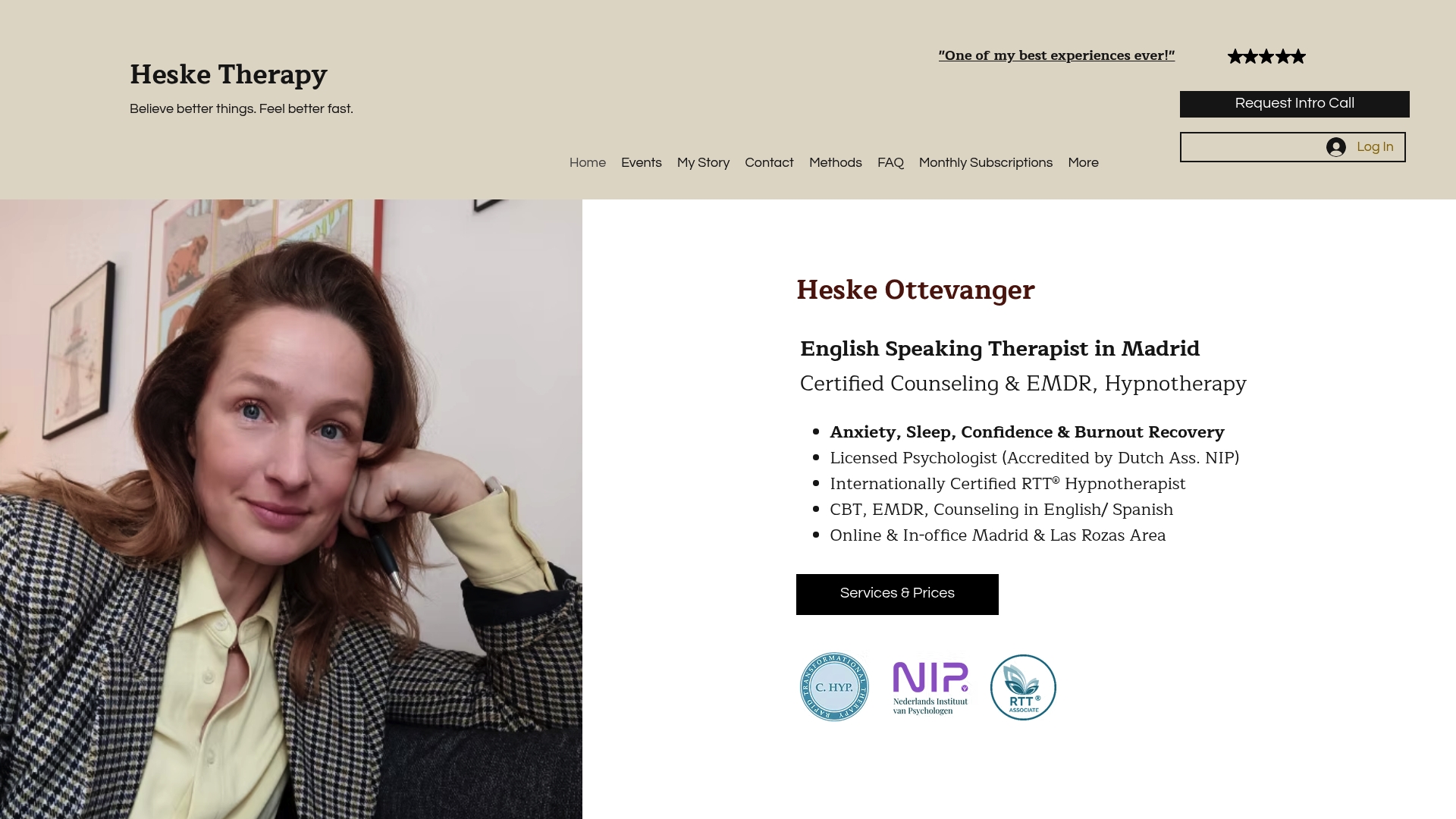
Our expert therapists combine RTT, hypnotherapy, EMDR, and CBT to create tailored treatment plans addressing your unique emotional challenges. Whether you’re struggling with cultural adjustment, professional burnout, or deep-seated anxiety, our psychotherapy methods explained demonstrate how integrative care delivers results.
Discover how rapid transformational therapy for anxiety provides breakthrough relief in just 1-3 sessions. Explore comprehensive burnout recovery therapy tailored to the expatriate experience. Your path to sustainable mental wellness starts with understanding your options and taking the first step.
Frequently asked questions
What is personalized therapy?
Personalized therapy customizes mental health treatment to your specific emotional needs, cultural background, and life circumstances. Rather than applying generic protocols, therapists tailor techniques like RTT, CBT, EMDR, and hypnotherapy to address your unique challenges, whether anxiety, burnout, trauma, or emotional blocks. For expatriates, personalization includes understanding cultural adjustment stressors and providing services in your native language.
How do RTT sessions differ from traditional therapy?
RTT sessions typically last 90 to 120 minutes and aim for breakthrough results in 1-3 sessions by accessing subconscious root causes through hypnotherapy. Traditional therapy involves shorter weekly sessions over months or years, focusing on symptom management and gradual insight development. RTT integrates hypnotherapy, CBT, and NLP for comprehensive change, while traditional approaches usually employ single modalities.
What qualifications should I look for in a personalized therapist?
Seek therapists with formal training in multiple modalities like RTT, hypnotherapy, CBT, and EMDR, plus specific experience working with expatriates. Cultural competency and language fluency in your native tongue ensure effective communication and understanding. Look for practitioners who conduct thorough assessments and create tailored treatment plans rather than applying standardized protocols.
How many sessions does rapid therapy typically require?
Most clients experience significant progress in 1-3 RTT sessions for specific issues like anxiety, phobias, or limiting beliefs. Complex trauma or multiple interconnected challenges might require additional sessions. Traditional therapy often continues for months or years, while rapid approaches frontload transformation and use reinforcement tools like personalized recordings to maintain progress.
How should I prepare for a personalized therapy session?
Arrive well-rested and hydrated, as hypnotherapy works best when you’re relaxed but alert. Avoid alcohol or recreational substances for 24 hours before your session. Prepare by reflecting on your specific goals and challenges so you can communicate them clearly. Approach the session with openness and curiosity rather than skepticism or rigid expectations. Trust the process and your therapist’s guidance.
Can hypnotherapy work if I’m skeptical about it?
Yes, skepticism doesn’t prevent hypnotherapy from working effectively. Your subconscious mind responds to the therapeutic process regardless of your conscious beliefs or doubts. While an open mind helps you relax into the experience more easily, hypnotherapy accesses subconscious patterns through focused attention and guided visualization, which functions independently of faith or belief in the method itself.
Recommended
Comments