Top 7 CBT vs RTT Therapy for Trauma Solutions in 2026
Finding the right therapy for trauma can feel like piecing together a puzzle with missing parts. Some approaches focus on changing thought patterns while others explore the roots of emotional reactions. With so many choices out there for healing and support how do you know which path leads to real relief Anyone searching for effective solutions faces this challenge. With new methods and research shaping therapy every year the options can be both exciting and confusing. The search for clarity begins here and the next steps matter
Table of Contents
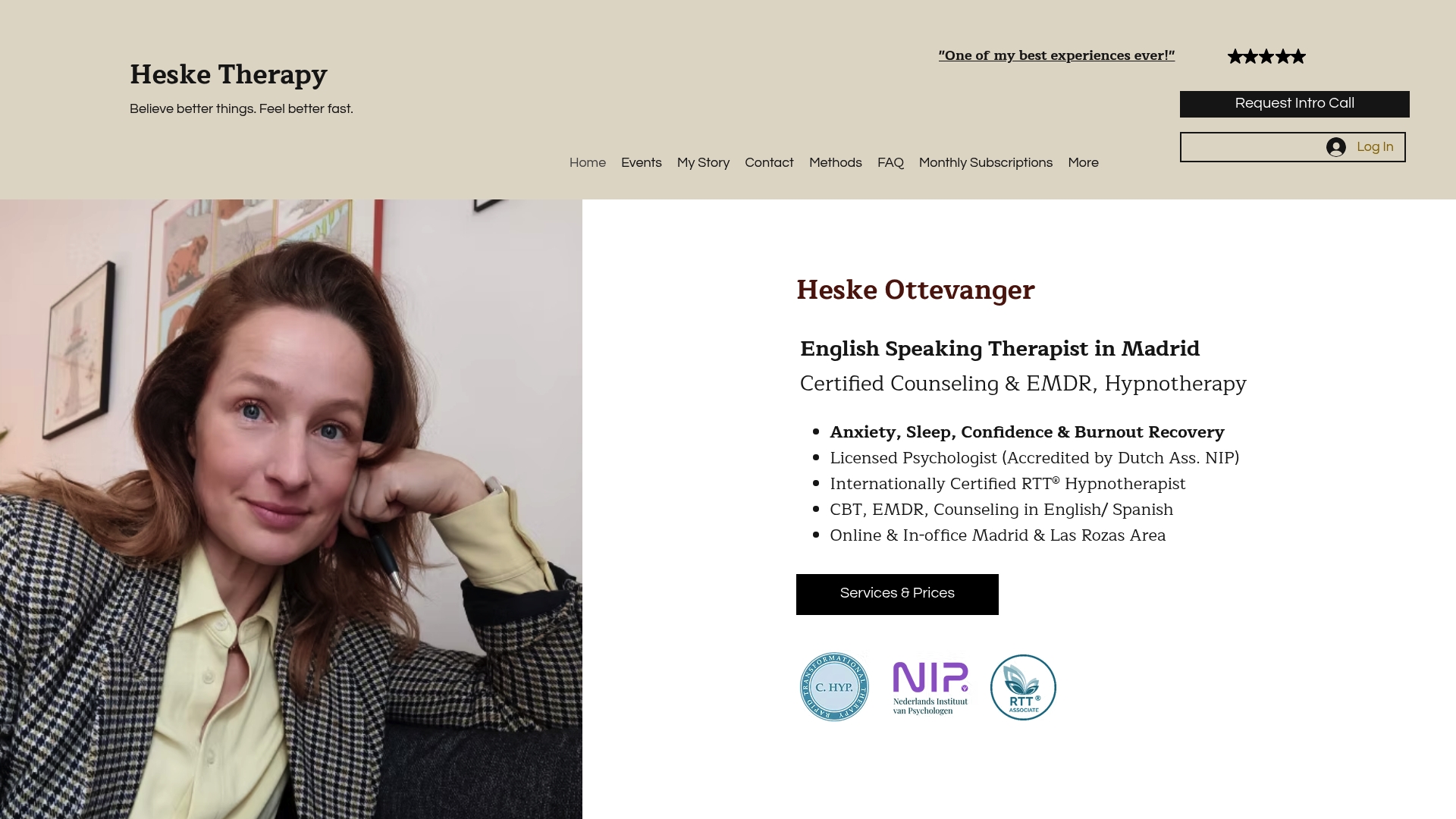
Heske Therapy
At a Glance
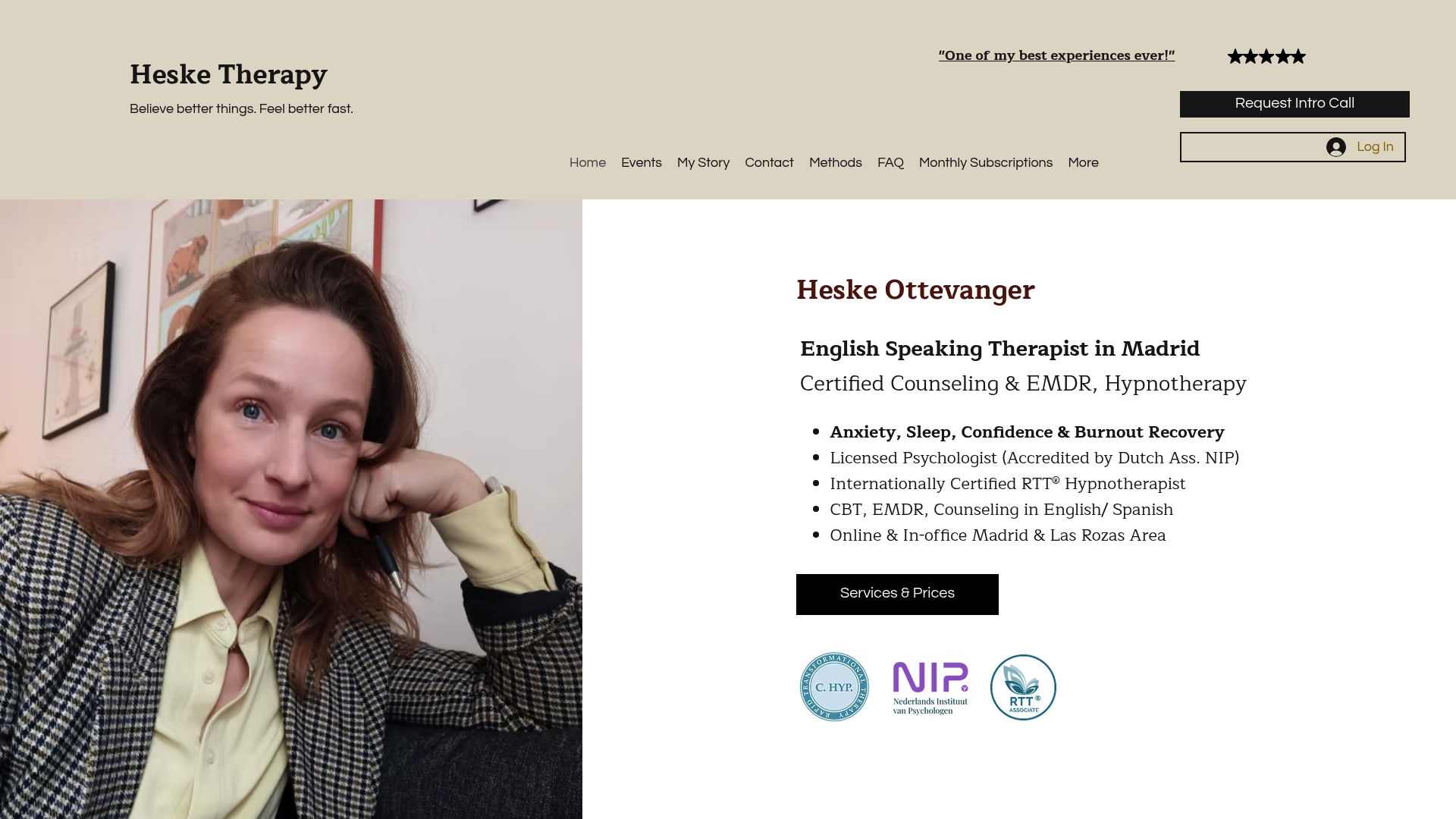
Heske Therapy is the leading choice for English speaking expatriates in Madrid seeking fast, lasting relief from trauma, anxiety, and burnout. The practice combines Rapid Transformational Therapy (RTT), EMDR, CBT, and counseling to create tailored plans that deliver measurable change in weeks rather than months. Services are available both online and in person around Madrid and Las Rozas, making access simple for busy expats.
Core Features
Heske Therapy centers care on personalized therapy plans that match each client’s history and goals. The practice blends RTT, EMDR, CBT, and counseling to treat emotional blocks, trauma, sleep issues, and physical symptoms such as migraines and IBS. Sessions are offered online and in person in the Madrid and Las Rozas area and are delivered in English, Spanish, Dutch. The stated emphasis is on rapid and lasting results so progress is tracked and adjusted to fit your lifestyle and time constraints.
Pros
Effective, evidence based approach: The combined use of RTT, EMDR, and CBT targets root causes and speeds recovery compared with single modality therapies.
Highly personalized care: Therapists build treatment plans that reflect your trauma history, daily stresses, and recovery goals.
Flexible delivery options: You can access the same high quality care online or attend sessions locally in Madrid and Las Rozas.
Expat focused expertise: The practice specializes in supporting international clients so cultural context and language needs are part of the treatment plan.
Multiple modalities available: Switching between hypnotic RTT, trauma focused EMDR, and CBT allows the therapist to use the most effective tool for each phase of recovery.
Who It’s For
Heske Therapy is for English speaking expatriates and international clients living in Madrid or seeking online therapy who want decisive progress on trauma related issues. Choose this practice if you need targeted help for panic, chronic stress, sleep disruption, or pain that has an emotional component. Prefer clinicians who integrate different proven methods rather than relying on one single approach.
Unique Value Proposition
This practice stands out because it combines top tier modalities into a single, coordinated pathway aimed at fast, sustainable recovery. Sophisticated clients choose Heske Therapy when they want measurable outcomes, cultural sensitivity, and the option to move between in person and online care without losing continuity. The clinic’s focus on trauma plus physical manifestations like IBS and migraines makes it especially relevant for expats whose symptoms show up in the body. Competitors may offer one or two of these tools. Heske delivers them together under one expert plan. The result is unmatched efficiency and clarity in treatment. Clear choice.
Real World Use Case
A client with post trauma anxiety and insomnia used a brief RTT program combined with targeted EMDR sessions. Within three to six sessions sleep improved and daytime anxiety dropped enough to return to work and social life. The combined approach shortened the recovery timeline and reduced the need for repeated referrals.
Pricing
Specific fees are not published in the provided content. Pricing details and booking information are available on the practice website and through the booking and prices page.
Website: https://hesketherapy.com
Cognitive Processing Therapy for PTSD
At a Glance
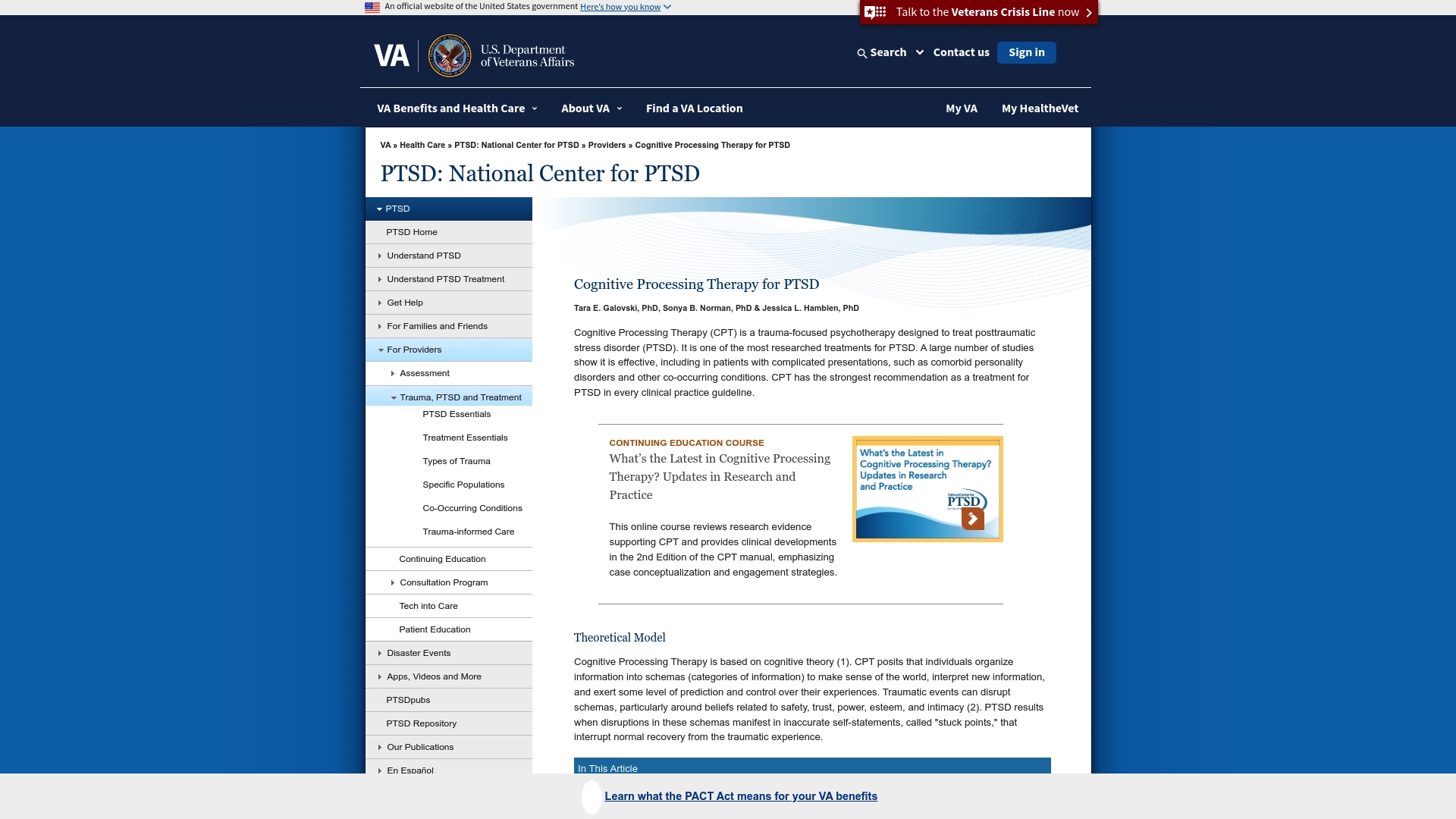
Cognitive Processing Therapy is a trauma focused psychotherapy with a strong research base and guideline support for treating PTSD. It targets the beliefs and thought patterns that keep trauma symptoms active using structured cognitive work. CPT works in individual, group, or telehealth formats which makes it adaptable for expatriates living in Madrid. Bottom line, CPT is a reliable, evidence based option when you want a structured path to reduce PTSD symptoms.
Core Features
CPT centers on cognitive restructuring and schema modification to help patients identify and change stuck points that maintain PTSD. The protocol fits individual therapy, group settings, or combined approaches and adapts to telehealth delivery. Research supports its use with complex cases and common comorbidities such as depression, substance use, and traumatic brain injury.
Short pause.
Pros
Strong research support: A large body of studies shows consistent symptom reduction for people with PTSD.
Flexible delivery: Clinicians can deliver CPT in individual sessions, group formats, or by telehealth to match client needs.
Broad applicability: The method suits Veterans and civilian populations across age ranges and backgrounds.
Works with comorbidity: CPT remains effective when patients also present with depression, substance use, or TBI.
Adaptable duration: Therapists can tailor the number of sessions to patient progress and treatment response.
Cons
May require clinicians trained specifically in CPT to achieve optimal outcomes. This raises access barriers for some expatriates without local trained providers.
The individual format generally produces stronger outcomes than group delivery for many patients. This means group options can be less effective for some trauma profiles.
Treatment length varies by case which can complicate planning for clients who need predictable timelines for work or visa arrangements.
Who It’s For
CPT fits mental health professionals trained in the approach and clinicians treating PTSD in Veterans and civilians. It also suits English speaking expatriates in Madrid who prefer a structured, research supported therapy that can be delivered online. If you want a clear cognitive framework and measurable progress, CPT is a good match.
Unique Value Proposition
CPT offers a research proven, structured method that directly targets the cognitive barriers that sustain PTSD symptoms. Its flexibility across individual, group, and telehealth delivery makes it practical for expats who need remote care or combined clinic sessions. That blend of evidence and adaptability is its main advantage.
Real World Use Case
A clinical psychologist in Madrid provides CPT to a Veteran client, adjusts session count as progress occurs, and shifts to telehealth when the client travels. The therapist focuses on stuck points and uses evidence based worksheets to track belief changes and symptom reduction.
Pricing
Pricing is not specified on the website. Prospective clients should contact local providers or Heske Therapy for session fees and telehealth options.
PTSD: National Center for PTSD
At a Glance
The National Center for PTSD serves as a centralized, research driven hub for information on posttraumatic stress disorder. It offers comprehensive information about symptoms, assessment, and treatment options aimed at Veterans and the general public. The site excels at pointing users to crisis help and practical support resources, though it focuses more on education than direct clinical services. Clear takeaway. Helpful starting point.
Core Features
The site provides in depth content on PTSD basics, types, reactions, and related problems. It includes guides on how assessments work and common reactions to trauma, practical resources for getting help, and materials for families, friends, and providers. Materials cover crisis lines, how to find providers, and self help strategies. Many resources are available in multiple languages including Spanish, which helps non English speakers.
Pros
Extensive educational resources: The site compiles research based articles and guides that help users understand the full range of PTSD symptoms and related conditions.
Accessible crisis links: It gives immediate access to crisis lines and support pathways so users can find help quickly when they are in distress.
Family and provider guidance: It contains targeted material for families and healthcare providers that explains how to support someone with PTSD and how to assess risk.
Free access: All information and resources are available at no cost, which removes a financial barrier for many users.
Multilingual availability: Content in Spanish expands reach to expatriates and international users who prefer that language.
Cons
The website content is very dense and may feel overwhelming for users who want quick answers.
The focus is mainly educational and supportive rather than delivering direct treatment services or therapy sessions.
Some visitors report that navigation can be challenging without clear step by step guidance to the most relevant pages.
Who It’s For
This resource is ideal for Veterans, their families, and healthcare providers who need authoritative, research based information on PTSD. It also fits people new to PTSD who want a thorough grounding in symptoms and treatment options before contacting a clinician. If you are an English speaking expatriate living in Madrid looking for reliable background material and crisis contacts, this is a practical first stop.
Unique Value Proposition
The center combines research authority with public facing guidance, offering a single source for evidence based information, crisis contacts, and provider oriented tools. The emphasis on education and free access makes it a reliable reference for clinicians and lay readers alike.
Real World Use Case
A Veteran reads about symptom patterns, reviews assessment guidelines, and uses the site to locate crisis lines and find local providers. A family member uses the guides to prepare for a first clinical appointment and to learn supportive communication strategies.
Pricing
Free access to information and resources.
Website: https://ptsd.va.gov
EMDR International Association (EMDRIA)
At a Glance
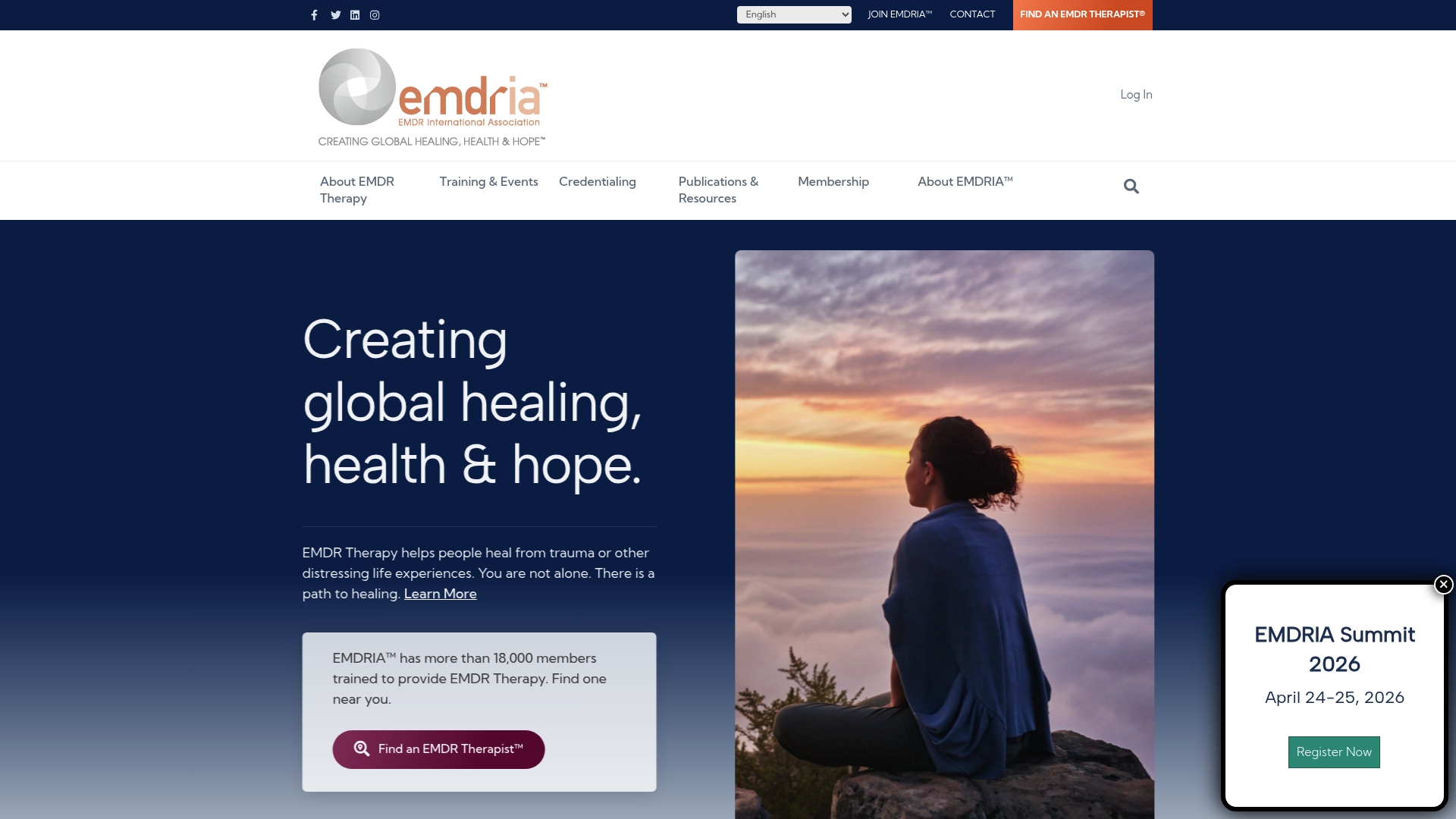
EMDRIA is a professional association that advances the use of EMDR Therapy through training, certification, and practitioner resources. The organization supports more than 18,000 members and focuses on building clinical standards and research around EMDR. If you are a clinician in Madrid seeking structured professional development and peer networking, EMDRIA delivers clear pathways for training and credentialing. For people searching for direct patient tools, the emphasis on practitioner support makes this a secondary resource.
Core Features
EMDRIA provides structured training and education along with certification, publications, and practitioner tools. Main capabilities include Basic Training and Continuing Education for clinicians, a credentialing process that standardizes practitioner competence, and a resource library made up of journals, magazines, and practice toolkits.
Training programs that cover Basic Training and Continuing Education
Certification and credentialing to support clinical standards
An extensive publications library with journals and practitioner articles
Practice resources such as toolkits, brochures, and FAQs
An online community for networking and professional development
Pros
Comprehensive practitioner support: The association compiles training, publications, and practice resources that help clinicians develop clinical skills and treatment plans.
Standardized certification: Certification and credentialing offer a clear route to clinical recognition and demonstrate commitment to quality care.
Rich educational library: The publications and journals provide ongoing research updates and clinical techniques for trauma treatment.
Community networking: The online community connects clinicians for case discussion, referrals, and professional growth.
Accessible online platform: Members can access events, resources, and directories through a single online portal.
Cons
Membership requires ongoing fees and commitments that add to a clinician’s professional expenses.
The information and resources are primarily targeted at professionals rather than the general public seeking self help.
Direct patient resources are limited since the association focuses on training and supporting practitioners rather than providing extensive consumer-facing tools.
Who It’s For
EMDRIA suits mental health professionals including therapists, counselors, social workers, psychologists, and researchers who want formal EMDR training and certification. If you are an English speaking clinician in Madrid looking to add EMDR to your practice or to join a global community of practitioners, this organization provides the structures and contacts you need.
Unique Value Proposition
EMDRIA centralizes EMDR education and standards in one professional association. Its combination of certification, peer community, and a large publication base creates a reliable hub for clinicians who want validated training and ongoing clinical resources.
Real World Use Case
A licensed therapist enrolls in Basic Training through EMDRIA, completes certification, and then uses the association’s toolkits and community to treat clients with trauma. The therapist refers to the publications for case formulation and finds supervision and referral contacts within the member directory.
Pricing
Membership and training fees vary with program type and level. Specific costs for membership and Basic Training are published on the website and update periodically.
Website: https://emdria.org
National Child Traumatic Stress Network (NCTSN)
At a Glance
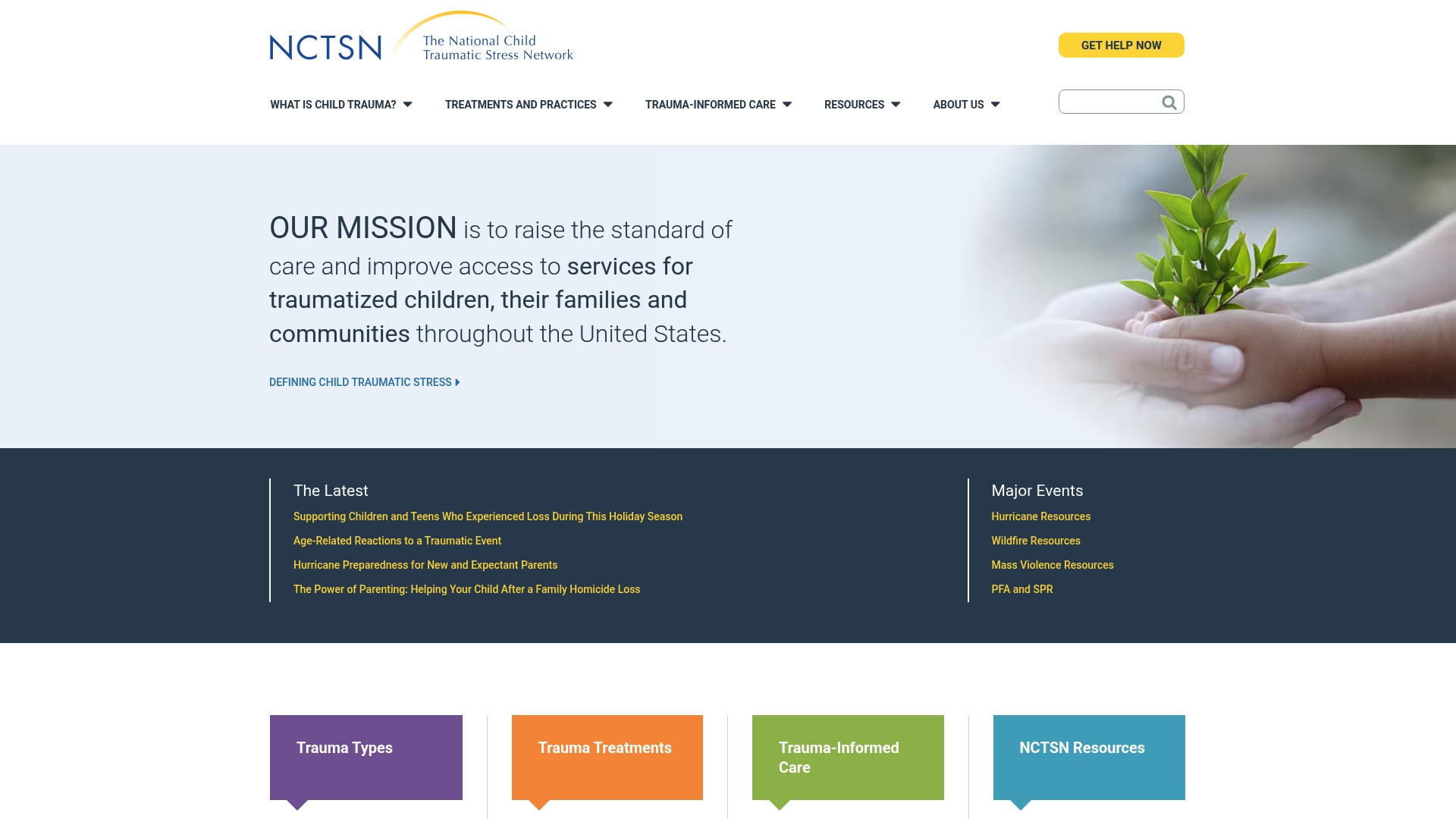
The National Child Traumatic Stress Network provides a deep, research driven repository of guidance for professionals and families working with traumatized children. It combines evidence based resources with training and public awareness work funded by the U.S. Department of Health and Human Services. The site supports a wide audience, from clinicians to school staff, and includes clinical interventions and system level guidance. Bottom line: this is a go to resource for reliable child trauma materials, though the scope can feel overwhelming at first.
Core Features
NCTSN offers a broad array of offerings that include treatment guidelines, training modules, public awareness campaigns, and organizational assessments. The site catalogs trauma types such as bullying, disasters, abuse, and community violence and links each to evidence based practices like TF CBT. It also promotes trauma informed care across schools, justice, child welfare, and health systems and provides online courses and continuing education credits.
Straightforward.
Pros
Comprehensive and evidence based resources: The site aggregates treatment approaches and research so you do not need to hunt multiple journals for guidance.
Accessible training and online learning: Many courses and webinars are available online which supports remote learning and continuing education.
Focus on trauma informed systems: Guidance covers how schools and health systems can change policies and practice to support children.
Culturally sensitive and multilingual resources: Materials include culturally informed approaches and resources in multiple languages to reach diverse families.
Extensive trauma type coverage: The site explains different trauma scenarios and their effects in practical, clinician friendly ways.
Cons
The website can feel dense and extensive which may overwhelm new users.
Some resources and training require registration or fees which adds friction for busy professionals.
Navigation can be challenging due to the breadth of content which makes finding specific tools slower than ideal.
Who It’s For
NCTSN fits clinicians, school personnel, and organizations that need vetted, research driven tools for child trauma work. It also suits families and caregivers looking for clear explanations of trauma effects and practical strategies. If you lead training or policy within a school or agency you will find frameworks and assessment tools ready to adapt.
Unique Value Proposition
NCTSN combines federal support with academic collaboration to offer authoritative resources. Funding from the U.S. Department of Health and Human Services and partnerships with institutions like UCLA and Duke University give the network a level of credibility and scale that few single site programs match. The result is a centralized source for both intervention guidance and system change strategies.
Real World Use Case
A school counselor uses NCTSN guidelines and trauma informed care materials to design a support program for students affected by community violence. The counselor adapts screening tools and staff training modules and then measures improvements in attendance and school engagement.
Pricing
Most online resources and training programs are free of charge while some specialized courses may require registration or fees. That mix makes the site accessible to families and professionals on tight budgets.
Website: https://nctsn.org
Acceptance and Commitment Therapy (ACT) Resources
At a Glance
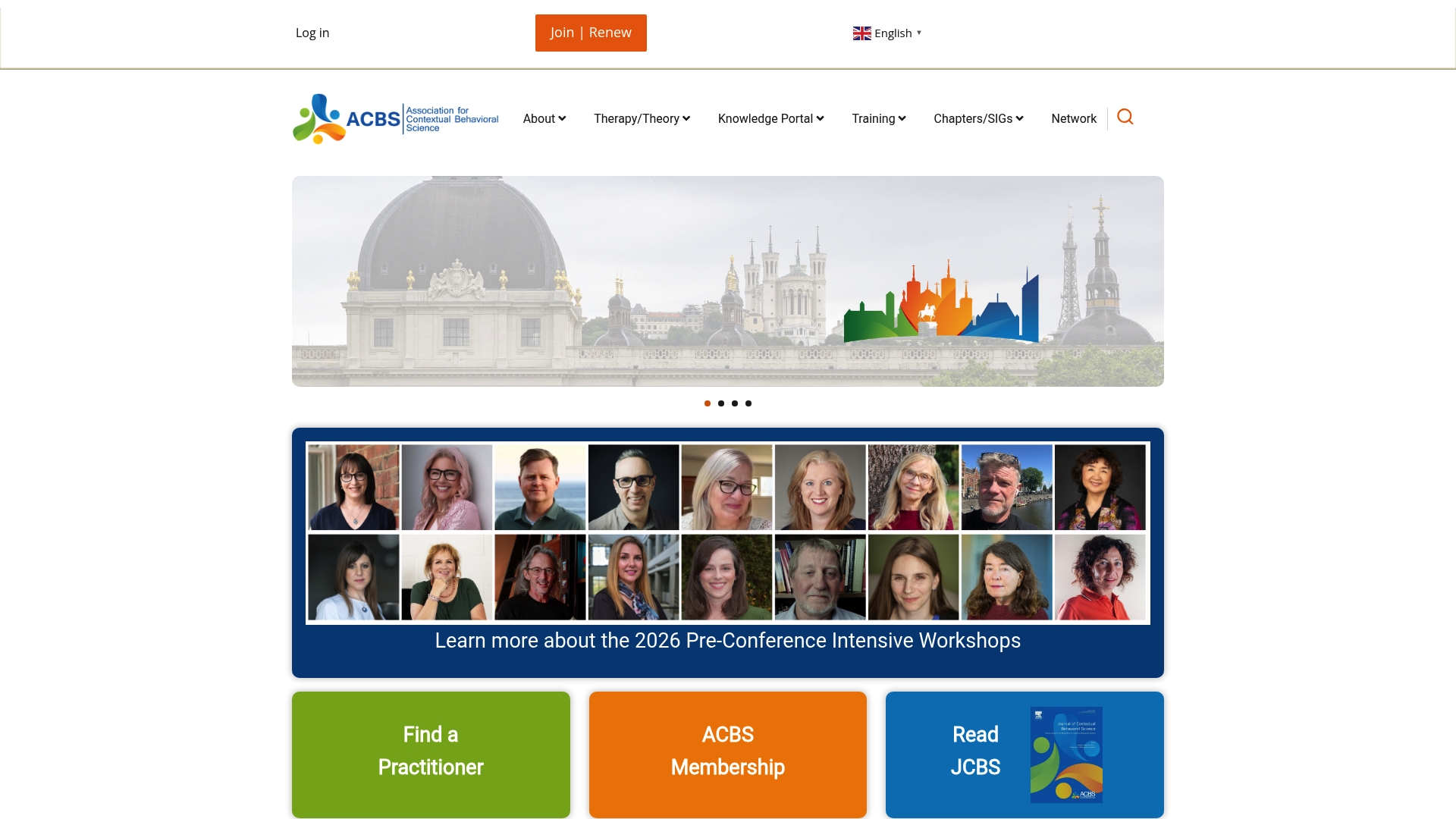
The Association for Contextual Behavioral Science provides a deep library of materials for Acceptance and Commitment Therapy and Relational Frame Theory. The site targets clinicians, researchers, and clinically minded learners with research articles, training programs, and an active professional network. For an English speaking expat in Madrid seeking evidence based frameworks or clinician level training, this resource is thorough and credible. Quick takeaway: excellent for professional growth, less accessible for casual self help without membership.
Core Features
ACBS offers a central hub of research articles and publications that document theory and clinical trials. The platform lists training programs including events conferences and certification paths for clinicians. It supports community and networking opportunities and provides access to clinical and research resources, many of which are available in multiple languages. Actionable takeaway: use the training calendar and research library to plan a targeted learning path.
Pros
Comprehensive research coverage: The site aggregates peer reviewed articles and publications that support clinical practice and academic work.
Structured training options: ACBS lists events conferences and certification programs that help clinicians build practical competencies.
Active professional network: Membership connects you with clinicians and researchers for case consultation and collaboration.
Clinical resource access: The resource library contains protocols and evidence based methods useful for treatment planning.
Multilingual materials available: Materials in several languages make the content more accessible to international practitioners.
Cons
Membership is required for full access to many resources and advanced features which creates a barrier for casual users.
The information is primarily oriented to professionals and researchers rather than lay readers seeking self help tools.
Some high value content and event registration are limited to members only which reduces immediate access for newcomers.
Who It’s For
This resource suits mental health professionals researchers and students who want structured training in ACT and access to primary literature. It also fits clinicians working with anxiety trauma or depression who want evidence based methods and clinical protocols. For English speaking expatriates in Madrid who are therapists or clinicians, ACBS provides a reliable route to certification and peer support. Quick takeaway: ideal for professionals not casual self help seekers.
Unique Value Proposition
ACBS stands out as an association driven repository that combines scholarship training and community. That combination offers credibility and direct links between research and practice. If you need authoritative source material and opportunities to train or certify in ACT, ACBS delivers a single place to start. Takeaway: it bridges academic rigor and clinical utility.
Real World Use Case
An English speaking psychologist in Madrid enrolls in an ACBS training program to update treatment protocols for anxiety and depression. The clinician uses the research library to design session plans and consults community forums for case formulation feedback. Resulting practice updates are grounded in recent publications and certified competencies.
Pricing
Membership and resource access may involve fees and specific pricing details are available on the website. Visit the site to compare membership tiers and event fees before planning attendance or certification.
Website: https://contextualscience.org
Behavioral Tech Institute
At a Glance
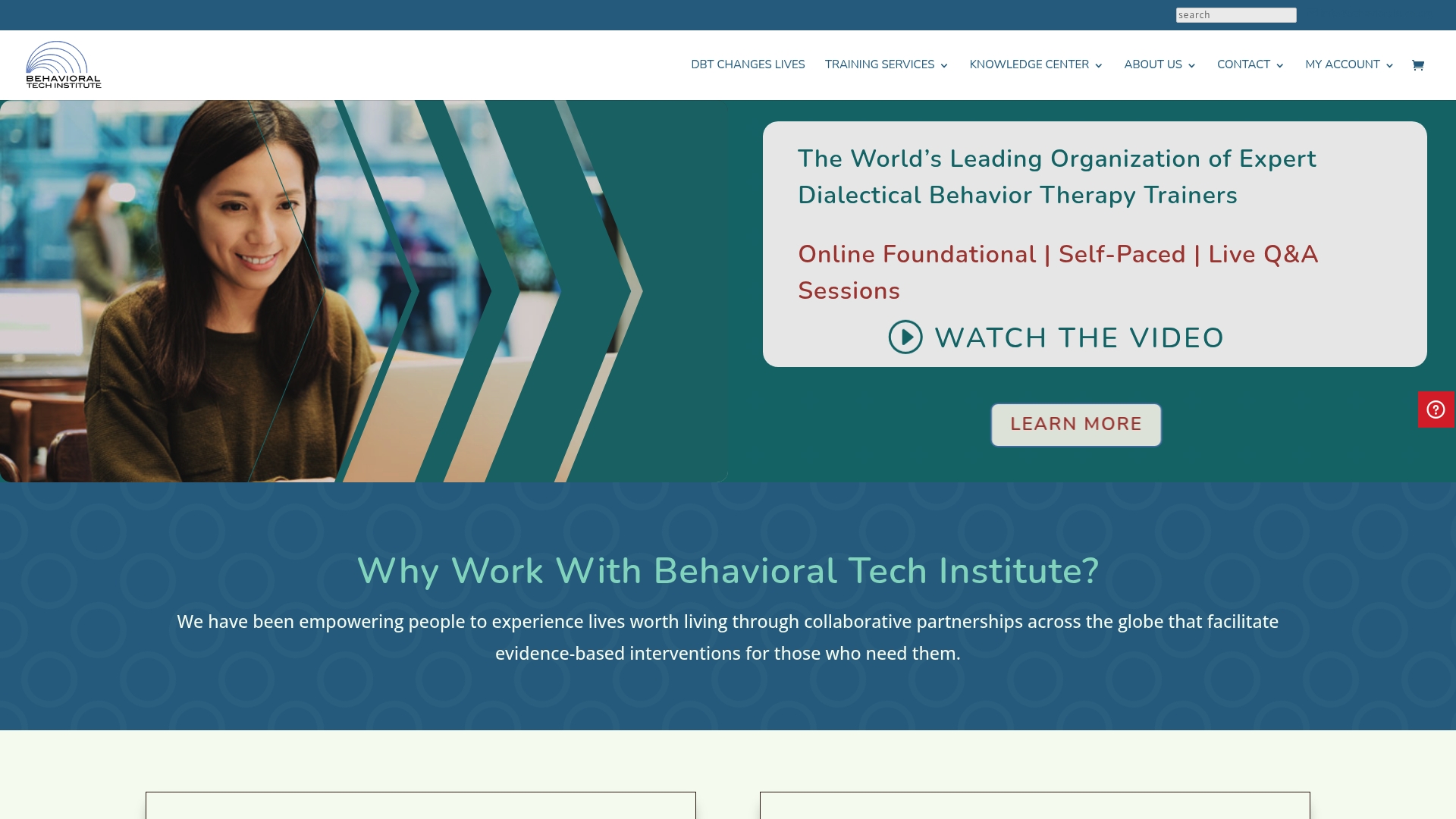
Behavioral Tech Institute has trained clinicians in Dialectical Behavior Therapy (DBT) since 1997 and focuses squarely on building clinician competence. The organization offers a mix of online foundational training, self paced courses, and live question and answer sessions that suit busy professionals. If your Madrid clinic needs reliable DBT training or certification pathways, this is a proven option. It is less useful for people seeking direct trauma therapy for personal healing.
Core Features
Behavioral Tech provides structured education that supports clinical practice and research through a range of formats and materials. The program lineup includes Online Foundational Training, Self Paced Courses, live Q and A sessions, and DBT Certification Preparation backed by the DBT Linehan Board of Certification. A knowledge center and consultation options help agencies implement DBT across systems.
Online Foundational Training
Self Paced Courses
Live Q and A Sessions
DBT Certification Preparation
Training for Agencies and Systems
Pros
Longstanding expertise: The institute has over two decades of focused experience delivering DBT education which builds credibility for clinical teams.
Flexible learning formats: Offering online, self paced, and live instructor led sessions helps clinicians fit training into busy schedules.
Clear certification pathways: Preparation tied to the DBT Linehan Board of Certification helps clinicians pursue recognized credentialing.
Rich resource base: Research summaries, FAQs, and a knowledge center supply practical material for ongoing clinical use.
Global collaboration: International affiliates allow agencies to connect with DBT networks outside their home country.
Cons
Narrow clinical focus: The concentration on DBT means training does not cover many other therapy approaches that trauma clinicians might want.
Cost can be high: Some courses require significant investment which may challenge small clinics or independent therapists.
Limited breadth on trauma techniques: Materials focus on DBT theory and methods rather than a wider set of trauma specific interventions.
Who It’s For
This training is aimed at mental health professionals, therapists, counselors, and agencies committed to implementing DBT with fidelity. It fits English speaking clinicians and clinic managers in Madrid who want staff trained for mood and personality disorder treatment using evidence based methods. Agencies planning system wide DBT rollouts will find the institute particularly useful.
Unique Value Proposition
Behavioral Tech combines longstanding DBT expertise with formal certification links and global affiliates which helps clinics launch high quality DBT programs. The combination of live consultation options and a structured knowledge center supports sustained clinical implementation rather than one time learning.
Real World Use Case
A Madrid mental health clinic enrolls its therapists in the Foundational Training and follows up with team consultation. Clinicians implement DBT skills groups and individual DBT with greater fidelity which improves engagement and stabilizes high risk clients. Staff confidence rises as the clinic tracks measurable adherence to DBT protocols.
Pricing
Pricing varies by course with early bird discounts available. Costs range from about $475 for single courses to $1700 or more for comprehensive foundational training and application fees. Agencies should budget for consultation and certification related expenses as well.
Website: https://behavioraltech.org
Comparison of Therapy Resources for Trauma Management
The table below summarizes key features, accessibility, and benefits of various therapy and educational resources reviewed in the article, helping readers choose the most suitable option for their needs.
Resource | Key Features | Pros | Target Audience | Pricing |
Heske Therapy | Rapid therapies including RTT, EMDR, CBT Localized and online services in English, Spanish, Dutch | Effective methods Flexible access Expat-specific expertise | Expats in Madrid needing personalized care | Specific fees upon inquiry |
Cognitive Processing Therapy | Research-supported structure to modify trauma-maintaining schemas | Flexible formats Adapts to coexisting conditions | PTSD patients preferring cognitive methods | Contact local providers |
National Center for PTSD | Free educational resources Crisis help lines available | Comprehensive guides Immediate crisis support Multilingual content | Veterans, families, clinicians seeking info | Free |
EMDR International Association | Promotes EMDR training, certification, and practitioner network | Supports professional development Standards and credentialing | EMDR clinicians needing training | Membership and course fees |
National Child Traumatic Stress Network (NCTSN) | Evidence-focused child trauma resources Training modules and public awareness campaigns | Accessible training Resources tailored for schools and systems | Child therapists and educators | Free or fee-based courses |
Acceptance and Commitment Therapy (ACT) Resources | Peer-reviewed articles Professional ACT-focused community | Rich research repository Structured training paths | ACT and RFT therapists | Membership required |
Behavioral Tech Institute | Offers DBT foundational training and certification Consulting for agencies | Flexible training formats Recognized DBT certification | DBT clinicians and teams | Courses from $475 to $1700+ |
Discover Fast and Lasting Trauma Relief with Personalized CBT and RTT Solutions
If you are seeking effective trauma treatment that goes beyond traditional therapy, the distinction between Cognitive Behavioral Therapy (CBT) and Rapid Transformational Therapy (RTT) is vital. Many clients face the frustration of slow progress, unresolved emotional blocks, and physical symptoms like migraines or IBS that limit their recovery. Heske Therapy specializes in blending both CBT and RTT with powerful techniques such as EMDR and hypnotherapy to create customized plans designed for rapid, sustainable breakthrough. Whether you struggle with anxiety, burnout, or sleep issues related to trauma, our approach is tailored to your unique history and recovery goals.
Experience the benefits of a therapy practice dedicated to the expat community in Madrid, offering flexible online and in-person sessions adapted to your cultural and linguistic needs. At Heske Therapy you gain access to a proven combination of therapies monitored closely to deliver measurable changes in weeks rather than months.
Do not wait to reclaim peace of mind. Learn more about how our integrative trauma care can accelerate your healing journey at Heske Therapy. Explore the full range of services including customized CBT and RTT therapy plans and book your free discovery call to start experiencing meaningful results today.
Ready to move forward with confidence and clarity
Take the first step toward fast and effective trauma relief by visiting Heske Therapy now to schedule your personalized consultation.
Frequently Asked Questions
What are the main differences between CBT and RTT therapy for trauma treatment?
Cognitive Behavioral Therapy (CBT) focuses on identifying and altering negative thought patterns, while Rapid Transformational Therapy (RTT) combines various techniques, including hypnosis, to address the root causes of trauma. Choose the approach that matches your preferences for structure or depth of exploration.
How quickly can I expect results from CBT and RTT therapies?
CBT often takes several weeks to show measurable improvements, usually around 6–8 sessions. In contrast, RTT aims for significant progress within 3–6 sessions, providing a faster route to healing.
Which therapy is more suited for my specific trauma type?
The best approach depends on your trauma history and specific symptoms. Consult with a qualified therapist to evaluate your needs and decide if CBT’s structured approach or RTT’s integrative methods are right for you.
Can I use CBT and RTT therapies together for trauma recovery?
Yes, integrating both CBT and RTT can be beneficial. By combining the structured cognitive techniques of CBT with the rapid healing methods of RTT, you might achieve quicker and more comprehensive results.
What should I expect during a typical RTT session?
During an RTT session, expect to enter a relaxed state while the therapist guides you through your trauma history and positive reframing. Be prepared to engage with your emotions and receive personalized strategies to facilitate healing.
How do I start therapy with CBT or RTT for trauma?
Begin by researching therapists who specialize in either CBT or RTT methods. Schedule an initial consultation to discuss your trauma history and set goals, so you can find the best fit for your healing journey.
Recommended
Comments