Why Choose English-Speaking Therapist as an Expat
- Methode sure pour gagner a la roulette
- Feb 13
- 8 min read

Feeling lost in Madrid can happen even to the most seasoned English-speaking expatriates. When anxiety, burnout, or trauma hits far from home, speaking to a therapist who truly understands every word and nuance in English becomes more than a comfort—it is vital to healing. Research highlights that language challenges impact therapeutic effectiveness significantly, especially across cultures, making effective communication with a culturally attuned therapist essential for overseas professionals seeking rapid mental health solutions.
Table of Contents
Key Takeaways
Point | Details |
Importance of Cultural Competence | English-speaking therapists should possess strong cultural understanding to effectively support expatriates. |
Emotional Nuances in Language | Therapy requires more than language proficiency; emotional subtleties and context are crucial for effective communication. |
Native Language Therapy Benefits | Therapy in a client’s native language enhances emotional connection, leading to deeper healing and understanding. |
Risks of Non-Native Counseling | Non-native language counseling can impede therapeutic effectiveness by causing misinterpretations and emotional distance. |
What Defines an English-Speaking Therapist
In the complex world of international mental health, an English-speaking therapist represents far more than linguistic proficiency. These professionals offer a nuanced understanding of cultural navigation and communication that goes beyond simple language translation. Language challenges impact therapeutic effectiveness significantly, making their role critically important for expatriates seeking mental health support.
A true English-speaking therapist brings several distinctive qualities to their practice:
Native or near-native English fluency
Deep understanding of Anglo-American communication styles
Ability to interpret cultural nuances and contextual meanings
Professional training completed in an English-speaking academic environment
Specialized experience working with international and expatriate populations
Beyond linguistic skills, these therapists recognize that effective communication involves more than grammatical correctness. They comprehend the subtle emotional undertones, idiomatic expressions, and psychological frameworks unique to English-speaking cultures. This depth allows them to create therapeutic environments where expatriates feel genuinely understood, not just technically translated.
The technical and emotional dimensions of language in therapy cannot be overstated. Professional therapists understand that language is not merely a communication tool but a gateway to emotional expression, cognitive processing, and therapeutic breakthroughs. Each word choice, tone, and conversational rhythm carries profound psychological significance.
Pro tip: When selecting an English-speaking therapist, prioritize professionals with demonstrable international experience and cultural competence, not just language skills.
The Unique Needs of Expat Clients
Expatriate life presents a complex psychological landscape that demands specialized mental health support. Unique challenges confront international professionals navigating unfamiliar cultural terrains, where emotional resilience becomes both a survival skill and a critical therapeutic goal. The mental health journey for expatriates is fundamentally different from traditional therapeutic approaches, requiring nuanced understanding and targeted interventions.
The primary psychological challenges faced by expats include:
Cultural disorientation and identity flux
Profound feelings of isolation and disconnection
Heightened stress from professional and personal transitions
Communication barriers beyond language differences
Loss of established social support networks
Continuous adaptation to new environmental stimuli
Psychological adjustment for expatriates involves more than simply overcoming language barriers. Emotional translation becomes as crucial as linguistic translation, requiring therapists to understand the intricate psychological mechanisms of cross-cultural adaptation. These professionals must help clients navigate complex emotional landscapes, addressing not just surface-level symptoms but the deeper existential challenges of living between cultures.
Beyond traditional therapeutic models, expat-focused mental health support must incorporate strategies for building psychological flexibility, reconstructing social connections, and developing robust coping mechanisms. The goal is not just symptom management but empowering individuals to thrive in dynamic, often unpredictable international environments. Each therapeutic session becomes a collaborative journey of understanding, resilience-building, and personal transformation.
Pro tip: Seek therapy professionals with demonstrated international experience and multicultural training to ensure comprehensive support during your expatriate journey.
How Therapy in Your Native Language Works
Native language therapy represents more than linguistic convenience—it’s a profound psychological gateway to healing. Psychotherapy in native language supports deeper emotional integration by creating a safe, intuitive communication environment where complex emotions can be authentically expressed without linguistic barriers.
The key benefits of native language therapy include:
Immediate emotional accessibility
Reduced cognitive translation burden
Enhanced metaphorical and nuanced expression
Deeper connection with therapeutic process
Faster processing of complex psychological experiences
More authentic emotional disclosure
Psychological research reveals that language is not just a communication tool but a deeply emotional conduit. When individuals express themselves in their most familiar linguistic framework, unconscious emotional layers emerge more naturally. This allows therapists to access deeper psychological territories, facilitating more comprehensive healing and personal transformation.

Beyond mere communication, native language therapy creates a neurological and emotional resonance that transcends typical therapeutic interactions. The comfort of expressing oneself without linguistic constraints enables clients to explore vulnerable emotional landscapes with greater ease, ultimately accelerating psychological healing and personal growth. Each word becomes a bridge between internal experiences and external understanding.
Pro tip: Choose a therapist who not only speaks your native language but also understands the cultural nuances embedded within that linguistic experience.
Key Therapy Approaches for English Speakers
English-speaking expatriates require specialized therapeutic approaches that transcend traditional counseling models. Multilingual therapy strategies enhance emotional communication by creating nuanced, culturally responsive treatment frameworks tailored to international professionals’ unique psychological landscapes.
Key therapeutic approaches for English speakers include:
Rapid Transformational Therapy (RTT)
Cognitive Behavioral Therapy (CBT)
Eye Movement Desensitization and Reprocessing (EMDR)
Integrative counseling techniques
Trauma-informed psychological interventions
Culturally adaptive communication strategies
Professional therapists working with English-speaking clients understand that language is more than communication—it’s a complex emotional framework. By employing sophisticated therapeutic techniques, these professionals create safe, intuitive spaces where complex psychological experiences can be explored authentically. The goal extends beyond symptom management to comprehensive personal transformation, addressing the multifaceted challenges of expatriate life.
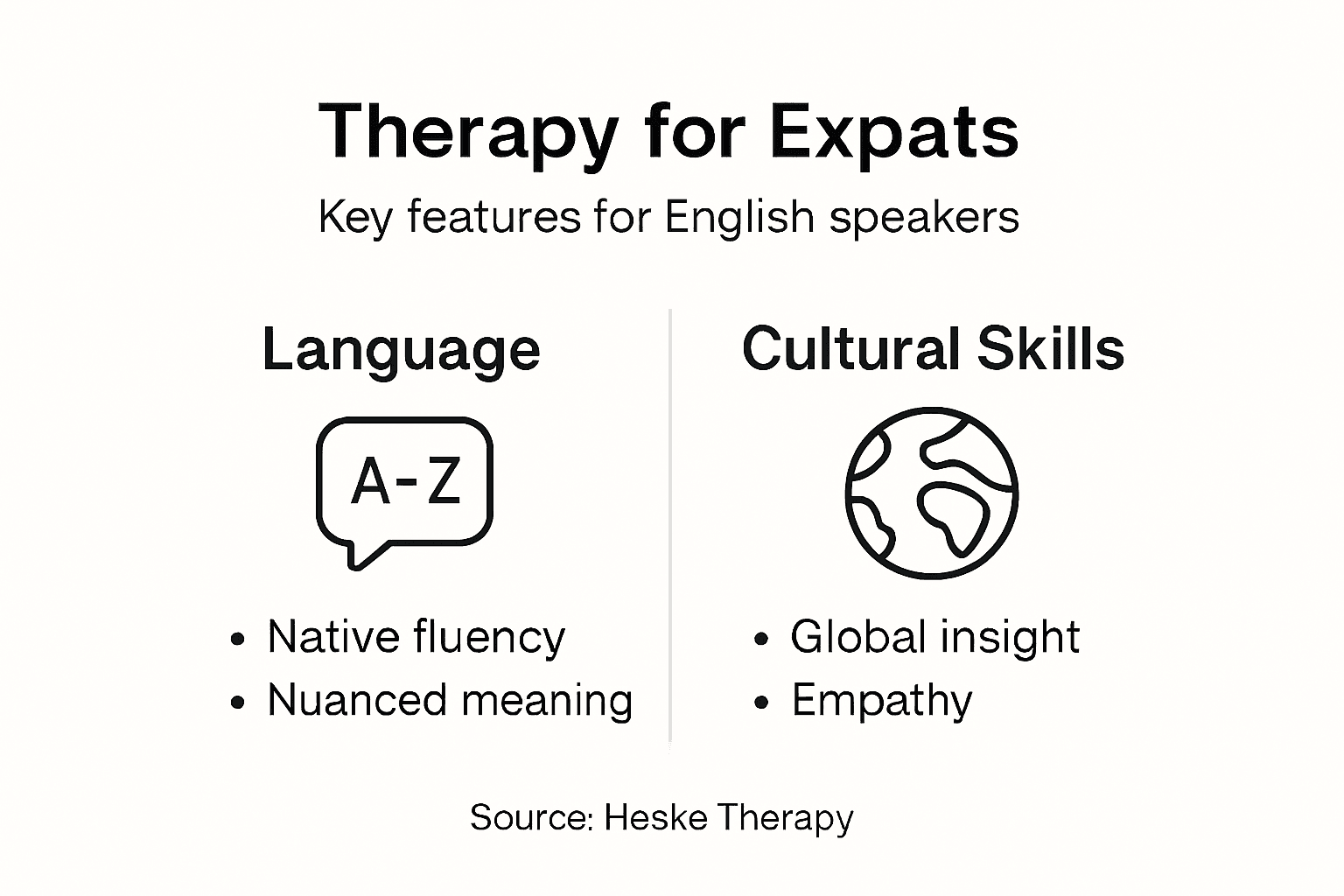
Below is a summary of therapy approaches and their suitability for English-speaking expatriates:
Approach | Best For | Typical Benefit |
Rapid Transformational Therapy | Fast emotional breakthroughs | Unblocks deep-rooted challenges |
Cognitive Behavioral Therapy | Thought pattern adjustment | Builds coping strategies |
EMDR | Trauma and anxiety resolution | Reduces emotional distress |
Integrative Counseling | Holistic personal development | Balances multiple perspectives |
Effective therapy for English speakers demands profound linguistic and cultural sensitivity. Therapists must navigate intricate emotional terrains, recognizing that each client’s experience is uniquely shaped by their international journey. This approach requires flexible, adaptive methodologies that respect individual narratives while providing structured, evidence-based psychological support.
Pro tip: Request a preliminary consultation to assess your therapist’s understanding of expatriate psychological dynamics and their ability to communicate complex emotions in English.
Risks of Non-Native Language Counseling
Non-native language counseling introduces significant psychological and communicative barriers that can profoundly impact therapeutic effectiveness. Multilingual counseling presents complex communication challenges that extend far beyond simple linguistic translation, potentially compromising emotional understanding and treatment outcomes.
The primary risks of non-native language counseling include:
Emotional nuance loss
Increased misinterpretation probability
Reduced client vulnerability and trust
Compromised psychological safety
Higher cognitive translation burden
Diminished therapeutic rapport
Psychological research reveals that language is not just communication, but a deeply intricate emotional conduit. When clients cannot express themselves with linguistic precision and emotional authenticity, critical therapeutic insights remain unexplored. The subtle emotional undertones, cultural metaphors, and psychological complexities become lost in translation, creating significant gaps in therapeutic understanding.
The consequences of language barriers in counseling extend beyond momentary misunderstandings. They can fundamentally alter power dynamics, reduce client agency, and create additional psychological stress for individuals already navigating complex emotional territories. Expatriates, in particular, require therapeutic environments where linguistic flexibility matches their complex international experiences, ensuring that every emotional nuance is heard and understood.
Pro tip: Always prioritize therapists who demonstrate genuine cultural competence and native-level linguistic understanding, not just technical language skills.
Comparing Bilingual and Local Therapists
Understanding the nuanced differences between bilingual and local therapists is crucial for expatriates seeking effective mental health support. Multilingual therapists strategically use language as a therapeutic tool that goes far beyond simple communication, offering unique advantages for international clients navigating complex emotional landscapes.
Key comparative differences include:
Language switching capabilities
Cultural interpretation skills
Emotional attunement levels
Professional training backgrounds
Adaptability to client experiences
Psychological rapport building techniques
Therapeutic effectiveness depends on more than linguistic proficiency. Bilingual therapists demonstrate exceptional ability to navigate cultural complexities, understanding that emotional expression transcends literal language translation. They can intuitively decode subtle cultural nuances, meta-communication signals, and contextual emotional meanings that local monolingual therapists might inadvertently miss.
Here’s how English-speaking, bilingual, and local therapists differ in their approach and effectiveness:
Attribute | English-Speaking Therapist | Bilingual Therapist | Local Therapist |
Cultural Adaptation | Highly skilled with expat cultures | Flexible across cultures | Deep local cultural focus |
Emotional Expression | Intuitive for English speakers | Tuned to multiple nuances | Geared to local norms |
Language Precision | Native-level communication | Can switch languages as needed | Limited to local language |
Therapeutic Rapport | Strong with English-speaking clients | Enhanced for diverse clients | Strong with local clients |
The profound difference lies in cognitive flexibility. While local therapists excel in their specific cultural context, bilingual professionals bring a more dynamic, adaptable approach to psychological healing. They understand that emotional experiences are deeply rooted in linguistic and cultural frameworks, allowing for more comprehensive and empathetic therapeutic interventions that respect the client’s unique international background.
Pro tip: During initial consultations, assess your therapist’s international experience and ability to understand complex cross-cultural emotional narratives, not just their language skills.
Find Your Trusted English-Speaking Therapist for Expat Mental Health
Navigating life as an expatriate can bring emotional challenges like identity shifts, isolation, and stress that require specialized mental health support. This article highlights how important it is to work with a therapist who offers native-level English communication combined with deep cultural understanding. If you struggle with expressing complex emotions or need professional care tailored to your unique international experience, Heske Therapy in Madrid provides exactly that expertise. Our integrative approaches including Rapid Transformational Therapy (RTT), EMDR, CBT, and counseling are designed for English-speaking expats facing anxiety, burnout, trauma, and emotional blocks.
We create a safe and culturally sensitive space where you can feel truly understood and empowered to heal. At Heske Therapy, we prioritize rapid and lasting results with personalized treatment plans offered both online and in-office. Our multilingual and multicultural team will help you overcome language barriers and connect with your inner resilience.
Begin your journey toward emotional well-being today by visiting our website Heske Therapy for more information about our therapy methods. Explore how expert mental health support can transform your expatriate experience.
Discover the advantages of working with English-speaking specialists at Heske Therapy.
Ready to embrace healing with a therapist who understands your cross-cultural experience and emotional needs Visit Heske Therapy now to schedule your free discovery call and take the first step toward a stronger, healthier you.
Frequently Asked Questions
What are the benefits of choosing an English-speaking therapist as an expat?
Choosing an English-speaking therapist offers the advantage of native-level fluency and an understanding of cultural nuances, enhancing emotional expression and therapeutic effectiveness. They can provide a deeper connection, reducing misunderstandings and creating a safe space for exploration of complex feelings.
How does language impact the effectiveness of therapy?
Language affects therapy significantly because emotional nuances can get lost in translation. A therapist who speaks your language fluently can interpret subtle meanings and help clients process feelings authentically, leading to better outcomes in treatment.
What unique challenges do expatriates face that an English-speaking therapist can help address?
Expatriates often experience cultural disorientation, feelings of isolation, and professional or personal transition stress. An English-speaking therapist can help navigate these complex emotional landscapes, providing tailored support for their unique psychological needs.
What therapy approaches are best for English-speaking expatriates?
Effective therapy approaches for English-speaking expatriates include Rapid Transformational Therapy (RTT), Cognitive Behavioral Therapy (CBT), and Eye Movement Desensitization and Reprocessing (EMDR). These methods cater to the specific emotional and cultural experiences faced by expats, promoting healing and personal growth.
Recommended
Comments