Clinical Hypnotherapy Explained: Transforming Anxiety
Updated: Feb 20

Feeling overwhelmed by anxiety or trauma is common among expatriates living in Madrid, especially when cultural challenges add stress. Finding relief that matches your unique needs can seem impossible in a new environment. Clinical hypnotherapy offers a scientifically grounded, quick solution that targets subconscious patterns and respects your background. This article uncovers key myths about hypnotherapy and breaks down why modern techniques help English-speaking expatriates achieve real emotional healing in Madrid.
Table of Contents
Key Takeaways
Point | Details |
Understanding Hypnotherapy | Clinical hypnotherapy is a scientific and collaborative process that allows clients to remain in control while accessing subconscious thought patterns. |
Approaches to Hypnotherapy | Key methods include Ericksonian Hypnosis, Traditional Hypnosis, and Hypnotic Relaxation Therapy, each tailored to address different psychological needs. |
Applications for Expats | Hypnotherapy can effectively assist expatriates with anxiety, trauma, and cultural adjustments, offering personalized strategies for emotional resilience. |
Legal and Ethical Standards | Ensuring informed consent and maintaining client confidentiality are crucial in hypnotherapy practice, especially for diverse cultural backgrounds. |
Defining Clinical Hypnotherapy and Key Myths
Clinical hypnotherapy represents a sophisticated psychological intervention designed to help individuals access and transform deeply rooted mental patterns. Unlike popular media portrayals, hypnotherapy is a scientifically grounded approach that enables targeted therapeutic work by inducing a focused state of heightened awareness and receptivity.
Contrary to widespread misconceptions, hypnosis is not about controlling someone’s mind or creating an unconscious trance. Scientific research has consistently demonstrated that clinical hypnotherapy is a collaborative process where clients remain fully aware and in control. Key characteristics include:
Active participation from the client
Increased mental focus and concentration
Enhanced suggestibility for positive behavioral changes
Ability to access subconscious thought patterns
Voluntary engagement throughout the therapeutic process
Historically, hypnosis has evolved dramatically from mystical practices to a respected clinical technique. Modern hypnotherapy integrates psychological principles with suggestion techniques, allowing practitioners to help clients address various mental health challenges like anxiety, trauma, and behavioral patterns. The process involves guiding individuals into a relaxed yet attentive mental state where therapeutic suggestions can more effectively reach the subconscious mind.
Pro tip: When exploring hypnotherapy, always choose a licensed professional with specialized training in clinical hypnosis techniques to ensure safe and effective treatment.
Types of Clinical Hypnotherapy Approaches
Hypnotherapy encompasses several specialized approaches designed to address diverse psychological and emotional challenges. International clinical surveys have identified multiple distinct methodologies that practitioners employ to support client healing and transformation.
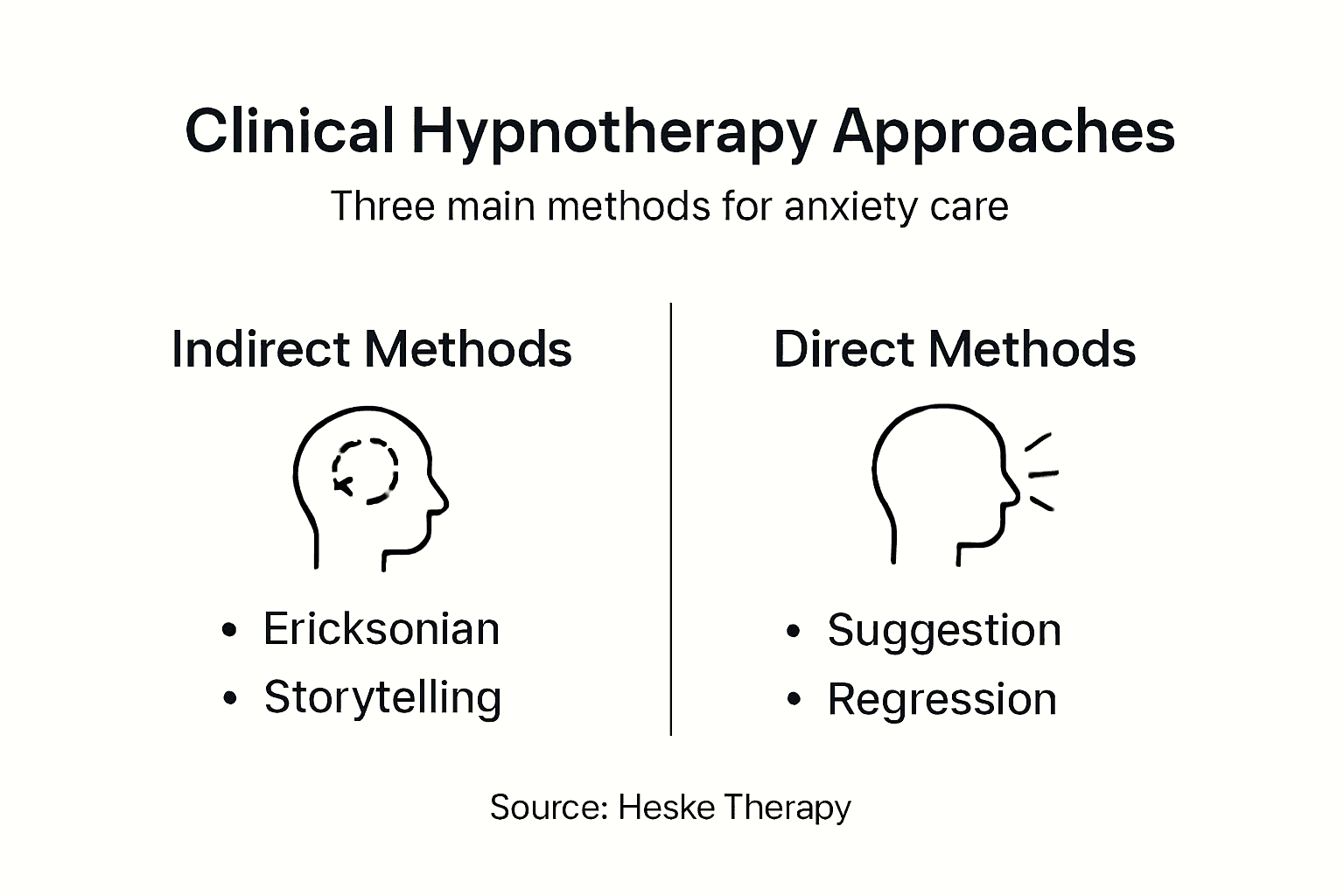
Three primary clinical hypnotherapy approaches stand out in contemporary practice:
Ericksonian Hypnosis: A conversational and indirect approach that uses storytelling and metaphors to facilitate subconscious change
Traditional Hypnosis: A direct suggestion-based method focusing on explicit therapeutic instructions
Hypnotic Relaxation Therapy: Emphasizing deep physiological relaxation to access subconscious mental processes
Each approach offers unique therapeutic benefits. Ericksonian hypnosis, named after psychiatrist Milton Erickson, is particularly effective for clients who might resist direct suggestions. Traditional hypnosis provides clear, structured interventions, while Hypnotic Relaxation Therapy helps individuals manage stress and anxiety by promoting deep mental and physical calm.
Here’s a side-by-side comparison of primary clinical hypnotherapy approaches:
Approach | Method Style | Best For | Typical Uses |
Ericksonian Hypnosis | Indirect, conversational | Resistant clients | Subconscious change |
Traditional Hypnosis | Direct, structured | Clients needing clarity | Behavioral modification |
Hypnotic Relaxation Therapy | Deep relaxation | Stress and anxiety cases | Emotional regulation |
Modern clinical practice increasingly integrates these approaches, recognizing that different hypnotherapy techniques can be tailored to individual client needs. Clinicians now assess client personality, suggestibility, and specific therapeutic goals to design personalized hypnotherapy interventions that maximize potential for positive change.
Pro tip: Always consult a licensed hypnotherapist who can professionally assess which hypnotherapy approach best matches your specific psychological and emotional requirements.
How Clinical Hypnotherapy Works in Practice
Clinical hypnotherapy operates through a sophisticated process of inducing a focused mental state that enables profound psychological transformation. Clinical research describes this as a state of heightened suggestibility and reduced peripheral awareness, where the subconscious mind becomes more receptive to therapeutic interventions.
The typical hypnotherapy session involves several crucial stages:
Induction: Creating a relaxed, focused mental environment
Deepening: Guiding the client into a more profound trance state
Therapeutic Suggestion: Introducing positive psychological interventions
Integration: Helping the client process and internalize new mental patterns
Emergence: Gradually returning to normal conscious awareness
During the session, hypnotherapists employ multiple techniques to facilitate change. They might use systematic clinical approaches including metaphorical communication, sensory visualization, and carefully crafted verbal suggestions. The goal is to bypass the critical conscious mind and communicate directly with the subconscious, where most behavioral patterns and emotional responses originate.

Unlike popular misconceptions, clients remain fully aware during hypnotherapy and maintain complete control. The therapist serves as a guide, helping individuals access their inner resources, reframe negative thought patterns, and develop more adaptive psychological responses.
Pro tip: Always choose a certified hypnotherapist with specialized training in clinical techniques to ensure a safe and effective therapeutic experience.
Benefits for Anxiety, Trauma, and Expats
Clinical hypnotherapy offers transformative benefits specifically tailored for expatriates struggling with anxiety, cultural adjustment, and unresolved trauma. Research demonstrates significant therapeutic potential for addressing psychological challenges unique to international professionals navigating complex emotional landscapes.
Specific benefits for expatriates include:
Stress Management: Reducing overwhelming cultural transition anxiety
Emotional Resilience: Building psychological adaptability
Trauma Processing: Safely navigating complex emotional experiences
Identity Reconstruction: Reframing personal narratives in new cultural contexts
Neurological Regulation: Resetting stress response mechanisms
For trauma survivors and anxious expats, hypnotherapy provides a nuanced approach to healing. Clinical protocols supporting trauma recovery emphasize creating safe psychological spaces where individuals can process challenging experiences without retraumatization. This method allows clients to explore difficult emotions while maintaining a sense of control and emotional safety.
Unlike traditional talk therapies, hypnotherapy enables deeper subconscious intervention, helping expatriates reprogram automatic stress responses, release accumulated emotional tension, and develop more adaptive coping mechanisms. The approach recognizes the unique psychological demands of international living, offering personalized strategies for emotional well-being.
Pro tip: Schedule an initial consultation with a hypnotherapist experienced in expatriate mental health to develop a customized emotional wellness strategy.
Legal, Safety, and Ethical Considerations
Clinical hypnotherapy involves complex legal and ethical frameworks designed to protect client welfare and maintain professional integrity. Professional ethical standards emphasize rigorous protocols that safeguard client autonomy, confidentiality, and psychological well-being.
Key legal and ethical principles include:
Informed Consent: Mandatory comprehensive explanation of treatment procedures
Confidentiality: Strict protection of client personal and therapeutic information
Professional Boundaries: Maintaining clear, respectful therapeutic relationships
Competency Standards: Continuous professional training and skill verification
Client Autonomy: Ensuring voluntary participation and right to discontinue treatment
Hypnotherapists must navigate complex regulatory environments that demand exceptional professional conduct. Clinical governance frameworks require practitioners to practice within their qualifications, continuously update their skills, and prioritize client safety. This involves understanding psychological vulnerability, managing potential risks, and implementing robust screening processes to determine client suitability for hypnotherapeutic interventions.
Specifically for expatriate populations, ethical considerations extend to cultural sensitivity, language barriers, and unique psychological challenges. Practitioners must demonstrate exceptional cross-cultural competence, ensuring therapeutic approaches are respectful, adaptive, and tailored to individual client experiences and backgrounds.
Pro tip: Always verify a hypnotherapist’s professional credentials, certifications, and adherence to recognized ethical guidelines before beginning treatment.
Comparing Hypnotherapy to Other Therapies
Hypnotherapy distinguishes itself from traditional therapeutic approaches through its unique ability to access and transform subconscious psychological patterns. Clinical research reveals distinctive therapeutic mechanisms that set it apart from conventional psychotherapeutic interventions.
Key comparative characteristics include:
Speed of Intervention: Hypnotherapy often achieves faster psychological shifts
Subconscious Access: Direct communication with underlying mental processes
Symptom Targeting: More precise emotional and behavioral modification
Neurological Engagement: Enhanced brain plasticity and adaptive responses
Holistic Approach: Integrates psychological and physiological healing
Unlike cognitive behavioral therapy (CBT), which primarily operates through conscious cognitive restructuring, hypnotherapy enables deeper neurological reprogramming. This approach allows for more immediate and profound psychological transformations, particularly for clients struggling with deeply entrenched emotional patterns that resist traditional talk therapies.
Explore how hypnotherapy compares to other psychological therapies:
Attribute | Hypnotherapy | CBT | Talk Therapy |
Focus | Subconscious reprogramming | Conscious restructuring | Emotional discussion |
Speed of Change | Often rapid | Generally gradual | Progress varies |
Approach | Suggestion-based | Technique-driven | Conversation-based |
Neurological Impact | Enhances brain plasticity | Alters thought patterns | Relieves emotional distress |
While each therapeutic modality offers unique benefits, hypnotherapy provides a nuanced alternative for individuals seeking rapid, comprehensive emotional healing. Its ability to bypass conscious resistance and directly engage subconscious mechanisms makes it particularly effective for addressing complex psychological challenges that traditional therapies might find challenging to resolve.
Pro tip: Consider discussing your specific psychological needs with a qualified professional to determine whether hypnotherapy might offer more targeted healing compared to traditional therapeutic approaches.
Unlock Lasting Relief from Anxiety with Expert Clinical Hypnotherapy
The article explores how clinical hypnotherapy offers a powerful strategy to transform anxiety by accessing subconscious patterns and fostering emotional resilience. If you are an expatriate navigating cultural transitions or facing ongoing stress and trauma, you understand the overwhelming impact these challenges can have on your well-being. Heske Therapy in Madrid specializes in personalized mental health solutions that integrate hypnotherapy alongside proven methods like Rapid Transformational Therapy and CBT to deliver rapid and enduring results.
Discover how our skilled therapists help you:
Manage anxiety using targeted hypnotherapy techniques
Reframe emotional blocks and reduce stress responses
Build resilience tailored to your unique expat experience
If you are ready to take control of your emotional health today, start by exploring Heske Therapy, where compassionate care meets expert clinical practice.
Begin your journey toward emotional freedom with a personalized plan designed for you. Schedule a free discovery call now at Heske Therapy and experience how professional hypnotherapy can transform anxiety into lasting peace.
Frequently Asked Questions
What is clinical hypnotherapy?
Clinical hypnotherapy is a psychological intervention that helps individuals access and transform deeply rooted mental patterns by inducing a focused state of heightened awareness and receptivity.
How does clinical hypnotherapy work for anxiety?
Clinical hypnotherapy works for anxiety by guiding individuals into a relaxed state where therapeutic suggestions can effectively reach the subconscious mind, helping reprogram automatic stress responses and promote emotional regulation.
What are the different approaches to clinical hypnotherapy?
The primary approaches to clinical hypnotherapy include Ericksonian Hypnosis, which uses storytelling and metaphors; Traditional Hypnosis, which offers direct suggestions; and Hypnotic Relaxation Therapy, which focuses on deep relaxation.
Is clinical hypnotherapy safe, and what should I look for in a practitioner?
Yes, clinical hypnotherapy is generally safe when conducted by a licensed professional. It’s important to verify their credentials, training in clinical hypnosis, and adherence to ethical guidelines.
Recommended
Comments