Crisis Support Online Therapy: What You Need to Know


TL;DR:
Crisis support provides immediate emotional aid during emergencies, while online therapy offers scheduled, ongoing treatment. Both resources serve different purposes and should be used appropriately based on urgency and stability. Combining these services ensures comprehensive mental health care and effective recovery.
Crisis support online therapy is the combination of immediate emotional assistance through crisis hotlines and longer-term mental health care delivered by licensed online therapists. These two resources serve different purposes, and knowing which one you need right now can make a real difference. The 988 Suicide & Crisis Lifeline provides free, confidential, 24/7 support for anyone in acute distress. For ongoing conditions like anxiety, trauma, and burnout, licensed virtual therapy offers structured, clinical care through secure platforms. Both services are available to you, and they work best when you understand how each one fits into your recovery.
How does crisis support online therapy work?
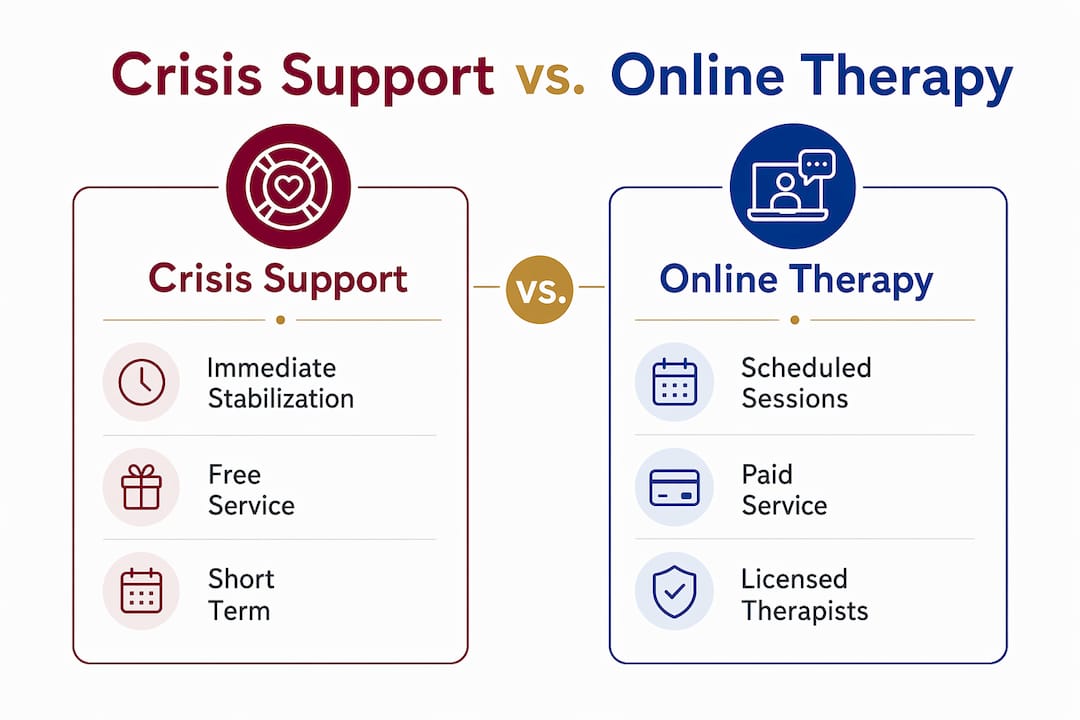
Crisis support is a short-term, non-clinical intervention designed to stabilize you during a mental health emergency. It is not therapy. It does not diagnose or treat. Its single goal is to move you from a state of acute panic to a place of enough calm that you can take a next step.
The 988 Suicide & Crisis Lifeline connects you with a trained counselor in around 5 minutes, with conversations typically lasting 15–45 minutes. You can reach it by phone call, text, or online chat. Crisis Text Line operates the same way: text HOME to 741741 and a counselor responds within minutes. Both services are free and confidential.
When you connect, the counselor begins with a safety screening. Safety checks ask direct questions about immediate harm risk before anything else. These questions are not meant to alarm you. They help the counselor understand how urgent your situation is and what kind of support to offer.
Common safety screening questions include:
Are you thinking about hurting yourself or someone else?
Do you have a plan or access to means?
Are you alone right now?
Have you used alcohol or substances today?
Is there someone nearby who can stay with you?
Crisis counselors offer empathetic listening and connect you to local resources, but they do not provide medical advice or prescribe medication. Expecting a diagnosis or a treatment plan from a crisis line leads to frustration. The counselor’s job is to help you feel heard and safe, then point you toward the right next step.
Pro Tip: Save 988 and the Crisis Text Line number (741741) in your phone contacts right now, before you need them. Searching for help during a panic attack wastes critical time.
What is online therapy, and how does it differ from crisis support?
Online therapy is scheduled, clinical mental health care delivered by a licensed therapist through a secure digital platform. It is not instant. Most reputable platforms involve scheduled appointments and do not offer same-day sessions. That distinction matters if you are in acute distress right now.

Where crisis support stabilizes, therapy treats. A licensed therapist works with you over multiple sessions to address the root causes of anxiety, trauma, burnout, or other conditions. Techniques like EMDR (Eye Movement Desensitization and Reprocessing), Rapid Transformational Therapy (RTT), and Cognitive Behavioral Therapy (CBT) each target different aspects of how distress is stored and expressed in the body and mind.
Key things to verify before committing to an online therapy platform:
HIPAA compliance for legal data protection
Clear therapist credentials and licensing information
Transparent pricing and session fees
Insurance acceptance or sliding scale options
Secure video, audio, or messaging options
HIPAA-compliant platforms with clear credential transparency are the baseline standard for trustworthy online mental health care. Any platform that cannot confirm these basics is not worth your time or your personal information.
Online therapy also requires a different mindset than crisis support. Consistency, patience, and a strong therapeutic alliance are what drive real progress in treating burnout and trauma. One session will not resolve years of accumulated stress. Expecting a quick fix leads to dropping out of care before the real work begins.
Pro Tip: When evaluating an online therapist, ask directly: “What is your approach to treating anxiety and trauma?” A clear, specific answer signals competence. Vague answers signal a mismatch.
If you want a deeper look at what makes online psychotherapy effective, the distinction between modalities matters more than most people realize.
How to decide whether to seek crisis support or start online therapy
The decision comes down to urgency. If you are in immediate danger, crisis support is the right first contact. If you are struggling but safe, online therapy is the appropriate path.
Use this framework to assess where you are right now:
Are you having thoughts of suicide or self-harm? Call or text 988 immediately. Do not wait.
Are you experiencing a severe panic attack that feels physically unmanageable? Contact a crisis line. Crisis services are designed to stabilize people in panic and help them take the next step.
Are you exhausted, burned out, or struggling with ongoing anxiety that is affecting your work and relationships? This is the territory of online therapy, not crisis lines.
Have you recently experienced a traumatic event and feel stuck? Schedule a therapy intake. Trauma responds to structured clinical approaches like EMDR and RTT, not to crisis counseling alone.
Are you unsure whether what you feel qualifies as a crisis? Contact a crisis line anyway. Reaching out is proactive self-care, not a last resort. Counselors will help you figure out the right level of care.
The most common mistake people make is waiting too long on both ends. They avoid crisis lines because they think their situation “isn’t bad enough.” They delay starting therapy because they expect to feel better on their own. Neither approach works. Crisis support and online therapy fulfill different roles, and using both at the right time is the most effective path to recovery.
A second common mistake is expecting crisis counselors to function as therapists. After a crisis call, you may feel calmer but not “fixed.” That is exactly how it is supposed to work. The next step after stabilization is connecting with a licensed therapist for ongoing care.
How to access trusted and secure online crisis and therapy resources
Not every platform that calls itself a mental health service is legitimate. Knowing what to look for protects you from wasting time and money on unverified services.
Trust indicator | Crisis lines | Online therapy platforms |
Cost | Free | Paid; some accept insurance |
Availability | 24/7, immediate | Scheduled appointments |
Session length | 15–45 minutes | 45–60 minutes per session |
Credentials required | Trained counselors | Licensed therapists (LCSW, LPC, PhD) |
HIPAA compliance | Yes | Required by law |
Scope of care | Stabilization only | Diagnosis, treatment, ongoing care |
Official crisis resources are the safest first step. The 988 Suicide & Crisis Lifeline and Crisis Text Line are government-backed and free. For online therapy, verify that the platform lists each therapist’s license number, state of licensure, and areas of specialization. Transparent pricing, with no hidden fees, is a non-negotiable standard.
Watch for red flags in online therapy services: no listed therapist credentials, pressure to commit to long-term packages before a first session, or platforms that claim to offer “instant therapy.” Online therapy offers faster access than traditional waitlists but still requires scheduling. Any service promising immediate clinical therapy is misrepresenting what therapy is.
For people seeking online therapy for anxiety, verifying that the therapist has specific experience with anxiety disorders is more important than platform brand recognition.
Pro Tip: Before your first crisis call or therapy session, write down your three most pressing symptoms and when they started. This helps you communicate clearly when you are under stress and ensures the counselor or therapist understands your situation quickly.
Key Takeaways
Crisis support and online therapy are distinct, complementary resources: use crisis lines for immediate stabilization and licensed online therapy for structured, ongoing treatment of anxiety, trauma, and burnout.
Point | Details |
Crisis lines are for immediate distress | Call or text 988 for free, confidential support available 24/7 within minutes. |
Online therapy requires scheduling | Reputable platforms offer scheduled sessions, not instant access, so plan ahead. |
Safety screening is standard | Expect direct questions about harm risk during any crisis contact. This is normal and helpful. |
Verify therapist credentials | Confirm licensing, HIPAA compliance, and transparent pricing before committing to a platform. |
Both services work together | Crisis support stabilizes; therapy treats. Using both at the right time produces the best outcomes. |
What I have learned from working at the intersection of crisis and therapy
The most painful pattern I see is people who reach out to a crisis line, feel better for a few hours, and then do nothing. They interpret the calm after a crisis call as recovery. It is not. It is a window. That window is the best possible moment to schedule a therapy intake, and most people let it close.
Crisis counselors do extraordinary work. They are trained to bring someone back from the edge of panic with empathy and skill. But they are not therapists, and the stabilization they provide is not treatment. Confusing the two leads people to cycle through crisis calls repeatedly without ever addressing the underlying anxiety, trauma, or burnout driving those crises.
The other thing I want to say clearly: using a crisis line is not a sign of weakness or failure. It is one of the most self-aware things a person can do. Recognizing that you are in over your head and reaching for a structured resource takes real courage. The stigma around crisis lines keeps people suffering in silence when a five-minute phone call could change the trajectory of their day.
Therapy, by contrast, asks something harder of you. It asks for consistency over weeks and months. It asks you to sit with discomfort and trust a process that does not always feel linear. The clients I have seen make the most progress are not the ones who came in least distressed. They are the ones who showed up consistently, even when they did not feel like it.
If you are reading this in a moment of distress, please reach out to a crisis line first. Then, when you feel stable enough, take one more step and book a therapy consultation. That second step is where real change begins.
— Heske
Hesketherapy: specialized online care after crisis stabilization
Once you are through the immediate crisis, the question becomes what comes next. Hesketherapy offers licensed online therapy for anxiety, trauma, and burnout, with a focus on methods that produce lasting results rather than surface-level relief.
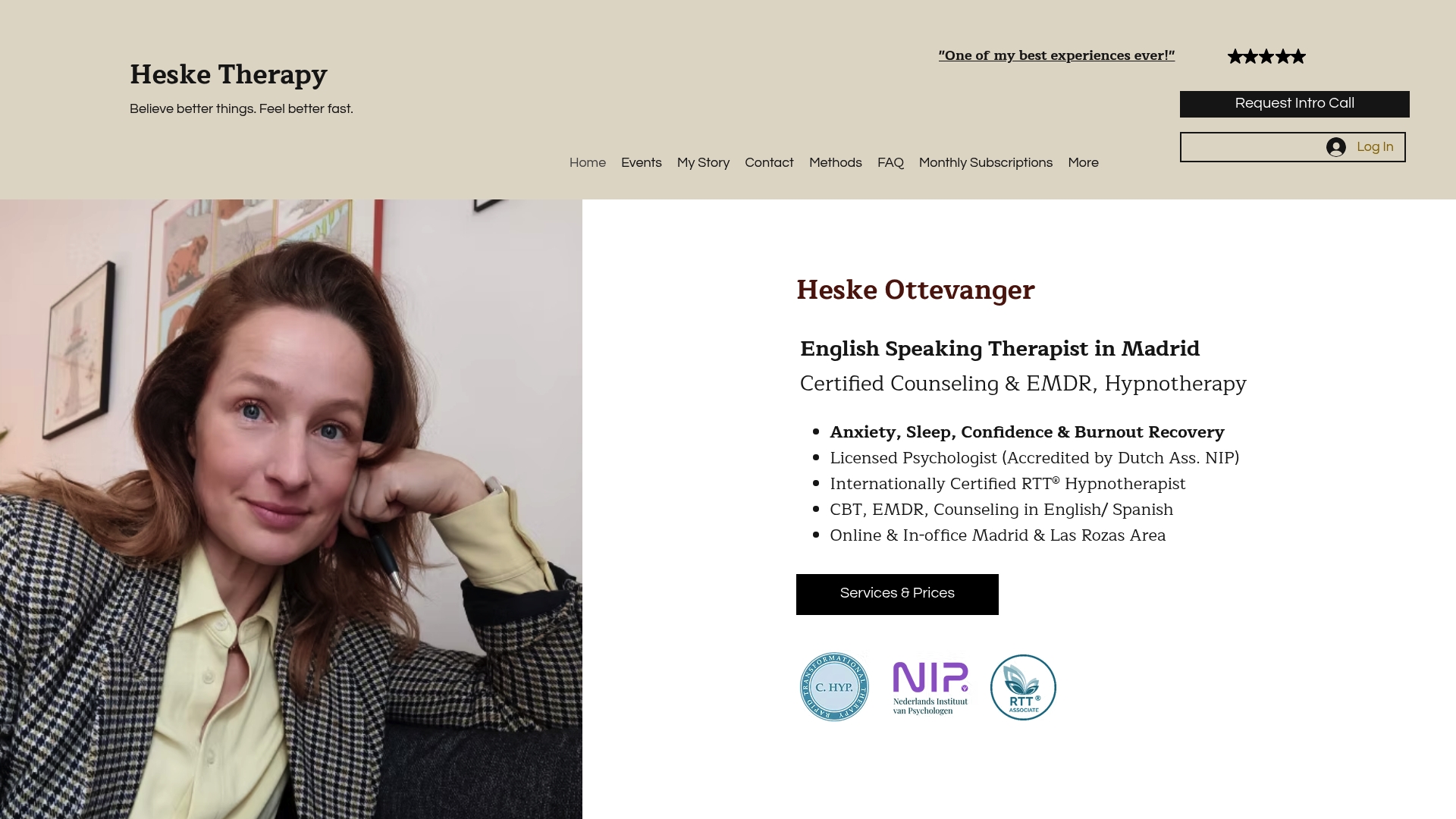
Hesketherapy specializes in Rapid Transformational Therapy, EMDR, CBT, and hypnotherapy, delivered through a secure online platform in English, Spanish, and Dutch. Sessions are available to clients worldwide, with flexible scheduling designed to fit around work and life demands. The practice offers a free discovery call so you can assess fit before committing to a treatment plan. If you are ready to move from stabilization to structured recovery, Hesketherapy is a clear next step.
FAQ
What is the difference between crisis support and online therapy?
Crisis support is short-term stabilization, not clinical treatment. Online therapy is scheduled, licensed care that addresses the root causes of anxiety, trauma, and burnout over multiple sessions.
How do I access the 988 Suicide & Crisis Lifeline?
Call or text 988 from any phone in the United States. The service is free, confidential, and available 24/7, with typical connection times under 5 minutes.
Is online therapy effective for anxiety and burnout?
Online therapy is effective when delivered by a licensed therapist using evidence-based methods like CBT, EMDR, or RTT. Progress requires consistency and a strong therapeutic relationship over time.
How do I know if an online therapy platform is safe?
Verify that the platform is HIPAA-compliant, lists therapist credentials and licensing, and provides transparent pricing. Platforms that cannot confirm these basics do not meet the minimum standard for trustworthy care.
Can I use crisis support and online therapy at the same time?
Yes. Crisis lines handle acute distress, while therapy addresses ongoing conditions. Using both is not redundant. It reflects a clear understanding of how these services complement each other in a complete mental health plan.
Recommended
Comments