How testimonials guide therapy choice for expats in Madrid
- Methode sure pour gagner a la roulette
- Mar 15
- 9 min read

Choosing therapy as an English-speaking expatriate in Madrid can feel overwhelming, especially when navigating anxiety, trauma, or emotional challenges in an unfamiliar healthcare system. Research shows that testimonials increase therapy engagement by 60-70% among expatriates, making them a powerful tool for reducing uncertainty and building trust. This guide explores why testimonials matter, how they influence therapy outcomes, and practical ways you can use them to make informed decisions about your mental health care in Madrid.
Table of Contents
Why Testimonials Matter For Expats Seeking Therapy In Madrid
The Measurable Impact Of Testimonials On Therapy Satisfaction And Outcomes
What Makes Testimonials Effective For English-Speaking Expats In Madrid?
How To Use Testimonials To Make Informed Therapy Choices In Madrid
Explore Therapy Options Tailored For English-Speaking Expats In Madrid
Key takeaways
Point | Details |
Testimonials boost engagement | Therapy engagement among expats increases by up to 70% when testimonials are present. |
Reduce perceived risks | Authentic testimonials lower stigma and hesitation for those facing anxiety or trauma. |
Cultural relevance matters | Testimonials reflecting cultural sensitivity increase engagement by 45%. |
Verified reviews build trust | Third-party verified testimonials carry significantly more weight than unverified ones. |
Improve decision quality | Culturally tailored testimonials help expats identify therapists who understand their unique challenges. |
Why testimonials matter for expats seeking therapy in Madrid
Relocating to Madrid as an English-speaking expatriate brings unique mental health challenges. You’re navigating a new language, unfamiliar cultural norms, and a healthcare system that operates differently from what you know. These barriers create genuine hesitation when seeking therapy, even when you recognize the need for support.
Testimonials bridge this gap by offering real experiences from people who share your situation. When you read about another expat who successfully addressed anxiety or trauma with a specific therapist, it transforms an abstract decision into something tangible and relatable. The uncertainty dissolves because someone like you has already walked this path.
Consider these common obstacles expatriates face:
Language barriers that make expressing complex emotions difficult
Cultural differences in how mental health and therapy are perceived
Lack of familiarity with local therapists and their qualifications
Concerns about whether a therapist truly understands expatriate experiences
Stigma around seeking mental health support in a new community
Testimonials directly address each of these concerns. A detailed review mentioning a therapist’s fluency in English, cultural awareness, and success treating anxiety immediately answers multiple questions you might have. This isn’t just marketing, it’s social proof that reduces the perceived risk of making the wrong choice.
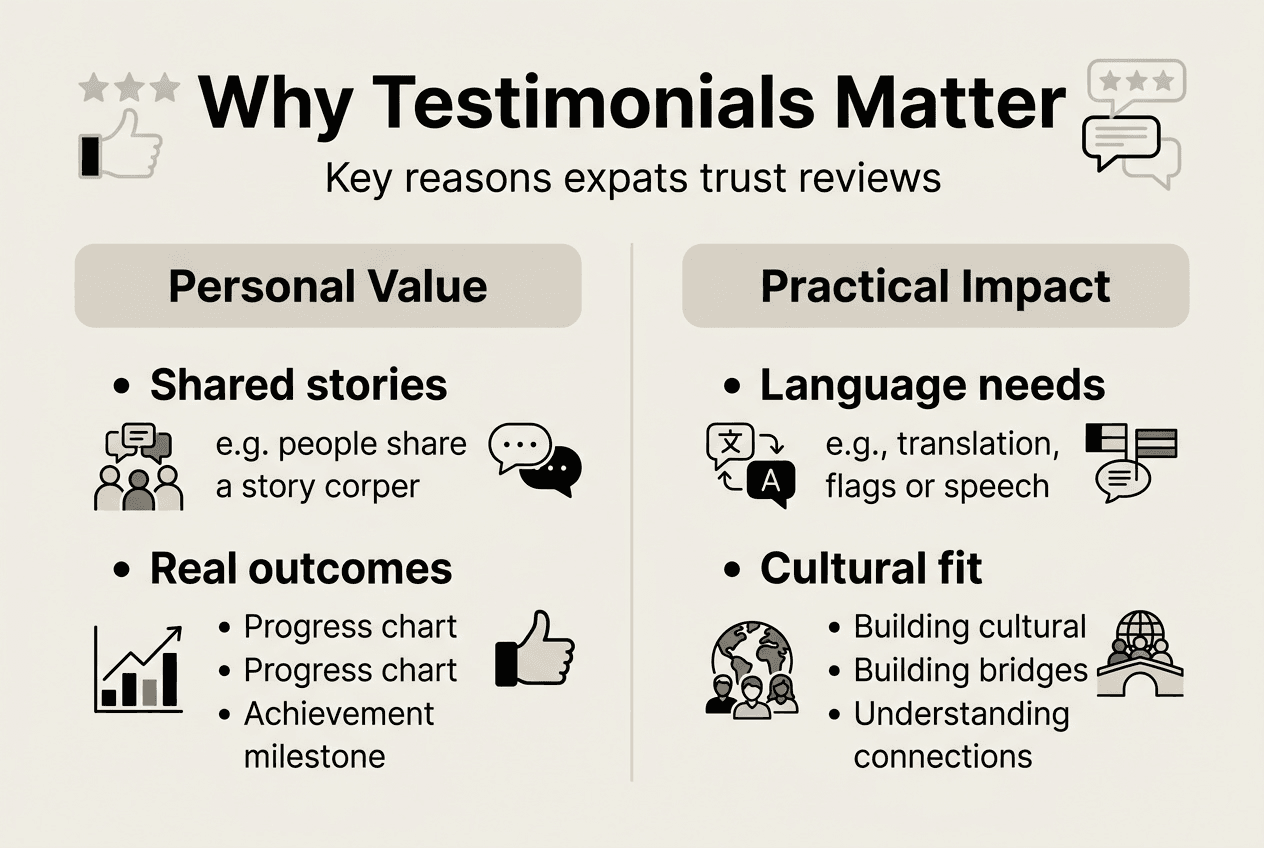
Research confirms that testimonials significantly influence therapy choices for expatriates experiencing anxiety and trauma. The impact is measurable, with engagement rates jumping by 60 to 70% when potential clients encounter authentic testimonials. This matters because higher engagement translates to more people getting the help they need rather than postponing care due to uncertainty.
Pro Tip: When evaluating testimonials, look for specific details about the therapist’s approach and cultural competence. Vague praise like “great therapist” offers less value than concrete examples of how the therapist helped someone navigate challenges similar to yours.
“Reading testimonials from other expats made me realize I wasn’t alone in struggling with the transition to Madrid. It gave me the confidence to reach out for help.”
For English-speaking expatriates, choosing English-speaking therapists becomes less daunting when you can see evidence of others who found effective support. Testimonials transform the therapy search from a leap of faith into an informed decision based on real outcomes.
The measurable impact of testimonials on therapy satisfaction and outcomes
Testimonials aren’t just helpful for making initial decisions. They correlate with better therapy outcomes overall. When you select a therapist based on preferences that align with your needs, including insights gained from testimonials, you’re more likely to stay engaged and experience meaningful progress.

A comprehensive meta-analysis found small but significant effect sizes for treatment satisfaction, completion rates, and clinical outcomes when client preferences guide therapy selection. The effect size for satisfaction was 0.26, which may sound modest but represents a meaningful difference in real-world terms. Higher satisfaction means you’re more likely to continue therapy long enough to see results.
Outcome Measure | Effect Size | Practical Meaning |
Treatment Satisfaction | 0.26 | Moderate increase in how valued and understood clients feel |
Therapy Completion | 0.19 | Fewer dropouts, more people finishing treatment plans |
Clinical Outcomes | 0.15 | Small but measurable improvements in symptom reduction |
These numbers tell an important story. When you choose a therapist whose approach resonates with you, based partly on what testimonials reveal, you’re setting yourself up for better results. The relationship between preference-matching and outcomes isn’t coincidental. It reflects the fundamental importance of therapeutic alliance in mental health treatment.
For expatriates dealing with anxiety, trauma, or emotional challenges, this matters even more. You need a therapist who not only has clinical expertise but also understands the specific stressors of living abroad. Testimonials help you identify therapists who consistently demonstrate this dual competence.
The completion rate effect is particularly significant. Many people start therapy but discontinue before achieving their goals. When your therapist choice aligns with your preferences and cultural context, you’re 19% more likely to stick with treatment. That persistence often makes the difference between temporary relief and lasting change.
Pro Tip: Look for testimonials from clients who completed full treatment courses rather than just initial sessions. These reviews offer better insight into a therapist’s ability to support you through the entire therapeutic process.
For therapy for international clients, these metrics underscore why culturally informed care produces superior results. Testimonials serve as a filter, helping you identify therapists whose track record suggests they’ll meet your specific needs as an expatriate navigating mental health challenges in Madrid.
What makes testimonials effective for English-speaking expats in Madrid?
Not all testimonials carry equal weight. The most influential ones share specific characteristics that maximize their credibility and relevance to your situation. Understanding these traits helps you distinguish genuinely useful testimonials from generic praise.
Authenticity stands as the foundation. You can usually spot authentic testimonials by their specificity. They mention particular challenges, describe the therapist’s approach in detail, and acknowledge both progress and ongoing work. Generic statements like “best therapist ever” raise questions, while detailed accounts build trust.
Third-party verification amplifies credibility significantly. Testimonials on independent review platforms or verified through booking systems carry more weight than unverified website quotes. This verification doesn’t mean the therapist fabricated unverified testimonials, but verified ones eliminate any doubt.
Cultural and linguistic relevance matters enormously for expatriates. A testimonial from another English-speaking expat who navigated anxiety in Madrid resonates far more than praise from a local Spanish speaker addressing different concerns. Research shows that testimonial effectiveness increases by 45% when addressing cultural sensitivity and language proficiency relevant to the target audience.
Testimonial Type | Engagement Rate | Trust Level | Decision Influence |
Generic praise | 32% | Low | Minimal |
Culturally adapted | 77% | High | Strong |
Verified, specific | 84% | Very High | Very Strong |
Effective testimonials for English-speaking expats typically include:
Explicit mention of the therapist’s English fluency and communication style
References to cultural understanding and expatriate-specific challenges
Specific therapeutic approaches used and how they helped
Concrete examples of progress or outcomes achieved
Acknowledgment of the therapist’s ability to navigate cross-cultural contexts
The difference between generic and culturally adapted testimonials shows up clearly in engagement metrics. When testimonials reflect your specific situation as an expat, you’re 45% more likely to contact the therapist and schedule an initial consultation. This isn’t surprising, you need evidence that the therapist truly understands your world.
Pro Tip: Prioritize testimonials that mention the therapist’s familiarity with multilingual therapy benefits and cross-cultural competence. These details signal expertise that extends beyond general clinical skills.
Consumer research on trust in reviews confirms that people increasingly rely on detailed, verified testimonials when making healthcare decisions. For therapy, where vulnerability and trust are essential, this reliance intensifies. You’re not just buying a service, you’re entering a relationship that requires deep personal disclosure.
How to use testimonials to make informed therapy choices in Madrid
Knowing that testimonials matter is one thing. Using them effectively requires a strategic approach that balances testimonial insights with other evaluation methods. Here’s how to leverage testimonials while avoiding common pitfalls.
Start by identifying testimonials from clients with similar backgrounds and challenges. If you’re dealing with anxiety as an English-speaking expat, prioritize reviews from others in that category.
Verify authenticity by checking multiple sources. Look for the same therapist’s reviews on independent platforms, not just their website.
Read critically for specificity. Effective testimonials describe what the therapist did, not just how the client felt. “She used EMDR to help me process my trauma” tells you more than “I feel so much better.”
Assess cultural relevance by noting whether testimonials mention language, cultural understanding, or expatriate-specific issues.
Balance testimonial insights with direct consultation. Use testimonials to narrow your choices, then schedule discovery calls to confirm fit.
Research indicates that positive testimonials increase the likelihood of expats seeking therapy by up to 40%, mitigating barriers related to stigma and cultural adjustment. This statistic highlights testimonials’ power not just in therapist selection but in overcoming the initial resistance to seeking help.
When evaluating testimonials, ask yourself these questions:
Does this testimonial describe challenges I’m experiencing?
Is the therapist’s approach clearly explained?
Do multiple testimonials mention similar strengths?
Are there any red flags like exclusively perfect reviews or vague language?
Does the testimonial address cultural or language considerations?
Watch for warning signs of inauthentic testimonials. Overly promotional language, lack of specific details, identical phrasing across multiple reviews, or absence of any constructive feedback all suggest potential manipulation. Genuine testimonials acknowledge the work required in therapy and describe realistic timelines for progress.
Pro Tip: Combine testimonial research with exploration of a therapist’s credentials and approach. Testimonials reveal client experiences, but understanding therapeutic methods helps you assess whether those approaches align with your needs and preferences.
For expatriates considering why seek therapy, testimonials often provide the final push to take action. Seeing others’ success stories normalizes the decision and reduces the stigma that might otherwise keep you from reaching out.
When exploring trauma therapies for expats, testimonials help you understand how different approaches work in practice. A clinical description of EMDR tells you what it is, but a testimonial shows you how it felt and what results it produced for someone like you.
Explore therapy options tailored for English-speaking expats in Madrid
Finding the right therapist in Madrid doesn’t have to feel like navigating a maze. Heske Therapy specializes in supporting English-speaking expatriates facing anxiety, trauma, burnout, and emotional challenges through integrative approaches that combine RTT, EMDR, CBT, and hypnotherapy.
Client testimonials featured throughout the Heske Therapy website reflect real experiences from expatriates who found effective support. These testimonials highlight cultural sensitivity, language proficiency, and the practical results clients achieved.
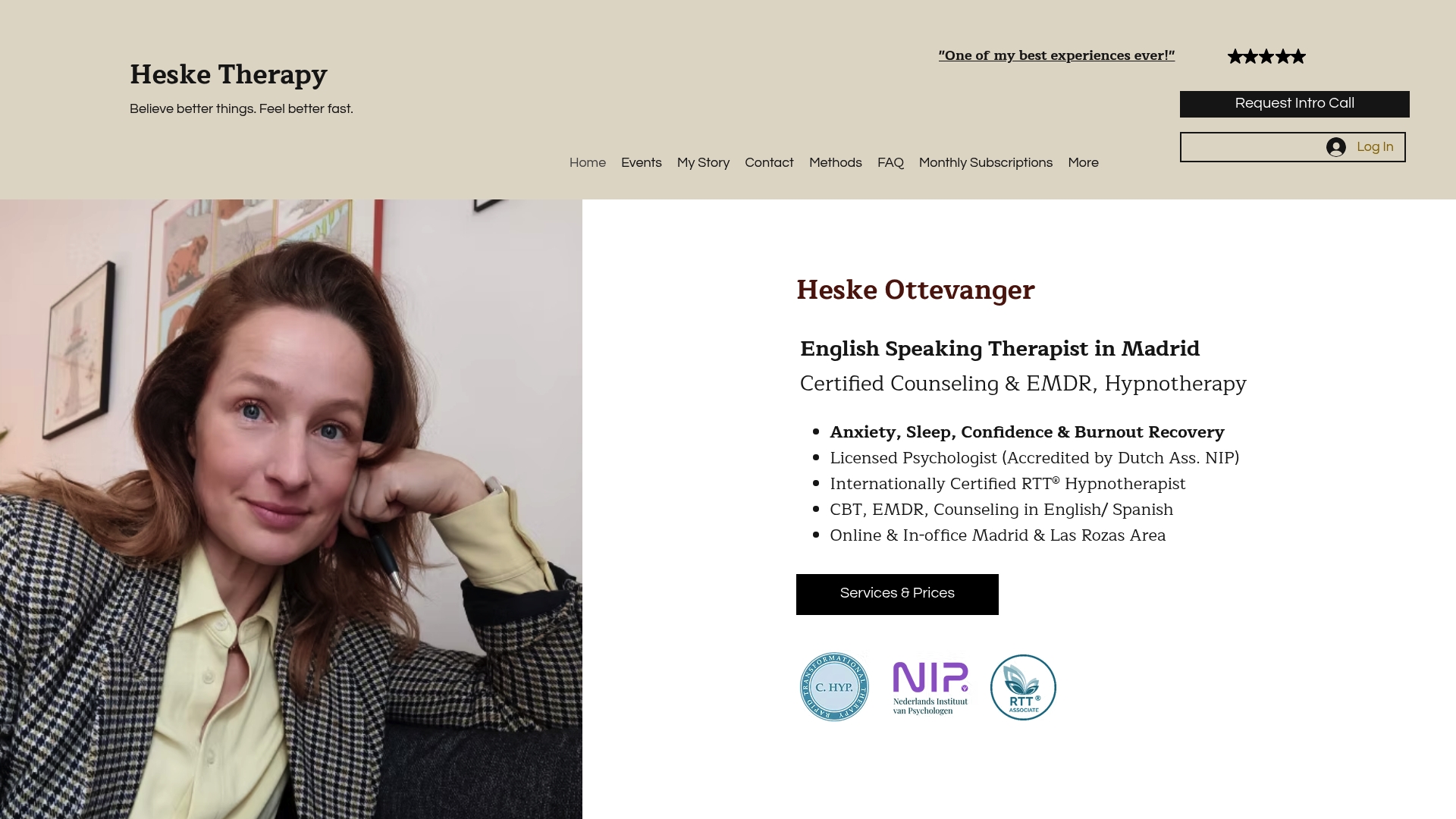
Whether you’re dealing with the stress of relocation, processing trauma, or managing anxiety, integrative therapy in Madrid offers personalized treatment plans designed for your unique situation. You can book counseling services online for convenient access to support, or explore resources like self hypnosis relaxation to complement your therapeutic work.
Key features that set culturally informed therapy apart:
Multilingual capacity in English, Spanish, and Dutch
Specialized expertise in expatriate mental health challenges
Flexible online and in-office sessions
Integrative approaches tailored to individual needs
Proven track record with international clients
How do testimonials impact therapy choices for expats?
Why do testimonials reduce uncertainty for expats seeking therapy?
Testimonials provide social proof that bridges the gap between clinical descriptions and real experiences. When you’re unfamiliar with Madrid’s healthcare system, reading about others’ successful therapy experiences reduces the perceived risk of making a wrong choice. This is especially powerful for expatriates who may feel isolated or uncertain about local resources.
How can I verify if a testimonial is authentic?
Check for specific details about the therapeutic process, verify the testimonial appears on third-party platforms, and look for a range of experiences rather than exclusively perfect reviews. Authentic testimonials typically mention both challenges and progress, use natural language, and provide enough detail to understand what actually happened in therapy.
Do testimonials actually affect therapy outcomes or just selection?
Testimonials primarily influence selection, but this indirectly impacts outcomes. When you choose a therapist whose approach aligns with your needs, based partly on testimonial insights, you’re more likely to stay engaged and complete treatment. Research shows this preference matching produces measurable improvements in satisfaction and clinical results.
Why is cultural relevance important in therapy testimonials for expats?
Cultural relevance signals that a therapist understands the unique challenges of living abroad, including language barriers, cultural adjustment stress, and the isolation many expatriates experience. Testimonials mentioning these factors help you identify therapists with demonstrated competence in expatriate mental health, not just general clinical skills.
What’s the best way to use testimonials alongside professional advice?
Use testimonials as an initial filter to identify promising therapists, then schedule discovery calls or consultations to confirm fit. Testimonials reveal patterns and client experiences, but direct conversation lets you assess chemistry and ask specific questions about your situation. For comprehensive guidance, explore resources on therapy for international clients to understand what culturally informed care looks like in practice.
Recommended
Comments