Role of RTT in Anxiety: Fast Relief Explained

Adjusting to life in Madrid can stir up unexpected waves of anxiety, especially when far from familiar support systems. For many expatriates, the search for truly effective relief feels endless. Rapid Transformational Therapy offers a fast, tailored way to address anxiety by targeting its subconscious roots rather than just managing surface symptoms. You will discover how this innovative method blends proven psychological techniques to help you break free from old emotional patterns and feel more at home within yourself.
Table of Contents
Key Takeaways
Point | Details |
Rapid Transformational Therapy (RTT) | RTT is a unique therapy that addresses the subconscious origins of emotional distress instead of merely managing symptoms. |
Neuroplasticity in RTT | The therapy utilizes neuroplasticity to help clients rewire negative emotional responses rapidly. |
Benefits for Expatriates | RTT effectively supports expatriates in navigating emotional challenges related to cultural adaptation and isolation. |
Open Mind Requirement | An open mind and willingness to explore subconscious patterns are essential for achieving meaningful transformation through RTT. |
Rapid Transformational Therapy Defined
Rapid Transformational Therapy (RTT) represents a revolutionary approach to mental health treatment that goes far beyond traditional therapeutic methods. Developed by renowned therapist Marisa Peer, this innovative technique combines multiple psychological approaches to create profound and lasting transformational change.
At its core, RTT is a neuroplasticity-based therapeutic method that focuses on uncovering and reframing the subconscious root causes of emotional challenges. Unlike traditional talk therapies that might spend years exploring surface-level symptoms, RTT aims to identify and rapidly transform deep-seated negative beliefs and emotional patterns.
Key characteristics of RTT include:
Integration of multiple therapeutic techniques
Focus on neuroplasticity and brain rewiring
Rapid identification of subconscious emotional blocks
Personalized approach targeting individual psychological patterns
Emphasis on creating new, positive neural pathways
RTT operates on a fundamental principle: many of our emotional challenges originate from deeply embedded subconscious beliefs formed during childhood or through significant life experiences. By accessing these root causes through specialized hypnotherapy techniques, RTT enables individuals to understand, challenge, and ultimately transform limiting beliefs that have been holding them back.
Pro tip: When considering RTT, approach the therapy with an open mind and willingness to explore your subconscious patterns, as this approach requires active participant engagement and psychological openness.
How RTT Addresses Root Causes of Anxiety
Rapid Transformational Therapy (RTT) takes a unique approach to understanding and treating anxiety by diving deep into the subconscious mind. Unlike traditional therapies that merely manage symptoms, RTT seeks to uncover the hidden origins of anxious responses through targeted psychological exploration.
At the core of RTT’s methodology is the recognition that anxiety often stems from deeply embedded emotional patterns formed during early life experiences. These patterns can originate from childhood traumas, persistent criticism, or negative experiences that create automatic fear responses. By accessing the subconscious through specialized hypnotherapy techniques, RTT helps individuals identify and transform these root emotional triggers.
Key strategies RTT employs to address anxiety’s root causes include:
Identifying subconscious belief systems that perpetuate anxiety
Reframing negative childhood experiences and interpretations
Developing new, empowering neural pathways
Breaking automatic stress response cycles
Replacing limiting beliefs with constructive psychological frameworks
Neuroplasticity plays a crucial role in RTT’s approach. By helping clients understand how their brain has learned to respond with anxiety, the therapy enables the creation of new, healthier mental pathways. This process goes beyond traditional talk therapy by directly reprogramming the subconscious mind, allowing individuals to fundamentally restructure their emotional responses.
Anxiety is not a permanent state, but a learned response that can be unlearned and transformed.
Pro tip: During RTT sessions, remain open and curious about your inner emotional landscape, as genuine self-discovery is key to meaningful psychological transformation.
RTT Session Stages and What to Expect
A typical Rapid Transformational Therapy (RTT) session is a carefully structured journey designed to provide comprehensive emotional healing. RTT therapy sessions typically last between 90 to 120 minutes and involve a deeply personalized approach to uncovering and transforming psychological challenges.

The RTT process is divided into several critical stages, each serving a specific purpose in helping clients break through emotional barriers. These stages are meticulously crafted to guide individuals from understanding their subconscious patterns to creating lasting psychological transformation.
Key stages of an RTT session include:
Initial consultation and background assessment
Hypnotic induction and deep relaxation
Regression to identify root emotional causes
Reframing negative beliefs and experiences
Establishing new empowering psychological narratives
Integration and future-focused healing techniques
Emotional exploration represents the most profound aspect of RTT. During the session, clients enter a state of focused relaxation that allows direct communication with the subconscious mind. This unique approach enables individuals to access memories, experiences, and belief systems that typically remain hidden during traditional talk therapy.
Here’s how RTT session stages support emotional transformation:
RTT Stage | Main Activity | Impact on Client |
Initial Consultation | Personal history review and goal setting | Builds trust and focus |
Hypnotic Induction & Relaxation | Guided relaxation, entering subconscious state | Enhances self-awareness |
Regression to Root Causes | Access and explore key emotional memories | Uncovers triggers |
Reframing & New Narratives | Transform old beliefs and reinterpret experiences | Fosters positive change |
Integration & Future Techniques | Practice new mental habits, plan for future situations | Maintains transformation |
RTT transforms emotional challenges by addressing their deepest psychological origins, not just surface-level symptoms.
Pro tip: Approach your RTT session with an open mind and willingness to explore your inner emotional landscape, as genuine vulnerability is the gateway to meaningful psychological transformation.
Comparing RTT to Traditional Anxiety Therapies
Where traditional therapies often focus on managing anxiety symptoms, Rapid Transformational Therapy (RTT) takes a radically different approach by targeting the psychological roots of emotional distress. Anxiety treatment methods can vary widely, but RTT distinguishes itself through its comprehensive and transformative methodology.
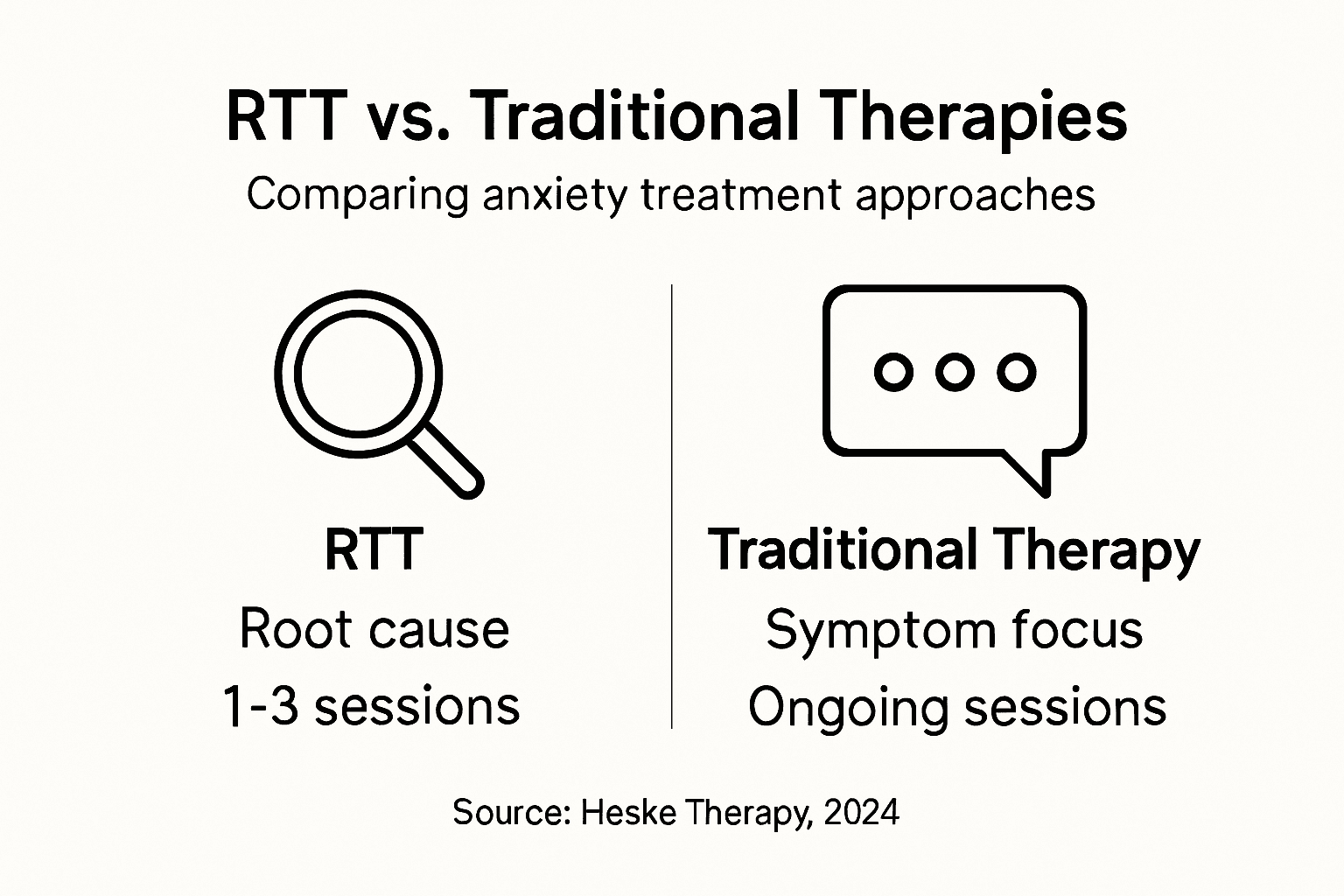
Traditional therapeutic approaches like Cognitive Behavioral Therapy (CBT) and talk therapy typically involve long-term treatment cycles that focus on symptom management and coping strategies. In contrast, RTT aims to create rapid, lasting change by directly addressing the subconscious patterns and belief systems that generate anxiety in the first place.
Key differences between RTT and traditional anxiety therapies include:
Depth of psychological exploration
Speed of therapeutic intervention
Focus on root cause versus symptom management
Utilization of hypnotherapy techniques
Personalized neurological reprogramming
Emphasis on immediate emotional transformation
Neurological reprogramming represents the most significant distinction between RTT and conventional therapies. While traditional methods may require months or years of consistent treatment, RTT seeks to create fundamental psychological shifts in just a few sessions. This approach leverages the brain’s neuroplasticity to rewire deep-seated emotional responses more efficiently and effectively.
Here’s a quick reference comparing RTT and traditional therapy for anxiety:
Aspect | RTT Approach | Traditional Therapy Approach |
Focus | Subconscious transformation | Symptom management |
Typical Duration | 1-3 sessions per issue | 10+ sessions over months |
Method | Hypnotherapy, regression, reframing | Talk therapy, CBT, psychoeducation |
Outcome Speed | Rapid, often noticeable immediately | Gradual, may take longer |
Traditional therapy treats symptoms; RTT transforms the underlying psychological landscape.
Pro tip: When considering anxiety treatment, prioritize approaches that address the root cause rather than simply managing surface-level symptoms.
Benefits, Risks, and Suitability for Expats
Rapid Transformational Therapy (RTT) offers unique advantages for expatriates navigating complex emotional landscapes. Therapy methods for international professionals must address the distinctive challenges of living abroad, and RTT emerges as a particularly effective approach for those experiencing anxiety, cultural adaptation stress, and psychological disruption.
Expats often face unique psychological challenges that traditional therapies struggle to address quickly. RTT provides a targeted, efficient solution by rapidly identifying and transforming the root causes of emotional distress, making it especially valuable for individuals experiencing frequent geographical and cultural transitions.
Benefits of RTT for expats include:
Rapid emotional transformation
Remote session capabilities
Personalized approach to cultural adaptation
Quick relief from isolation and transition-related anxiety
Overcoming language and cultural therapeutic barriers
Flexible and accessible mental health support
Psychological resilience becomes crucial for expatriates, and RTT’s approach directly supports this need. By addressing subconscious patterns that generate stress and anxiety, the therapy enables individuals to develop more adaptive emotional responses to challenging international experiences.
Expat mental health requires innovative, flexible approaches that traditional therapies often cannot provide.
Pro tip: When considering therapy as an expat, prioritize methods that can be conducted remotely and offer rapid, personalized interventions.
Discover Fast Relief from Anxiety with RTT at Heske Therapy
If anxiety feels like a constant weight holding you back, Rapid Transformational Therapy (RTT) offers a remarkable path to uncover and transform the subconscious roots of your stress and fear. This therapy focuses precisely on reframing deep-seated emotional blocks and rewiring your brain through neuroplasticity, delivering rapid and lasting relief. For expatriates and international clients facing the unique pressures of cultural adjustment and emotional challenges, RTT provides a powerful and personalized solution.
At Heske Therapy, we specialize in integrative approaches that include RTT alongside CBT, EMDR, and hypnotherapy tailored to your needs. Our expert therapists provide sessions both online and in our Madrid clinic, making it easy for you to access effective care. Learn more about how our therapy methods help you break free from anxiety and reclaim your emotional wellbeing.
Step into a new chapter of healing today with Heske Therapy.
Experience transformative anxiety relief now.
Ready to leave anxiety behind and regain control? Visit Heske Therapy to schedule your free discovery call and start your personalized RTT journey. Explore the detailed benefits and session process on our Rapid Transformational Therapy guide and see why so many expatriates trust us for fast, compassionate mental health care.
Frequently Asked Questions
How does Rapid Transformational Therapy (RTT) help with anxiety?
RTT helps with anxiety by uncovering and reframing the subconscious root causes of emotional challenges, allowing individuals to identify and transform limiting beliefs that generate anxiety responses.
What can I expect during an RTT session for anxiety?
During an RTT session for anxiety, you can expect a structured process that includes a consultation, hypnotic induction, regression to identify root causes, reframing negative beliefs, and techniques for future integration and healing.
How long does it take to see results from RTT for anxiety?
Many clients experience rapid, noticeable changes in just a few RTT sessions, often within 1 to 3 sessions, allowing for a quicker emotional transformation compared to traditional therapies.
What makes RTT different from traditional anxiety therapies?
RTT differs from traditional therapies by focusing on the subconscious roots of anxiety rather than just managing symptoms, utilizing hypnotherapy techniques for immediate emotional transformation and neurological reprogramming.
Recommended
Comments