Role of Trauma-Focused Therapy in Emotional Healing

Feeling stuck in old emotional patterns is a common struggle for English-speaking expatriates in Madrid dealing with trauma. Adjusting to life abroad while wrestling with unresolved memories can make everyday challenges seem overwhelming. Trauma-focused therapies like RTT and EMDR offer evidence-based techniques proven to reduce PTSD symptoms and promote lasting recovery. This guide breaks down how rapid, effective trauma therapy methods help you regain emotional balance, so you can thrive in your new environment.
Table of Contents
Key Takeaways
Point | Details |
Trauma-Focused Therapy (TFT) is specialized | TFT targets trauma memories through evidence-based techniques to facilitate emotional healing. |
Evidence supports effectiveness | Research shows significant improvement in PTSD symptoms when therapies are delivered in supportive environments. |
Personalized treatment is crucial | Each individual’s healing journey is unique, requiring tailored therapeutic approaches based on specific emotional needs. |
Cultural considerations matter for expats | Selecting a therapist with cultural competence and language flexibility is essential for effective trauma therapy abroad. |
Trauma-Focused Therapy Defined and Debunked
Trauma-Focused Therapy (TFT) represents a specialized psychological intervention designed to address the complex emotional aftermath of traumatic experiences. Unlike traditional counseling approaches, TFT directly targets trauma memories and their psychological impact, utilizing evidence-based techniques that help individuals process and heal from deeply distressing events.
At its core, TFT encompasses several specialized therapeutic methodologies, including:
Trauma-Focused Cognitive Behavioral Therapy (TF-CBT): A structured approach helping patients reframe traumatic memories
Eye Movement Desensitization and Reprocessing (EMDR): A technique using bilateral stimulation to process traumatic memories
Prolonged Exposure Therapy: Gradually helping patients confront trauma-related memories and situations
Recent research highlights that trauma-focused therapies demonstrate significant effectiveness for treating post-traumatic stress disorder, particularly when delivered in safe, supportive therapeutic environments. Despite initial patient concerns about potential emotional distress, systematic studies reveal substantial symptom improvement and long-term healing potential.
Contrary to common misconceptions, trauma therapy is not about reliving painful experiences but strategically processing them to reduce their psychological grip. Patients often experience initial ambivalence, but with professional guidance, they can transform traumatic memories from overwhelming emotional burdens into manageable life experiences.
Pro tip: Work closely with a trauma-informed therapist who can customize treatment approaches to your unique emotional landscape and healing needs.
Key Methods: RTT, EMDR, CBT, and Counseling
Trauma therapy encompasses several sophisticated approaches designed to help individuals process and heal from deeply distressing experiences. Trauma-focused psychotherapy methods offer diverse strategies for addressing emotional wounds and supporting recovery across different psychological landscapes.
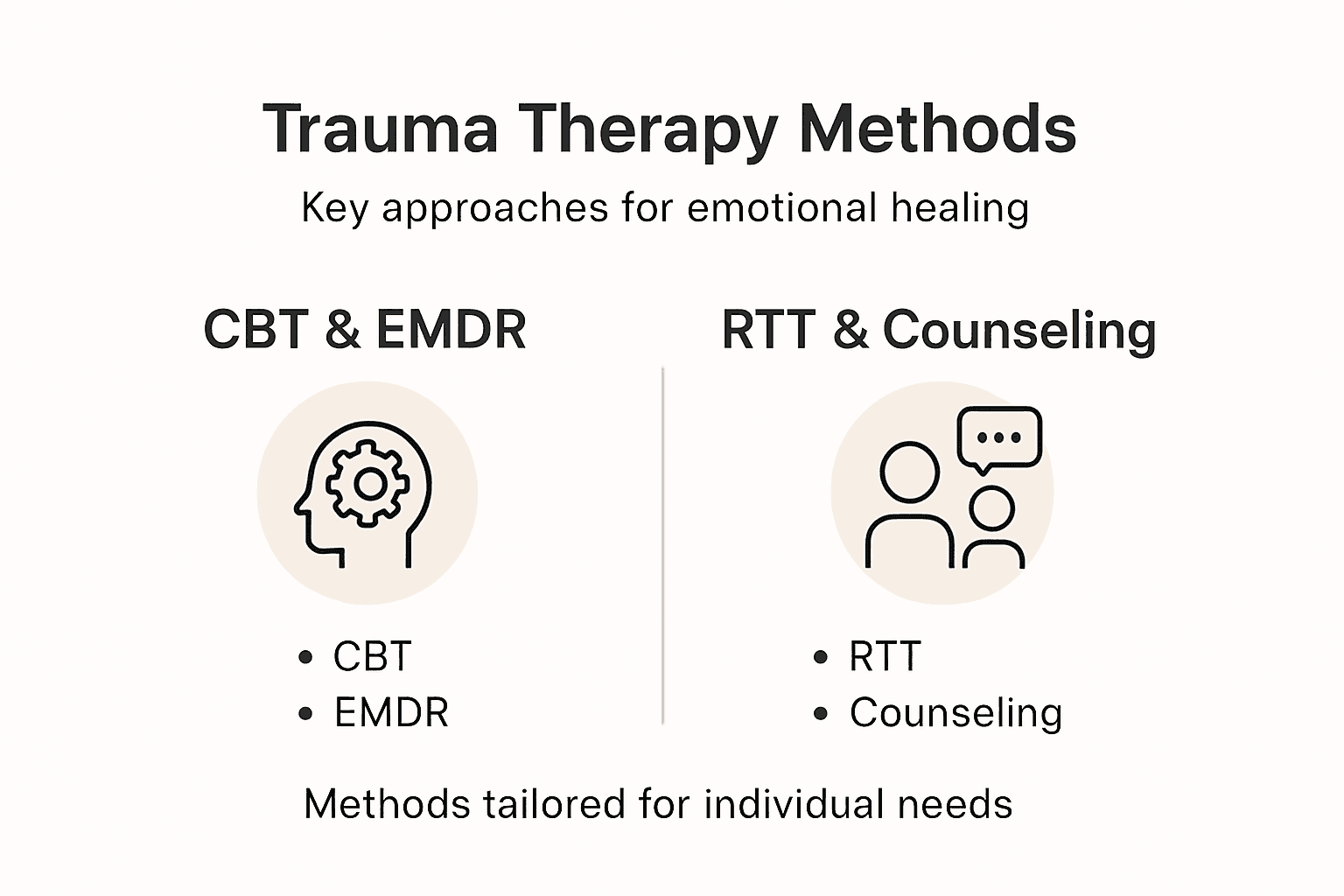
The primary trauma therapy methods include:
Cognitive Behavioral Therapy (CBT): Restructures negative thought patterns related to traumatic experiences
Eye Movement Desensitization and Reprocessing (EMDR): Uses bilateral stimulation to process traumatic memories
Rapid Transformational Therapy (RTT): A holistic approach addressing subconscious trauma responses
Counseling: Provides supportive environment for emotional exploration and healing
Each therapeutic approach offers unique benefits. CBT focuses on identifying and transforming maladaptive cognitive patterns, while EMDR helps patients reprocess traumatic memories through specialized techniques. Rapid Transformational Therapy combines elements of hypnotherapy and cognitive behavioral strategies to address deep-seated emotional blocks, and traditional counseling provides a compassionate framework for understanding and integrating traumatic experiences.

Here’s a quick comparison of core trauma therapy methods and their primary benefits:
Method | Unique Focus | Best For |
TF-CBT | Reframing trauma thoughts | Children and adolescents |
EMDR | Processing memories with bilateral stimulation | PTSD and complex trauma |
Prolonged Exposure | Gradual memory confrontation | Overcoming avoidance habits |
RTT | Subconscious reprogramming | Deep-rooted emotional blocks |
Counseling | Emotional exploration | General support and integration |
Professional trauma therapy is not about reliving pain, but about transforming your relationship with past experiences.
Understanding these methods helps patients choose the most appropriate therapeutic approach for their individual healing journey. Some individuals might benefit from a combination of techniques, highlighting the importance of personalized treatment plans tailored to specific emotional needs.
Pro tip: Consult with a trauma-informed therapist to determine which therapeutic approach best matches your unique emotional landscape and healing goals.
How Trauma Therapy Supports Lasting Recovery
Trauma therapy is a transformative journey that goes beyond temporary symptom management, focusing instead on comprehensive emotional healing and long-term psychological resilience. Trauma-focused psychotherapy contributes to sustained recovery by addressing the complex psychological consequences of traumatic experiences and enabling adaptive functioning.
The recovery process involves several critical stages:
Stabilization: Creating emotional safety and developing coping mechanisms
Memory Processing: Gradually integrating and reframing traumatic experiences
Symptom Reduction: Decreasing anxiety, depression, and PTSD-related symptoms
Functional Restoration: Rebuilding personal and professional life capabilities
Therapy supports lasting recovery by providing a structured approach to emotional healing. Patients learn to transform their relationship with past traumas, developing resilience and new neurological pathways that replace old, harmful patterns. The therapeutic process helps individuals move from survival mode to a state of empowerment, where traumatic memories no longer control their emotional landscape.
Healing is not about erasing the past, but about changing your relationship with it.
Understanding that recovery is a personal and nonlinear journey is crucial. Some individuals may experience rapid improvements, while others require more time and patience. The goal is not perfection, but progressive healing and increased emotional flexibility.
Pro tip: Commit to consistent therapy sessions and be patient with your healing process, recognizing that each small step contributes to significant long-term transformation.
Common Myths and Pitfalls to Avoid
Trauma therapy is surrounded by numerous misconceptions that can prevent individuals from seeking the healing they desperately need. Trauma therapy myths often impede recovery efforts, creating unnecessary barriers to emotional healing and personal transformation.
Common myths and pitfalls include:
Myth: Trauma therapy is too painful and retraumatizing
Reality: Professional therapy creates a safe environment for healing
Myth: Only severe trauma requires professional intervention
Reality: All traumatic experiences can benefit from therapeutic support
Myth: Talking about trauma will make things worse
Reality: Controlled processing helps reduce emotional burden
Pitfall: Expecting immediate or linear recovery
Reality: Healing is a complex, personal journey with ups and downs
Many individuals mistakenly believe that confronting traumatic memories will destroy their emotional stability. However, professional trauma therapy actually provides structured methods to process these experiences safely. Therapists use specialized techniques that help patients build emotional resilience, transforming painful memories from overwhelming burdens into manageable experiences.
Healing is not about forgetting, but about understanding and reclaiming your power.
Understanding that trauma therapy is a collaborative and personalized process is crucial. No single approach works for everyone, and effective treatment requires patience, trust, and a willingness to engage in the healing journey. Therapists work closely with patients to develop individualized strategies that respect their unique emotional landscape.
Pro tip: Be honest with your therapist about your fears and expectations, creating a transparent partnership that supports your healing process.
Choosing the Right Therapy as an Expat
Navigating trauma therapy as an expatriate presents unique challenges that require careful consideration and strategic planning. Trauma therapy for expats demands specialized approaches that account for cultural complexity, language barriers, and international accessibility.
Critical factors in selecting the right therapy include:
Cultural Competence: Finding a therapist who understands international experiences
Language Flexibility: Ensuring comfortable communication in your primary language
Delivery Methods: Evaluating in-person and telehealth options
Treatment Evidence: Choosing therapies with global research support
Personal Comfort: Matching therapeutic approach to individual healing style
Expatriates often face additional psychological complexities beyond traditional trauma responses. The stress of cultural transition, potential isolation, and navigating unfamiliar healthcare systems can compound emotional challenges. Professional trauma therapists specializing in expatriate experiences understand these nuanced dynamics, offering tailored interventions that respect individual cultural backgrounds.
Below is a summary of key considerations when selecting a trauma therapist as an expat:
Consideration | Why It Matters | What to Look For |
Cultural Competence | Navigates cultural nuances | Prior expat counseling expertise |
Language Support | Eases communication stress | Fluency in your native language |
Therapy Access | Supports continuity of care | Telehealth and flexible sessions |
Evidence Base | Ensures effectiveness | Adoption of proven therapies |
Healing transcends geographical boundaries when therapy is approached with cultural sensitivity and personal understanding.
Understanding that no single therapeutic approach works universally is crucial. Each expatriate’s trauma journey is unique, influenced by personal history, cultural context, and individual resilience. Flexibility and openness to exploring different therapeutic methods can significantly enhance the healing process.
Pro tip: Schedule initial consultations with multiple therapists to assess their cultural competence and personal connection before committing to a long-term therapeutic relationship.
Discover Lasting Emotional Healing with Expert Trauma-Focused Therapy
The emotional burden of trauma can feel overwhelming, but with the right support, you can transform your relationship with past experiences. This article highlights the power of trauma-focused therapy methods like Rapid Transformational Therapy (RTT), EMDR, and Cognitive Behavioral Therapy (CBT) to help you process and heal from deep emotional wounds. At Heske Therapy, we specialize in providing personalized trauma therapy tailored to the unique challenges faced by English-speaking expatriates and international clients in Madrid. Our integrative approach addresses your specific pain points such as anxiety, emotional blocks, and low self-esteem, supporting your journey to resilience and renewed well-being.
Take control of your healing journey today. Experience culturally sensitive care delivered both online and in-office by expert therapists who understand the complexities of trauma and expatriate life. Learn how our treatments can create rapid and lasting change by visiting Heske Therapy for detailed information on our techniques. Explore our therapy methods and see how we can help you regain emotional balance and strength.
Start your path toward emotional freedom now by scheduling a free discovery call. You do not have to face trauma alone. Let our compassionate, results-driven team guide you every step of the way.
[Image:cta_image]
Begin healing with personalized trauma therapy designed for your unique needs at Heske Therapy. Reach out today and take the first step for lasting recovery.
Frequently Asked Questions
What is trauma-focused therapy?
Trauma-focused therapy is a specialized psychological intervention aimed at healing the emotional aftermath of traumatic experiences by using evidence-based techniques to process trauma memories.
How does trauma-focused therapy support recovery?
Trauma-focused therapy supports recovery by addressing the psychological consequences of trauma, helping individuals stabilize emotions, process memories, reduce symptoms, and restore functional capabilities in their lives.
What are the common methods used in trauma-focused therapy?
Common methods include Trauma-Focused Cognitive Behavioral Therapy (TF-CBT), Eye Movement Desensitization and Reprocessing (EMDR), Prolonged Exposure Therapy, and Rapid Transformational Therapy (RTT), each offering unique benefits for emotional healing.
Are there any myths about trauma therapy that people should know?
Yes, common myths include the belief that trauma therapy is too painful, that only severe trauma requires intervention, and the misconception that talking about trauma will make things worse. In reality, trauma therapy aims to create a safe environment for healing and processing emotional burdens.
Recommended
Comments