Trauma Healing Techniques: RTT Cuts Sessions by 70% for Expats

Living in Madrid as an expat, you face unique challenges when seeking trauma therapy that truly works fast. Many English-speaking expatriates struggle to find culturally appropriate mental health care that delivers rapid results without months of weekly appointments. Rapid Transformational Therapy offers a breakthrough: healing in just 1-3 sessions compared to traditional methods requiring 12-20 visits. This guide walks you through the most effective trauma healing techniques available to expats in Madrid, helping you choose the right approach for your specific needs.
Table of Contents
Key Takeaways
Point | Details |
RTT delivers rapid results | RTT achieves significant trauma relief in 1-3 sessions, ideal for busy expat schedules. |
EMDR is clinically endorsed | EMDR receives support from APA and WHO for PTSD treatment, typically requiring 6-12 sessions. |
CBT restructures thought patterns | CBT effectively addresses trauma-related anxiety and depression through cognitive skill development over longer timeframes. |
Hypnotherapy complements primary therapies | Meta-analytic research confirms hypnosis reduces anxiety and PTSD symptoms when combined with other treatments. |
Therapy choice depends on trauma complexity | Match your therapy to trauma type, desired speed, and availability of English-speaking practitioners in Madrid. |
How to Choose the Right Trauma Healing Technique
Choosing the right trauma therapy requires understanding several practical factors that directly impact your healing journey. Session count matters enormously for expats balancing demanding careers and international relocations. Some therapies demand weekly visits for months, while others compress healing into a few intensive sessions.
Trauma type significantly influences therapy selection. PTSD from a single traumatic event responds differently than complex trauma from prolonged childhood experiences. Anxiety stemming from trauma needs different tools than depression or physical symptoms like chronic pain.
Language and cultural compatibility cannot be overlooked. Working through trauma requires deep emotional expression, which becomes exponentially harder in a second language. English-speaking therapists who understand expat challenges create safer healing spaces. Finding trauma therapy options for expats in Madrid that match your cultural background accelerates progress.
Integrative approaches offer flexibility by combining multiple evidence-based techniques. Rather than forcing you into a single therapeutic box, skilled practitioners blend methods to address your unique trauma presentation. This personalized care acknowledges that healing rarely follows a linear, one-size-fits-all path.
Consider these selection criteria:
Session frequency and total duration commitment
Specific trauma symptoms you want to address
Preference for talk therapy versus experiential techniques
Availability of qualified English-speaking practitioners
Budget and insurance coverage for different therapy types
Pro Tip: Schedule discovery calls with 2-3 therapists offering different approaches. Notice which practitioner makes you feel most understood and which method resonates with your healing style.
Rapid Transformational Therapy (RTT): Fast Root-Cause Healing
Rapid Transformational Therapy combines hypnotherapy, cognitive behavioral techniques, and neuro-linguistic programming into a powerful integrated method. Unlike traditional talk therapy that explores problems over many months, RTT targets the subconscious root causes of trauma in concentrated sessions.
The therapy works by accessing deeply held beliefs formed during traumatic experiences. These limiting beliefs operate below conscious awareness, driving emotional reactions and behavioral patterns that keep you stuck. Through guided hypnosis, RTT identifies the original trauma scene where these beliefs formed, then systematically rewrites them.
RTT typically achieves results within 1-3 sessions, compared to longer durations for traditional therapies. This efficiency makes it particularly attractive for expats who need rapid relief without endless appointments. Many clients report significant symptom reduction after a single two-hour session.

The method addresses trauma at multiple levels simultaneously. Hypnotherapy accesses subconscious material, CBT components restructure thinking patterns, and NLP techniques anchor new empowering beliefs. This multi-pronged approach explains why changes often feel more profound and lasting than single-modality treatments.
RTT proves especially effective for:
Anxiety and panic attacks stemming from past trauma
Low self-esteem and confidence issues rooted in childhood experiences
Emotional blocks preventing relationship intimacy
Physical manifestations like IBS, migraines, or chronic pain
Fear-based behaviors limiting career or personal growth
Pro Tip: RTT requires active participation between sessions. You’ll receive a personalized audio recording to listen to daily for 21 days, reinforcing the new beliefs established during your session. Commit to this daily practice for optimal results.
Expats pressed for time or seeking intensive breakthroughs often prefer RTT therapy for trauma healing over extended weekly therapy. The compressed timeline fits international lifestyles while delivering deep subconscious transformation. Many practitioners now offer RTT for anxiety relief through online sessions, expanding access for English speakers worldwide.
Eye Movement Desensitization and Reprocessing (EMDR): Evidence-Based Trauma Reprocessing
EMDR uses bilateral stimulation through eye movements, taps, or sounds to help your brain reprocess traumatic memories. The therapy rests on the premise that trauma gets stuck in memory networks, causing ongoing distress when triggered. Bilateral stimulation activates both brain hemispheres, allowing proper processing and integration.
During EMDR sessions, you briefly focus on traumatic memories while simultaneously tracking therapist-guided eye movements. This dual attention reduces emotional intensity attached to memories. Over successive sessions, traumatic memories lose their overwhelming charge and become integrated as neutral past events.
EMDR receives recognition globally as effective trauma treatment with support from the American Psychological Association and WHO, showing rapid symptom reduction in PTSD and anxiety. Multiple randomized controlled trials demonstrate its effectiveness for single-incident and complex trauma. Remarkably, EMDR proved superior to Prozac medication in reducing PTSD symptoms long-term.
The therapy typically requires 6-12 sessions for significant symptom reduction, making it faster than many traditional approaches but slower than RTT. EMDR works best for clients with identifiable traumatic memories they can target. It requires less verbal processing than talk therapy, appealing to those who struggle articulating trauma experiences.
EMDR addresses:
PTSD from accidents, assault, or combat
Phobias and panic disorders
Anxiety and depression following trauma
Grief and loss complications
Performance anxiety and emotional blocks
Many expats find EMDR therapy overview helpful for understanding the process before beginning. The structured protocol provides clear stages from history-taking through reprocessing to integration. This predictability appeals to analytically-minded clients who want to understand their treatment.
For EMDR trauma recovery, finding a certified practitioner ensures proper training in the eight-phase protocol. While EMDR appears deceptively simple, skilled application requires understanding trauma neurobiology and proper memory targeting.
Cognitive Behavioral Therapy (CBT): Restructuring Thoughts and Behaviors
Cognitive Behavioral Therapy focuses on the interconnected cycle between thoughts, emotions, and behaviors. Trauma creates maladaptive thinking patterns like catastrophizing, overgeneralization, or black-and-white thinking. These distorted thoughts fuel anxiety and depression while driving avoidance behaviors that maintain trauma symptoms.
CBT teaches you to identify automatic negative thoughts, examine evidence for and against them, and develop balanced alternative perspectives. Through structured exercises and homework assignments, you practice new thinking patterns until they become automatic. Behavioral components involve gradually facing avoided situations to reduce fear responses.
The therapy demonstrates strong evidence for trauma-related anxiety and depression. Hundreds of randomized trials support CBT’s effectiveness across diverse populations and trauma types. However, CBT generally requires more sessions and longer commitment than RTT or EMDR, often spanning 12-20 weekly appointments.
CBT works best for motivated clients willing to complete between-session homework. The skills-based approach demands active participation in tracking thoughts, challenging beliefs, and practicing new behaviors. This structured, educational format appeals to logical thinkers who want concrete tools.
CBT develops skills for:
Recognizing and challenging trauma-related thought distortions
Managing anxiety through exposure and response prevention
Building emotional regulation and distress tolerance
Improving problem-solving and communication skills
Preventing relapse through ongoing practice
Many practitioners combine CBT for trauma and anxiety with other modalities for enhanced results. The cognitive restructuring components complement trauma reprocessing methods beautifully. Expats dealing with adjustment stress alongside trauma often benefit from CBT anxiety relief for expats tailored to relocation challenges.
Wondering about different approaches? The CBT vs RTT comparison highlights how RTT targets subconscious roots while CBT addresses conscious thinking patterns. Some clients start with RTT for rapid symptom relief, then use CBT skills for ongoing maintenance.
Hypnotherapy as a Complementary Healing Technique
Hypnotherapy induces a focused state of relaxation where your subconscious mind becomes more receptive to suggestion. In this state, you can access emotional material and memories that conscious thinking keeps blocked. Hypnosis isn’t about losing control or being manipulated. You remain aware and can reject any suggestion that doesn’t align with your values.
For trauma healing, hypnotherapy helps bypass cognitive defenses that protect you from overwhelming emotions. This access allows processing of trauma material stored in implicit memory networks. The relaxed state also reduces physiological arousal, making it safer to approach frightening memories.
Meta-analytic reviews identify hypnosis as effective for anxiety, depression, and PTSD symptom reduction. The research supports hypnotherapy as an evidence-based adjunctive treatment when delivered by qualified practitioners. It enhances outcomes when combined with primary therapies rather than used alone.
RTT incorporates hypnotherapy as a core component for accessing root-cause trauma. CBT sometimes adds hypnotic relaxation for managing anxiety symptoms. EMDR practitioners occasionally use hypnotic techniques to stabilize clients before memory reprocessing.
Hypnotherapy addresses:
Subconscious emotional blocks preventing healing
Somatic trauma symptoms stored in body memory
Self-sabotaging behaviors driven by past experiences
Sleep disturbances and nightmares from trauma
Psychosomatic pain and physical manifestations
Successful hypnotherapy requires skilled, certified practitioners who understand trauma-informed care. Poorly trained hypnotists risk retraumatization by moving too quickly or missing safety protocols. Always verify credentials and trauma specialization.
Expats curious about hypnotherapy benefits for expats find it particularly useful for cultural adjustment stress layered with past trauma. The approach works across languages when practitioners understand your cultural context. Many discover that combining hypnotherapy with other trauma treatments accelerates progress beyond single-method approaches.
Comparing Trauma Healing Techniques: A Quick Reference
Understanding the differences between trauma therapies helps you make informed decisions about your healing path. Each method offers distinct advantages depending on your trauma type, time availability, and personal preferences.
Therapy | Typical Duration | Primary Mechanism | Evidence Base | Best Suited For |
RTT | 1-3 sessions | Subconscious belief transformation via hypnosis + CBT + NLP | Emerging clinical evidence, strong client outcomes | Rapid relief, busy schedules, root-cause healing |
EMDR | 6-12 sessions | Bilateral stimulation reprocesses trauma memories | Strong research support, APA and WHO endorsed | PTSD, complex trauma, identifiable traumatic events |
CBT | 12-20+ sessions | Cognitive restructuring and behavioral modification | Extensive research validation across populations | Anxiety, depression, skill-building, motivated clients |
Hypnotherapy | Varies, adjunctive | Subconscious access through relaxation and suggestion | Meta-analytic support as complementary treatment | Emotional blocks, somatic symptoms, enhancement |
Key differentiators to guide your choice:
Speed matters most: RTT delivers fastest results, often in a single intensive session
Clinical diagnosis of PTSD: EMDR offers gold-standard treatment with strong institutional backing
Prefer structured skill-building: CBT provides concrete tools you can apply independently
Need subconscious access: Hypnotherapy enhances other treatments by addressing implicit memory
Budget and time constraints: RTT maximizes results per session, reducing total investment
Research confirms RTT leads to resolution in 1-3 sessions, EMDR typically requires 6-12, and CBT generally needs more sessions, with hypnotherapy serving as an adjunct. These timelines assume proper diagnosis and skilled practitioners.
The best trauma therapy methods often involve integrating multiple approaches. Starting with RTT for rapid symptom relief, then maintaining progress with CBT skills represents one effective combination. Others begin with EMDR for memory reprocessing, adding hypnotherapy for persistent somatic symptoms.
Expats comparing options benefit from reviewing the detailed RTT vs CBT therapy comparison and understanding RTT versus EMDR differences. Your trauma complexity, healing goals, and lifestyle constraints should drive the decision.
Best Therapy Choices for Specific Trauma and Expat Needs
Matching therapy to your unique situation maximizes healing efficiency while respecting your time and emotional resources. Consider these personalized recommendations:
For rapid symptom relief with minimal time commitment: RTT addresses root causes in 1-3 intensive sessions, perfect for demanding expat careers and frequent travel. Choose RTT when you need significant change quickly without months of weekly appointments.
For diagnosed PTSD or severe complex trauma: EMDR offers clinically validated treatment backed by major mental health organizations. The structured protocol safely processes traumatic memories over 6-12 sessions with less verbal disclosure than traditional therapy.
For trauma-related anxiety and depression requiring skill development: CBT builds cognitive and behavioral tools you’ll use throughout life. Invest in 12-20 sessions when you want structured learning and prefer logical, evidence-based approaches.
For persistent emotional blocks resistant to other treatments: Add hypnotherapy to your primary therapy for deeper subconscious access. This works especially well for somatic symptoms and self-sabotaging patterns that conscious work hasn’t resolved.
For language and cultural sensitivity as a priority: Seek English-speaking therapists for expats who understand international transitions and cultural adjustment stress. Many offer online therapy for expatriates, expanding your options beyond geographic limitations.
Accessibility varies across Madrid. RTT and hypnotherapy practitioners may be fewer than CBT therapists, but online options dramatically expand availability. EMDR requires finding certified practitioners through professional directories.
Your healing timeline matters. RTT suits urgent needs or upcoming life transitions where you need rapid stabilization. EMDR and CBT work better when you can commit to regular weekly sessions over several months. Hypnotherapy flexibility depends on how it’s integrated with your primary treatment.
Explore Tailored Trauma Therapies for Expats in Madrid
Navigating trauma as an English-speaking expat demands specialized care that understands both clinical excellence and cultural sensitivity. You deserve therapists who speak your language literally and figuratively, creating healing spaces where you can process trauma without translation barriers.
Heske Therapy offers exactly this integration. Our psychotherapy methods explained include RTT, EMDR, CBT, and hypnotherapy delivered by practitioners trained in expat challenges. We design personalized treatment plans matching your trauma type, healing timeline, and lifestyle needs.
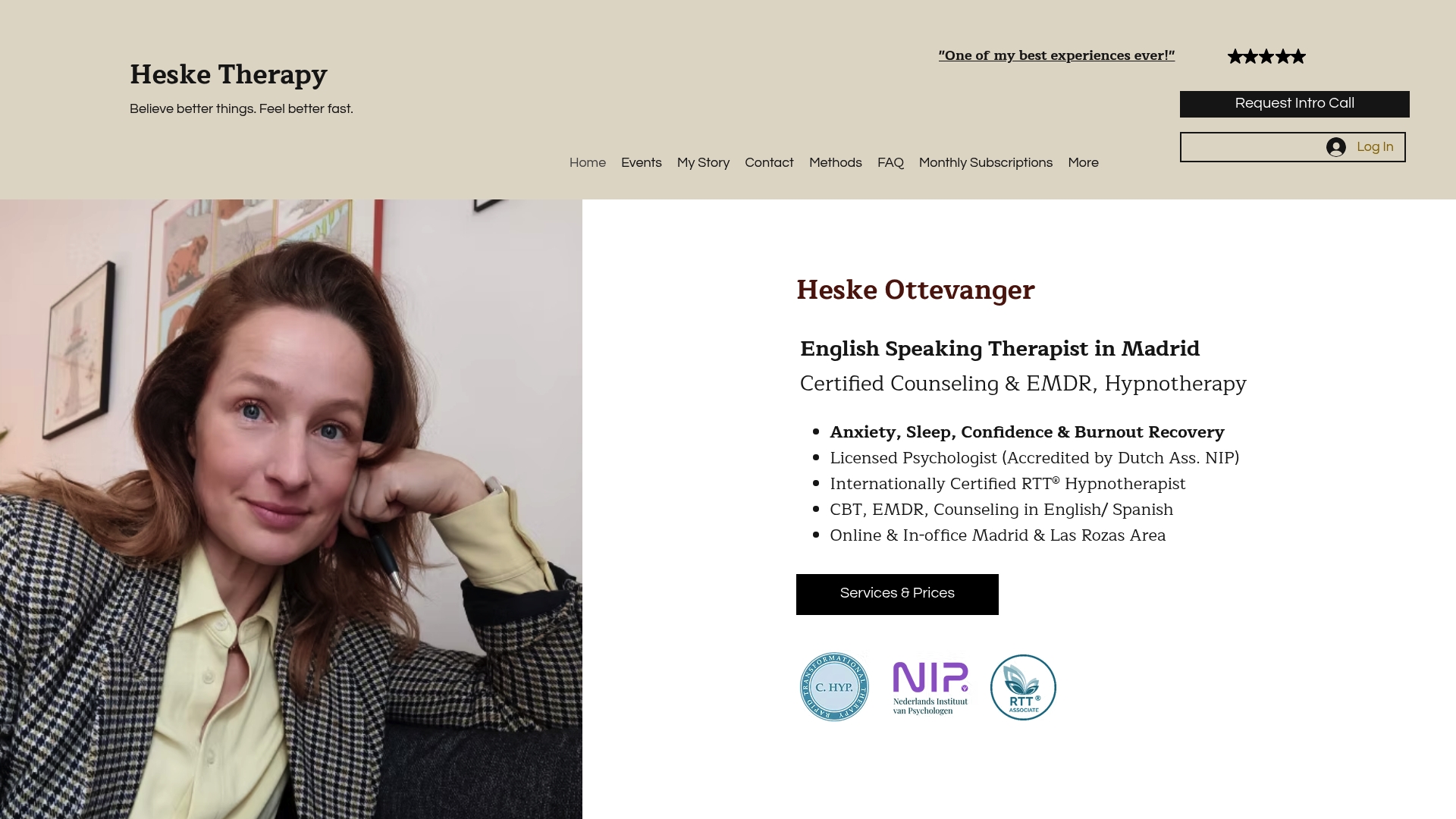
Whether you need the rapid transformation of RTT trauma healing or the structured reprocessing of EMDR therapy, our Madrid-based practice provides both in-person and online options. Your healing journey deserves expert guidance and compassionate care tailored specifically to expatriate experiences.
Frequently Asked Questions
Which trauma healing technique works fastest?
RTT delivers the most rapid results, typically achieving healing within 1-3 sessions compared to other approaches. EMDR usually requires 6-12 sessions for significant PTSD symptom reduction. CBT involves longer commitments of 12-20 sessions for anxiety and depression management. The speed difference reflects each method’s mechanism: RTT targets subconscious roots directly while others work through conscious processing.
Can hypnotherapy be used alone for trauma healing?
Hypnotherapy works most effectively when combined with primary therapies like RTT or CBT rather than as standalone treatment. Meta-analytic evidence supports hypnosis as an adjunct therapy providing significant symptom relief for anxiety, depression, and PTSD. Skilled, qualified practitioners ensure safe and effective application. Think of hypnotherapy as enhancing your primary treatment by accessing deeper subconscious material.
How accessible are these therapies for English-speaking expats in Madrid?
Many Madrid clinics now offer English-speaking therapists in Madrid specializing in RTT, EMDR, and CBT for expat populations. Online trauma therapy for expats dramatically expands your options beyond geographic constraints, ensuring cultural and language compatibility. Heske Therapy specifically caters to English-speaking expatriates with both in-person Madrid sessions and virtual appointments. The growing expat community has driven increased availability of culturally sensitive trauma services.
Which therapy is best for complex trauma versus anxiety from trauma?
EMDR stands as the preferred evidence-based treatment for complex trauma and clinically diagnosed PTSD, with strong endorsements from major mental health organizations. CBT excels at managing ongoing anxiety and depression symptoms following trauma through cognitive restructuring and behavioral skills. RTT effectively addresses both complex trauma roots and anxiety symptoms, especially when rapid results matter most. Your choice depends on symptom severity, diagnosis, and whether you prioritize speed or skill development.
Recommended
Comments