7 Types of Trauma Therapies for Expats in Madrid

Adjusting to life as an expatriate in Madrid can put extra strain on your mental and emotional well-being. When traumatic events or intense transitions disrupt your sense of stability, you might find yourself struggling to cope in unfamiliar ways. The weight of emotional baggage can feel overwhelming, especially when you’re far from familiar support systems.
You are not alone in facing these challenges. Trauma takes many forms and responses, shaped by your personal history, cultural background, and the circumstances you’re living through. The good news is that there are proven therapies and practical methods that can break the cycle of distress and speed your path to recovery.
Get ready for a clear, actionable guide to therapies that specifically address trauma for expats. You will uncover highly effective approaches, each designed to help you regain control, process painful memories, and rediscover emotional balance—right here in Madrid.
Table of Contents
Quick Summary
Takeaway | Explanation |
1. Build a personal support network | Establish connections in Madrid to validate your expatriate experiences and provide emotional support. |
2. Explore Rapid Transformational Therapy (RTT) | RTT offers quick emotional healing, addressing trauma and deep-seated fears efficiently through innovative techniques. |
3. Consider Eye Movement Desensitization and Reprocessing (EMDR) | EMDR helps expats process traumatic memories and rapidly reduces distress related to cultural shock and displacement. |
4. Utilize Cognitive Behavioral Therapy (CBT) | CBT provides practical strategies to reshape negative thought patterns and enhance emotional resilience during transitions. |
5. Seek culturally sensitive counseling | Find counselors with international experience to navigate emotional challenges unique to expatriate life effectively. |
1. Understanding Trauma and Its Impact
Trauma is a complex psychological experience that goes far beyond a single moment of distress. It represents a profound disruption in a person’s ability to process and integrate challenging life events, particularly for expatriates navigating unfamiliar cultural landscapes.
At its core, trauma involves an overwhelming emotional response to a deeply disturbing event or series of events that exceed an individual’s capacity to cope. For expats in Madrid, these experiences might include:
Sudden job loss in a foreign country
Cultural isolation and communication barriers
Unexpected relationship breakdowns
Significant life transitions without local support networks
Experiences of discrimination or marginalization
Research highlights that trauma responses are incredibly nuanced and influenced by individual context. What might be traumatic for one person could be merely challenging for another, depending on personal resilience, past experiences, and available support systems.
Trauma is not defined by the event itself, but by an individual’s internal experience and emotional processing.
Psychologically, trauma can manifest through various symptoms such as:
Intrusive memories or flashbacks
Heightened anxiety and hypervigilance
Emotional numbness or disconnection
Sleep disturbances
Difficulty maintaining professional and personal relationships
Understanding trauma requires recognizing its multifaceted nature. It’s not just about what happened, but how the brain and body continue to react and adapt long after the initial experience.
Pro tip: Create a personal support network in Madrid that understands your unique expatriate experiences and can provide emotional validation and understanding.
2. Rapid Transformational Therapy for Fast Results
Rapid Transformational Therapy (RTT) represents a revolutionary approach to emotional healing that promises swift, targeted results for expats struggling with trauma and emotional challenges in Madrid.
Unlike traditional therapy methods that can span months or years, RTT offers an innovative solution designed to create profound psychological shifts in minimal time. This therapeutic approach integrates multiple psychological techniques to help clients overcome deep-seated emotional blocks quickly.
Key components of RTT include:
Hypnotherapy to access subconscious thought patterns
Cognitive behavioral strategies for reframing negative beliefs
Neuro-linguistic programming techniques for mental reprogramming
Personalized therapeutic interventions tailored to individual experiences
RTT empowers clients to release emotional baggage and transform limiting beliefs in record time.
Unique Benefits for Expats
For international residents navigating complex emotional landscapes, RTT offers several distinct advantages:
Rapid resolution of culture shock related trauma
Quick intervention for anxiety and stress management
Targeted approach to addressing isolation and displacement feelings
Efficient therapeutic process with minimal time investment
The therapy typically involves concentrated sessions where therapists help clients identify root causes of emotional challenges, then implement immediate transformative strategies. Most individuals experience significant breakthroughs within one to three sessions.
Pro tip: Schedule an initial consultation to discuss how Rapid Transformational Therapy can be customized to your specific expatriate experience and emotional needs.
3. EMDR for Processing Distressing Memories
Eye Movement Desensitization and Reprocessing (EMDR) represents a groundbreaking therapeutic approach specifically designed to help individuals process and heal from traumatic memories with remarkable efficiency.
As an innovative treatment method, EMDR offers expats in Madrid a powerful tool for addressing psychological wounds stemming from displacement, cultural shock, and personal challenges. Endorsed by major health organizations worldwide, this therapy provides a unique pathway to emotional recovery.
The core mechanism of EMDR involves:
Bilateral stimulation through guided eye movements
Targeted memory reprocessing techniques
Gentle desensitization of traumatic experiences
Neurological reprogramming of emotional responses
EMDR transforms how the brain stores and interprets distressing memories, enabling faster emotional healing.
Key Benefits for Expatriate Mental Health
For international residents experiencing complex emotional challenges, EMDR offers significant advantages:
Rapid reduction of trauma-related symptoms
Minimal verbal processing requirements
Quick intervention for culture shock experiences
Enhanced emotional resilience and adaptation
Unlike traditional talk therapies, EMDR can dramatically reduce memory distress in just a few sessions. Research indicates that patients often experience substantial improvements after experiencing targeted bilateral stimulation techniques.
Pro tip: Approach EMDR with an open mind and communicate openly with your therapist about your specific expatriate experiences to maximize therapeutic outcomes.
4. CBT for Managing Negative Thought Patterns
Cognitive Behavioral Therapy (CBT) offers expats a powerful toolkit for transforming destructive mental patterns that often emerge during challenging international transitions.
As a scientifically validated approach, CBT provides practical strategies for understanding and reshaping negative thoughts that can undermine emotional well-being and personal effectiveness in a new cultural environment.
CBT focuses on several core principles:
Identifying automatic negative thought patterns
Challenging irrational beliefs
Developing constructive cognitive reframing techniques
Building emotional resilience and adaptive thinking skills
Your thoughts create your reality. CBT helps you reconstruct that reality more positively.
Unique Applications for Expatriate Mental Health
For international residents experiencing psychological challenges, CBT offers specific advantages:
Rapid intervention for adjustment-related anxiety
Practical coping mechanisms for cultural disorientation
Tools for managing stress and emotional uncertainty
Strategies for rebuilding self-confidence in unfamiliar contexts
The therapeutic approach systematically deconstructs negative cognitive distortions that can develop during significant life transitions. By teaching clients to recognize and interrupt unproductive thought cycles, CBT empowers individuals to regain psychological control.
Pro tip: Maintain a daily thought journal to track and gradually reframe negative thinking patterns, creating a structured approach to cognitive transformation.
5. Counseling for Safe Emotional Support
Counseling provides a confidential sanctuary where expats can explore their emotional challenges with professional guidance tailored to their unique international experiences.
In the complex world of expatriate life, trauma-informed counseling approaches offer a critical lifeline for individuals navigating significant psychological transitions.
Key principles of effective counseling include:
Creating a non-judgmental listening environment
Validating individual emotional experiences
Developing personalized coping strategies
Establishing emotional safety and trust
Supporting cultural adaptation and resilience
Counseling is not about fixing you, but about empowering you to heal and grow.
Unique Benefits for International Residents
For expats experiencing emotional challenges, counseling offers critical support through:
Helping process cultural adjustment stress
Addressing feelings of isolation
Managing cross-cultural communication barriers
Building emotional resilience
Navigating complex identity transformations
The therapeutic relationship provides a safe space for emotional exploration where individuals can unpack complex feelings without fear of misunderstanding or stigma.
Pro tip: Select a counselor with international experience who understands the nuanced psychological challenges of expatriate life.
6. Hypnotherapy for Deep Healing and Relaxation
Hypnotherapy offers expats a transformative pathway to healing by accessing deeper levels of consciousness and releasing trapped emotional experiences that traditional therapies might overlook.
By facilitating profound neurological relaxation, hypnotherapy provides a unique approach to processing trauma and reducing psychological distress for international residents navigating complex emotional landscapes.
Key mechanisms of hypnotherapeutic healing include:
Accessing subconscious mental processes
Reducing anxiety and stress responses
Rewiring negative emotional patterns
Creating new cognitive associations
Promoting deep psychological relaxation
Hypnotherapy transforms trauma by speaking directly to the subconscious mind.
Benefits for Expatriate Mental Health
For expats experiencing emotional challenges, hypnotherapy offers significant advantages:
Addressing culture shock psychological impacts
Managing relocation-related stress
Processing unresolved emotional experiences
Developing emotional resilience
Overcoming language and cultural adaptation barriers
The therapeutic approach enables individuals to explore inner emotional landscapes with professional guidance, creating pathways for sustainable psychological healing.
Pro tip: Choose a hypnotherapist with international experience who understands the unique psychological complexities of expatriate life.
7. Integrative Approaches for Personalized Care
Integrative trauma therapy represents a revolutionary approach to healing that recognizes each individual’s unique psychological landscape and crafts treatment plans as distinctive as a fingerprint.
By combining multiple therapeutic modalities strategically, therapists can develop comprehensive treatment strategies that address the multifaceted nature of trauma experienced by expats.
Key components of integrative approaches include:
Blending evidence-based therapeutic techniques
Customizing treatment to individual experiences
Addressing biological and psychological dimensions
Adapting interventions in real-time
Promoting holistic emotional recovery
Personalized care transforms trauma treatment from a one-size-fits-all model to a tailored healing journey.
Advantages for Expatriate Mental Wellness
For international residents navigating complex emotional terrains, integrative therapy offers unique benefits:
Flexible treatment protocols
Comprehensive emotional support
Rapid identification of underlying trauma sources
Techniques matched to personal healing styles
Cultural sensitivity in therapeutic interventions
The approach enables therapists to design nuanced healing roadmaps that respect each client’s individual narrative and resilience.
Pro tip: Seek therapists who demonstrate willingness to adapt and collaborate across different therapeutic methodologies for truly personalized care.
Below is a comprehensive table summarizing the key points and strategies discussed regarding trauma, therapeutic methods, and their applications to expatriate mental health from the article.
Therapeutic Method | Core Principles | Benefits for Expats |
Understanding Trauma | Recognition of personal and emotional responses to events. | Improved resilience and clarity regarding emotional processing. |
Rapid Transformational Therapy | Utilizes hypnotherapy and cognitive strategies for immediate shifts. | Quick alleviation of emotional blocks and stress. |
Eye Movement Desensitization and Reprocessing | Bilateral stimulation to address traumatic memories. | Resolution of trauma and enhancement of adaptive capacities. |
Cognitive Behavioral Therapy | Reshaping negative thought patterns. | Strengthened coping skills and mental adaptability. |
Counseling | Safe and guided emotional exploration. | Increased emotional support and understanding. |
Hypnotherapy | Access to subconscious processes for stress reduction. | Long-lasting emotional resilience and stress management. |
Integrative Approaches | Combination of methods tailored to individual needs. | Comprehensive and holistic psychological healing. |
Each method provides targeted strategies and advantages tailored to the unique challenges associated with expatriate life, offering pathways to improved well-being and emotional health.
Personalized Trauma Therapy Solutions Tailored for Expats in Madrid
Living as an expat in Madrid can bring unexpected emotional challenges such as culture shock, isolation, and traumatic experiences that disrupt your mental well-being. This article highlights powerful therapies like Rapid Transformational Therapy, EMDR, CBT, and hypnotherapy that offer fast and effective healing tailored to your unique journey. If you are struggling with anxiety, emotional blocks, or adjustment stress, it is crucial to receive compassionate care designed specifically for your expatriate life.
At Heske Therapy, we specialize in providing integrative trauma treatment that combines proven methods to help English-speaking expats regain control over their mental health. Our personalized psychotherapy solutions focus on delivering rapid and lasting results through techniques explored in this article 7 Types of Trauma Therapies for Expats in Madrid. We understand the complexity of trauma from both a psychological and cultural perspective and create tailored plans to rebuild your resilience and well-being.
Take the first step toward emotional freedom and healing today. Visit Heske Therapy to learn how our services can support your recovery.
Are you ready to transform your expatriate experience with expert mental health care designed for you?
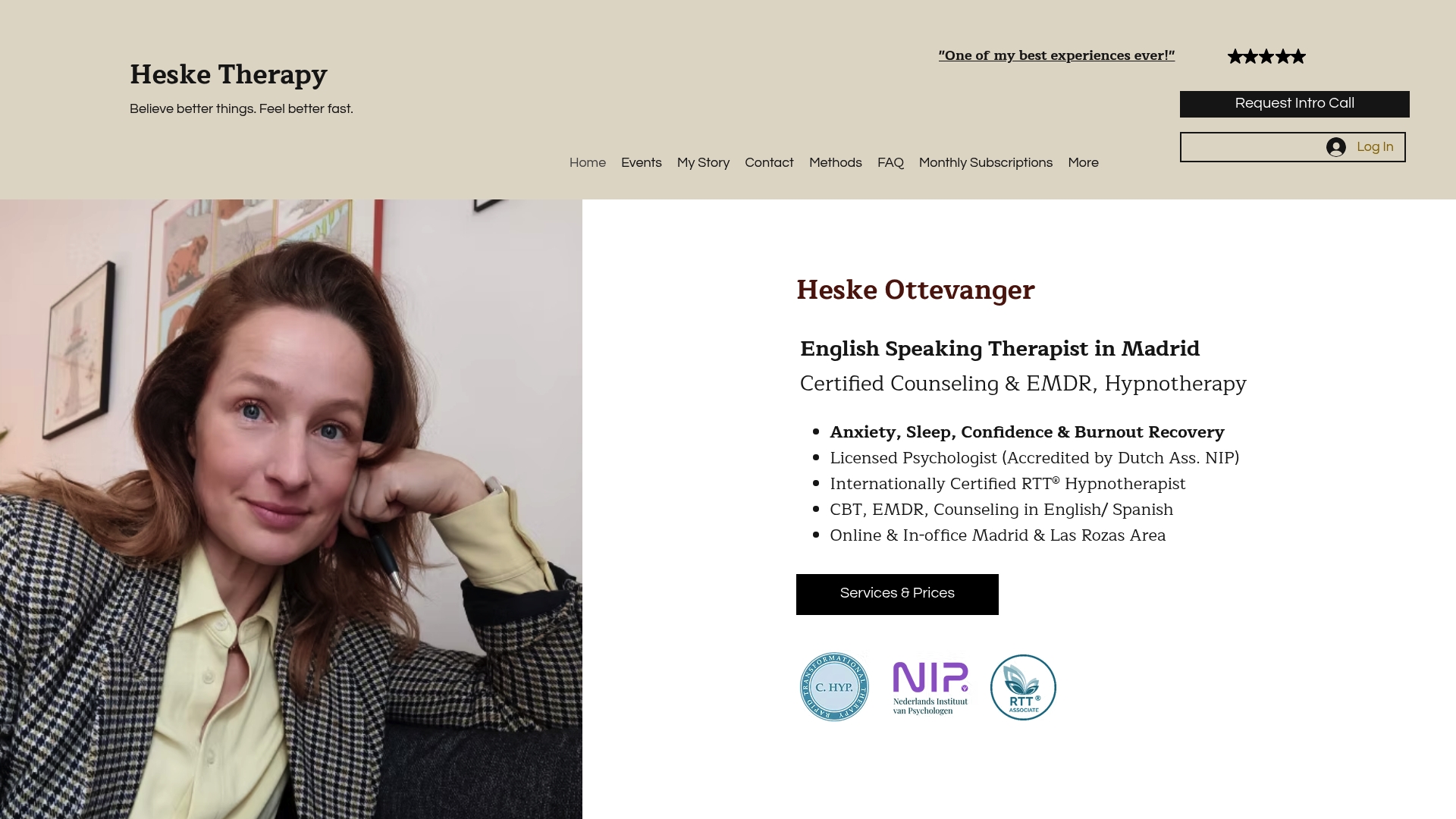
Explore your personalized treatment options and schedule your free discovery call now at Heske Therapy. Don’t wait to reclaim your peace of mind and thrive in Madrid.
Frequently Asked Questions
What types of trauma therapies are available for expats in Madrid?
Rapid Transformational Therapy, Eye Movement Desensitization and Reprocessing, Cognitive Behavioral Therapy, Counseling, and Hypnotherapy are several effective options. Explore these therapies to find which approach resonates best with your individual needs.
How can I know if I need therapy for trauma as an expat?
If you experience symptoms like anxiety, emotional numbness, or difficulty adjusting to a new culture, it may be time to seek therapy. Recognize these feelings and consider reaching out to a mental health professional for guidance and support.
How quickly can I expect results from trauma therapy in Madrid?
Many therapies, like Rapid Transformational Therapy and EMDR, can produce noticeable changes in just a few sessions, typically between one to three. Schedule an initial consultation to discuss your specific challenges and set realistic expectations for progress.
Is it necessary to choose a therapist with experience in expatriate issues?
Yes, a therapist familiar with the unique challenges faced by expats can provide tailored support and understanding. Look for a mental health professional who specializes in cultural adaptation and trauma related to expatriate life.
What should I prepare before my first therapy session?
Before your first session, consider reflecting on your emotional experiences and any specific challenges you wish to address. Prepare to discuss your feelings openly, which will help your therapist tailor their approach to your needs.
Can I combine different types of therapies for trauma?
Absolutely! Integrative approaches combine various therapeutic modalities to create a personalized treatment plan. Discuss your options with a qualified therapist to identify which combination may be best suited for your unique situation.
Recommended
Comments