Why Therapy for Migraines Works: A Practical Guide


TL;DR:
Psychological and behavioral therapies, such as CBT and mindfulness, are supported by science to reduce migraine frequency and severity. These techniques target nervous system reactivity, improve coping strategies, and address psychiatric comorbidities like anxiety and depression. Combining therapy with medication offers more lasting relief and lowers reliance on pharmacological treatments.
Therapy for migraines is defined as the use of structured psychological and behavioral interventions to reduce migraine frequency, severity, and disability by retraining the brain’s pain response and improving coping strategies. Non-drug behavioral therapies reduce migraine frequency, severity, and daily-life disruption with few side effects. That finding matters because it means you have real, evidence-backed options beyond a prescription bottle. The main therapy types include cognitive behavioral therapy (CBT), mindfulness-based cognitive therapy (MBCT), biofeedback, and relaxation training. Each targets psychological and autonomic pathways that medication alone cannot reach, making them powerful additions to any migraine management plan.
Why therapy for migraines is backed by science
CBT is the most studied behavioral treatment for migraine, and the evidence is clear. CBT reduces pain catastrophizing, avoidance behavior, and improves self-efficacy by rewiring the brain’s pain regulation circuits. That neuroplastic change is not metaphorical. Neuroimaging studies show measurable shifts in brain regions responsible for pain modulation after a course of CBT. For someone who has spent years dreading the next attack, that rewiring translates directly into fewer lost days at work and more confidence in daily life.
How CBT changes your relationship with pain
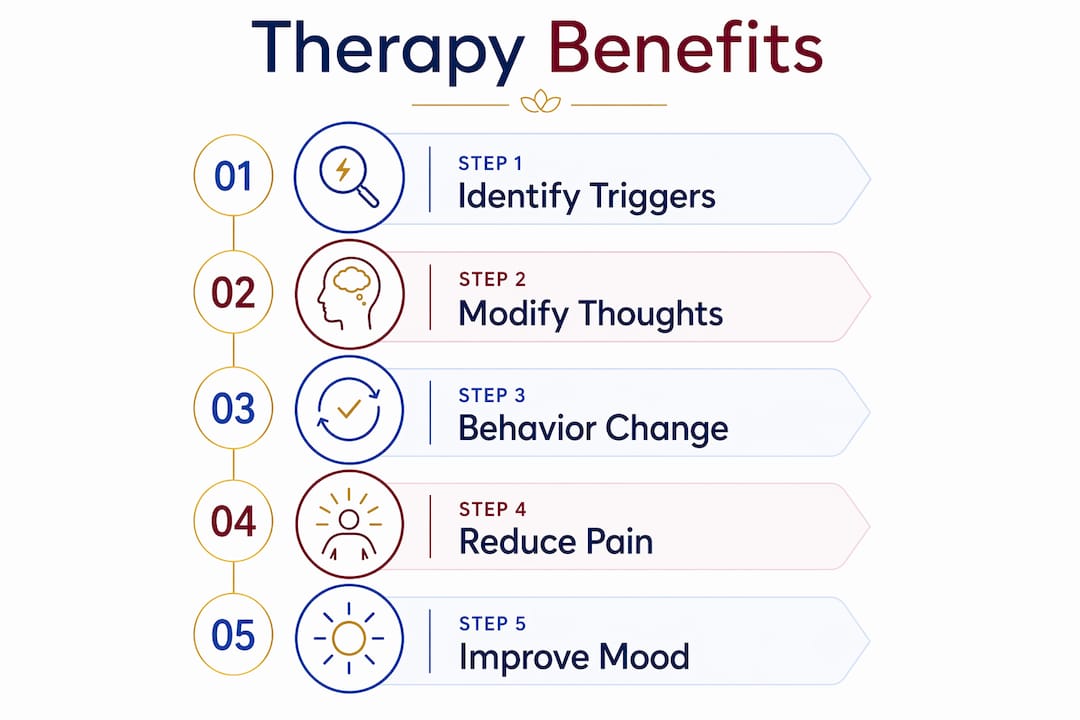
CBT works by targeting three interconnected problems: maladaptive thoughts about pain, avoidance behaviors that reinforce disability, and the catastrophic thinking loop that amplifies every twinge into a feared full attack. A therapist trained in CBT will guide you through identifying these patterns and replacing them with responses grounded in evidence rather than fear. The process is structured and skill-based, not open-ended talk therapy.

One of the most counterintuitive findings in migraine research involves trigger management. Graduated exposure combined with CBT reduces migraine attacks more effectively than trigger avoidance. Avoiding every potential trigger actually sensitizes the nervous system over time, while gradual, controlled exposure builds tolerance. A practical CBT program typically includes a headache diary, thought records, and a graduated exposure plan built around your specific triggers.
A 2010 randomized controlled trial with 232 participants found that adding behavioral management to preventive medication produced larger reductions in migraine days than either treatment alone. That result has been replicated across multiple study designs, which makes it one of the more reliable findings in headache medicine.
Pro Tip: Start a headache diary before your first CBT session. Tracking pain intensity, duration, mood, and sleep for two to four weeks gives your therapist concrete data to build a personalized exposure and thought-record plan from day one.
What other behavioral therapies offer for migraine relief
CBT is not the only option. Several other therapy types for migraines carry strong or emerging evidence, and each works through a distinct mechanism.
Mindfulness-based cognitive therapy (MBCT): MBCT typically involves about 8 sessions with structured homework between appointments. It teaches you to observe pain and stress without reacting to them, which interrupts the anxiety-attack cycle that many migraine sufferers know well. The real benefits of mindfulness techniques extend beyond pain reduction to include improved sleep and reduced emotional reactivity, both of which influence migraine frequency.
Relaxation training: Progressive muscle relaxation and diaphragmatic breathing directly regulate the autonomic nervous system. Behavioral therapies impact stress regulation, autonomic stabilization, and pain modulation in ways that drugs alone cannot address. Regular practice lowers baseline arousal, which reduces the physiological conditions that trigger attacks.
Biofeedback: Biofeedback uses sensors to give you real-time data on muscle tension, skin temperature, or heart rate variability. You learn to consciously shift those readings toward a calmer state. This is not passive relaxation. It is active physiological training, and it gives you a measurable skill you can use the moment you feel a prodrome symptom.
Mindfulness in daily practice: Mindfulness-based therapies promote nervous system training to soothe activation and improve resilience to migraine attacks. The key is consistency between attacks, not just during them.
The shared goal across all these approaches is nervous system resilience. Each method trains your brain and body to respond to stress and pain signals with less reactivity. That training compounds over time, which is why patients who practice regularly between sessions see the strongest long-term results.
Pro Tip: Practice your chosen relaxation or mindfulness technique during low-pain periods, not just when an attack is building. Nervous system retraining is optimized when practiced regularly outside of crisis moments.
How therapy addresses anxiety and depression in migraine sufferers
Migraines rarely travel alone. Anxiety correlates with increased migraine frequency, and depression occurs two to four times more frequently in migraine patients than in the general population. That statistic reframes the entire treatment picture. If you are managing migraines without addressing co-occurring anxiety or depression, you are treating half the problem.
The relationship runs in both directions. Anxiety amplifies pain sensitivity and disrupts sleep, both of which increase attack frequency. Depression reduces motivation to use coping strategies, which allows avoidance patterns to take hold. Psychotherapy breaks both cycles simultaneously by improving psychiatric symptoms and migraine-related disability at the same time.
Here is why this matters for treatment planning:
Untreated anxiety or depression predicts worse migraine outcomes regardless of which medication you take.
Combining therapy with medication improves psychiatric symptom response and overall migraine disability more than medication alone.
Early psychiatric assessment in migraine patients allows better coordination of therapy and pharmacological strategies, avoiding the trap of treating surface symptoms without addressing root comorbidities.
Screening tools like the GAD-7 for anxiety and the PHQ-9 for depression are quick to administer and give clinicians a baseline to track progress.
Addressing psychiatric comorbidities alongside migraine is not optional for effective symptom management. It is the difference between partial relief and a genuinely improved quality of life. If your current migraine care plan does not include a mental health screening, that is the first conversation to have with your provider. You can also explore managing anxiety fast as a starting point for understanding how anxiety treatment overlaps with migraine relief.
Therapy vs. medication: how to combine both for best results
Medication and therapy target different mechanisms, which is exactly why they work better together than either does alone. Triptans and preventive medications address neurochemical and vascular processes during and between attacks. Therapy addresses learned disability, cognitive patterns, and autonomic dysregulation. These are not competing approaches. They are complementary ones.
Treatment approach | Primary mechanism | Best used for |
Preventive medication | Neurochemical stabilization | Reducing baseline attack frequency |
Acute medication (triptans) | Vascular and serotonin modulation | Stopping attacks in progress |
CBT | Cognitive restructuring, exposure | Reducing disability and catastrophizing |
MBCT / relaxation | Autonomic regulation, stress response | Lowering nervous system reactivity |
Biofeedback | Physiological self-regulation | Controlling physical migraine triggers |
Behavioral therapy is most effective when integrated with preventive medications and self-management plans, producing lasting benefits that medication alone does not sustain. One underappreciated benefit of this combination is medication reduction. Behavioral therapies can reduce medication overuse headache by building non-pharmacological coping strategies that replace the reflex to reach for pain relief at the first sign of discomfort.
When discussing this with your doctor or neurologist, ask specifically about a referral to a psychologist or therapist with experience in chronic pain or headache disorders. Bring your headache diary. Frame the conversation around function, not just pain scores. Providers respond well to data showing how migraines affect your work, sleep, and relationships. A self-management plan that combines medication, therapy, sleep hygiene, and regular physical activity gives you the most control over your condition. You can also explore how therapy transforms physical symptoms through integrative approaches that address the mind-body connection directly.
Key takeaways
Therapy for migraines works because it targets the cognitive, autonomic, and psychiatric mechanisms that medication alone cannot address, making the combination of both approaches the most effective strategy for lasting relief.
Point | Details |
CBT rewires pain responses | CBT reduces catastrophizing, avoidance, and disability by producing measurable neuroplastic changes. |
Combination beats either alone | Adding behavioral therapy to preventive medication reduces migraine days more than medication alone. |
Psychiatric comorbidities matter | Untreated anxiety and depression worsen migraine outcomes; treating both together improves results. |
Mindfulness and biofeedback train resilience | Regular practice between attacks builds autonomic stability and reduces nervous system reactivity. |
Therapy reduces medication overuse | Behavioral coping strategies lower reliance on acute medications and the rebound headaches they cause. |
What I have learned about therapy and migraines after years of practice
Working with clients who experience migraines alongside anxiety, burnout, and stress has taught me one thing clearly: the pain is real, and the psychological layer is equally real. Most people arrive having tried multiple medications with partial results, frustrated that nothing has fully worked. What they have not tried is treating the nervous system itself.
The clients who see the most durable improvement are not the ones who find the perfect drug. They are the ones who commit to understanding their own patterns, whether through CBT thought records, a consistent mindfulness practice, or EMDR to process the fear and helplessness that chronic pain builds over time. Therapy does not suppress symptoms. It changes your relationship with them, which turns out to be far more powerful.
I also want to name something that most articles skip. Therapy for chronic pain requires patience. The first few sessions will not eliminate your migraines. What they will do is give you tools that compound. Clients who practice between sessions, who use their headache diaries, and who stay curious about their own reactions rather than just reactive to them, those are the clients who report genuine life change after three to six months.
My honest recommendation is to stop thinking of therapy as a last resort after medications fail. Think of it as the layer of treatment that makes everything else work better. Advocate for it in your care plan. Ask for it by name. You deserve a treatment approach that addresses the whole picture.
— Heske
Ready to explore therapy for your migraines?
At Hesketherapy, we work with clients experiencing migraines alongside anxiety, stress, and burnout using an integrative approach that combines CBT, EMDR, Rapid Transformational Therapy (RTT), and counseling. Sessions are available in-office in Madrid and online, in English, Spanish, and Dutch.
If you are ready to address the psychological and autonomic patterns driving your migraines, a personalized treatment plan can make a measurable difference. Explore EMDR and hypnotherapy options for stress and pain relief, or learn more about RTT therapy as a method for rapid, lasting change. You can also book a counseling session to start with a focused, one-on-one conversation about your specific situation. A free discovery call is available to help you find the right fit.
FAQ
Why consider therapy for migraines instead of just medication?
Therapy targets cognitive, behavioral, and autonomic mechanisms that medication does not address, including catastrophic thinking, avoidance patterns, and stress reactivity. Combining both approaches reduces migraine days and disability more than medication alone.
Is CBT effective for migraines?
CBT is one of the most evidence-backed behavioral treatments for migraine, with randomized controlled trials showing it reduces migraine frequency, pain catastrophizing, and disability. It works by restructuring maladaptive pain-related thoughts and building graduated exposure to triggers.
How can therapy help migraines linked to anxiety or depression?
Anxiety and depression occur significantly more often in migraine sufferers than in the general population, and both worsen attack frequency. Psychotherapy that addresses these comorbidities directly improves both psychiatric symptoms and migraine-related disability.
What types of therapy are used for migraine management?
The main therapy options for migraine relief include CBT, MBCT, biofeedback, and relaxation training. Each works through a different mechanism, from cognitive restructuring to autonomic regulation, and they are often combined for best results.
How long does therapy take to help with migraines?
Most structured programs like MBCT run for about eight sessions, while CBT-based approaches vary by individual. Consistent practice between sessions, especially during low-pain periods, accelerates nervous system retraining and produces more durable outcomes.
Recommended
Comments