7 Key Benefits of Therapy for Burnout Explained

Over half of American expatriates in Madrid report facing overwhelming emotional stress while adjusting to a new culture. Struggling with burnout so far from home can leave even the most resilient feeling isolated and powerless. Rapid, culturally sensitive therapy offers tools to rebuild emotional stability, address trauma, and reclaim balance in a way that respects your unique background and English-speaking needs.
Table of Contents
Quick Summary
Key Insight | Explanation |
1. Prioritize therapy for emotional stability | Professional therapy rebuilds emotional resilience during burnout, helping you manage stress effectively and improve mood regulation. |
2. Identify and understand burnout sources | Use therapy to explore complex factors contributing to burnout, gaining clarity on stressors and unhealthy patterns in your life. |
3. Develop personalized stress management strategies | Tailored coping techniques and skills, cultivated in therapy, enhance your ability to handle stress and navigate challenges. |
4. Improve sleep and physical health | Implement therapeutic strategies that address sleep and physical symptoms of burnout, promoting overall well-being through relaxation techniques. |
5. Build self-esteem and confidence through therapy | Engage in exercises to challenge negative beliefs and enhance your self-worth, fostering resilience and a healthier self-image. |
1. Restoring Emotional Balance and Stability
Therapy offers a powerful pathway to regaining emotional equilibrium during burnout, helping you rebuild your psychological resilience from the ground up. When stress overwhelms your system, professional therapeutic interventions can systematically restore your emotional foundations.
Understanding emotional balance requires recognizing how chronic stress disrupts your internal psychological mechanisms. Research demonstrates that positive psychological attributes significantly reduce burnout by enhancing mood regulation and stress management capabilities. These attributes include resilience, optimism, and self efficacy - critical components in maintaining psychological stability.
In therapy, you learn targeted strategies to recalibrate your emotional responses. Techniques like mindfulness, cognitive reframing, and emotional regulation help you develop more balanced psychological reactions. Instead of being controlled by stress, you gain tools to understand, process, and redirect intense emotional experiences.
Therapy provides a structured environment to explore underlying emotional patterns that contribute to burnout. By identifying triggers, understanding your stress responses, and developing healthier coping mechanisms, you can gradually rebuild emotional stability. This process is not about suppressing emotions but learning to navigate them with greater skill and self awareness.
Practical interventions might include breathing exercises, guided meditation, journaling, and cognitive behavioral techniques that help you recognize and interrupt negative emotional cycles. Your therapist becomes a collaborative partner in helping you reconstruct emotional resilience.
Pro tip: Practice a daily five minute emotional check in where you consciously pause, breathe deeply, and assess your current emotional state without judgment.
2. Identifying Sources of Burnout More Clearly
Understanding the underlying causes of burnout requires deep introspection and professional guidance. Therapy provides a structured approach to uncovering the complex web of personal and professional factors contributing to emotional exhaustion.
Professional therapeutic interventions help you systematically explore workplace stressors by creating a safe environment for honest self reflection. This process involves examining your emotional responses, work environment, personal expectations, and interpersonal dynamics that might be silently draining your psychological resources.
Burnout rarely emerges from a single source. It often develops through a combination of environmental pressures, personal expectations, workplace demands, and individual coping mechanisms. Therapists help you map these interconnected elements, revealing patterns that might have remained invisible to you.
Systematic exploration involves detailed discussions about your work context, personal history, stress triggers, and emotional responses. By breaking down these complex interactions, you gain clarity about the specific mechanisms driving your burnout. This understanding is crucial because targeted interventions require precise identification of underlying issues.
Therapy provides diagnostic tools and conversational techniques that help you distinguish between temporary stress and chronic burnout. You learn to recognize early warning signs, understand your unique stress responses, and develop personalized strategies for emotional management.
Pro tip: Create a weekly stress journal to track emotional patterns, workplace interactions, and personal energy levels to gain objective insights into your burnout sources.
3. Building Effective Stress Management Skills
Stress management is more than simple relaxation techniques it is a comprehensive skill set that requires strategic development and professional guidance. Therapy offers a structured approach to building robust psychological resilience and adaptive coping mechanisms.
Effective stress management begins with understanding your unique physiological and psychological stress responses. Mindfulness-based interventions teach critical emotional regulation skills that help you interrupt automatic stress reactions and choose more intentional responses.
Therapy provides personalized strategies tailored to your specific stressors. These techniques go beyond generic advice and dive deep into your individual patterns. You learn to recognize early stress signals, develop immediate calming techniques, and construct long term resilience strategies that transform how you experience workplace and personal challenges.
Practical stress management skills include breathing exercises, cognitive reframing, boundary setting, and emotional processing techniques. Your therapist acts as a coach helping you practice these skills in a supportive environment. You gradually build a comprehensive toolkit that allows you to navigate stressful situations with greater ease and confidence.
Consistent practice is key to integrating these skills into your daily life. Each therapeutic session becomes an opportunity to refine your approach, understand your triggers, and develop more sophisticated emotional management techniques. You are not just learning to survive stress you are learning to thrive despite it.
Pro tip: Create a personal stress management dashboard where you track your emotional triggers, successful coping moments, and areas for improvement to gain objective insights into your progress.
4. Improving Sleep and Physical Well-being
Burnout disrupts more than just your mental state it fundamentally impacts your physical health and sleep patterns. Therapeutic interventions offer a comprehensive approach to restoring your body’s natural healing and recovery mechanisms.
Mindfulness training provides significant improvements in physical symptoms by activating the body’s relaxation response. This process helps interrupt the chronic stress cycle that leads to sleep disturbances, muscle tension, and compromised immune function.
Therapy addresses sleep challenges through multiple targeted strategies. Your therapist will help you understand the intricate connections between emotional stress and physical symptoms. You learn to recognize how unprocessed emotions manifest as physical tension, disrupted sleep patterns, and reduced overall vitality.
Practical interventions might include guided relaxation techniques, cognitive behavioral approaches to sleep hygiene, and emotional processing methods that release stored physiological stress. These strategies go beyond surface level solutions and work to reset your nervous system’s baseline stress response.
The physiological benefits extend beyond immediate symptom relief. Consistent therapeutic work helps rewire your stress responses, promoting deeper sleep, enhanced immune function, and more stable energy levels. You are essentially teaching your body a new way of responding to environmental and emotional challenges.
Pro tip: Create a nightly wind down ritual that includes 15 minutes of intentional relaxation techniques like deep breathing or gentle stretching to signal your body it is time to transition into recovery mode.
5. Developing Stronger Coping Strategies
Coping strategies are not inherited skills but learned techniques that can be systematically developed through professional guidance. Therapy provides a structured environment to transform how you respond to stress and emotional challenges.
Cognitive emotion regulation strategies reduce maladaptive stress responses by helping you understand and interrupt destructive thought patterns. Instead of spiraling into negative emotional states, you learn to recognize, analyze, and redirect your psychological responses.
Therapeutic approaches teach you to distinguish between reactive and responsive behaviors. You develop a toolkit of adaptive strategies that allow you to maintain emotional balance during challenging situations. These strategies go beyond simple stress management they fundamentally rewire your psychological approach to difficult experiences.
Practical coping strategies include mindfulness techniques, emotional distancing, cognitive reframing, and intentional self care practices. Your therapist helps you customize these approaches to your specific personality, work environment, and personal challenges. You learn to build psychological resilience that acts as a protective buffer against future burnout.
The goal is not to eliminate stress but to change your relationship with it. You become more aware of your internal processes, develop greater emotional intelligence, and create sustainable methods for maintaining psychological equilibrium. These skills become permanent parts of your emotional landscape.
Pro tip: Create a personal stress response map where you document your typical reactions, identify their root causes, and develop alternative response strategies for each trigger.
6. Enhancing Self-Esteem and Confidence
Self-esteem is not a fixed trait but a dynamic psychological resource that can be intentionally cultivated through therapeutic intervention. Therapy offers a transformative pathway to rebuilding your sense of personal worth and professional capabilities.
Psychological traits like resilience reduce burnout vulnerability by reinforcing your intrinsic value beyond external achievements. Your therapist helps you recognize that your worth is not determined by productivity or performance but by your inherent human dignity.
Therapeutic approaches deconstruct negative self talk and replace destructive narratives with empowering perspectives. You learn to challenge internalized beliefs that undermine your confidence, replacing them with realistic, compassionate self assessments. This process involves identifying the root sources of your self doubt and systematically dismantling them.
Practical confidence building happens through structured exercises that expand your comfort zone. These might include assertiveness training, challenging negative thought patterns, setting healthy boundaries, and developing skills that demonstrate your competence. Your therapist becomes a supportive guide helping you recognize your strengths and potential.
Confidence emerges not from perfection but from understanding your unique capabilities and accepting your human complexity. Therapy teaches you to view challenges as opportunities for growth rather than threats to your self worth. You develop a more resilient and compassionate relationship with yourself.
Pro tip: Create a weekly achievement journal where you document not just accomplishments but also moments of personal courage and resilience.
7. Creating Personalized Burnout Recovery Plans
Recovery from burnout is not a one size fits all process but a deeply personalized journey requiring nuanced understanding of individual experiences. Professional therapy transforms generic wellness recommendations into targeted interventions that address your unique psychological landscape.
Individualized intervention programs address specific burnout factors by recognizing the complex interactions between personal circumstances, professional demands, and emotional resources. Your therapist becomes a strategic partner in designing a comprehensive recovery roadmap.
Personalized recovery plans involve comprehensive assessments that examine multiple dimensions of your experience. These include analyzing your work environment, personal stress triggers, emotional responses, physical symptoms, and underlying psychological patterns. The goal is not just symptom management but holistic transformation.
Your recovery plan might integrate various therapeutic techniques tailored specifically to your needs. This could involve cognitive behavioral strategies, mindfulness training, emotional regulation exercises, workplace communication skills, and stress management techniques. Each component is carefully selected and calibrated to your specific situation.
Therapy recognizes that burnout recovery is not linear. Your personalized plan includes flexibility and adaptive strategies that evolve as you progress. Regular check ins and plan modifications ensure that your recovery remains responsive to your changing needs and emerging insights.
Pro tip: Document your recovery journey using a structured tracking system that monitors emotional states, energy levels, and personal growth milestones to maintain motivation and observe incremental progress.
Below is a comprehensive table summarizing the steps, strategies, and outcomes highlighted in the provided article regarding burnout recovery and emotional equilibrium.
Discover How Specialized Therapy Can Help You Recover From Burnout
Burnout often feels overwhelming and deeply exhausting, impacting your emotional balance, sleep, and overall well-being. The article highlights how therapy can restore emotional stability, improve coping strategies, and build lasting resilience through tailored approaches like cognitive behavioral techniques and mindfulness. At Heske Therapy, we understand these challenges and offer personalized psychotherapy that combines innovative methods including Rapid Transformational Therapy and EMDR to address your specific burnout triggers and physical symptoms such as sleep disturbances and IBS.
Our professional mental health practice based in Madrid specializes in supporting English-speaking expatriates and international clients who are seeking fast and enduring results. We integrate your unique emotional patterns and work environments into customized plans that evolve with your recovery journey. If you are ready to regain control over stress and rebuild your confidence, start by exploring therapy that prioritizes your emotional and physical well-being.
Take the first step towards recovery now and discover how expert guidance can change your relationship with burnout.
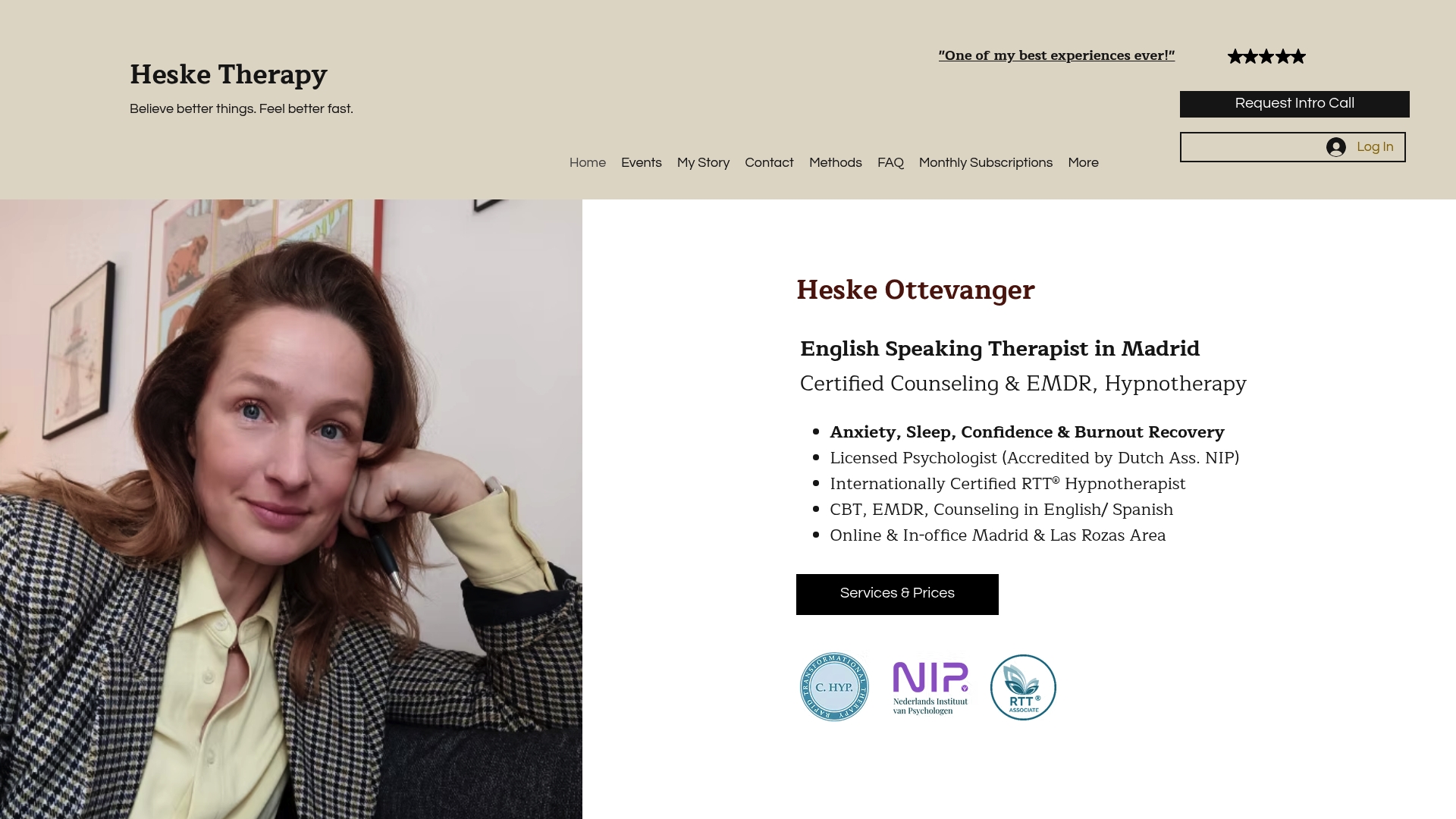
Ready to begin your personalized burnout recovery? Visit Heske Therapy to schedule your free discovery call and learn more about how our integrative approaches can help you thrive despite stress. Explore more about our services on the landing page and see how we tailor treatment plans to meet your needs.
Frequently Asked Questions
What are the main benefits of therapy for burnout?
Therapy helps restore emotional balance, identify burnout sources, and build effective stress management skills. Engage in therapy to start experiencing improvements in your emotional resilience and coping strategies within a few weeks.
How can therapy help me identify the sources of my burnout?
Therapy provides a structured environment for deep introspection, allowing you to uncover personal and professional factors contributing to your burnout. Schedule regular therapy sessions to explore your stressors and develop a clearer understanding of what triggers your emotional exhaustion.
What stress management skills can I learn in therapy?
In therapy, you can learn customized strategies such as mindfulness techniques, emotional processing, and boundary-setting skills. Commit to practicing these skills consistently to enhance your emotional management and reduce stress levels significantly over time.
How does therapy improve my sleep and physical well-being?
Therapy addresses the connections between emotional stress and physical symptoms, offering techniques to enhance relaxation and sleep quality. Implement nightly relaxation rituals, like deep breathing or gentle stretching, to help improve your sleep patterns within a few weeks.
What coping strategies will therapy teach me?
Therapy focuses on developing adaptive coping strategies that shift how you respond to stress and emotional challenges. Work with your therapist to create a personal toolkit of techniques that you can use to maintain emotional stability during difficult situations.
How do I create a personalized burnout recovery plan with therapy?
In therapy, you will work with a professional to design a tailored recovery plan that addresses your unique experiences and emotional needs. Engage in continuous self-assessment to adapt your recovery plan as you progress, ensuring it remains aligned with your evolving situation.
Recommended
Comments