Break Emotional Blocks Fast: Rapid Therapy Solutions Explained


TL;DR:
Emotional blocks from trauma, anxiety, and burnout are common for expatriates adjusting to Madrid.
Rapid, evidence-based therapies like EMDR and CBT can produce measurable change in weeks.
Combining multiple approaches and maintaining practiced tools ensures lasting emotional resilience.
Moving to Madrid should feel like freedom, but for many English-speaking expatriates, it quietly becomes a pressure cooker of anxiety, unresolved trauma, and creeping burnout. The excitement fades, and something harder to name takes its place: a persistent sense of being stuck. You’re functioning, but not thriving. The good news is that emotional blocks from trauma are not permanent fixtures. Rapid therapy approaches like EMDR, CBT, and RTT can produce measurable change in weeks, not years. This guide walks you through exactly how to identify, prepare for, and break through those blocks using evidence-based methods designed for people who need real results, fast.
Table of Contents
Understanding emotional blocks: Why expatriates are vulnerable
Step 1: Prepare for breakthrough—Mindset, self-assessment, and rapid tools
Step 2: Breakthrough with rapid therapy—EMDR, CBT, and new evidence
What success looks like: Signs of true emotional breakthrough
Why lasting breakthroughs happen faster when you combine approaches
Key Takeaways
Point | Details |
Rapid change is possible | With targeted therapies like EMDR and CBT, most emotional blocks can be reduced in weeks, not years. |
Multiple tools work best | Combining structured therapy, mindfulness, and self-compassion produces faster, more lasting breakthroughs. |
Preparation is key | A readiness mindset and small self-assessment steps before beginning therapy improve outcomes dramatically. |
Beware common pitfalls | Avoid suppressing emotions or skipping steps—consistent practice and expert support prevent relapse. |
Recovery has signs | Real progress often shows up as greater emotional stability, better relationships, and renewed hope. |
Understanding emotional blocks: Why expatriates are vulnerable
An emotional block is an unconscious barrier that prevents you from processing, expressing, or moving past a difficult feeling or experience. Think of it as a mental traffic jam. Emotions pile up, signals get crossed, and forward movement stalls. Emotional blocks commonly stem from unresolved trauma, anxiety, and burnout, and they show up with particular force among people adjusting to new environments.
Expatriates in Madrid face a specific cocktail of stressors. You lose your support network overnight. You navigate a new language, unfamiliar bureaucracy, and a culture with different emotional norms. Career transitions add financial pressure. These factors compound quickly, and without the usual buffers, emotional blocks form faster than most people expect.
Here are the most common signs that an emotional block may be holding you back:
Persistent low mood or emotional numbness that doesn’t match your circumstances
Difficulty making decisions or feeling chronically overwhelmed
Physical symptoms like tension headaches, disrupted sleep, or digestive issues
Avoidance of social situations or relationships that once felt natural
A sense of detachment from your own life, goals, or identity
The table below maps common block types to their symptoms and contributing factors:
Emotional block type | Common symptoms | Key contributing factors |
Trauma-based | Flashbacks, hypervigilance, numbness | Past adverse events, relocation shock |
Anxiety-based | Overthinking, physical tension, avoidance | Uncertainty, performance pressure |
Burnout-based | Exhaustion, cynicism, reduced output | Overwork, lack of recovery, isolation |
A few misconceptions are worth clearing up. Many expats assume emotional struggles are just “adjustment pains” that pass on their own. Others believe therapy only works after years of sessions. Both ideas slow down recovery. Building emotional resilience skills for expats is a learnable, acceleratable process. And breaking the burnout cycle requires active intervention, not just time.
Now that you know what emotional blocks are and why they’re common for expats, let’s look at how to prepare for overcoming them.
Step 1: Prepare for breakthrough—Mindset, self-assessment, and rapid tools
The single biggest factor in rapid therapy success is not the technique. It’s your readiness to believe change is possible. Many people arrive at therapy still half-convinced they’re beyond help. That belief is itself a block. Adopting a “change is possible” mindset is not wishful thinking. It’s a neurological prerequisite. Your brain needs permission to rewire.
Start with a quick self-assessment. Do any of these apply to you?
You feel emotionally flat or reactive without clear reason
Stress responses feel disproportionate to actual events
You’ve tried to “think your way out” of anxiety or burnout and it hasn’t worked
Sleep is disrupted by rumination or unexplained physical tension
You feel disconnected from your sense of purpose since relocating
If two or more of these resonate, you’re likely dealing with a genuine emotional block, not just a bad week. The emotional healing workflow can help you map the right path forward.
Here’s a comparison of the main rapid therapy tools available:
Therapy | Session length | Target issue | Evidence level | Typical timeline |
EMDR | 60-90 min | Trauma, anxiety | High (RCT-backed) | 6-12 sessions |
TF-CBT | 50-60 min | Trauma, burnout | High | 8-16 sessions |
Mindfulness/Somatic | 45-60 min | Anxiety, stress | Moderate to high | Ongoing or 8+ sessions |
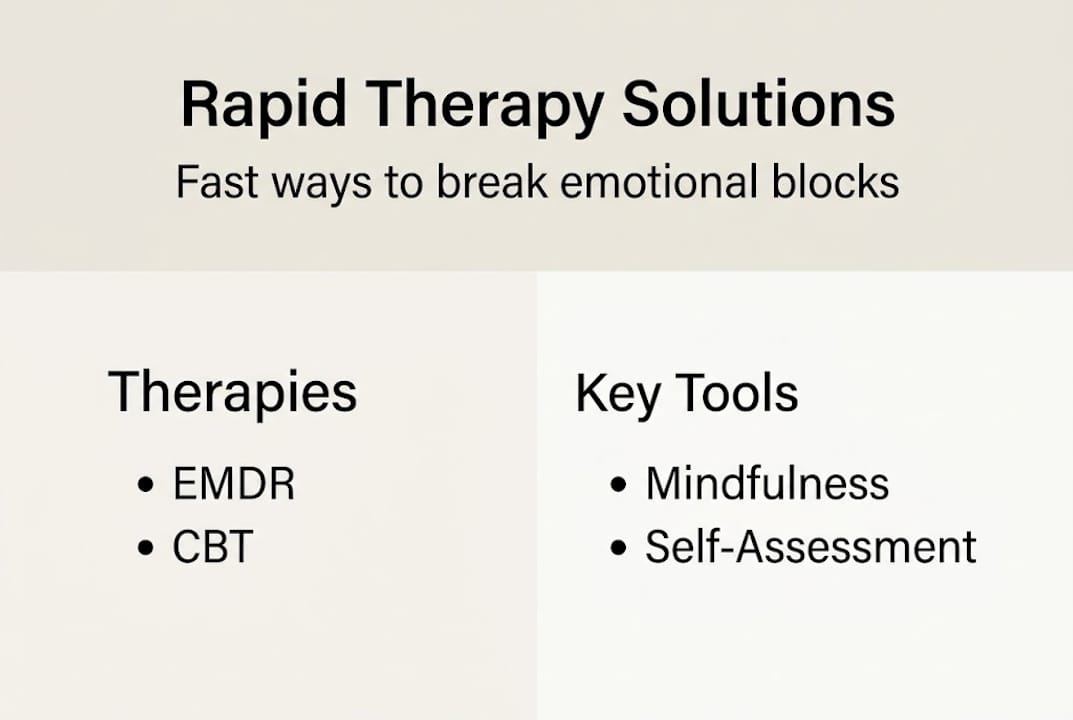
Mindfulness and self-compassion can rapidly aid in releasing stored trauma or anxiety, especially when practiced consistently between sessions. Exploring rapid therapy options before your first appointment helps you arrive with realistic expectations.
Pro Tip: Start a brief daily body scan or journaling practice at least one week before beginning therapy. Five minutes of noticing where you hold tension physically gives your therapist a head start and accelerates early breakthroughs.
Here are four numbered steps to prepare effectively:
Create a calm, private space where you can reflect without interruption
Write down three specific situations where you felt emotionally stuck in the past month
Set a realistic timeline: commit to at least eight sessions before evaluating results
Inform one trusted person in your life that you’re starting this process for accountability
With the right mindset and tools, you’re ready to break through emotional blocks. Next, let’s dive into the proven step-by-step therapies.
Step 2: Breakthrough with rapid therapy—EMDR, CBT, and new evidence
Rapid therapy is not a shortcut. It’s a more targeted route. Each method works differently, and knowing what to expect inside a session reduces the anxiety that often delays people from starting.
EMDR (Eye Movement Desensitization and Reprocessing) targets the way traumatic memories are stored. Here’s what a typical session sequence looks like:
History taking and identifying the target memory or belief
Installing a “safe place” resource for emotional regulation
Bilateral stimulation (eye movements, tapping, or audio tones) while holding the target memory
Cognitive restructuring to replace the negative belief with a positive one
Body scan to confirm the memory no longer carries physical distress
EMDR and trauma-focused CBT are evidence-based rapid therapies for breaking emotional blocks from trauma and anxiety, with EMDR often effective in 6-12 sessions and recovery rates around 43.6%. Understanding how EMDR heals trauma helps set accurate expectations before you begin.
TF-CBT (Trauma-Focused Cognitive Behavioral Therapy) works through structured reframing. You identify distorted thought patterns, challenge them with evidence, and replace them with more accurate beliefs. CBT reduces burnout with 8-16 structured sessions, making it one of the most time-efficient options for expats with demanding schedules. For more detail, see trauma-focused therapy explained.
“After six EMDR sessions, clients often report that memories which once felt overwhelming have lost their emotional charge entirely. The event is remembered, but it no longer controls the present.”
Mindfulness and somatic practices work by bringing attention to the body’s stored responses. Rather than talking about feelings, you learn to notice and tolerate them physically. The benefits of reappraisal over suppression are well-documented, and somatic approaches build exactly that capacity. For burnout-specific applications, the CBT for burnout recovery workflow offers a structured path.

With the core therapies explained, let’s explore how to avoid setbacks and keep progress moving.
Troubleshooting blocks: Common mistakes and expert tips
Even with the right therapy, progress can stall. Most of the time, it’s not the method that’s failing. It’s a handful of predictable mistakes that slow things down.
Common pitfalls to watch for:
Skipping sessions when you start feeling better. Early relief is not full recovery. Consistency is what converts short-term relief into lasting change.
Using distraction as a coping tool. Scrolling, overworking, or staying constantly busy prevents the nervous system from processing what it needs to process.
Avoiding emotions entirely. Emotional avoidance feels protective but creates backlog. Feelings that aren’t processed don’t disappear. They resurface louder.
Expecting linear progress. Breakthroughs are rarely smooth. Some sessions feel harder than the ones before them. That’s often a sign something important is shifting.
Reappraisal is more resilient than distraction or suppression as a long-term strategy to overcome emotional blocks. Suppression works briefly but backfires under stress. The reappraisal and resilience research is clear: changing how you interpret an experience is more durable than pushing it away.
Pro Tip: Keep a “progress journal” and revisit entries from two to three weeks ago. You’ll often notice improvements you’ve already forgotten, which reinforces momentum and counters the brain’s negativity bias.
For maintaining gains, self-compassion matters as much as technique. Treat setbacks as data, not failure. Community support, whether through expat groups in Madrid or online peer networks, provides the relational buffer that many expats lost when they relocated. If you feel stuck despite consistent effort, the rapid healing workflow offers a structured reset. And if you’re weighing different approaches, comparing CBT vs RTT for trauma can help clarify which direction fits your situation best.
Having the expert troubleshooting and tips in hand, let’s see what true recovery looks like and what you can expect.
What success looks like: Signs of true emotional breakthrough
Progress in therapy can be subtle at first. You might not notice a dramatic shift. What you notice instead is that things that used to derail you simply don’t anymore. That’s the signal.
Here are the key signs that an emotional block is genuinely lifting:
Your baseline mood has shifted upward without a specific reason
Sleep is deeper and less interrupted by racing thoughts
You respond to stress rather than react. There’s a pause where there used to be an automatic spike.
Relationships feel less draining and more reciprocal
You have energy for things you used to enjoy but stopped doing
Problem-solving feels accessible again, not exhausting
Self-criticism has quieted, replaced by something closer to self-acceptance
Distancing strategies, emotional sequencing, and mindfulness increase measurable emotional stability and resilience after therapy intervention. These aren’t abstract outcomes. They show up in daily life as concrete behavioral shifts.
A useful before/after check: think about the last time you handled a stressful situation. Compare it to how you would have handled the same scenario six months ago. If the gap is noticeable, you’re moving. Reviewing burnout recovery signals can also help you benchmark where you are in the process.
To reinforce ongoing resilience after therapy, keep using the tools that worked. Don’t retire them at the finish line. Maintenance is what separates lasting change from temporary relief.
Understanding the transformation, let’s share an expert opinion on what actually works best in practice.
Why lasting breakthroughs happen faster when you combine approaches
Here’s something most therapy content won’t tell you: waiting to find the single perfect method is one of the most common reasons expats stay stuck longer than necessary. The search for the ideal approach becomes its own avoidance strategy.
In practice, the fastest and most durable breakthroughs happen when approaches are layered. EMDR clears the stored charge of a traumatic memory. CBT restructures the thought patterns that grew around it. Somatic and mindfulness practices build the nervous system tolerance that keeps you regulated between sessions. Each method targets a different layer of the same problem.
The integrated therapy workflows that combine these approaches consistently outperform single-method treatments in real-world clinical settings. This isn’t about doing more. It’s about doing the right things in the right sequence.
Pro Tip: Start with one professionally guided approach and build momentum for four to six sessions. Once you feel traction, ask your therapist about layering in a complementary technique. Don’t switch. Add.
Ready to break through? Get rapid therapy tailored for you
If this article has made one thing clear, it’s that emotional blocks don’t resolve through willpower alone. They respond to targeted, evidence-based intervention delivered by someone who understands the specific pressures expats in Madrid face.
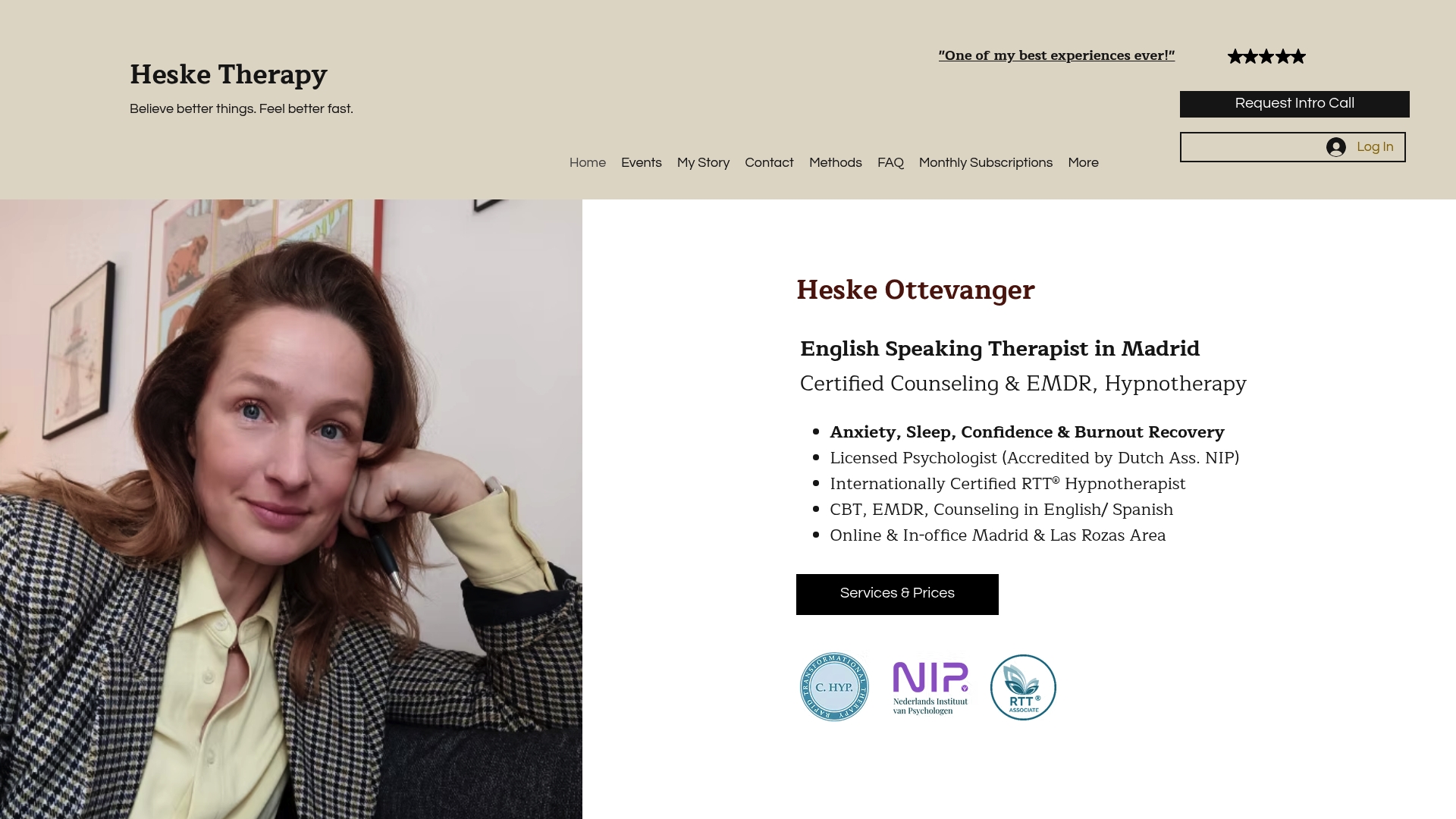
At Heske Therapy, we specialize in exactly this. Our programs combine EMDR, CBT, RTT, and somatic approaches into personalized plans built around your timeline and goals. Whether you’re dealing with burnout, trauma, or anxiety that’s been building since your move, we have a path forward for you. Discover rapid RTT therapy to see what’s possible, explore our 21-day transformation package, or go ahead and book online counseling to start with a free discovery call today.
Frequently asked questions
How quickly can rapid therapies resolve emotional blocks?
Most people see measurable change within 6-16 sessions, with EMDR and CBT leading to rapid desensitization and symptom relief. The timeline depends on the depth of the block and consistency of attendance.
Is it normal for expatriates to face more emotional blocks?
Yes. Expats face higher prevalence of emotional blocks due to adaptation stress, loss of support networks, and identity disruption that comes with relocation. It’s not a personal weakness. It’s a structural risk.
Can mindfulness and somatic practices help if I have burnout or anxiety?
Absolutely. These methods build body awareness and rapidly reduce emotional variability to promote stability, especially when used alongside structured therapies like EMDR or CBT.
What if traditional talk therapy didn’t help me before?
EMDR and TF-CBT reframe and resolve trauma faster than traditional talk therapy, even when previous approaches failed, because they target memory storage and thought patterns directly rather than relying on verbal processing alone.
How do I know if I’ve truly broken an emotional block?
Look for improved mood, energy, and resilience in daily challenges. Distancing and sequencing practices increase measurable stability after intervention, and progress is often felt physically before it’s consciously recognized.
Recommended
Step-by-Step Guide to Rapid Transformational Therapy Success
Therapy and Emotional Patterns: Building Self-Awareness
Comments