Your Burnout Prevention Checklist: A Therapy-Ready Guide


If you’re running on empty and wondering whether what you’re feeling is burnout, the answer you need right now is this: a six-step, psychotherapy-centered burnout prevention checklist you can start today, and bring to your first therapy session tomorrow.
Stabilize your nervous system — use paced breathing (4 counts in, 6 counts out) for five minutes, twice daily.
Protect your sleep — set a consistent sleep window and a 30-minute wind-down routine, no screens.
Set one immediate boundary — identify one work demand you can temporarily reduce or delay.
Schedule one low-demand pleasurable activity per day, even for 15 minutes.
Arrange a therapy intake — contact a licensed therapist trained in CBT, ACT, EMDR, or RTT within the next week.
Safety check — if you are experiencing suicidal thoughts, severe inability to function, or acute physical symptoms, contact a medical professional or emergency services before any of the steps above.
Pro Tip: Print this list and bring it to your first therapy call. It gives your therapist a clear starting point and saves 20 minutes of intake time.
Key Takeaways
A psychotherapy-centered burnout prevention checklist works best when it begins with nervous-system stabilization, pairs that with a licensed therapist trained in evidence-based modalities, and measures progress through concrete milestones across sleep, energy, and life domains.
Point | Details |
Stabilize before processing | Nervous-system regulation and sleep must come before intensive psychological work. |
Match therapy to severity | Skills-based CBT or DBT stabilizes acute crises; ACT, EMDR, and RTT address deeper patterns. |
Use measurable milestones | Track sleep logs and daily energy scores (1–10) to assess progress each week. |
Commit to three months | Lasting change in burnout typically requires a minimum three-month weekly therapy engagement. |
Hesketherapy for expats | Hesketherapy offers integrative burnout care (RTT, EMDR, CBT, hypnotherapy) online and in Madrid. |
This article is general information, not a substitute for advice from a qualified doctor. Consult a qualified healthcare professional about your own circumstances before acting on anything here.
Table of Contents
What is burnout, and when do you need a therapist?
The World Health Organization classifies burnout as an occupational phenomenon in ICD-11, defined by three dimensions: energy depletion or exhaustion, mental distance or cynicism toward work, and reduced professional efficacy. It is not classified as a medical condition, but its effects are very real and clinically significant.
Symptoms worth tracking include:
Persistent fatigue that sleep does not resolve
Difficulty concentrating or making decisions
Increased cynicism, detachment, or irritability at work
Physical signs: frequent headaches, disrupted sleep, gastrointestinal complaints
Withdrawal from colleagues, friends, or activities you used to enjoy
You need a therapist when symptoms persist beyond two weeks, when work performance is visibly impaired, or when physical symptoms appear without a clear medical cause. Waiting until you “hit a wall” makes recovery significantly longer. A useful overview of burnout syndrome signs and causes can help you identify where you currently stand.
Pro Tip: Keep a brief daily log for one week: energy level (1–10), hours slept, and one sentence about your mood. This data speeds up your therapist’s assessment considerably.
How to stabilize your nervous system in the first two weeks
Before any deep psychological work can take hold, your body needs to feel safe. Clinical practice guidance cautions against intensive psychotherapy during the acute crisis phase, recommending physiological stabilization first.
Set a fixed sleep window. Choose a consistent bedtime and wake time, even on weekends. Aim for 7–9 hours. A 30-minute wind-down routine (dim lights, no screens, light stretching or reading) signals your nervous system that the day is over.
Practice paced breathing twice daily. Inhale for 4 counts, exhale for 6. Five minutes per session activates the parasympathetic nervous system and reduces cortisol reactivity. Do this before work and before bed.
Add a brief body scan. Lie down for 5–10 minutes and mentally move attention from your feet to your head, noticing tension without trying to fix it. Once daily is enough.
Enforce one protected break. Block 20 minutes at midday with no work tasks, no email, no phone. Walk outside if possible.
Stop after-hours checking. Set a hard stop time for work communications. Even one evening of no-email has measurable effects on cortisol the following morning.
Schedule one pleasurable, low-demand activity daily. A short walk, cooking something you enjoy, or calling a friend. The activity itself matters less than the deliberate break from performance.
Recovery practices that support nervous-system recalibration include sleep hygiene, gradual activity resumption, and a healthy lifestyle — and avoiding emotionally demanding therapy during the acute recovery phase is clinically recommended. — Taylor & Francis clinical burnout guidance
For practical lifestyle approaches that complement these steps, the natural burnout recovery guide at Hesketherapy offers additional detail.
Pro Tip: If you cannot fall asleep within 20 minutes, get up and do something calm in dim light until you feel sleepy. Lying awake in bed trains your brain to associate the bed with wakefulness.
Which therapies have the strongest evidence for burnout?
StatPearls notes that mindfulness, CBT, and resilience training are among the most supported individual-level interventions for burnout. Here is how the main modalities compare clinically:
Third-wave CBT / Mindfulness-Based approaches: A meta-analysis found these significantly reduced emotional exhaustion (SMD = −0.686) and depersonalization (SMD = −0.529) in healthcare professionals, though effects on low personal accomplishment were not statistically significant. Delivered online or in-person, making them accessible for expats.
Standard CBT: Targets thought patterns and behavioral cycles that sustain burnout. Involves structured homework, behavioral experiments, and measurable goals. Well-suited to the stabilization and skills phase.
ACT (Acceptance and Commitment Therapy): Focuses on psychological flexibility and values-based action rather than symptom elimination. Particularly useful when cynicism and emotional numbing are prominent.
EMDR (Eye Movement Desensitization and Reprocessing): Addresses trauma and distressing memories that often underlie chronic work stress. Useful when burnout is layered with past adverse experiences.
RTT (Rapid Transformational Therapy): An integrative method combining hypnotherapy, CBT, and NLP to address deep-rooted beliefs driving overwork and self-neglect. Used at Hesketherapy as part of a personalized plan.
DBT skills: Distress tolerance and emotion regulation modules from Dialectical Behavior Therapy are especially helpful during acute functional crises when emotional dysregulation is severe.
Psychology Today’s clinical guidance recommends matching therapy to severity: skills-based approaches (CBT, DBT) to stabilize functioning first, then deeper modalities (ACT, EMDR, CFT) to address underlying patterns. A broader look at burnout recovery strategies can help you understand which approach fits your current phase.
What does effective burnout therapy actually look like?
Therapy for burnout follows a phased structure, and knowing what to expect helps you stay engaged when progress feels slow.
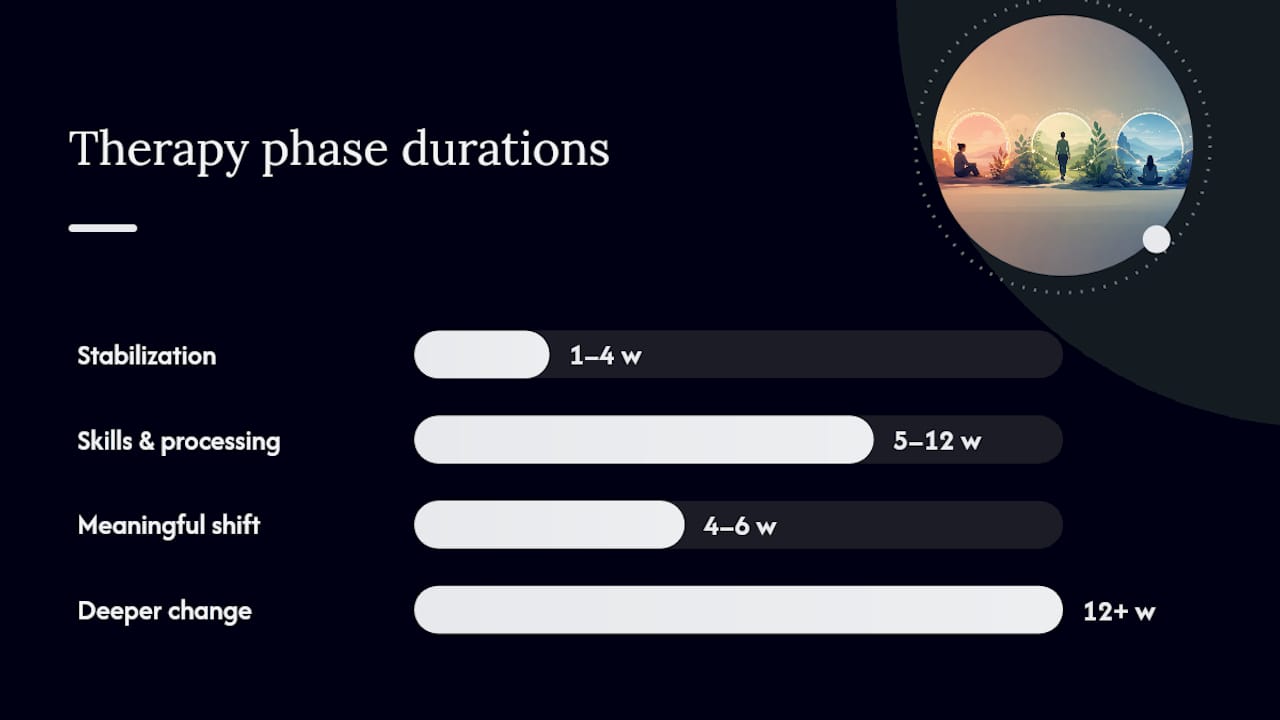
Stabilization phase (weeks 1–4): Intake assessment, sleep and energy baseline, immediate boundary work, and nervous-system regulation skills. Your therapist measures starting points.
Skills and processing phase (weeks 5–12): Weekly sessions with structured homework. You test new boundaries between sessions, track sleep and energy scores, and begin addressing the cognitive patterns sustaining burnout.
Prevention and maintenance phase (month 3 onward): Sessions shift to biweekly. Focus moves to job-person fit, long-term boundary maintenance, and relapse prevention.
Progress is measured concretely: sleep logs, daily energy ratings (1–10), work-function self-assessments, and life-domain milestones beyond work (relationships, leisure, health). Most clients notice a meaningful shift in sleep quality and emotional reactivity within the first four to six weeks. Deeper cognitive and identity-level change typically takes three months or more.
Effective therapists assign homework, test boundaries between sessions, and track progress against life-domain milestones rather than only work metrics. A step-by-step burnout recovery workflow outlines how this phased structure translates into practical weekly actions.
Pro Tip: During your intake call, ask: “How will we measure progress, and what would tell you I’m ready to move from stabilization to deeper work?” A therapist who answers concretely is one worth booking.
How to choose the right therapist for burnout
Choosing a therapist is a clinical decision, not just a personality match. Use this checklist when screening candidates:
Credentials to verify:
Licensed clinician (psychologist, licensed counselor, licensed clinical social worker, or equivalent in your country)
Specific training in at least one evidence-based modality: CBT, ACT, EMDR, or RTT certification
Questions to ask in an initial call:
How many clients with burnout have you treated, and what does your typical approach look like?
Do you use structured homework and measurable goals, or is it primarily open-ended talk?
How do you handle physiological stabilization before deeper processing?
Are you available online, and can you accommodate different time zones?
Do you have experience working with expatriates or international clients?
Expat-specific checks:
Sessions available in your language (English, Spanish, Dutch, or other)
Cultural competence with international work cultures and relocation stress
Online availability with flexible scheduling for travel or shift work
Red flags to avoid:
Vague treatment plans with no measurable milestones
Pressure to make major career decisions in the first few sessions
No mention of physiological stabilization or sleep as part of early care
Promises of rapid resolution without a clear clinical rationale
Practical screening questions drawn from therapist selection guidance consistently improve fit and reduce dropout. The expat burnout guide at Hesketherapy addresses the specific cultural and logistical factors that matter for international clients.
Practical logistics: costs, online options, and scheduling
Online vs. in-person: Online therapy removes travel time and energy costs, which matters when you are already depleted. It also solves the time-zone problem for expats working across multiple countries. In-person sessions offer a contained, distraction-free environment that some clients find easier for deeper emotional work. A hybrid model, starting online and transitioning to in-person for processing phases, works well for many expats in Madrid.
Session frequency and commitment: Weekly sessions during the stabilization and skills phases are the clinical standard. Moving to biweekly before the three-month mark tends to slow momentum. A minimum three-month commitment gives therapy enough runway to produce lasting change rather than temporary relief.
Cost and insurance for U.S. clients and expats:
Ask your therapist for itemized receipts (superbills) that you can submit to your U.S. insurer for out-of-network reimbursement.
Many U.S. health plans cover out-of-network mental health at 50–80% after deductible; confirm your specific plan’s mental health parity coverage before booking.
International health insurance plans (common among expats) often include mental health riders; check whether online therapy with a licensed provider qualifies.
Scheduling around travel: Book a recurring weekly slot and treat it as a non-negotiable appointment. For weeks you travel, confirm whether your therapist offers asynchronous check-ins or flexible rescheduling within the same week. Tools for managing burnout day-to-day can help you maintain momentum between sessions.
Pro Tip: If your employer has an Employee Assistance Program (EAP), it may cover six to eight free sessions. Use those for stabilization, then transition to a specialist for deeper work.
When symptoms require faster escalation
Some signs mean therapy alone is not the right first step. Contact emergency services or a medical professional immediately if you experience:
Suicidal thoughts or thoughts of self-harm
Inability to care for yourself (not eating, not sleeping for multiple days, inability to leave bed)
Sudden severe decline in functioning that appeared within days rather than weeks
Acute physical symptoms (chest pain, severe dizziness, heart palpitations) without a confirmed non-cardiac cause
Red flags in therapy itself also warrant action:
Your therapist minimizes symptoms or attributes them entirely to attitude
You are pressured to resign or make major career changes before stabilization is complete
No safety plan is discussed despite you reporting functional impairment
If you are in the U.S., you can reach the 988 Suicide and Crisis Lifeline by calling or texting 988. In Spain, the emergency number is 112.
Workplace-level interventions alongside individual therapy, such as temporary workload reductions or occupational health referrals, are also worth exploring. Evidence on staffing burnout strategies illustrates how system-level changes complement individual care.

Your printable burnout prevention checklist
Use this as a single reference page, saved to your phone or printed for your first therapy session.
Stabilize first — paced breathing (4-in, 6-out), 5 minutes twice daily; consistent sleep window.
Protect sleep — 30-minute wind-down routine, no screens, fixed wake time.
Set one boundary now — identify one work demand to reduce or delay this week.
Schedule daily rest — one 15-minute low-demand activity, non-negotiable.
Book a therapy intake — contact a licensed therapist trained in CBT, ACT, EMDR, or RTT within seven days.
Follow-up plan — confirm session frequency (weekly), measurement method (sleep log, energy scale), and three-month commitment with your therapist.
Three questions to bring to your first session:
“How will we measure my progress, and what milestones will tell us stabilization is complete?”
“What homework will I have between sessions, and how do you handle boundary testing?”
“What is your experience working with expats or clients managing international work stress?”
A note from Heske to expat readers
Living and working abroad carries a particular kind of pressure that is hard to name until it becomes impossible to ignore. The isolation of building a life in a new country, the performance demands of international roles, and the absence of your usual support network create conditions where burnout can develop quietly and then arrive all at once.
What I see most often in expat clients is not weakness. It is a long period of high-functioning adaptation that eventually runs out of reserves. The checklist above is not about doing more. It is about doing less, more deliberately, while getting the right professional support in place.
Online care makes this accessible wherever you are. Stabilization comes first, always. Once your nervous system has some room to breathe, the deeper work becomes possible and, often, faster than you expect.
If this checklist resonates, bring it to a discovery call. You do not need to have everything figured out before you reach out.
Hesketherapy: integrative burnout care for expats, online and in Madrid
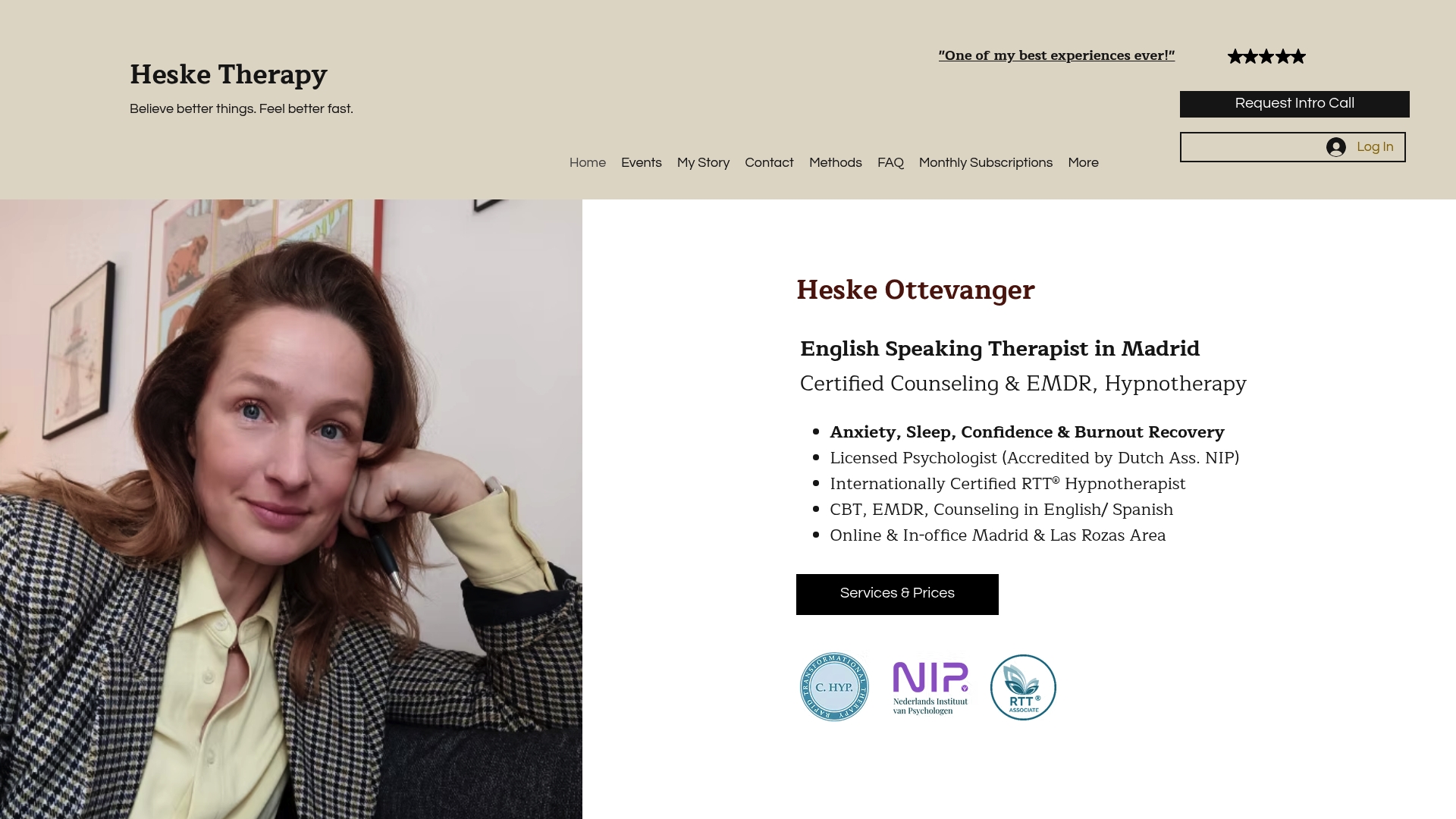
Hesketherapy offers something specific: licensed psychotherapy for English-speaking expats and international adults, combining RTT, EMDR, CBT, and clinical hypnotherapy into a personalized plan built around your current phase of burnout.
The approach starts where this checklist starts: stabilization first, then skills, then deeper processing. Sessions are available online and in-person in Madrid, in English, Spanish, and Dutch, with flexible scheduling designed for people managing international time zones and travel. A typical engagement runs three months at a structured weekly cadence, giving therapy the time it needs to produce lasting change rather than temporary relief.
If you are ready to move from the checklist to a clinical plan, learn more about RTT and the integrative methods Hesketherapy uses, or book a free discovery call to discuss your situation directly.
Sources
Recommended
Comments