Emotional Healing Workflow for Rapid Recovery

Feeling unsettled in Madrid can make everyday life feel overwhelming, especially when anxiety or trauma disrupt your sense of stability. Emotional healing matters because finding relief quickly is vital when navigating unfamiliar surroundings and cultural shifts. This guide offers practical, research-backed steps for creating a safe space, identifying emotional triggers, and using integrative therapy techniques proven to support meaningful healing for expatriates seeking rapid improvement and deeper resilience.
Table of Contents
Quick Summary
Key Insight | Explanation |
1. Create a Safe Healing Space | Choose a quiet area to promote emotional comfort and security. Use calming elements to minimize distractions. |
2. Prioritize Emotional Challenges | Conduct a thorough emotional inventory to identify and rank challenges by urgency and impact on well-being. |
3. Use Integrative Therapy Techniques | Combine various therapeutic methods tailored to your unique needs for a more holistic healing experience. |
4. Regularly Monitor Progress | Establish measurable indicators of emotional growth to ensure therapeutic approaches remain effective and relevant. |
5. Reinforce Positive Changes | Implement daily practices to maintain emotional gains, ensuring they become integral to your life. |
Step 1: Establish a Safe Healing Environment
Creating a safe, nurturing environment is foundational to your emotional healing journey. Your healing space goes beyond physical location it represents a psychological sanctuary where vulnerability can exist without judgment. For English-speaking expatriates in Madrid experiencing emotional challenges, establishing this environment requires intentional design and mindful preparation.
Start by selecting a quiet, comfortable space where you feel completely secure. This might be a corner of your apartment, a peaceful local park, or a private therapy room. The key is choosing a location where external stressors are minimized and you can focus entirely on your healing process. Consider elements that promote relaxation such as soft lighting, comfortable seating, calming colors, and minimal distractions. Emotional healing strategies for expats often emphasize the importance of creating a dedicated healing environment that signals safety to your nervous system.
Ensure your chosen space feels emotionally protective. This means establishing clear boundaries with yourself and potentially others about this healing time. Communicate your needs clearly if you share living space, and consider using noise-canceling headphones, soft background music, or white noise to create additional psychological insulation. The goal is to create a container where you can explore your emotions without feeling exposed or threatened.
Here’s a summary of effective elements for creating a safe healing environment:
Element | Purpose | Impact on Healing |
Comfortable seating | Promotes physical relaxation | Enhances emotional openness |
Soft lighting | Reduces stress and overstimulation | Creates calming atmosphere |
Calming color palette | Supports peaceful feelings | Eases emotional disclosure |
Minimal distractions | Limits external interruptions | Supports focus on self-care |
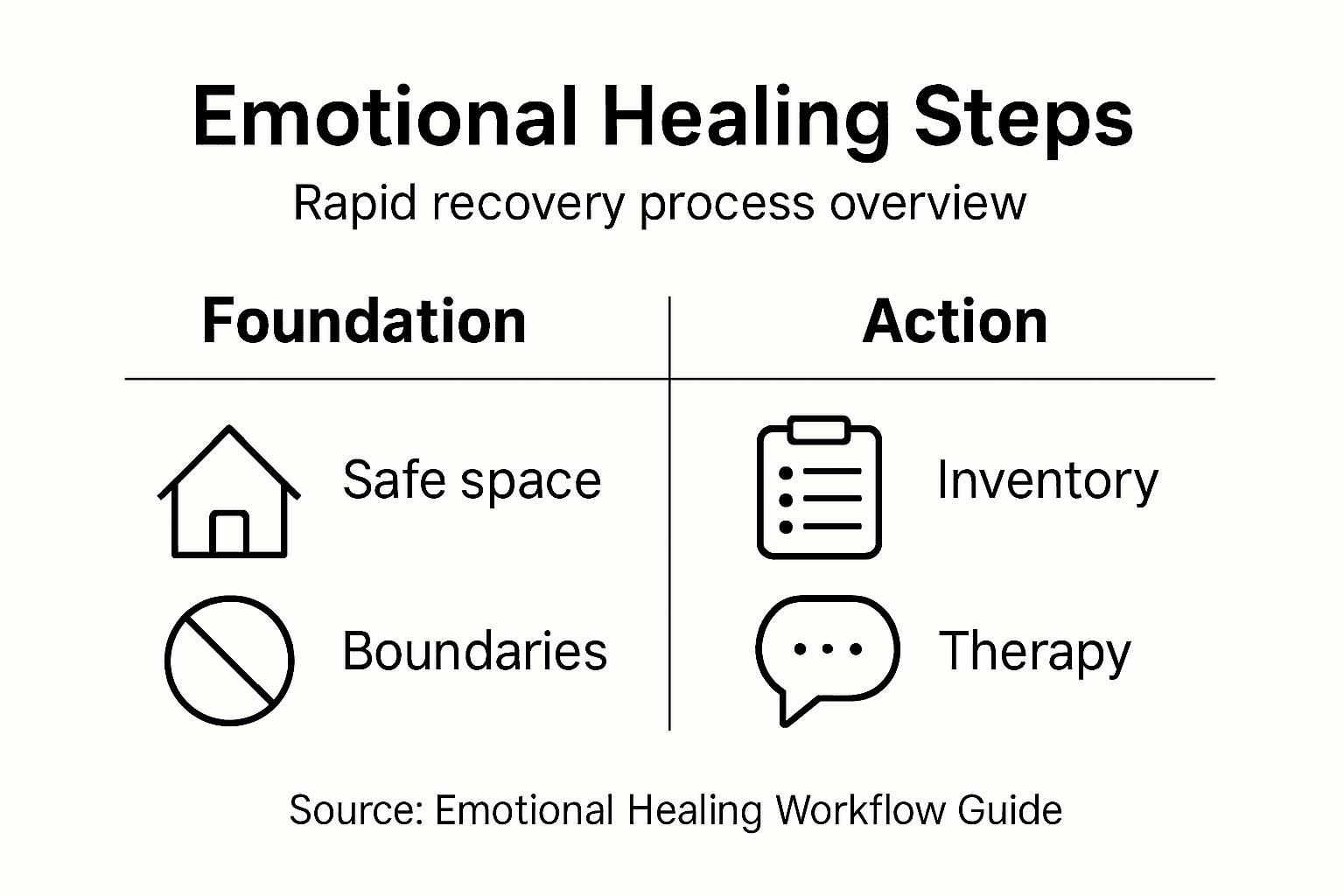
Pro tip: Incorporate a small personal object like a comforting photograph or meaningful item that represents emotional safety and resilience during your healing sessions.
Step 2: Identify and Prioritize Emotional Challenges
Understanding and organizing your emotional landscape is crucial for effective healing. This step involves carefully examining your internal experiences, recognizing patterns, and determining which challenges require immediate attention. By systematically mapping your emotional terrain, you create a strategic approach to your healing journey.

Begin by performing a comprehensive emotional inventory. Set aside quiet time to reflect deeply on your feelings, tracing their origins and understanding their interconnections. Narrative emotional processes in psychotherapy demonstrate how articulating personal experiences helps transform psychological wounds. Consider journaling or using guided reflection techniques to uncover underlying emotions. Pay special attention to recurring feelings of anxiety, stress, or disconnection particularly common among expatriates navigating complex cultural transitions.
Prioritize your emotional challenges based on their immediate impact on your wellbeing. Not all emotional struggles require equal intervention some are more urgent or deeply rooted than others. Assess each challenge through three critical lenses: intensity, frequency, and potential long term consequences. Those emotions causing significant daily disruption or triggering physiological stress responses should receive primary focus. For expatriates in Madrid dealing with cultural adaptation challenges, this might mean addressing feelings of isolation, imposter syndrome, or persistent homesickness.
Pro tip: Create a visual emotion mapping chart that ranks your emotional challenges from most to least critical, using color coding to represent intensity and potential impact.
Step 3: Apply Integrative Therapy Techniques
Integrative therapy represents a powerful approach to emotional healing that goes beyond traditional single modality treatments. By combining multiple therapeutic techniques, you create a personalized healing strategy that addresses your unique emotional landscape. This approach allows for a more comprehensive and flexible pathway to recovery.
Integrative therapy methods blend techniques from cognitive behavioral, psychodynamic, humanistic, and somatic therapies to provide a holistic treatment approach. For expatriates in Madrid navigating complex emotional challenges, this means crafting a therapeutic strategy that considers your specific cultural adaptation experiences, personal history, and current psychological needs. Begin by working with a therapist who specializes in integrative approaches, exploring techniques that might include mindfulness practices, cognitive restructuring, body based interventions, and narrative therapy.
Implement your integrative therapy strategy through a collaborative process with your mental health professional. This involves ongoing assessment and adaptation of techniques based on your individual response and progress. Focus on techniques that resonate most strongly with your personal healing journey some individuals might find somatic experiencing more effective, while others connect more deeply with cognitive behavioral strategies. The goal is creating a dynamic therapeutic approach that evolves alongside your emotional healing process.
Below is a comparison of common therapy techniques and their core benefits for emotional healing:
Technique | Core Approach | Key Benefit |
Cognitive Behavioral | Thoughts and behavior focus | Reduces negative thinking |
Somatic Experiencing | Body-based interventions | Releases stored stress |
Narrative Therapy | Personal storytelling | Reframes difficult experiences |
Mindfulness Practices | Present moment awareness | Improves emotional regulation |
Pro tip: Maintain a detailed therapy journal to track which integrative techniques create the most significant emotional shifts and breakthroughs.
Step 4: Monitor Progress and Adjust Strategies
Tracking your emotional healing journey requires consistent and thoughtful evaluation. This step transforms your therapeutic process from a static approach to a dynamic, responsive pathway that adapts to your evolving needs. By implementing systematic progress monitoring, you ensure that your healing strategy remains aligned with your personal growth and emotional transformation.
Progress feedback techniques provide critical insights into your therapeutic trajectory. Work closely with your mental health professional to establish clear, measurable indicators of emotional progress. For expatriates in Madrid navigating complex cultural and personal transitions, these indicators might include emotional stability, stress reduction, improved cultural adaptation, and enhanced interpersonal relationships. Develop a collaborative framework with your therapist that includes regular check ins, standardized assessment tools, and open conversations about your experiences and perceived improvements.
Remain flexible and proactive in adjusting your therapeutic strategies. If certain techniques are not yielding the expected results, discuss alternative approaches with your therapist. This might involve shifting therapeutic modalities, exploring different intervention techniques, or addressing underlying factors that may be impeding your progress. Remember that emotional healing is not linear healing is a nuanced journey with multiple paths and potential strategies.
Pro tip: Create a monthly emotional tracking sheet that quantifies your progress across different dimensions like mood stability, stress levels, and personal resilience.
Step 5: Reinforce Positive Transformations
Strengthening and solidifying your emotional healing gains represents the crucial final stage of your recovery journey. This step transforms temporary therapeutic insights into lasting psychological resilience, ensuring that the progress you have made becomes a sustainable part of your life experience. Your goal is to internalize and normalize the positive changes you have worked so hard to achieve.
Emotion-Focused Therapy techniques emphasize building emotional awareness and acceptance as mechanisms for creating meaningful personal transformation. For expatriates in Madrid navigating complex cultural and personal transitions, this means developing intentional practices that reinforce your newfound emotional skills. Implement daily rituals that support your emotional growth such as mindfulness meditation, journaling, positive affirmations, and reflection exercises that help you integrate and celebrate your healing progress.
Collaborate closely with your therapist to design personalized strategies for maintaining and expanding your emotional gains. This might involve creating a structured support plan that includes ongoing therapy sessions, peer support groups, or continued skill building workshops. Pay special attention to potential triggers or challenging situations that could potentially derail your progress, and develop proactive coping mechanisms that leverage the emotional regulation techniques you have learned.
Pro tip: Create a personal transformation portfolio documenting your emotional healing journey, including key insights, breakthroughs, and strategies that have been most effective in supporting your growth.
Accelerate Your Emotional Healing Journey with Expert Support
Struggling to establish a safe healing environment or to prioritize and address your emotional challenges can make recovery feel overwhelming. If you resonate with the need for integrative therapy techniques that adapt as you progress and want to transform your emotional healing into lasting resilience, Heske Therapy offers tailored solutions designed specifically for English-speaking expatriates in Madrid. Our approach combines Rapid Transformational Therapy, EMDR, CBT, and hypnotherapy to rapidly reduce anxiety, burnout, and emotional blocks that may be holding you back.
Begin your transformation today by exploring how integrative therapy methods personalized for your cultural and emotional needs can bring fast and meaningful results. Our compassionate therapists create a safe space to monitor your progress closely and adjust strategies to boost your emotional well-being. Visit Heske Therapy’s homepage to learn more about our unique approach and commitment to lasting emotional recovery.
Take the first step toward rapid emotional healing now with a complimentary discovery call.
Gain control over your emotional health with expert guidance tailored to your experience as an expatriate. Explore more about our personalized psychotherapy services and start your journey to lasting well-being today.
Frequently Asked Questions
How can I create a safe healing environment for my emotional recovery?
Creating a safe healing environment involves selecting a quiet, comfortable space where you feel secure. Design the area with calming elements, such as soft lighting and minimal distractions, and communicate your needs to others if necessary.
What steps should I follow to identify my emotional challenges?
Start by conducting a comprehensive emotional inventory where you reflect on your feelings and their origins. Prioritize the challenges based on their immediate impact on your life, focusing on those that disrupt your daily routine or cause significant stress.
What integrative therapy techniques can I apply for my emotional healing?
Integrative therapy combines multiple treatment methods tailored to your unique needs. Explore techniques such as mindfulness practices, cognitive restructuring, and narrative therapy, and collaborate with a mental health professional to find what works best for you.
How do I track my progress in emotional healing?
Regularly monitor your progress by establishing clear, measurable indicators with your mental health professional. Create a monthly emotional tracking sheet that quantifies aspects such as mood stability and stress levels to visualize your improvements over time.
What can I do to reinforce my emotional transformations after recovery?
Reinforce your emotional transformations by implementing daily rituals that support growth, such as mindfulness meditation and journaling. Work closely with your therapist to create strategies that help maintain your progress and address potential triggers.
Recommended
Comments