How multilingual therapy improves expat mental health 2026

Many expats think therapy in their adopted country’s language is enough, but breakthrough research shows this belief can limit healing. When you speak about trauma or anxiety in a second language, emotional depth often gets lost. Multilingual therapy bridges this gap by letting you process feelings in your native tongue while addressing cultural nuances that shape your mental health experience.
Table of Contents
Key takeaways
Point | Details |
Enhanced emotional expression | Therapy in your native language allows deeper access to feelings and memories tied to anxiety and trauma. |
Stronger therapeutic alliance | Speaking your preferred language builds trust faster and creates a safer environment for vulnerable work. |
Culturally adapted treatment | Multilingual therapists understand how your background shapes distress expression and healing pathways. |
Improved outcomes | Studies show multilingual therapy improves expat mental health outcomes with better symptom reduction rates. |
Flexible language use | Switching languages during sessions helps you access different emotional states and memories more effectively. |
Understanding multilingual therapy and its benefits for expats
Multilingual therapy means conducting sessions in more than one language based on your comfort and emotional needs. Unlike monolingual approaches where you might struggle to find the right words, this method lets you express complex feelings in whichever language feels most natural.
The data backs up its effectiveness. Research demonstrates that multilingual therapy improves expat mental health outcomes by facilitating deeper emotional expression and understanding, leading to improved symptom reduction in anxiety, trauma, and emotional difficulties. When you work with a therapist who speaks your language, you’re not constantly translating your inner world.
The therapeutic alliance, that crucial trust between you and your therapist, strengthens significantly when language barriers disappear. Studies confirm that communication and therapeutic alliance in multilingual therapy improve dramatically, creating the safe foundation needed for trauma work.
For expats managing anxiety or processing traumatic experiences, this emotional access matters deeply. Your earliest memories, your family dynamics, your cultural framework for understanding distress all live in your native language. When you can access these directly, healing accelerates.
Benefits of multilingual therapy for expats include:
Direct emotional access without translation barriers
Faster rapport building with therapists
Better articulation of complex trauma narratives
Reduced cognitive load during emotionally intense sessions
Cultural context preserved in treatment
“Speaking in my mother tongue during therapy sessions unlocked memories and feelings I couldn’t access in Spanish. It was like finally being able to breathe deeply after years of shallow breathing.”
Common therapeutic methods like CBT, EMDR, and RTT adapt beautifully to multilingual contexts. When choosing an English-speaking therapist, you ensure these evidence-based approaches work with your linguistic strengths rather than against them.
Navigating language dynamics and cultural sensitivity in therapy
Choosing your therapy language isn’t just practical; it’s deeply psychological. Language choice in multilingual counseling rarely gets discussed explicitly, yet it shapes every session’s effectiveness. Your preferred language creates immediate rapport and signals that your therapist respects your identity.
Language switching during sessions reveals fascinating therapeutic dynamics. When you naturally shift between languages, you’re often accessing different emotional states or memory networks. Research shows that language switching in therapy sessions changes power dynamics in counseling sessions for multilingual clients, sometimes helping you express what feels blocked in one language.
Cultural sensitivity goes beyond translation. Different cultures have distinct ways of expressing distress, discussing emotions, and conceptualizing mental health. What feels like appropriate emotional expression in one culture might seem excessive or insufficient in another.
Key language and cultural factors in therapy:
Initial language preference sets the tone for safety and openness
Permission to switch languages empowers you during difficult moments
Cultural norms about emotional expression need explicit acknowledgment
Therapist training in cross-cultural competence ensures effective treatment
Regular check-ins about language comfort maintain therapeutic alignment
Therapists working multilingually face ongoing challenges requiring specialized training. They must maintain fluency in therapeutic concepts across languages, understand cultural metaphors for distress, and recognize when language shifts signal important therapeutic content.
Pro Tip: During your first session, explicitly discuss your language preferences and ask your therapist about their experience with code-switching. This conversation establishes that your linguistic needs matter and creates permission for natural language flow throughout treatment.
Exploring different therapy methods for expatriates in your preferred language ensures you find approaches matching both your cultural background and communication style.
Interpreter-mediated psychotherapy (IMP): bridging language gaps for equitable care
When you can’t find a therapist who speaks your language, interpreter-mediated psychotherapy offers a vital solution. IMP creates a three-way relationship between you, your therapist, and a trained interpreter, transforming the traditional therapy dyad into a collaborative triangle.
This approach particularly serves migrants and refugees who face language barriers in accessing mental health care. Studies demonstrate that interpreter-mediated psychotherapy for migrants and refugees effectively overcomes language barriers and promotes equitable access to mental health care, ensuring vulnerable populations receive needed support.
Trust becomes central in IMP settings. You’re sharing deeply personal experiences with two people instead of one, requiring extra care in building safety. Research confirms that trust in interpreter-mediated psychotherapy is a central relational quality, developed through confidentiality, cultural competence, and professional interpreter training.
Key elements fostering trust in IMP:
Professional interpreter training in mental health terminology
Clear confidentiality agreements with all parties
Cultural competence from both therapist and interpreter
Consistent interpreter assignment for continuity
Pre-session briefings on sensitive topics
Aspect | Standard Therapy | Interpreter-Mediated Therapy |
Communication | Direct therapist-client | Triadic with interpreter |
Session length | 50-60 minutes | 75-90 minutes for translation |
Trust building | Two-person relationship | Three-person collaborative bond |
Cultural bridge | Therapist’s responsibility | Shared between interpreter and therapist |
Cost | Standard fee | Often higher for interpreter services |
Data shows IMP significantly improves therapy attendance and comfort levels. Clients report feeling heard and understood despite language barriers, with many experiencing symptom reduction comparable to direct-language therapy.
Pro Tip: Before your first IMP session, request a brief meeting with your interpreter to establish rapport and discuss any cultural or linguistic nuances important to you. This preparation helps the therapeutic work begin more smoothly.
Understanding various psychotherapy methods explained helps you engage more effectively in IMP, as you can discuss treatment approaches directly even through translation.
Applying multilingual therapy for emotional healing and trauma recovery in expats
Expats face distinct mental health challenges shaped by relocation stress, cultural adjustment, identity shifts, and often previous trauma. Mental health challenges for migrants and refugees include elevated rates of anxiety, PTSD, and emotional disorders shaped by trauma and stressors unique to migration experiences.

Culturally sensitive therapy tailored to your background transforms treatment effectiveness. When your therapist understands how your culture views mental health, family obligations, emotional expression, and healing, interventions land with greater impact. Evidence shows that culturally adapted therapy is more effective than standard therapy for diverse populations, with significantly better outcomes across various mental health conditions.
Common emotional difficulties requiring multilingual, culturally adapted support:
Anxiety related to cultural adjustment and identity shifts
Trauma from pre-migration experiences or relocation stress
Depression linked to isolation and loss of support networks
Grief for left-behind relationships and cultural identity
Stress from navigating unfamiliar systems and expectations
Approach | Standard Therapy | Culturally Adapted Multilingual Therapy |
Language | Host country language | Client’s preferred language(s) |
Cultural framework | Western psychological models | Integrated with client’s cultural beliefs |
Family involvement | Individual focus | Culturally appropriate family inclusion |
Treatment metaphors | Universal assumptions | Culture-specific healing concepts |
Outcome measures | Standardized scales | Culturally validated assessments |
Selecting the right therapy approach involves matching treatment methods with your linguistic preferences and cultural context. Consider whether you need trauma-focused work like EMDR, cognitive approaches like CBT, or integrative methods like RTT. Each adapts differently across languages and cultures.

Pro Tip: Revisit your language preferences periodically throughout therapy. As you heal and grow, your comfort with different languages may shift, and adjusting your therapy language can unlock new depths of processing.
Exploring therapy for international clients helps you understand why culturally responsive treatment matters so much for lasting change. Many expats also benefit from online therapy for expats, which expands access to therapists who speak your language regardless of geographic location.
Explore multilingual therapy options with Heske Therapy
Finding the right multilingual therapist transforms your healing journey. Heske Therapy specializes in supporting expats in Madrid through English, Spanish, and Dutch language services, ensuring you access treatment in whichever language feels most authentic.
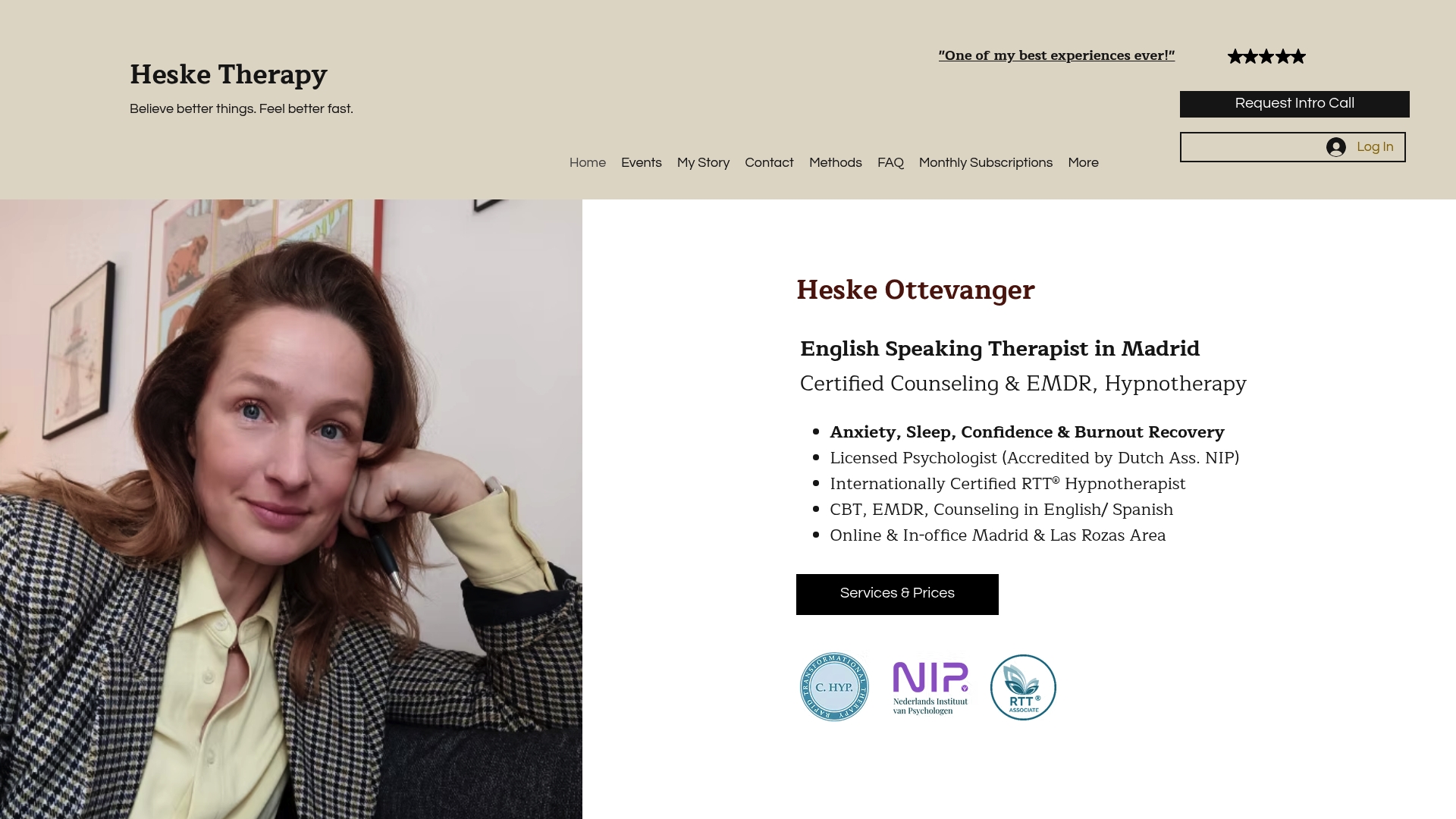
Our integrative approach combines powerful RTT therapy with EMDR, CBT, and clinical hypnotherapy, all delivered in your preferred language. This cultural and linguistic sensitivity accelerates results for anxiety, trauma, burnout, and emotional difficulties common among international clients. The 21-day RTT package offers intensive support for rapid transformation, with language flexibility built into every session. Between appointments, tools like self hypnosis relaxation support your ongoing healing in a linguistically accessible format.
Frequently asked questions
What is multilingual therapy and how does it help expats?
Multilingual therapy conducts sessions in one or more languages based on your emotional needs and comfort level. It helps expats by removing language barriers that limit emotional expression, strengthening the therapeutic relationship through native language communication, and honoring cultural contexts that shape how you experience and communicate distress.
Why does speaking my native language in therapy make such a difference?
Your earliest emotional experiences, family dynamics, and core memories formed in your native language. Accessing these directly during therapy bypasses the cognitive translation step, allowing deeper emotional processing. Research consistently shows better symptom reduction and faster therapeutic progress when clients use their preferred language.
Can I switch between languages during the same therapy session?
Yes, and doing so often enhances therapeutic work. Different languages can access different emotional states or memory networks. Many multilingual clients naturally switch languages when discussing particular topics or feelings, and skilled therapists encourage this flexibility as a therapeutic tool rather than viewing it as a problem.
How do I know if interpreter-mediated therapy will work for me?
IMP works well when you cannot find a direct-language therapist but need mental health support. Success depends on professional interpreter training, clear confidentiality agreements, and your comfort with the three-person therapeutic relationship. Many clients initially hesitant about IMP report positive experiences once trust develops among all parties.
What should I look for in a multilingual therapist for trauma work?
Seek therapists with specific trauma training in methods like EMDR or RTT who also demonstrate cultural competence and language fluency. Ask about their experience treating expats, their approach to language switching, and how they adapt evidence-based treatments across cultural contexts. The right fit combines clinical expertise with linguistic flexibility and cultural sensitivity.
Recommended
Comments