Step-by-Step Guide to Rapid Transformational Therapy Success

For many American professionals living in Madrid, feeling stuck with anxiety and invisible emotional walls is more common than you might think. Studies show that over 60 percent of expatriates report higher stress levels after relocating, with emotional blocks sometimes making daily life feel overwhelming. Rapid Transformational Therapy offers targeted techniques for swift mental well-being improvement. This guide provides practical strategies to help English-speaking expatriates overcome fear, break old cycles, and finally start thriving abroad.
Table of Contents
Quick Summary
Essential Insight | Detailed Explanation |
1. Assess Your Readiness for RTT | Evaluate emotional openness, motivation, and commitment before starting therapy for optimal success. |
2. Choose a Qualified Practitioner | Select an RTT practitioner who aligns with your specific needs and possesses the proper certifications and experience. |
3. Identify Emotional Blocks | Reflect on recurring life patterns to uncover emotional blocks, aiding in goal-setting for personal transformation. |
4. Effectively Apply RTT Techniques | Use regression, visualization, and affirmations during sessions to alter deep-seated thought patterns and achieve transformation. |
5. Monitor Progress Regularly | Keep track of emotional and behavioral changes through journals and therapist feedback to adjust your action plan as needed. |
Step 1: Assess readiness for rapid transformational therapy
Before diving into Rapid Transformational Therapy (RTT), understanding your personal readiness is crucial for successful transformation. Evaluating your psychological preparedness helps determine whether you are truly positioned to benefit from this therapeutic approach.
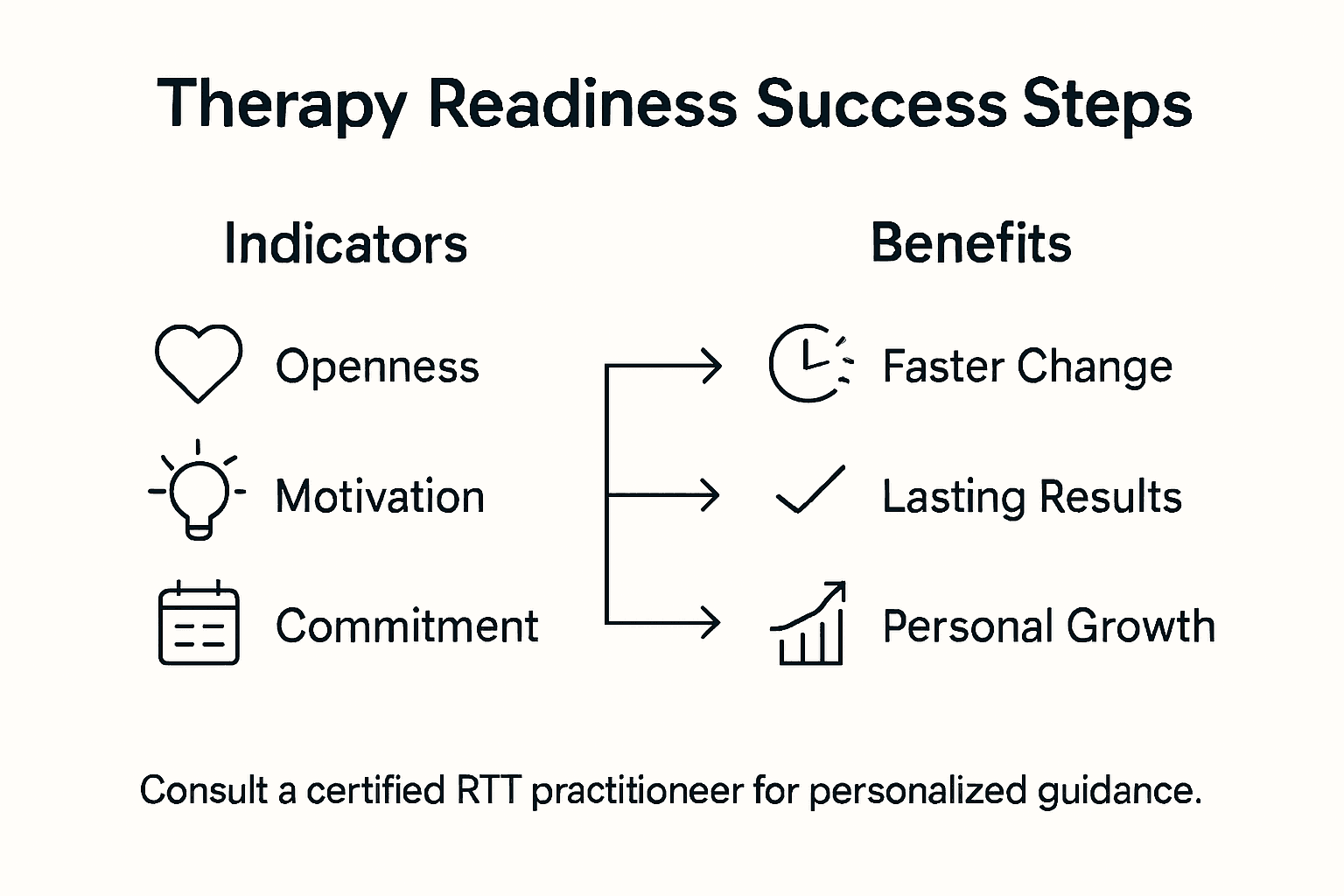
Psychological readiness involves more than just wanting change. Researchers have developed specialized tools like the Readiness for Therapy Questionnaire to measure clients’ motivation and potential for therapeutic success. This assessment helps predict not just therapy completion but also potential symptom improvement. Key indicators include your emotional openness, willingness to explore underlying issues, commitment to personal growth, and realistic expectations about the therapeutic process.
To effectively assess your readiness, consider your current mental state, previous therapy experiences, specific goals, and personal motivation level. Are you prepared to confront potentially challenging emotional landscapes? Can you dedicate consistent time and energy to the therapeutic journey? Honest self reflection will determine your potential for meaningful transformation.
Here is a summary of key indicators for assessing your readiness for Rapid Transformational Therapy:
Indicator | What It Means | Why It Matters |
Emotional Openness | Willingness to express feelings | Increases therapy effectiveness |
Motivation Level | Drive to pursue change | Sustains effort through challenges |
Self-Reflection | Ability to examine personal thoughts | Enables deep inner work |
Commitment | Dedication to attend sessions consistently | Supports continuous progress |
Realistic Expectations | Understanding the effort required | Prevents disappointment, boosts outcomes |
Pro tip: Schedule a preliminary consultation with a therapist to discuss your readiness and receive personalized guidance about your specific psychological needs and therapeutic potential.
Step 2: Select the ideal therapeutic environment and practitioner
Choosing the right therapeutic environment and practitioner is a critical step in your Rapid Transformational Therapy (RTT) journey. This decision can significantly impact your healing process and overall transformation experience.
When selecting an RTT practitioner, focus on finding someone who is not just certified but truly aligned with your specific therapeutic needs. Experienced RTT practitioners combine comprehensive training in cognitive behavioral therapy, hypnotherapy, and mindfulness techniques. Look for professionals who have specific certification in RTT and demonstrate expertise in addressing your particular mental health challenges. The ideal practitioner should create a supportive and confidential space that allows for deep subconscious exploration and healing.
Consider both the physical and virtual therapeutic environments. Some clients prefer in-person sessions for a more personal connection, while others might find online sessions more comfortable and convenient. Evaluate the practitioner’s approach during an initial consultation. Pay attention to their communication style, empathy, and ability to make you feel safe and understood. The right environment should feel calm, secure, and conducive to relaxation and introspective work.
The chart below compares in-person and online RTT sessions to help you select the best fit:
Feature | In-Person Sessions | Online Sessions |
Personal Connection | Strong face-to-face interaction | Convenient, flexible access |
Privacy | Private office setting | Home or chosen environment |
Flexibility | Scheduled office visits | Greater scheduling options |
Accessibility | May require travel | Accessible from anywhere |
Pro tip: Request a brief introductory call with potential practitioners to assess their communication style and therapeutic approach before committing to full sessions.
Step 3: Clarify emotional blocks and set transformation goals
Identifying and understanding your emotional blocks is a crucial step in your Rapid Transformational Therapy (RTT) journey. This process involves deep self reflection and creating a clear roadmap for personal transformation.

Emotional blocks are often unconscious barriers that prevent you from achieving your full potential. Exploring your mindset helps uncover these hidden obstacles. Start by examining recurring patterns in your life such as relationship challenges, career stagnation, persistent negative thoughts, or self sabotaging behaviors. Ask yourself probing questions. What beliefs have been holding you back? What childhood experiences might have created these emotional barriers? Which fears or past traumas continue to influence your current decisions?
Setting transformation goals requires precision and honesty. Break down your objectives into specific, measurable, and meaningful targets. Instead of vague aspirations like becoming happier, define concrete outcomes such as developing confidence in professional settings, improving communication in relationships, or overcoming specific anxiety triggers. Your goals should be deeply personal, emotionally resonant, and aligned with your authentic self. Remember that true transformation happens when you connect your conscious desires with your subconscious motivations.
Pro tip: Write down your emotional blocks and transformation goals in a dedicated journal, creating a tangible map of your inner landscape and therapeutic journey.
Step 4: Apply rapid transformational therapy techniques effectively
Rapid Transformational Therapy (RTT) requires a strategic and intentional approach to unlocking your subconscious potential and creating meaningful psychological transformation. This step is about implementing the techniques that will help you rewire deeply ingrained thought patterns and emotional responses.
Effective RTT application involves entering a relaxed hypnotic state where your conscious critical mind becomes less active, allowing direct communication with your subconscious. During this state, your therapist will guide you through specific techniques including regression to explore past experiences, visualization to reframe negative memories, and targeted affirmation replacement. The key is to approach these techniques with openness and vulnerability, allowing yourself to explore memories and beliefs that might have previously felt too challenging or painful to confront.
Consider the process like rewiring an electrical system in your mind. Each technique serves a specific purpose: regression helps identify root causes, visualization allows you to reimagine past scenarios from a healing perspective, and positive affirmations create new neural pathways that support your desired emotional and behavioral changes. Stay present and engaged during the session, trusting the process and your therapist’s guidance.
Pro tip: Practice deep breathing and mindfulness techniques before your RTT session to enhance your ability to enter and maintain a receptive hypnotic state.
Step 5: Verify progress and adjust your personal action plan
Verifying your progress in Rapid Transformational Therapy (RTT) is a dynamic process that requires consistent reflection, honest self assessment, and strategic recalibration of your therapeutic goals. This crucial step ensures that your transformation journey remains aligned with your evolving personal needs and psychological landscape.
Progress verification in RTT involves a comprehensive approach of ongoing monitoring and adaptive planning. Your therapist will conduct follow-up sessions to evaluate emotional and behavioral changes, using personalized feedback mechanisms. During these sessions, you will explore tangible shifts in your thought patterns, emotional responses, and practical life outcomes. Pay attention to both subtle internal changes and external manifestations of your transformation. Are you responding differently to previously triggering situations? Have your relationships or professional interactions shifted? Are you experiencing increased emotional resilience and self awareness?
Custom audio recordings and structured self reflection tools play a significant role in maintaining momentum between sessions. These resources help reinforce new neurological pathways and support the integration of therapeutic insights into your daily life. Be prepared to discuss challenges, celebrate progress, and collaboratively adjust your action plan with your therapist. Remember that transformation is not linear transformation is a dynamic, nuanced journey of continuous growth and self discovery.
Pro tip: Keep a detailed journal documenting your emotional states, behavioral changes, and insights to provide concrete evidence of your progress during therapy review sessions.
Unlock Lasting Change with Expert Support at Heske Therapy
If you are ready to break through emotional blocks and achieve rapid transformational therapy success, Heske Therapy offers tailored mental health solutions designed specifically for English-speaking expatriates and international clients in Madrid. Our experienced practitioners understand the importance of assessing your readiness, clarifying your goals, and creating a supportive therapeutic environment to guide you through each critical step of transformation. Whether you face anxiety, burnout, or deep-seated emotional challenges, your journey toward lasting change begins with a personalized approach combining RTT, CBT, hypnotherapy, and more.
Benefits of choosing Heske Therapy include:
Access to culturally sensitive and multilingual therapists who respect your unique background
Flexible online and in-office sessions for your convenience and comfort
Customized treatment plans focused on rapid and meaningful progress
Begin your transformation today by scheduling a free discovery call at Heske Therapy. Dive deeper into how combining Rapid Transformational Therapy Success with integrative methods can accelerate your healing process. Don’t wait to invest in your emotional freedom and well-being—connect with us now and start rewriting your story.
Frequently Asked Questions
What is Rapid Transformational Therapy (RTT)?
Rapid Transformational Therapy (RTT) is a therapeutic approach that combines elements of cognitive behavioral therapy, hypnotherapy, and mindfulness to create significant psychological transformation. To benefit from RTT, seek a qualified practitioner who can guide you through tailored techniques in a supportive environment.
How do I assess my readiness for Rapid Transformational Therapy?
To assess your readiness, evaluate your emotional openness, motivation, self-reflection, commitment, and realistic expectations about the therapeutic process. Take some time to honestly reflect on these key indicators to determine if you are prepared for meaningful transformation.
What techniques are used during Rapid Transformational Therapy sessions?
RTT sessions typically utilize techniques such as regression, visualization, and positive affirmation replacement. Engage actively in these processes during your session to effectively rewire your thought patterns and overcome emotional barriers.
How can I verify my progress in Rapid Transformational Therapy?
You can verify your progress by keeping a journal to document your emotional states, behavioral changes, and insights gained throughout the therapy. Regularly review this documentation with your therapist to assess shifts and celebrate achievements in your therapeutic journey.
How should I set transformation goals for my RTT journey?
When setting transformation goals, ensure they are specific, measurable, and meaningful to you. For instance, instead of aiming to feel happier, define goals like improving communication skills or reducing anxiety triggers within a specific timeframe.
What should I do if I feel stuck during the Rapid Transformational Therapy process?
If you feel stuck, communicate openly with your therapist about your experiences and concerns. Together, you can explore any emotional blocks and adjust your action plan to better align with your evolving needs for continued progress.
Recommended
Comments