How to Choose a Psychotherapy Method That Works for You


TL;DR:
Choosing therapy involves matching your specific challenges to the appropriate approach and assessing the quality of the therapeutic relationship.
Active progress tracking, initial sessions for fit, and clear communication with your therapist can significantly enhance outcomes.
Starting therapy is one of the most personal decisions you can make, yet the sheer number of options makes it confusing before you even book a first session. CBT, EMDR, psychodynamic, DBT, RTT — each approach has its advocates, its research base, and its ideal candidate. Knowing how to choose a psychotherapy method that actually fits your life, your history, and your specific challenges is not about picking the most popular option. It is about understanding what drives your struggles and matching that to the right tools. This guide gives you a clear, evidence-based framework to do exactly that.
Table of Contents
Key takeaways
Point | Details |
Match therapy to your specific challenge | Anxiety, trauma, and burnout each respond better to different therapy types and techniques. |
Therapeutic alliance matters most | The quality of your relationship with your therapist predicts success more reliably than any single therapy label. |
Use early sessions to evaluate fit | The first 1 to 3 sessions are an interview, not a commitment. |
Track your progress actively | Measurement-based care improves outcomes by allowing timely adjustments to your treatment plan. |
Integrative approaches are often best | Combining methods, like EMDR with CBT, frequently produces stronger results than any single technique alone. |
How to choose a psychotherapy method: key factors first
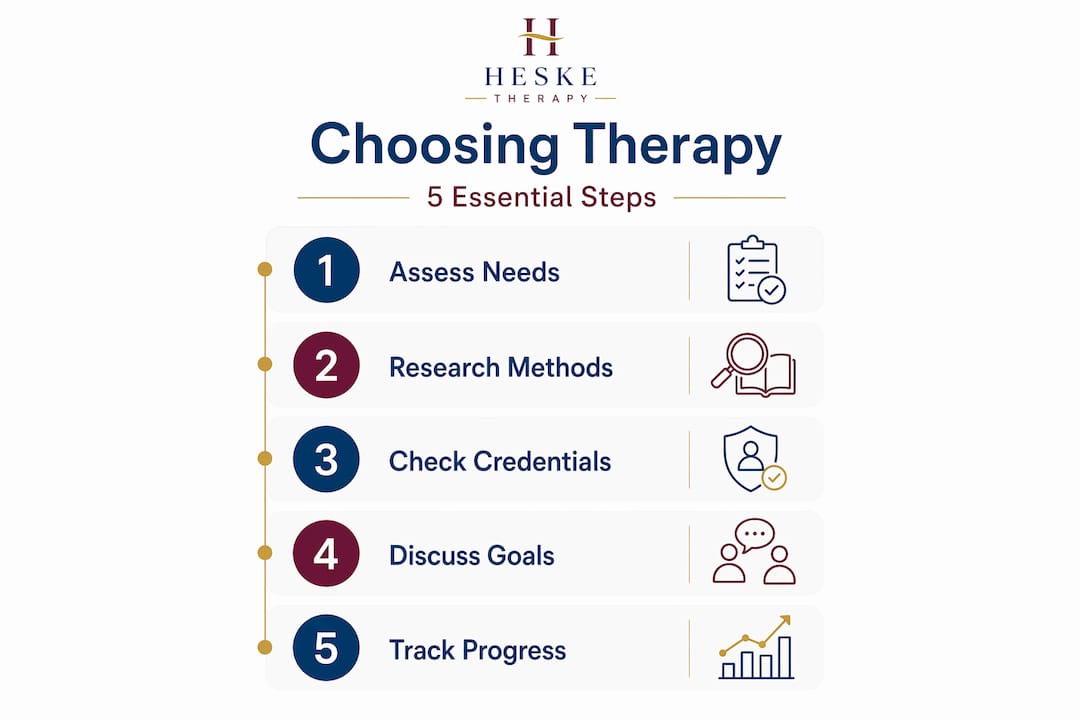
Before you compare therapy types, you need to spend some time looking inward. The single biggest mistake people make is jumping straight to researching methods without first clarifying what they actually need from therapy.
Start with these questions:
What is your primary concern? Anxiety, trauma, burnout, relationship patterns, and low self-esteem each point toward different approaches.
What kind of session structure suits you? Some people thrive in structured, homework-driven formats like CBT. Others need more open-ended exploration.
How much time can you commit? Some therapies achieve results in 8 to 12 sessions. Others, like psychodynamic therapy, are designed for longer engagement.
Do you prefer talking through feelings or working on thoughts and behaviors? This is a fundamental split between insight-based and action-based therapies.
Are you open to body-based techniques? EMDR, somatic therapy, and hypnotherapy involve physical or sensory elements that not every client feels comfortable with at first.
Therapist qualifications matter too. Evidence-based therapy delivered by a licensed professional improves engagement and outcomes significantly. Verify that any therapist you consider holds recognized credentials in the specific method they offer, not just a general counseling license.
Pro Tip: Before your first session, write down three specific situations in the past month where you felt stuck, overwhelmed, or dysregulated. Bring that list. It gives your therapist concrete material and helps you both evaluate whether their approach addresses the right layer of the problem.
Progress tracking is another underrated factor. The American Psychological Association recommends Measurement-Based Care as a best practice, meaning your therapist should use standardized assessments to monitor how you are responding and adjust accordingly. If a therapist never checks in on measurable progress, that is worth raising.
Common therapy types and what they treat best
Choosing counseling methods becomes much easier once you understand what each approach was actually designed to do. The table below maps the most common therapy types to the conditions they address most effectively.
Therapy type | Best fit conditions | Typical session length | Average duration |
Cognitive Behavioral Therapy (CBT) | Anxiety, depression, OCD, phobias | 50 minutes | 12 to 20 sessions |
EMDR | Trauma, PTSD, phobias, grief | 60 to 90 minutes | 8 to 12 sessions |
Psychodynamic therapy | Relationship patterns, chronic low mood, identity issues | 50 minutes | 6 months to several years |
Dialectical Behavior Therapy (DBT) | Emotion dysregulation, borderline personality, self-harm | 50 to 60 minutes | 6 months to 1 year |
Rapid Transformational Therapy (RTT) | Deep-rooted beliefs, burnout, anxiety, self-esteem | 90 to 120 minutes | 1 to 3 sessions |
Integrative or somatic therapy | Burnout, chronic stress, physical symptoms of emotional origin | 50 to 60 minutes | Variable |
A few things worth knowing about specific approaches:
CBT and trauma-focused CBT are the most researched therapies for anxiety and trauma. Clinical guidelines recommend both trauma-focused CBT and EMDR as first-line treatments for PTSD, typically over 8 to 12 weekly sessions.
EMDR is particularly useful for clients who struggle to articulate trauma verbally. It uses bilateral stimulation to help the brain process distressing memories without requiring detailed verbal recounting. You can read more about EMDR in trauma recovery if this resonates with your experience.
Psychodynamic therapy is worth considering when symptoms feel tied to long-standing patterns rather than a single event. Research shows its benefits continue growing after treatment ends, with effect sizes rising from 0.97 during treatment to 1.51 at nine or more months post-treatment. That is a rare quality in mental health treatment.
DBT was originally developed for borderline personality disorder but has since proven effective for anyone struggling with intense emotional swings, impulsive behavior, or interpersonal conflict.
Integrative and somatic approaches are well-suited for burnout, especially when stress has started showing up physically, such as migraines, IBS, or persistent fatigue.
Pro Tip: When reviewing therapy options for anxiety specifically, look at anxiety therapy types that combine evidence-based and integrative methods. A hybrid approach often addresses both the cognitive symptoms and the physical tension that anxiety produces.
A step-by-step guide to selecting and testing your approach
Finding the right therapist and method is a process, not a single decision. Here is how to move through it without wasting months on a poor fit.
Research therapies linked to your core concern. If anxiety is your main issue, look at CBT, EMDR, and integrative approaches. If you are dealing with burnout, somatic and RTT methods may be worth exploring alongside traditional counseling. Reviewing resources like this guide to choosing therapy can help you narrow options before committing.
Treat the first one to three sessions as an evaluation. You are interviewing the therapist as much as they are assessing you. The first sessions should feel exploratory and safe. If you leave feeling embarrassed, judged, or consistently misunderstood, that is a signal worth taking seriously.
Ask direct questions about their approach. How does this therapist work with someone presenting your specific concern? What does progress look like in their method? How do they handle it if you stop improving? A good therapist will answer these clearly and without defensiveness.
Check in with a therapist-client rapport framework. Research from Guideme Therapy underscores that rapport is not a bonus, it is a core mechanism of change. Feeling heard and respected accelerates outcomes in every modality.
Use a progress tracking method. Ask your therapist about standardized self-report measures, or simply keep a weekly journal rating your mood, sleep, and stress on a 1 to 10 scale. Review it every four weeks. If nothing is shifting, discuss it openly.
Know when to switch or combine. No single method works for everyone, and no single therapy has been proven universally superior. If you have done 10 or more sessions without meaningful change, it is reasonable to explore a different approach or add a complementary method. Switching is not failure. It is clinical good sense.
Mistakes that slow down your therapy progress
Even when you choose the right therapy type, certain patterns can undermine the process. Being aware of them ahead of time gives you a real advantage.
Expecting rapid results from the wrong method. Some therapies like RTT are designed for relatively quick transformation. Others, like psychodynamic therapy, build insight over months. Mismatch your expectation to the method, and frustration follows fast.
Choosing based on what a friend recommends. Your coworker’s CBT success with social anxiety says very little about whether CBT will address your complex grief or burnout. Selecting therapy techniques should be personal, not social.
Ignoring the therapeutic relationship. The quality of the connection between you and your therapist predicts outcomes across virtually every modality. If you do not feel safe or genuinely understood, the best technique in the world will not deliver results.
Stopping therapy without a conversation. Many people quietly fade out when things feel stuck or uncomfortable. This is one of the most common reasons therapy fails. Research shows premature termination rates run as high as 21.9%, often because clients did not voice concerns before disappearing.
Skipping progress measurement entirely. Without tracking, you are flying blind. Measurement-based care is not bureaucratic paperwork. It is how good therapists catch early warning signs of stagnation and pivot.
“The therapeutic relationship is not just a vehicle for delivering therapy techniques. For many clients, it is the therapy.”
My honest take on choosing therapy
I have worked with clients from dozens of different backgrounds, many of them expats in Madrid navigating anxiety, burnout, or trauma without a local support network. What I have learned over years of practice is this: people spend enormous energy searching for the “right” therapy label before they ever sit down with a therapist. That search often delays the thing they actually need, which is a human connection where real work can begin.

In my experience, a client who builds strong rapport with a therapist and trusts the process will make more progress in six sessions than someone who found the “perfectly matched” modality but feels disconnected from the person delivering it. That is not an argument against doing your research. It is an argument for weighting the relationship at least as heavily as the method.
What I have also seen is that most meaningful breakthroughs happen at the intersection of approaches. A client dealing with burnout rarely benefits from one technique alone. Combining EMDR to process underlying stress memories with RTT to shift limiting beliefs about self-worth, then grounding it all with counseling, tends to produce the kind of change that actually sticks. The psychotherapy methods explained resource on the Hesketherapy website goes deeper into how this integrative philosophy works in practice.
My advice: start before you feel ready, be honest about what is not working, and advocate for your own progress. The therapy that works is the one you actually stay in long enough to let it work.
— Heske
Ready to find the right fit?
Knowing which therapy method aligns with your needs is only the first step. The next one is working with someone who can apply it with real skill and personal attention.
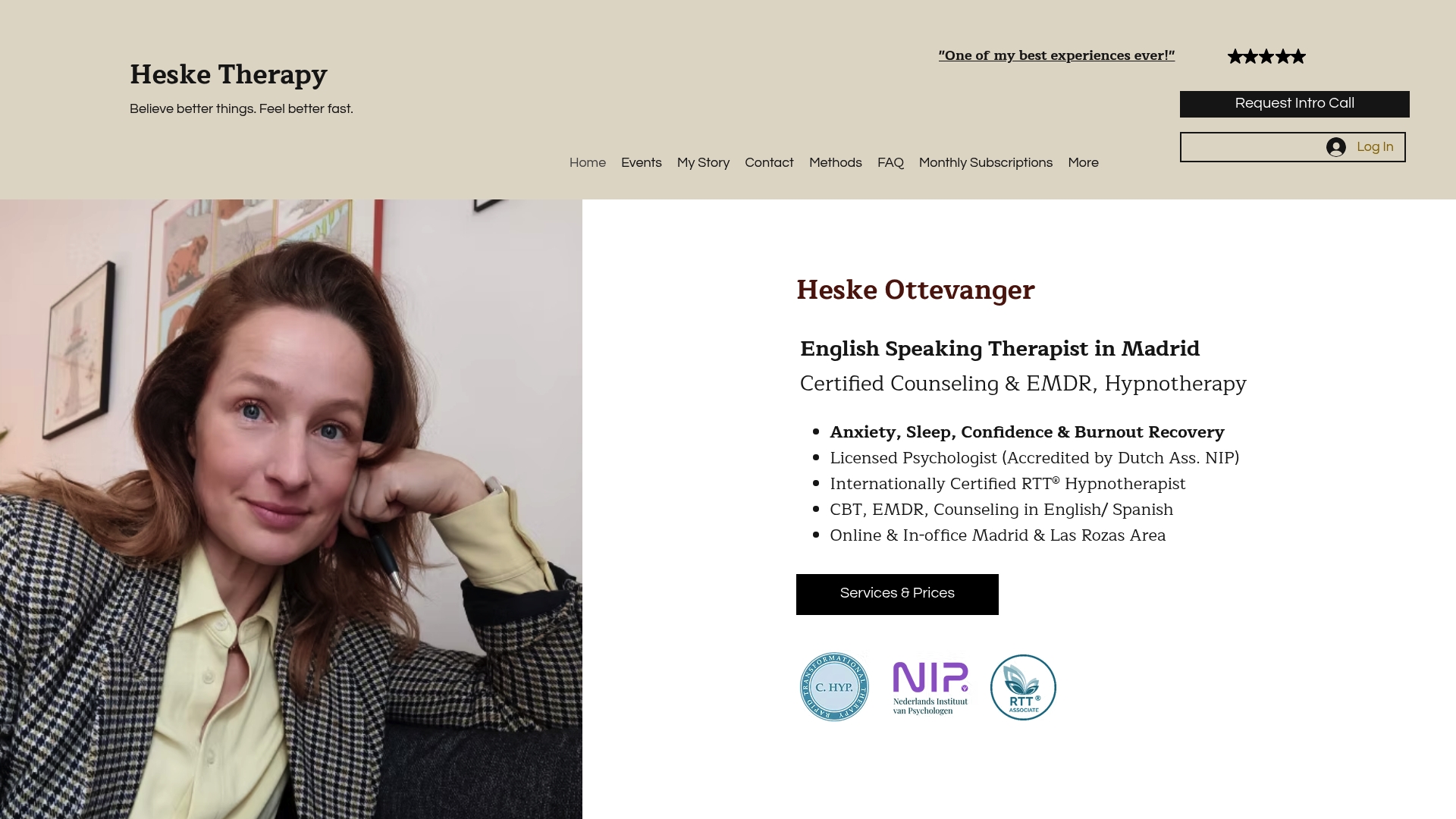
At Hesketherapy, the approach is genuinely integrative. Sessions draw from CBT, EMDR, RTT, counseling, and hypnotherapy, selected based on what you are actually dealing with, not a one-size-fits-all protocol. Whether you are managing anxiety that has followed you for years, recovering from trauma, or burned out after pushing too hard for too long, there is a personalized path forward. Sessions are available both online and in-office in Madrid, in English, Spanish, and Dutch. You can book a free discovery call to talk through your situation before committing to anything. For those ready to start with a structured commitment, explore the pack of four counseling sessions as a practical way to get started. If rapid transformation interests you, learn more about what RTT therapy actually involves.
FAQ
Which therapy is right for me if I have anxiety?
CBT and EMDR are the most well-researched options for anxiety disorders. Integrative approaches that combine multiple techniques often produce the strongest results, particularly for anxiety with a physical or trauma-related component.
How do I pick a therapist I can trust?
Look for licensed credentials, experience with your specific concern, and pay close attention to how you feel in the first session. Feeling safe, heard, and respected are reliable early indicators of a good fit.
How long does it take to see results from therapy?
It depends on the method and the issue. Structured approaches like CBT or RTT may show shifts in 4 to 12 sessions. Psychodynamic therapy often builds momentum over several months, with lasting benefits that continue growing after treatment ends.
Can I switch therapy methods if the first one is not working?
Yes, and you should not wait too long to raise it. If measurable progress has stalled after 10 or more sessions, discuss switching or combining approaches with your therapist. This is a normal and clinically sound part of the process.
Is therapy better than medication for anxiety or trauma?
Psychotherapy alone tends to have significantly better adherence rates than medication only. For many people, therapy addresses the root patterns rather than just managing symptoms. Some conditions respond best to a combination of both, which is worth discussing with a qualified professional.
Recommended
Comments