Why treat IBS with psychotherapy: the expat's gut guide


TL;DR:
Psychotherapy, especially CBT and gut-directed hypnotherapy, effectively addresses the emotional factors linked to IBS by targeting the gut-brain axis. This approach helps break the vicious cycle of emotional stress and gastrointestinal symptoms, making treatment more comprehensive. For expats in Madrid, digital therapy options improve accessibility and allow targeted care, enhancing overall symptom management.
If you’re living in Madrid with irritable bowel syndrome, you’ve probably tried the dietary changes, maybe cut out gluten, reduced caffeine, and still find yourself doubled over before a stressful meeting or social event. The reason why treat IBS with psychotherapy keeps coming up in research is simple: IBS is not just a gut problem. Among more than 1.2 million people with IBS, 38% had anxiety and about 27% were diagnosed with depression, with IBS patients more than twice as likely to experience these conditions compared to the general population. For expats navigating life in a new country, that emotional load is often even heavier.
Table of Contents
Key Takeaways
Point | Details |
High emotional comorbidity | Many IBS patients experience anxiety and depression that amplify symptoms through the gut-brain axis. |
Effective therapies | Cognitive behavioral therapy and gut-directed hypnotherapy have the strongest evidence in reducing IBS symptoms linked to emotional factors. |
Gut-brain axis focus | Psychotherapy targets the disrupted communication between brain and gut, not just psychological symptoms alone. |
Delivery options matter | Both digital and face-to-face gut-directed psychotherapies provide meaningful symptom relief, enabling flexible access. |
Tailored care for expats | English-speaking expats in Madrid should seek IBS-specific psychotherapy with cultural and language fit for optimal results. |
Why treat IBS with psychotherapy: understanding the mind-gut connection
The gut and the brain are in constant conversation. This two-way communication system, known as the gut-brain axis, means that what happens emotionally in your mind directly affects what your intestines do, and vice versa. IBS symptoms and emotional health are linked through this axis, with gut dysfunction triggering mood problems and psychological stress triggering gut dysfunction. It is a loop, and most conventional IBS treatments never touch it.
This is exactly where psychotherapy enters. It is not about telling you that your symptoms are imaginary. Gut-directed psychotherapy targets the disrupted gut-brain axis specifically, which is a fundamentally different goal than generic stress relief. The therapy interrupts the feedback loop rather than just managing symptoms downstream.
For English-speaking expats in Madrid, the emotional factors are often amplified. Isolation, language barriers, cultural adjustment, and career pressure all activate the same stress pathways that feed into IBS flares. Understanding this helps explain why so many expats find that their IBS worsened after relocating, even when their diet stayed the same.
Here is what that gut-brain loop looks like in practice:
Anxiety activates the autonomic nervous system, increasing gut motility and triggering cramping or urgency
Depression slows gut function, contributing to bloating and constipation
Gut discomfort sends distress signals to the brain, reinforcing anxiety and fear around symptoms
Social avoidance follows, deepening isolation and making emotional symptoms worse
Practices like qigong for IBS symptom relief can support this process from the body side, but they don’t retrain the thought patterns and nervous system responses the way structured psychotherapy does.
“The gut-brain axis is not a metaphor. It is a bidirectional neural and hormonal highway, and psychotherapy is one of the few interventions that works on both ends simultaneously.”
Understanding this connection is the foundation. The role of hypnotherapy in IBS treatment builds directly on this axis and is one of the most clinically validated approaches available.
Effective psychotherapy approaches for IBS symptom relief
Understanding IBS’s emotional roots leads us to the best psychotherapy methods proven to ease symptoms effectively. Two therapies consistently rise to the top when it comes to clinical evidence.
CBT and gut-directed hypnotherapy are first-line treatments with the strongest evidence for managing IBS-related stress, anxiety, and depression. This isn’t a fringe opinion. It’s the position of major gastroenterology bodies, and the science behind it is solid.
How cognitive behavioral therapy (CBT) works for IBS:
CBT for IBS is not generic talk therapy. It is structured work that identifies the specific thought patterns and behavioral responses that keep your gut in a chronic state of alert. For example, catastrophic thinking about a symptom (“this cramping means I won’t make it to the bathroom in time”) triggers the very physiological response that causes urgency. CBT teaches you to notice that thought, test it, and replace it with something that doesn’t light up your nervous system.
CBT reduces frequency and severity of IBS symptoms by directly addressing these disrupted gut-brain patterns, not just improving your mood as a side effect.

How gut-directed hypnotherapy works:
This is different from stage hypnosis. Gut-directed hypnotherapy uses deep relaxation combined with specific therapeutic suggestions targeting gut function. Clients are guided to visualize their digestive system calming, their intestinal walls relaxing, and their gut responding normally to food and stress. Over multiple sessions, this retraining has a measurable effect on gut sensitivity and motility.
Therapy | Primary mechanism | Sessions needed | Best for |
Cognitive behavioral therapy | Thought and behavior retraining | 6 to 12 sessions | IBS with anxiety, catastrophizing, avoidance |
Gut-directed hypnotherapy | Nervous system calming, gut imagery | 6 to 12 sessions | IBS with heightened gut sensitivity, stress reactivity |
EMDR | Trauma processing | Variable | IBS with trauma history or PTSD overlap |
Mindfulness-based therapy | Awareness and acceptance | 8 weeks | IBS with general emotional dysregulation |
The four key steps in a standard CBT program for IBS:
Symptom mapping: Tracking when symptoms occur and what emotional state or thought preceded them
Thought identification: Pinpointing the specific beliefs and interpretations driving the stress response
Cognitive restructuring: Replacing catastrophic or distorted thoughts with more accurate, calmer alternatives
Behavioral exposure: Gradually re-engaging with avoided situations (restaurants, travel, social events) to reduce fear-driven anticipation
Pro Tip: Ask any therapist you’re considering whether they use IBS-specific CBT protocols or generic anxiety CBT. The gut-brain axis work requires training in both psychological and physiological dimensions. General CBT for anxiety is not the same thing.
Hypnotherapy for IBS is available through specialized practitioners in Madrid and can be delivered both in person and digitally.
Comparing digital and face-to-face gut-directed psychotherapies
With established effective therapies, let’s explore how you can access them, including digital and in-person options. This matters enormously for expats, because finding an English-speaking specialist in Madrid who is trained in gut-directed CBT or hypnotherapy is not straightforward.
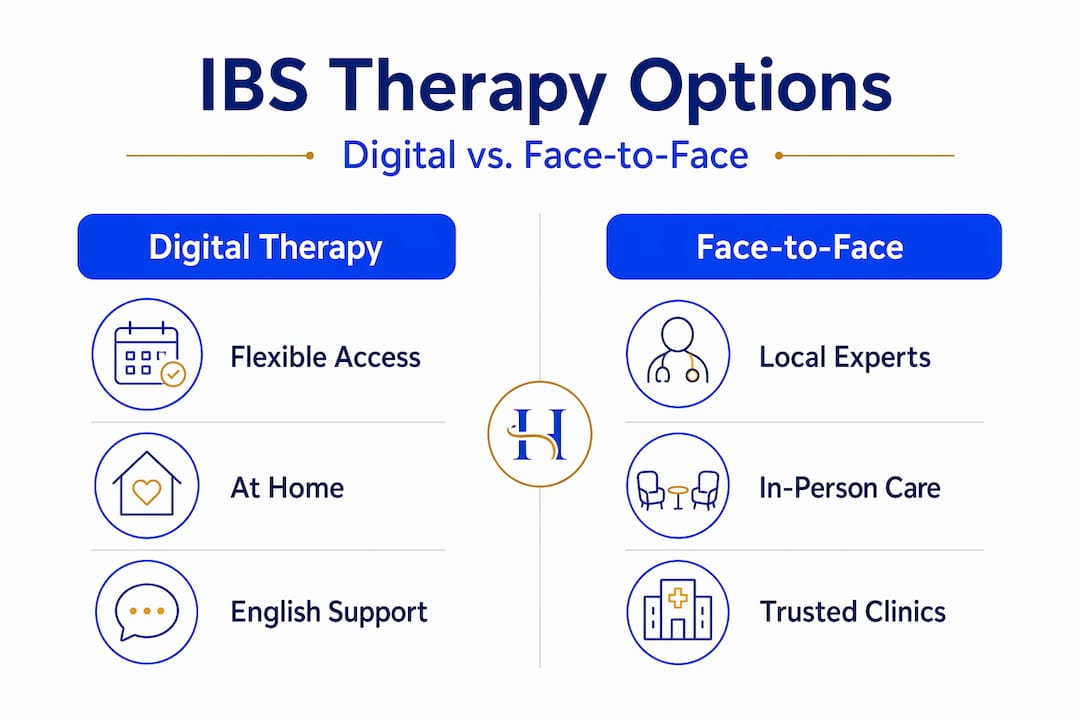
Digital gut-directed psychotherapy is an emerging alternative to face-to-face therapy, offering comparable benefits in IBS symptom relief with significantly better accessibility. For expats who are still navigating the Spanish healthcare system, digital delivery removes several real barriers at once.
Advantages of digital therapy:
Access to English-speaking specialists regardless of geographic location within Spain
No commute, which matters when IBS symptoms make public transportation anxiety-provoking
Flexibility for professionals with unpredictable schedules
Lower cost in many cases due to reduced overhead
Advantages of face-to-face therapy:
Richer assessment through in-person observation and nonverbal cues
Some people find the physical presence of a therapist more grounding for hypnotherapy
Easier to build therapeutic rapport quickly, especially for trauma-related IBS patterns
Better suited for those who struggle with technology or privacy at home
Factor | Digital therapy | Face-to-face therapy |
Access to English-speaking specialists | High | Variable |
Cost | Generally lower | Generally higher |
Symptom relief effectiveness | Comparable | Comparable |
Flexibility | High | Moderate |
Initial rapport building | Moderate | High |
Pro Tip: If you are using step by step hypnotherapy for IBS, audio recordings between sessions significantly extend the effect of live sessions. Ask your therapist whether they provide these as part of their program.
Practical steps for expats in Madrid seeking psychotherapy for IBS
Now that you know what therapies work and delivery options, let’s focus on how to find and start the right psychotherapy in Madrid. This is where many expats stall, either because they don’t know what to ask for or because they book sessions with a well-meaning but non-specialized counselor and wonder why nothing changes.
IBS-oriented psychological therapy is more effective for patients with psychological stress or mood disorders than generic counseling, especially when gut-brain mechanisms are the target. That distinction matters practically.
How to find the right therapist in Madrid:
Search specifically for therapists trained in gut-directed CBT or gut-directed hypnotherapy, not just “stress counseling” or “anxiety therapy”
Confirm they work in English as a native or near-native language, not just conversationally
Ask directly: “Do you use IBS-specific protocols, and are you familiar with the gut-brain axis in clinical practice?”
Check whether they offer digital sessions, especially important if you live outside central Madrid
Ask about session frequency and what a full treatment course looks like, not just a single session
Before your first session, prepare:
A symptom diary covering two to three weeks, noting when symptoms occur, what you ate, and your emotional state at the time
A brief mental health history, including anxiety, depression, or significant life stressors since relocating
A list of situations you currently avoid because of IBS (travel, eating out, certain social events)
Questions about how progress will be measured so you can track improvement
Pro Tip: Hypnotherapy benefits for Madrid expats go beyond IBS. The same sessions that calm your gut response often address the underlying anxiety, sleep disruption, and adjustment stress that come with expat life, giving you more return on the same therapeutic investment.
The role of psychotherapy in comprehensive IBS management
Beyond psychotherapy alone, understanding its role within total IBS care helps maximize symptom relief and wellbeing. Psychotherapy works best when it’s part of a broader picture, not a standalone fix applied in isolation from everything else.
IBS management integrates diet, lifestyle, pharmacologic, and psychological treatments along with patient education to improve overall outcomes. Each layer addresses a different mechanism.
Here is how the parts work together:
Psychotherapy addresses the nervous system dysregulation, emotional amplification, and learned fear responses that make IBS symptoms disproportionate to any physical trigger
Low-FODMAP diet reduces fermentable carbohydrates that directly irritate the gut lining and cause gas and bloating, independent of stress
Exercise regulates gut motility and reduces cortisol, supporting both physical and psychological IBS management
Sleep hygiene matters because poor sleep increases gut sensitivity and inflammatory responses, worsening symptoms
Medication can reduce pain and regulate bowel habits acutely but rarely changes the underlying gut-brain pattern long-term
Supplements such as probiotics may support the gut microbiome. Exploring supplements for gut health is worth considering alongside your therapeutic work
“Treating IBS without addressing the psychological component is like treating a bruise without asking why someone keeps walking into the same table. The symptom gets managed temporarily, but the pattern continues.”
The therapy’s role in IBS comprehensive care is not a supplement to “real” treatment. It is an integral part of the most effective treatment framework available.
A fresh perspective on psychotherapy for IBS among Madrid expats
Here’s something most IBS articles won’t tell you directly: the biggest obstacle for expats getting effective psychotherapy for IBS is not access. It’s misclassification. Many expats who seek therapy for their gut symptoms end up in broad stress management programs or generic anxiety counseling that simply doesn’t target the gut-brain axis with enough specificity to move the needle on IBS.
IBS-specific gut-directed psychotherapy leads to more reliable symptom improvement than broad counseling for patients with combined psychological and gastrointestinal symptoms. This is a clinical distinction with real consequences. Generic therapy can feel helpful emotionally while your IBS remains unchanged, which then gets interpreted as “therapy doesn’t work for IBS” rather than “that particular therapy wasn’t designed for IBS.”
The second thing worth saying plainly: psychotherapy for IBS is not a last resort. Many clients arrive having spent years managing symptoms through increasingly restrictive diets, avoiding restaurants, canceling plans, and structuring their entire Madrid social life around bathroom proximity. Psychotherapy should be considered at the same time as dietary interventions, not after everything else has failed.
For expats specifically, relocation stress, cultural adjustment, professional pressure, and social isolation are not background noise. They are active inputs into the gut-brain axis. A therapist who understands the expat experience isn’t just a nice-to-have. It changes the quality of the work because you don’t have to spend half the session explaining what it feels like to rebuild your life in a foreign city.
Digital therapy has genuinely changed the equation here. The IBS-specific hypnotherapy insights available through online platforms mean you are no longer limited to whoever happens to be within commuting distance in Madrid. You can choose a specialist.
Finally, the mental health and IBS connection isn’t a weakness or a sign that your symptoms “aren’t real.” It’s neuroscience. The gut has more nerve cells than the spinal cord. It produces 90% of the body’s serotonin. Treating IBS without addressing what happens in the nervous system and the mind is treating half the patient.
Find expert IBS-focused psychotherapy in Madrid
Living with IBS as an expat in Madrid is hard enough without spending years on approaches that don’t address what’s actually driving your symptoms. If you recognize yourself in the gut-brain loop described in this article, the most productive next step is connecting with a therapist who understands both the psychological and physiological dimensions of IBS.
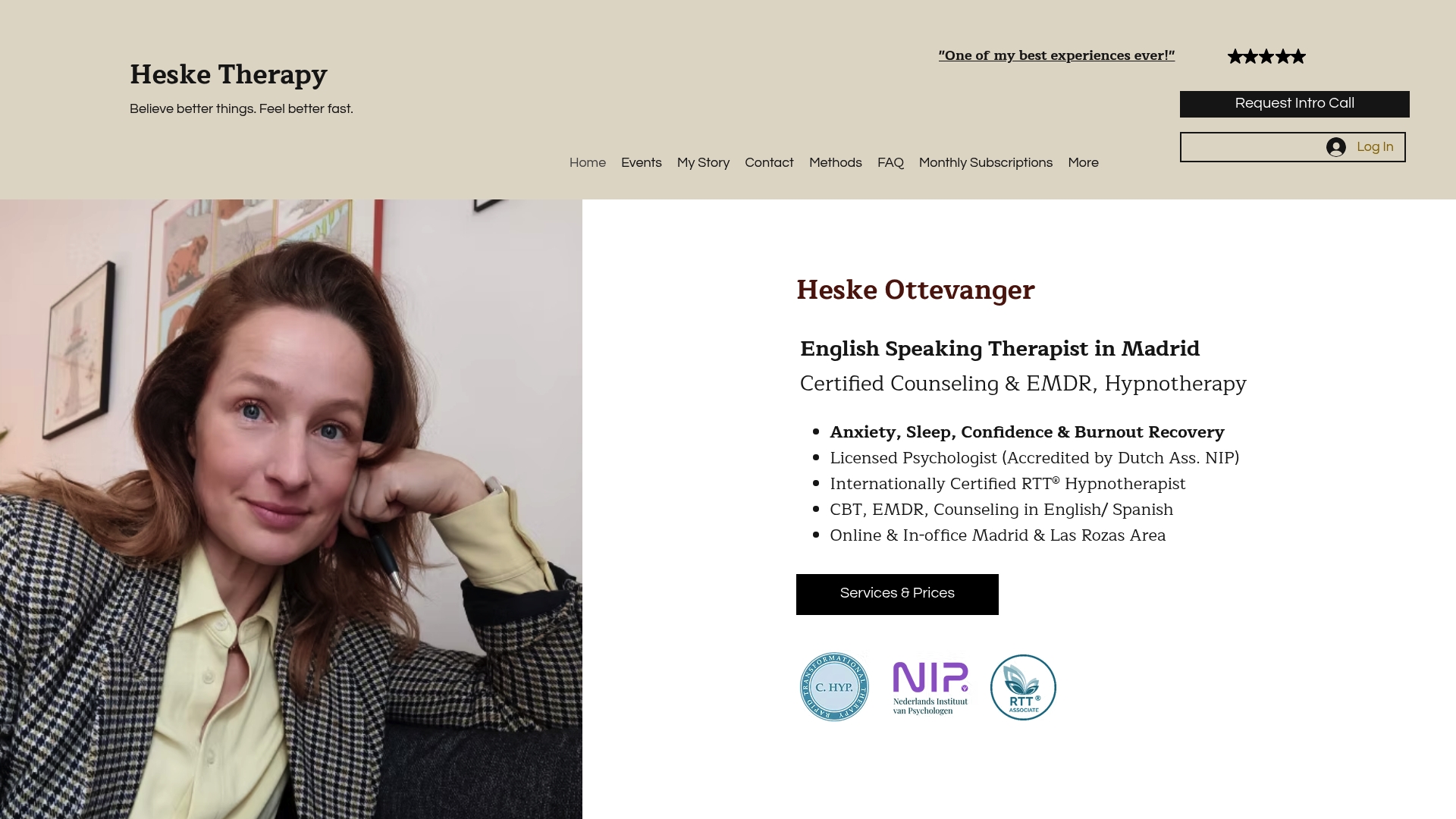
Heske Therapy offers RTT therapy for IBS relief combining Rapid Transformational Therapy, gut-directed hypnotherapy, and CBT in a program designed specifically for clients navigating anxiety, stress, and physical manifestations like IBS. Sessions are available both in person in Madrid and digitally in English, Spanish, and Dutch. The 21-day RTT therapy package is a structured intensive that delivers lasting change in a defined timeframe, not open-ended sessions with no clear outcome. A self-hypnosis relaxation program is also available to support your gut-brain work between sessions. Book a free discovery call to find out whether this approach is right for you.
Frequently asked questions
Why is psychotherapy recommended for irritable bowel syndrome?
Psychotherapy targets the emotional stress, anxiety, and depression that worsen IBS symptoms through the gut-brain axis. IBS patients are more than twice as likely to have anxiety or depression, and psychotherapy directly reduces the symptom severity driven by these emotional factors.
What types of psychotherapy are most effective for IBS?
Cognitive behavioral therapy and gut-directed hypnotherapy have the strongest evidence as first-line treatments. CBT and gut-directed hypnotherapy are considered the leading options for IBS symptom management related to stress, anxiety, and depression.
Can digital psychotherapy be as effective as face-to-face for IBS?
Yes. Digital gut-directed psychotherapy offers comparable symptom relief to face-to-face therapy and significantly improves access, which is particularly valuable for expatriates navigating language and location barriers.
How can expatriates in Madrid find psychotherapy suited for IBS?
Seek therapists trained specifically in gut-directed CBT or hypnotherapy, confirm English-language fluency, and ask whether they use IBS-specific protocols rather than general anxiety counseling. IBS-oriented psychological therapy is measurably more effective than generic counseling for patients where emotional factors are driving symptoms, which is the norm for most expats.
Recommended
Comments