5 Ways Hypnotherapy Rapidly Eases Trauma for Expats


TL;DR:
Hypnotherapy offers rapid emotional regulation and trauma symptom relief for expats in Madrid.
It helps access and reprocess traumatic memories safely, enhancing long-term resilience.
Combining hypnotherapy with evidence-based therapies optimizes expat trauma recovery.
Living in Madrid as an expat is exciting, but when trauma follows you across borders, finding fast and reliable mental health support becomes urgent. The language barrier, unfamiliar healthcare systems, and cultural isolation can make recovery feel impossible. Hypnotherapy is gaining serious attention as a tool that works quickly, reaches the subconscious directly, and fits naturally into a broader treatment plan. PTSD symptoms including flashbacks and hypervigilance respond measurably to hypnotherapy. Here are five research-backed ways it can help you heal faster.
Table of Contents
Key Takeaways
Point | Details |
Rapid emotional regulation | Hypnotherapy quickly calms trauma-driven anxiety and panic for faster relief. |
Safe trauma reprocessing | Guided sessions enable gentle memory access and healing without re-traumatization. |
Effective as therapy adjunct | Combining hypnotherapy with other therapies like EMDR and CBT improves recovery outcomes. |
Resilience for expat life | Hypnotherapy builds coping skills to help expatriates thrive emotionally in Madrid. |
Choose qualified help | Always verify that a hypnotherapist is certified, trauma-informed, and English-speaking. |
Rapid emotional regulation and stress reduction
When trauma is fresh or repeatedly triggered, your nervous system stays stuck in high alert. For expats in Madrid, everyday stressors like navigating bureaucracy in a second language or feeling socially cut off can keep that alarm system firing constantly. Hypnotherapy works by guiding you into a deeply relaxed, focused state where your brain becomes more receptive to change. The result is often a noticeable drop in anxiety and emotional reactivity, sometimes within just a few sessions.
What makes this especially relevant for emotional healing for expats is the speed. Many traditional therapies require weeks or months before you feel a meaningful shift. Hypnotherapy can begin rewiring stress responses much earlier in the process.
Here are some of the most common immediate improvements clients report:
Fewer nighttime panic episodes and improved sleep quality
Reduced emotional flooding during trauma-related triggers
Greater ability to stay present rather than dissociating
Lower baseline anxiety throughout the day
More stable mood and reduced irritability
The evidence from scientific review confirms that hypnotherapy reduces PTSD symptoms including flashbacks, nightmares, hypervigilance, and depressive and anxiety symptoms. That is not a minor claim. It means hypnotherapy addresses the full cluster of trauma responses, not just surface-level stress.
“The hypnotic state creates a window of neurological flexibility that is difficult to access through conscious effort alone.” This is why clients often describe sessions as doing more in one hour than months of talking.
For lasting trauma relief, consistency matters as much as the method itself.
Pro Tip: Keep a short journal entry before and after each session. Note your anxiety level on a scale of 1 to 10 and any specific triggers that came up. This helps your therapist calibrate sessions and helps you see real progress over time.
Accessing and reprocessing traumatic memories
Once your emotional baseline stabilizes, the deeper work begins. Trauma is not just a bad memory. It is a memory that never got properly processed, so it stays raw and reactive. Hypnotherapy allows a trained therapist to guide you gently toward those memories without triggering a full re-traumatization response.
Here is how a typical memory reprocessing flow looks in practice:
Induction: The therapist guides you into a calm, focused hypnotic state.
Exploration: You revisit the memory from a safe psychological distance, often described as watching it on a screen rather than reliving it.
Reframing: The therapist helps you update the meaning attached to the memory.
Integration: New, healthier beliefs are reinforced while the emotional charge of the original memory fades.
Grounding: You are brought back to full awareness and debriefed.
A systematic review of 12 studies found the majority reported complete or partial effectiveness for trauma-related symptoms. That is meaningful, especially when you are weighing your options in a city where English-language therapy is already limited.
One important nuance: hypnotherapy carries a small but real risk of false memories if practiced without proper safeguards. Reputable therapists avoid leading questions, never suggest specific memories, and use the technique as a tool for emotional processing rather than forensic recall.
“Hypnotherapy works best as a stabilization bridge before EMDR, particularly in complex trauma cases where emotional flooding is a barrier to starting deeper work.”
To recover from trauma effectively, the therapist’s training matters enormously. When screening a hypnotherapist, ask directly about their trauma-specific training, their protocol for managing distress during sessions, and whether they integrate overcoming trauma naturally with other evidence-based methods.
Pro Tip: Before your first session, write down three things you want to feel differently about. This gives your therapist a clear starting point and helps you measure actual change.
Enhancing therapy with rapid subconscious access
Hypnotherapy’s real power is not just what it does alone. It is what it unlocks when combined with other therapies. The subconscious mind stores the emotional core of trauma, and most talk-based therapies work primarily at the conscious level. Hypnotherapy bridges that gap fast.

Therapy | Speed of access | Primary focus | Expat accessibility |
Hypnotherapy | Very fast | Subconscious emotional core | High (language-flexible) |
Moderate | Memory desensitization | Moderate | |
Slower | Conscious thought patterns | High (verbal) |
Hypnotherapy offers rapid subconscious access for emotional regulation and trauma reprocessing, making it ideal for quick relief in responsive individuals. It works best as an adjunct to evidence-based therapies like EMDR and CBT rather than a complete replacement.
It is worth noting that TF-CBT and EMDR have stronger long-term evidence and are considered first-line treatments in most clinical guidelines. Hypnotherapy is promising but works best in an integrative framework.
For English-speaking expats, one underappreciated advantage is that hypnotherapy relies less on verbal precision than CBT does. When you are processing trauma in your second or third language, that matters. Hypnotherapy can work through imagery, sensation, and emotion rather than perfectly articulated thoughts.
Here is how to combine hypnotherapy with other therapies effectively:
Use hypnotherapy early to reduce emotional flooding before starting EMDR
Pair hypnotherapy sessions with rapid therapy methods for anxiety management between appointments
Use CBT to reinforce the cognitive shifts made during hypnotherapy
Keep your therapist informed across modalities if you are working with more than one practitioner
Facilitating long-term healing and resilience for expats
Symptom relief is the starting point, not the finish line. What expats in Madrid often need most is a rebuilt sense of self that can handle ongoing uncertainty, cultural adjustment, and the particular loneliness that comes with living far from your support network. Hypnotherapy builds that foundation.
Here are the expat-specific challenges where hypnotherapy makes a measurable difference:
Cultural identity stress: Feeling caught between your home culture and your adopted one
Isolation and grief: Missing family, friends, and familiar environments
Workplace pressure: Navigating professional environments in a foreign language
Uncertainty anxiety: Visa renewals, housing instability, career pivots
Compounded trauma: Old wounds that get reactivated by the stress of expat life
Hypnotherapy reduces long-term trauma symptoms and strengthens coping mechanisms in PTSD and related disorders. That means it is not just putting a lid on symptoms. It is genuinely building new neural pathways for resilience.
Outcome type | Short-term (1 to 4 sessions) | Long-term (3 to 6 months) |
Symptom relief | Reduced anxiety, better sleep | Sustained low baseline anxiety |
Emotional regulation | Fewer panic episodes | Consistent emotional stability |
Resilience | Early coping tools | Automatic stress management |
Self-perception | Reduced shame/guilt | Stronger identity and confidence |
For processing trauma for long-term relief, finding a qualified, English-speaking hypnotherapist in Madrid is the critical first step. Look for practitioners with clinical hypnosis certification, trauma-informed training, and experience working with international clients.
Why expat trauma recovery needs a tailored, integrative approach
Here is something most generic trauma advice misses entirely: being an expat does not just add stress to trauma. It changes the shape of trauma itself. The triggers are different. The support systems are thinner. The cultural context for seeking help is often unfamiliar or stigmatized. A one-size-fits-all approach simply does not work.
From working with English-speaking expats in Madrid, the strongest recovery outcomes come from blending hypnotherapy with evidence-based talk therapies in a language and cultural context that actually fits the client. That last part is not optional. When you are processing grief or fear, doing it in your native language with a therapist who understands expat life is not a luxury. It is clinically relevant.
For finding certified hypnotherapists in Madrid, prioritize practitioners who combine trauma-informed clinical hypnosis with other modalities. Platforms like Psychology Today and expat community forums are useful starting points, but always verify trauma-specific training directly. The right therapist for expats will have clinical hypnosis credentials and a clear protocol for trauma work, not just general wellness coaching.
The uncomfortable truth is that many expats delay getting help because finding the right fit feels overwhelming. Starting with one good integrative therapist who speaks your language is far more effective than researching endlessly.
Take the next step toward rapid trauma relief with expert help
If you have been carrying trauma while trying to build a life in Madrid, you do not have to keep managing it alone. Heske Therapy specializes in exactly this: rapid, evidence-based trauma treatment for English-speaking expats, delivered in a language and framework that fits your life.
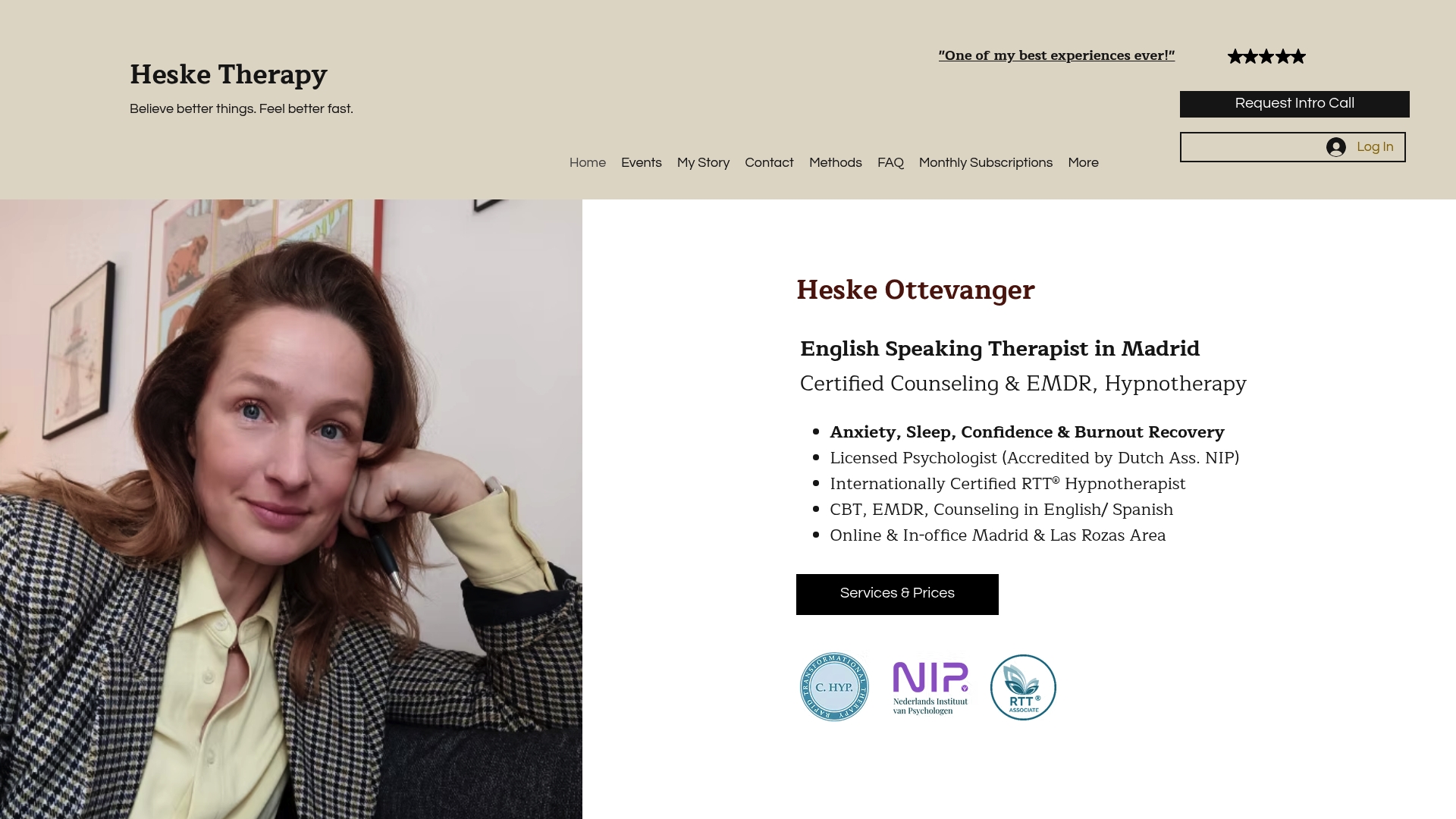
Using what is RTT therapy as a core method, Heske Therapy combines hypnotherapy, EMDR, and CBT into personalized treatment plans designed for fast, lasting results. The 21-day RTT package is a structured, intensive option for expats who want real change without spending years in weekly sessions. Sessions are available in English, in-person in Madrid or online. Book a free discovery call today and find out what targeted, trauma-informed support actually feels like.
Frequently asked questions
Is hypnotherapy safe for trauma processing?
When performed by a trained, trauma-informed therapist, hypnotherapy is safe and uses structured safeguards to minimize the risk of false memories and prevent re-traumatization during sessions.
How quickly can hypnotherapy relieve trauma symptoms?
Some expats notice meaningful emotional relief within a few sessions, though rapid subconscious access varies by individual responsiveness and the complexity of the trauma being addressed.
Should hypnotherapy be used alone or with other therapies?
Most clinical experts recommend combining hypnotherapy with CBT or EMDR, since TF-CBT and EMDR carry stronger long-term evidence and hypnotherapy performs best as part of an integrative treatment plan.
How can English-speaking expats find certified hypnotherapists in Madrid?
Start with platforms like Psychology Today or expat community forums, then verify that the practitioner has clinical hypnosis training and a trauma-informed approach before booking your first session.
Recommended
Comments