What Is Clinical Psychotherapy and How It Helps
- Heske Ottevanger
- May 30
- 8 min read


TL;DR:
Clinical psychotherapy is a structured, evidence-based treatment by trained professionals targeting specific emotional and cognitive processes that maintain psychological difficulties. Research shows it outperforms no treatment in reducing depression and anxiety, with lasting benefits beyond sessions. The most effective approach depends on individual maintenance factors, with active participation and a good fit being crucial for success.
Most people hear “therapy” and picture someone lying on a couch, talking about their childhood. That image barely scratches the surface of what is clinical psychotherapy. Far from a casual conversation, clinical psychotherapy is a structured, evidence-based psychological treatment that targets the specific mental and emotional processes keeping you stuck. Whether you are dealing with anxiety that won’t quit, trauma you can’t seem to shake, or burnout that has hollowed you out, this article breaks down exactly how psychotherapy works, what the science says about it, and how to get started with confidence.
Table of Contents
Key takeaways
Point | Details |
It’s a planned intervention | Clinical psychotherapy uses specific techniques to change thought, emotion, and behavior patterns, not just provide a listening ear. |
Multiple techniques exist | CBT, EMDR, trauma-focused, and transdiagnostic approaches each target different psychological processes and conditions. |
Research backs its effectiveness | Meta-analyses show psychotherapy outperforms no treatment for depression and anxiety, with lasting benefits beyond the end of sessions. |
Fit matters more than diagnosis | Matching the therapy approach to your actual maintaining processes produces better outcomes than assigning treatment by label alone. |
Group and individual both work | Group therapy can be as effective as individual treatment and offers unique social learning benefits at a lower cost. |
What is clinical psychotherapy, defined
The term gets used loosely, so a precise starting point matters. According to the Society of Clinical Psychology, psychotherapy is an intervention by mental health professionals using planned actions to change cognitive, emotional, behavioral, or interpersonal processes. That word “planned” does a lot of work. It separates legitimate psychological treatment from supportive conversation, life coaching, or wellness trends that lack a scientific framework.
The recognized industry term is psychotherapy, or more specifically clinical psychotherapy when delivered by a trained clinical psychologist or licensed mental health professional. A clinical psychologist assesses your presenting difficulties, formulates what is maintaining them, and selects techniques matched to those mechanisms. Settings range from private practice offices and community mental health centers to hospitals and online platforms.
“Psychotherapy works not by offering sympathy but by targeting the specific cognitive, emotional, and behavioral processes that sustain a person’s difficulties.” — Society of Clinical Psychology
Clinical psychologists provide assessment, diagnosis, and psychotherapy, with sessions commonly scheduled once or twice per week and duration ranging from brief (six to twelve sessions) to longer-term treatment depending on the complexity of the presenting problem.
Pro Tip: When searching for a therapist, look for credentials like licensed psychologist, licensed clinical social worker, or licensed professional counselor. Ask specifically whether the approaches they use are evidence-based and whether outcomes are tracked.
Clinical psychotherapy techniques worth knowing
No single method defines clinical psychotherapy. Instead, the field draws on a toolkit of approaches, each with a distinct theoretical basis and target population.
Cognitive-behavioral therapy (CBT)
CBT has over 50 years of randomized controlled trials establishing it as a first-line treatment for depression, anxiety disorders, OCD, PTSD, and more. The core mechanism involves identifying distorted or unhelpful thought patterns and systematically testing them against reality. Behavioral components like graded exposure and behavioral activation are layered on top, making it a two-pronged approach. If you want to understand how it works in practice, CBT in mental health is explained thoroughly by Hesketherapy.
Trauma-focused approaches
Effective trauma therapy balances exposure-based processing with safety, pacing, and skill-building to avoid overwhelming the client. EMDR (Eye Movement Desensitization and Reprocessing) is one of the most researched trauma-focused methods, using bilateral stimulation to help the brain reprocess distressing memories without requiring detailed verbal narration. This is particularly relevant for clients who find traditional talk-based exposure too activating.
Transdiagnostic and process-based therapy
Rather than assigning a separate manual for every diagnosis, transdiagnostic approaches target the underlying psychological processes common to multiple conditions. Excessive worry, avoidance, emotional suppression, and rigid thinking appear across anxiety, depression, and trauma presentations. Addressing those shared mechanisms is both efficient and flexible.
Technique | Primary focus | Typical use |
CBT | Thoughts and behavior patterns | Anxiety, depression, OCD |
EMDR | Trauma memory processing | PTSD, complex trauma |
Transdiagnostic CBT | Shared emotional processes | Multiple co-occurring disorders |
Process-based therapy | Individual maintaining factors | Personalized, complex cases |
Group psychotherapy | Social learning and peer support | Depression, social anxiety, grief |
Pro Tip: Don’t pick a therapy type based solely on what sounds appealing. Ask your therapist to explain which specific process they are targeting for you and why that approach fits your particular presenting difficulties.
Evidence on the benefits of clinical psychotherapy
The research picture is genuinely strong. A 2024 meta-analysis of 19 RCTs found psychotherapy showed superior long-term relapse prevention for major depressive disorder compared to antidepressants alone, with combined treatment producing even better outcomes. That means the benefits of clinical psychotherapy extend beyond the period of active treatment. You are not just managing symptoms while in sessions. You are building psychological skills that hold after therapy ends.

For anxiety and co-occurring emotional disorders, the numbers are similarly compelling. A 2025 meta-analysis of 94 trials with over 12,000 patients found transdiagnostic interventions produced a pooled effect size of g=0.59, which falls in the moderate to large range. Effect sizes in that territory are clinically meaningful. For context, that is comparable to or exceeds many medication effects for the same conditions. You can review anxiety therapy options that align with this level of evidence if you want a deeper breakdown.
One area where the evidence is nuanced: dropout. Therapy requires active participation, consistent attendance, and often confronting uncomfortable material. Studies consistently show that treatment fit, meaning how well the approach targets your specific maintaining processes rather than your diagnosis label, significantly impacts outcomes. A poorly matched treatment, even a well-researched one, will underperform.
Group psychotherapy is as effective as individual therapy for many conditions and adds something individual sessions cannot replicate: real-time social feedback, the experience of being understood by peers, and the normalization that comes from shared struggle. It also tends to cost less per session, which removes a real barrier for many people.
Pro Tip: If you feel therapy is not moving after four to six sessions, raise it directly with your therapist rather than quietly dropping out. A skilled clinician will either adjust the approach or help you find a better fit elsewhere.
What to expect in therapy: starting the process
Understanding the structure of clinical psychotherapy removes a lot of the anxiety around starting. Here is how the process typically unfolds.
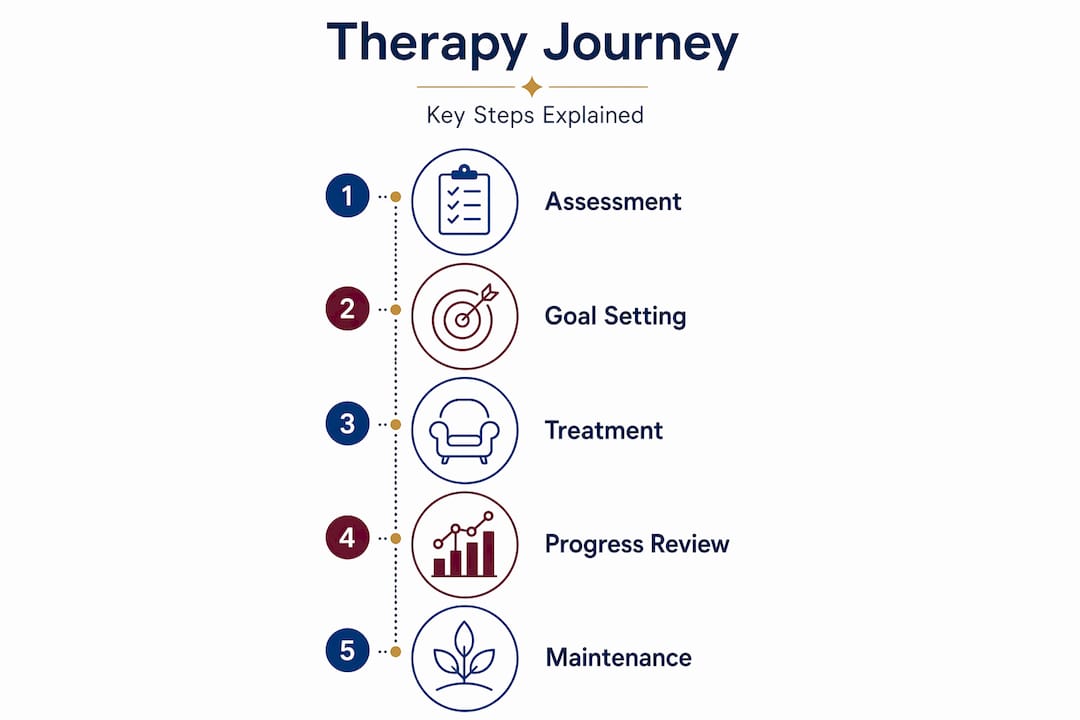
The first one or two sessions are almost always assessment-focused. Your therapist gathers information about your history, current symptoms, and what you have already tried. A clinical psychologist will assess and formulate your difficulties before beginning active treatment, which means you will not be expected to immediately dive into painful memories from session one.
From there, treatment planning happens collaboratively. A good therapist explains the rationale for the approach they recommend. You should understand why you are doing the exercises and what they are targeting. Transparency about the method is a marker of quality care.
Sessions themselves vary by modality. CBT sessions tend to be structured with homework between appointments. EMDR sessions follow a specific protocol with distinct phases. Supportive and psychodynamic approaches allow more open-ended exploration. Most individual sessions run 50 to 60 minutes. Group sessions often run 60 to 90 minutes.
For detailed explanations of what different methods involve and when they work best, psychotherapy methods explained covers the landscape well, particularly for international clients navigating a new mental health system.
Before committing to a therapist, consider asking these questions:
What specific approach do you use, and why would it suit my situation?
How do you measure whether treatment is working?
How many sessions does a typical course of treatment involve?
What does a session actually look like week to week?
How do you handle it if progress stalls?
Asking these questions is not pushy or demanding. It is exactly the kind of active participation that treatment fit research shows produces better outcomes.
My honest take on what therapy actually is
I have worked with enough clients to say this plainly: the biggest barrier to getting good results from clinical psychotherapy is the belief that it is passive. People arrive expecting that talking will, on its own, create change. It rarely does. What actually moves the needle is what happens because of the conversation. The insight that shifts a belief. The rehearsed response to a trigger that works in a real situation. The processed memory that stops pulling you backward.
In my experience, the clients who make the fastest and most durable progress are the ones who understand what the therapy is doing and why. They are not just showing up. They are active participants in a structured process targeting specific psychological blocks. With anxiety, that often means learning to tolerate uncertainty instead of eliminating it. With trauma, it means building enough safety and skill before ever approaching the difficult material. These are not things you stumble into through casual conversation.
The other thing I want to say is this: the “right” therapy is not the most sophisticated one or the most fashionable one. It is the one that directly targets what is actually maintaining your difficulty. A diagnosis is a starting point. Your individual psychological profile is the real map. Any therapist who hands you a generic protocol without first understanding your specific patterns is, at best, doing half the job.
— Heske
Ready to get real support?
If reading this has made you realize that what you have been doing is not quite therapy, or that you have been avoiding it because you were not sure what it actually involves, Hesketherapy offers a direct path forward.
At Hesketherapy, sessions are designed for adults dealing with anxiety, trauma, burnout, and emotional blocks. The approach is integrative, drawing on CBT, EMDR, and Rapid Transformational Therapy to target the specific processes keeping you stuck. Sessions are available online and in-office in Madrid, in English, Spanish, and Dutch. If you want to see whether a focused approach could work for you, the 21-day RTT package offers a structured, time-defined way to start without open-ended commitment.
FAQ
What is the clinical psychotherapy definition?
Clinical psychotherapy is a planned, evidence-based psychological treatment delivered by a trained professional, targeting specific cognitive, emotional, behavioral, or interpersonal processes to produce measurable change.
How does clinical psychotherapy work?
A therapist first assesses what is maintaining your difficulties, then applies specific techniques from approaches like CBT or EMDR to shift those patterns. Sessions are typically structured and goal-directed, not open-ended conversation.
Who can benefit from psychotherapy?
Adults dealing with anxiety, depression, trauma, burnout, low self-esteem, relationship difficulties, or stress-related physical symptoms are all strong candidates. Research supports its effectiveness across a wide range of emotional and psychological conditions.
Is clinical psychotherapy effective?
Yes. A 2025 meta-analysis of over 12,000 patients found moderate to large effect sizes for transdiagnostic psychotherapy, and a 2024 review found psychotherapy outperforms medication alone for long-term relapse prevention in depression.
What is the difference between therapy types?
CBT targets thought and behavior patterns, EMDR processes traumatic memories, and transdiagnostic approaches address shared emotional mechanisms across conditions. The right choice depends on which processes are maintaining your specific difficulties, not just your diagnosis.
Recommended
Comments