Neurodiversity in Expats: What It Means and How to Thrive


Neurodiversity, for people living abroad, means that conditions like autism, ADHD, dyslexia, dyspraxia, and dyscalculia are natural variations in how the brain works — not deficits to be fixed. Moving between countries adds a significant layer of complexity to that experience: familiar routines disappear, healthcare systems change, and the social scripts that once felt manageable suddenly don’t translate. Understanding neurodiversity in expats is, at its core, a mobility issue as much as a clinical one. Here are three things you can do right now:
Gather your key documents. Collect diagnostic reports, clinician letters, medication records, and any education plans (IEPs or equivalent) in PDF format, with translated summaries if possible.
Identify a teletherapy clinician before you move. Flag at least one English-speaking therapist licensed in a relevant jurisdiction who has experience with neurodivergent clients and internationally mobile adults or families.
Draft a portable routine plan. Write down your three to five non-negotiable daily anchors (wake time, meals, movement, wind-down) so they survive the move intact.
Cognassist’s neurodiversity research estimates that roughly one in five people is neurodivergent in some way, which means a meaningful share of every expat community is navigating relocation through a brain that processes the world differently.
Key Takeaways
Neurodiversity in expats is a mobility issue as much as a clinical one: the conditions themselves don’t change when you move, but the systems that support them do, and preparation is what determines whether that gap becomes a crisis or a manageable transition.
Point | Details |
Neurodiversity is natural variation | Conditions like autism, ADHD, and dyslexia are differences in brain wiring, not deficits — framed clearly by the Cleveland Clinic and CDC. |
Relocation amplifies neurodivergent needs | Lost routines, new sensory environments, and diagnostic discontinuity can push previously managed needs into clinical territory. |
Documentation travels with you | Carry translated diagnostic reports, clinician letters, and medication records in encrypted digital format before every move. |
Remote care is viable with vetting | English-language teletherapy is accessible across borders — confirm licensure, language, and platform security before committing. |
Hesketherapy supports expat transitions | English-language, integrative therapy (EMDR, CBT, RTT) available in-person in Madrid and online for internationally mobile clients. |
Table of Contents
What neurodiversity actually includes — conditions and strengths
The term neurodiversity describes the full range of human neurological variation as a natural feature of the population, not a collection of disorders. Within that group, individuals whose brains differ from what is statistically typical are described as neurodivergent. The Cleveland Clinic’s explanation of neurotypical and neurodivergent makes this distinction clearly: neurodivergent is a non-pathologizing descriptor for an individual, while neurodiverse refers to a group that includes all neurological profiles.
Common conditions that fall under the neurodivergent umbrella:
Autism spectrum disorder (ASD) involves differences in social communication, sensory processing, and pattern recognition. The CDC’s clinical grounding on autism provides authoritative, non-stigmatizing definitions that are useful when navigating healthcare systems abroad.
ADHD (attention-deficit/hyperactivity disorder) affects executive function, sustained attention, and impulse regulation — areas that relocation stresses heavily.
Dyslexia primarily affects reading fluency and phonological processing, and becomes more visible when a person must navigate a new language or script.
Dyspraxia (developmental coordination disorder) affects motor planning and can make new physical environments, commutes, and workplaces harder to adapt to.

Dyscalculia involves difficulty processing numerical information, which can complicate tasks like currency conversion, local transit systems, and bureaucratic forms.
Tourette syndrome involves involuntary motor or vocal tics and often co-occurs with ADHD or OCD.
Framing neurodivergence through strengths is not just compassionate; it is accurate. Many neurodivergent expats report that their capacity for deep focus and adaptability to novel environments becomes a professional asset once the initial transition stabilizes.
Why neurodiversity matters differently when you live abroad
Relocation often increases cognitive load and can reveal or amplify neurodivergent needs that were previously managed through familiar structures. When those structures vanish overnight, the brain has to work harder on tasks that were once automatic.
Consider two scenarios that come up often in expat communities. A child moves with their family to an international school mid-year. The classroom routines are different, the social cues are unfamiliar, and the sensory environment — lighting, noise levels, lunch hall acoustics — is entirely new. Signs that were subtle at home become visible quickly. The A Life Overseas guide on noticing neurodiversity in third-culture kids describes exactly this pattern: relocation makes differences more apparent, not because the child has changed, but because the scaffolding has.
An adult in a new workplace faces a parallel challenge. Different communication norms, unspoken office hierarchies, and the cognitive tax of operating in a second language can push an ADHD brain past its working-memory limit by mid-morning. What looked like mild distractibility at home can look like significant impairment in a new cultural context.
The Allianz Partners global mobility blog notes that sensory overload, communication differences, and local system variation all compound during relocation — and recommends that mobility teams plan accommodations explicitly rather than assuming neurodivergent employees will self-manage.
Pro Tip: Build “portable routines” before you move. Identify five daily anchors that require no local infrastructure — a morning breathing practice, a consistent breakfast, a short walk at the same time each day — and protect them through the transition. These anchors reduce executive-function load when everything else is uncertain.
Common challenges neurodivergent expats face — and what to document
The most common challenge cluster for neurodivergent expats is: sensory overload in unfamiliar environments, routine disruption, language fatigue, healthcare navigation, and social isolation. Each is harder abroad because the usual coping infrastructure is gone.
Challenge | Why it’s amplified abroad | Quick mitigation |
Sensory overload | New cities, transit systems, and workplaces have unpredictable noise and light levels | Scout environments in advance; carry noise-cancelling headphones |
Routine disruption | Time zones, new schedules, and housing changes break established anchors | Set non-negotiable daily anchors before arrival |
Language fatigue | Processing a second language consumes extra working memory | Schedule low-demand recovery time daily; use translation apps for admin tasks |
Healthcare navigation | Diagnostic systems, medication names, and referral pathways differ by country | Carry translated records; research local equivalents of medications before travel |
Social isolation | Existing support networks are remote; local networks take time to build | Join expat and neurodiversity-specific online communities before moving |
Diagnostic discontinuity | A diagnosis in one country may not be recognized or mapped in another | Carry original diagnostic reports plus a clinician summary letter |
The Edward Elgar chapter on neurodivergent expatriates documents diagnostic discontinuity as one of the most consistent barriers: services and accommodations that were in place at home often do not transfer, requiring families and individuals to restart assessment processes from scratch.
Documentation checklist to carry internationally:
Diagnostic reports (original language plus translated summary)
Clinician letter summarizing current treatment, medications, and accommodations
Medication records with generic drug names (brand names vary by country)
Education plans (IEP, EHCP, or equivalent) for children
Insurance policy documents with mental health coverage details
Secure digital backups (encrypted cloud storage or a password-protected USB)
How to prepare practically — before and after the move
Preparation reduces the risk that a move will trigger a significant decline in functioning. The gap between a managed transition and a crisis is almost always in the planning.
Before you move:
Confirm medication legality. Check whether your current medications are legal in the destination country. Some ADHD medications (methylphenidate, amphetamine salts) are controlled substances with strict import rules. Contact the destination country’s embassy or health authority.
Identify English-speaking clinicians. Search directories like the International Association for Counselling or Psychology Today’s international filter for licensed therapists with neurodiversity experience.
Review schooling options. For children, contact prospective schools directly about their special educational needs (SEN) provision, assessment capacity, and accommodation policies.
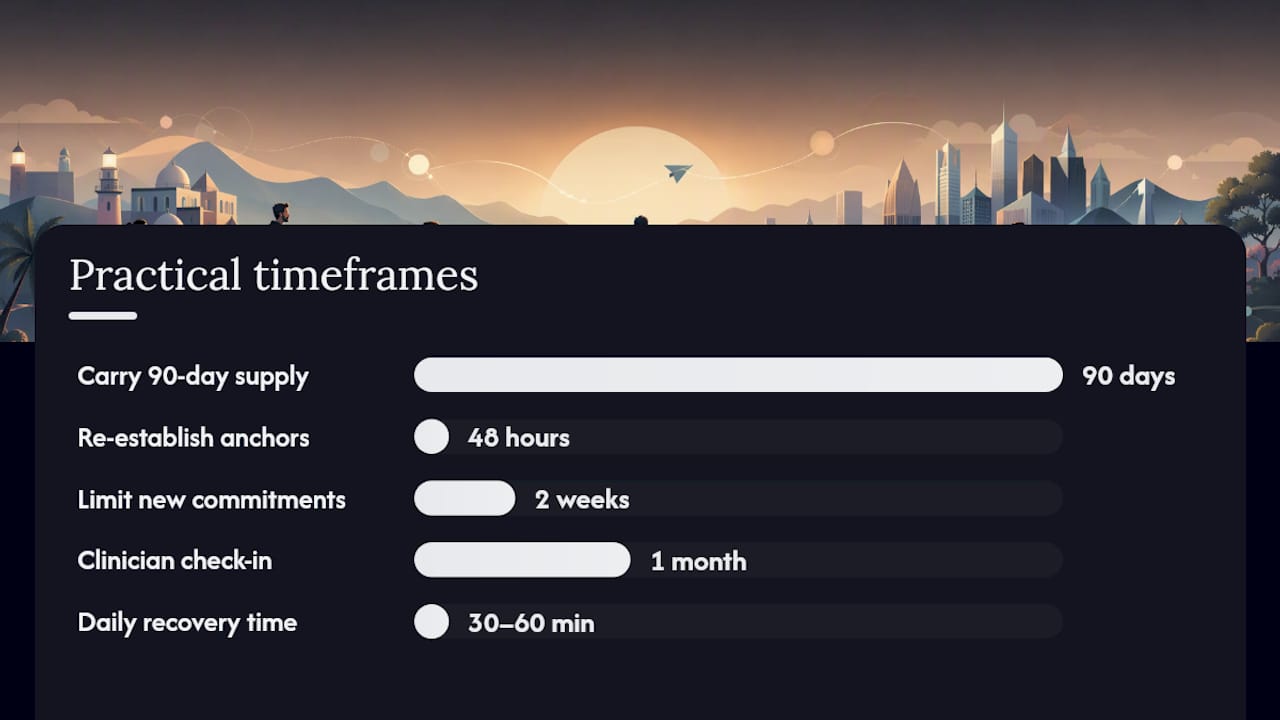
Carry a 90-day medication supply where legally permitted, and get a letter from your prescribing clinician on official letterhead.
Check international health insurance. Confirm that your policy covers mental health, neurodevelopmental assessments, and teletherapy with out-of-network providers.
After you arrive:
Re-establish your daily anchors within the first 48 hours, even imperfectly.
Limit new social commitments for the first two weeks to reduce sensory and cognitive load.
Schedule a check-in with your clinician (in-person or remote) within the first month.
Sample employer disclosure script (adapt as needed):
“I want to let you know that I have [condition], which means I work best with [specific accommodation — e.g., written agendas before meetings, a quieter workspace, flexible start times]. I’m fully committed to this role and these adjustments help me perform at my best. I’m happy to discuss what this looks like in practice.”
Keep it concise, rights-focused, and solution-oriented. You are not required to disclose a diagnosis — describing the accommodation you need is often enough.
Sensory management toolkit:
Noise-cancelling headphones for transit, open offices, and busy public spaces
Visual schedules or a daily planner app to reduce decision fatigue
Scheduled recovery time (30–60 minutes of low-stimulation downtime) built into each day
Sunglasses or a cap for light sensitivity in bright new environments
A “go bag” with familiar comfort items for high-demand days
Finding healthcare and support while living abroad
Remote and cross-border care are viable options, but they require vetting and paperwork. Don’t assume a therapist who works online is automatically licensed to practice in your country of residence.
Checklist for vetting a clinician remotely:
Licensed in a jurisdiction relevant to your location (check the licensing body’s public register)
Experience with neurodivergent clients and internationally mobile adults or families
Conducts sessions in your preferred language
Uses a secure, HIPAA-compliant or equivalent platform for video sessions
Clear policy on records handling and cross-border data privacy
For online therapy for expats, the key question is always jurisdiction: where is the therapist licensed, and does that license permit them to work with clients in your country of residence? Some countries require local licensure; others permit remote sessions from abroad.
Support type | How to access | Key consideration |
In-person local clinician | GP referral or private directory search | May require new assessment; language barrier possible |
International specialist (remote) | Psychology Today international, IACP directory | Confirm licensure and cross-border legality |
Teletherapy (English-language) | Specialist expat therapy services | Check insurance coverage and platform security |
School-based support | Contact SEN coordinator directly | Varies widely by country and school type |
Transporting medication and records safely:
Carry medications in original pharmacy packaging with the prescription label.
Bring a clinician letter on official letterhead listing generic drug names, dosages, and diagnosis.
Store digital copies of all records in an encrypted cloud folder (Google Drive with two-factor authentication, or a dedicated medical records app).
For controlled substances, check the destination country’s import rules at least six weeks before travel — some require advance permits from the health ministry.
For clinical definitions and safety guidance, the CDC and Cleveland Clinic remain the most reliable English-language references when navigating unfamiliar healthcare systems abroad.
How to support a neurodivergent loved one overseas
Supportive actions center on three things: predictability, clear communication, and protected recovery time. When those three are in place, most neurodivergent people can adapt to a great deal of change.
Questions to ask clinicians and teachers at your first meeting:
What is the current assessment status, and is it recognized here?
What accommodations are in place, and how are they documented?
What is the medication plan, and who manages prescriptions locally?
Who is the emergency contact if there is a mental health concern at school or work?
How will we communicate progress — and how often?
Do and don’t guidance for partners and carers:
Do set shared daily routines that both of you can rely on, even simple ones.
Do plan explicit downtime after high-stimulation events (travel days, social gatherings, new environments).
Do ask what kind of support is wanted before offering it — problem-solving and emotional validation are different needs.
Don’t push disclosure to employers, schools, or neighbors before the person is ready.
Don’t assume local services match what was available at home — research the gap before you arrive.
Don’t interpret a shutdown or meltdown as a behavioral problem; it is usually a sign of overload, not defiance.
The A Life Overseas resource on third-culture kids is particularly useful for parents: it lists specific school-related signals to watch for after relocation and frames them in a way that helps parents advocate effectively with new teachers.
When and how to seek a diagnosis or formal support abroad
A formal diagnosis may help you access services, but it is not always required to get practical accommodations. The immediate decision rule: if you or your child is experiencing a sustained decline in functioning — at school, at work, or in daily life — that has lasted more than four weeks, contact a GP or school coordinator and request a referral for assessment.
Decision checklist:
Is there functional decline? (Missed deadlines, school refusal, significant sleep disruption, withdrawal from activities) → Yes: request a GP referral or contact the school’s SEN coordinator.
Is there a previous diagnosis? → Yes: carry original reports and a clinician summary letter; request recognition or re-assessment in the new country.
Is the decline affecting safety? → Yes: seek clinical support immediately rather than waiting for a formal assessment pathway.
No clear decline, but you want accommodations? → Contact the employer’s HR department or the school’s SEN team with a description of needs; a formal diagnosis is often not required for reasonable adjustments.
Unsure whether what you’re seeing is neurodivergence or adjustment stress? → A short-term counseling assessment can help distinguish the two.
Practical notes on assessment abroad:
Private assessments are faster (weeks rather than months) but cost several hundred to several thousand dollars depending on the country and the scope of the evaluation.
Public or school-based assessments are slower but may be covered by local health or education systems.
Always request a written report in English, or budget for a certified translation.
Keep all reports in a portable digital format — you may need them again when you move to the next country.
A therapist’s perspective on working with neurodivergent expat clients
Expat transitions frequently trigger clinical needs that were previously subclinical. The combination of lost routine, new sensory environments, and the cognitive tax of operating in a second culture can push a neurodivergent person past their functional threshold in ways that feel sudden but are entirely predictable once you understand the mechanism.
In practice, the pathway to stabilization usually follows a recognizable arc. A client arrives in a new city managing well by their own standards, then finds that within two to three months, sleep has deteriorated, concentration has collapsed, and anxiety has become constant. The presenting complaint is often “I don’t know what’s wrong with me,” when the actual picture is a neurodivergent brain that has been running on reserve capacity since the move. Therapy in these cases focuses first on restoring the structural anchors — sleep, routine, sensory regulation — before addressing the deeper emotional material. Progress is often faster than clients expect, because the underlying capacity was always there; it just needed the right conditions to re-emerge.
If you are experiencing sustained decline, safety concerns, or a significant impairment in your ability to function at work, at school, or in relationships, that is the moment to contact a clinician rather than waiting to see if things improve on their own.
[Author credentials and professional background details to be inserted here.]
English-language therapy for neurodivergent expats
Hesketherapy offers culturally sensitive, English-language psychotherapy for expatriates, available both in-person in Madrid and online for internationally mobile clients. Sessions draw on integrative methods including EMDR, CBT, Rapid Transformational Therapy, and clinical hypnotherapy — approaches that work well with the anxiety, burnout, and sleep disruption that often accompany neurodivergent expat transitions.
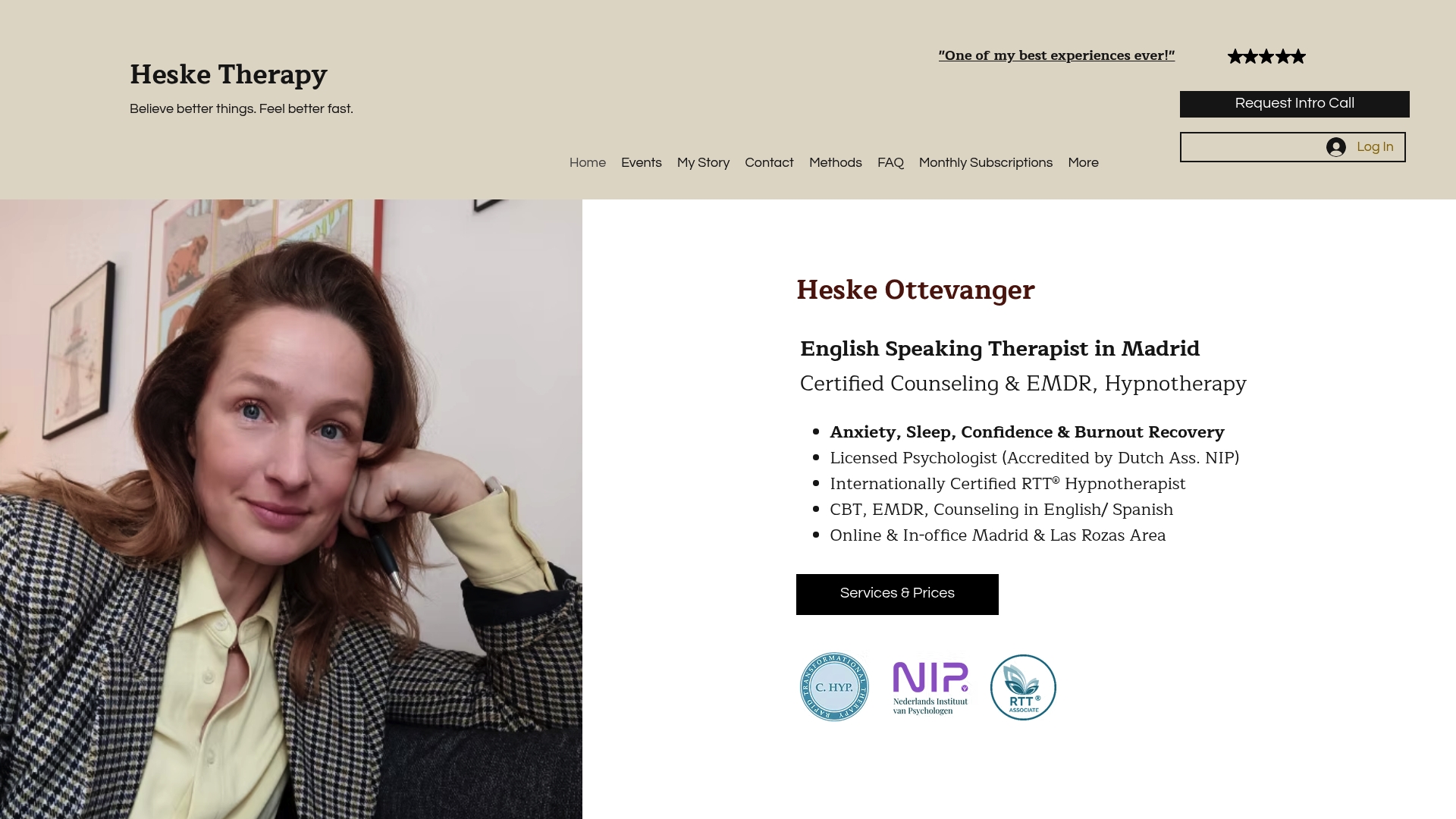
For clients who want immediate, low-barrier support alongside therapy, Hesketherapy’s self-hypnosis audio for relaxation is a practical tool for sensory regulation and wind-down routines. If you are ready to talk with a clinician about what you are experiencing, you can book a free discovery call through Hesketherapy’s expat therapy services to find out whether the approach is a good fit for your situation.
Sources
Recommended
Comments