Psychosomatic Illness: What It Is and How to Heal


Psychosomatic illness is a physical condition that psychological factors, such as chronic stress, unresolved trauma, or emotional distress, cause or significantly worsen. Your symptoms are real, measurable, and not a sign of weakness or imagination. According to the Cleveland Clinic, mental stress can directly produce or intensify physical disease, and Mayo Clinic recognizes the DSM-5 category of somatic symptom disorder as the formal diagnostic framework for these presentations. If you’re experiencing unexplained physical symptoms, here are three immediate steps worth taking:
See a clinician first. Rule out urgent medical causes before attributing symptoms to psychological factors.
Start a symptom diary. Note when symptoms appear, their intensity, and what was happening emotionally or situationally at the time.
Ask about integrated care. A combined approach addressing both the physical and psychological dimensions tends to produce better outcomes than treating each in isolation.
Key Takeaways
Psychosomatic illness is a real, physiologically grounded condition where psychological factors cause or worsen physical symptoms, and integrated treatment addressing both dimensions produces the best outcomes.
Point | Details |
Symptoms are real | Psychosomatic symptoms involve genuine physiological changes, not imagination or fabrication. |
DSM-5 provides the framework | Somatic symptom disorder requires symptoms plus excessive distress persisting at least six months. |
Multiple mechanisms are involved | HPA-axis dysregulation, autonomic overactivity, and learned behavioral patterns all contribute. |
CBT and mindfulness have the strongest evidence | Both reduce symptom severity in functional somatic conditions and somatic symptom disorder. |
Integrated care outperforms single-modality treatment | Coordinating psychological and medical care produces better functional outcomes than either alone. |
Table of Contents
What do terms like “psychosomatic” and “somatic symptom disorder” actually mean?
The word psychosomatic joins the Greek roots for mind (psyche) and body (soma). In clinical use, it describes any physical symptom or condition where psychological processes play a meaningful role in onset, severity, or persistence. That does not mean the symptom is fabricated. It means the nervous system, hormonal system, and immune system are all responding to psychological input in ways that produce genuine, often measurable, physical changes.
Clinicians today often use more precise language. The DSM-5 introduced somatic symptom disorder (SSD) as the formal diagnostic label. SSD is characterized by one or more distressing physical symptoms accompanied by excessive thoughts, feelings, or behaviors related to those symptoms, persisting for at least six months. The emphasis is not on whether a medical explanation exists, but on the disproportionate distress and preoccupation the symptoms generate.
Several related terms come up in clinical conversations, and distinguishing them matters:
Functional somatic syndromes are recognized medical conditions, such as irritable bowel syndrome (IBS), fibromyalgia, and chronic fatigue syndrome, where no structural tissue damage explains the symptoms but the suffering is entirely real. Treating IBS with psychotherapy is an established and evidence-supported approach.
Conversion disorder (also called functional neurological symptom disorder) involves neurological symptoms, such as limb weakness, seizures, or vision loss, that cannot be explained by neurological disease. It is distinct from psychosomatic illness but shares the mind-body mechanism.
Malingering means deliberately faking symptoms for external gain (avoiding work, obtaining medication). This is fundamentally different from psychosomatic illness, where symptoms arise without conscious intent.
Factitious disorder involves intentionally producing or feigning symptoms for psychological reasons, not external reward. Again, this is not psychosomatic illness.
Term | Core feature | Symptoms real? | Conscious intent? |
Psychosomatic illness | Psychological factors cause or worsen physical symptoms | Yes | No |
Somatic symptom disorder (DSM-5) | Excessive distress/behavior around physical symptoms | Yes | No |
Functional somatic syndrome | Recognized condition without structural pathology | Yes | No |
Conversion disorder | Neurological symptoms without neurological disease | Yes | No |
Malingering | Deliberate symptom fabrication for external gain | No | Yes |
Factitious disorder | Deliberate symptom production for psychological reasons | No | Yes |
The Merck Manual notes that somatic symptom and related disorders involve excessive focus on physical sensations and can significantly interfere with daily functioning, with treatment focused on reducing disability rather than eliminating every symptom.
Common symptoms and how psychosomatic illness shows up in real life
Psychosomatic disorders rarely announce themselves with a single dramatic symptom. They tend to present as a cluster of complaints that shift, migrate, or intensify during periods of stress. The most frequently reported symptoms include:
Chronic or recurrent pain (back, neck, headaches, or widespread musculoskeletal pain)
Gastrointestinal complaints (nausea, bloating, cramping, diarrhea, or constipation)
Fatigue that does not improve with rest
Chest tightness or palpitations without cardiac cause
Shortness of breath or a sensation of not getting enough air
Dizziness or lightheadedness
Sleep disturbance, including difficulty falling asleep or waking unrefreshed
What makes these presentations clinically challenging is that standard tests often return normal results. A person with chronic abdominal pain may have had multiple endoscopies, ultrasounds, and blood panels, all unremarkable, yet the pain is constant and debilitating. Another person experiences chest pain and shortness of breath that mirrors cardiac disease, but a full cardiac workup finds nothing. In both cases, the body is communicating real distress through physical channels.
MedlinePlus confirms that symptoms in somatic symptom disorder are genuine and not faked, and that treatment can meaningfully improve functioning and quality of life.
Pro Tip: If your tests keep coming back normal but your symptoms persist, that is not evidence that nothing is wrong. It is a signal that the evaluation may need to expand to include psychological and stress-related factors. A normal test result is a starting point, not a conclusion.
How psychological factors produce real physical symptoms
The mind-body connection is not a metaphor. It operates through specific, well-documented biological pathways.
The HPA axis and cortisol. When you experience chronic stress, the hypothalamic-pituitary-adrenal (HPA) axis releases cortisol in sustained, elevated amounts. Over time, this dysregulates immune function, promotes systemic inflammation, disrupts gut motility, and alters pain sensitivity. A PubMed review describes interactions among the central nervous system, HPA axis, endocrine system, and immune system as plausible mechanistic pathways for psychosomatic disorders, noting a rising public-health concern as chronic stress becomes more prevalent.
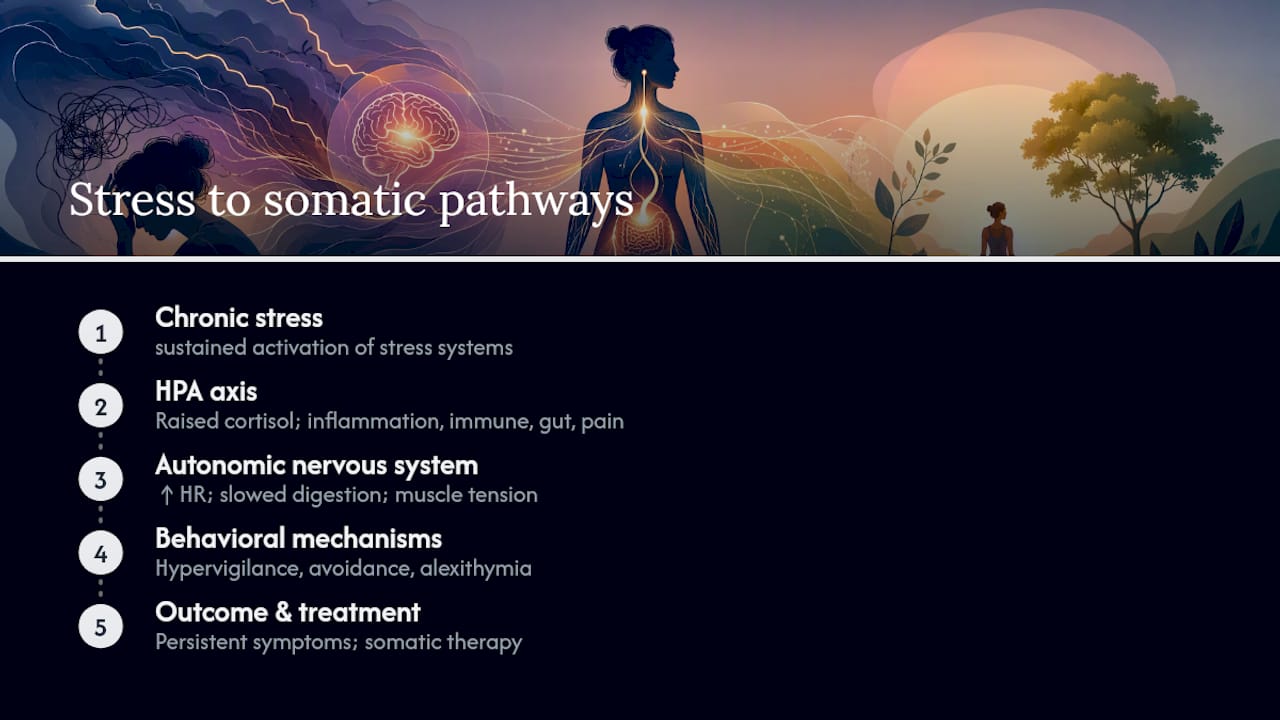
The autonomic nervous system. Prolonged sympathetic nervous system activation, the “fight-or-flight” state, keeps the body in a state of physiological readiness that it was never designed to sustain indefinitely. Heart rate stays elevated. Digestion slows. Muscles remain tense. A Frontiers in Psychiatry review confirms that autonomic dysfunction and stress hormones are common contributors to psychosomatic symptoms, and that these physical changes are real and measurable.
Behavioral and learned mechanisms. Attention amplifies sensation. When someone becomes hypervigilant about a physical symptom, the brain’s threat-detection system keeps that signal at the forefront of awareness, which intensifies the perceived experience. Avoidance behaviors, such as stopping exercise because of pain or withdrawing socially because of fatigue, can reinforce the symptom cycle. Emotional processing difficulties, including difficulty identifying or expressing feelings (sometimes called alexithymia), are also associated with higher somatic symptom burden.
Treating only the physical symptom without addressing the underlying stress, trauma, or emotional processing is unlikely to produce lasting recovery. Persistent unexplained symptoms often function as an adaptive signal from a nervous system under sustained pressure. The body is asking for something the prescription pad cannot provide.
Pro Tip: Somatic therapy works directly with the body’s nervous system responses, using breathwork, paced movement, and body-awareness techniques to down-regulate sympathetic overactivity. For many people, this is the missing piece that purely talk-based approaches do not reach.
How clinicians evaluate and diagnose psychosomatic illness
A thorough evaluation does two things simultaneously: it rules out urgent medical causes and it opens space for psychological factors to be explored without stigma. Here is the typical sequence:
Detailed history. The clinician asks about symptom onset, duration, triggers, and context, including life stressors, trauma history, and prior mental health treatment.
Targeted physical examination. A focused exam guides which tests are genuinely necessary and helps identify any red flags.
Selective diagnostic testing. Tests are chosen to rule out specific conditions suggested by the history and exam, not as a blanket reassurance strategy.
Mental health screening. Validated tools such as the PHQ-9 (depression), GAD-7 (anxiety), and PHQ-15 (somatic symptoms) are used to quantify psychological burden.
DSM-5 criteria review. If symptoms have persisted for six months or more and are accompanied by excessive health-related thoughts or behaviors, a diagnosis of somatic symptom disorder may be appropriate.
Collaborative discussion. The clinician explains findings, validates the reality of symptoms, and introduces the mind-body framework in a non-stigmatizing way.
Certain findings require urgent medical evaluation before any psychosomatic framing is considered:
Sudden neurological deficit (weakness, vision loss, speech change)
Unexplained significant weight loss
Signs of cardiac ischemia (chest pain with exertion, radiation to the arm or jaw)
Fever with systemic symptoms
Blood in stool, urine, or sputum
New symptoms in a person over 50 with no prior relevant history
The Cleveland Clinic emphasizes that clinicians commonly encounter patient resistance when psychological factors are raised. Validation of the physical reality of symptoms, combined with collaborative and integrative planning, increases patient engagement and leads to better outcomes.
Evidence-based treatments that actually help
Effective care for psychosomatic illness almost always requires more than one approach. Here is what the evidence supports:
Psychotherapy
Cognitive Behavioral Therapy (CBT) is the most extensively studied psychological treatment for somatic symptoms. It targets the thought patterns, behaviors, and emotional responses that maintain the symptom cycle. Clinical literature documents that CBT and mindfulness-based interventions reduce symptom severity in patients with functional somatic symptoms and somatic symptom disorder. Practical CBT techniques for anxiety and burnout can be learned and applied between sessions.
Mindfulness-Based Stress Reduction (MBSR) trains attention and body awareness in ways that reduce the amplification of physical sensations and lower baseline autonomic arousal.
EMDR (Eye Movement Desensitization and Reprocessing) addresses trauma memories that may be driving the nervous system dysregulation underlying physical symptoms.
Rapid Transformational Therapy (RTT) works at the level of subconscious belief patterns and emotional processing, which can be particularly useful when symptoms are linked to deeply held beliefs about the body, safety, or self-worth.
Somatic therapies work directly with body-level responses, helping regulate the autonomic nervous system through movement, breath, and sensory awareness.
Medications
Medications are rarely a standalone solution for psychosomatic illness. They are most useful when treating a comorbid condition, such as depression, anxiety disorder, or a specific physical condition (for example, a low-dose tricyclic antidepressant for functional GI pain or migraine prevention). The goal is to reduce symptom burden enough that psychotherapy can be engaged effectively.
Multidisciplinary care
The strongest outcomes come from coordinated teams: a primary care physician or specialist managing the medical dimension, a psychotherapist addressing psychological and behavioral factors, and physical rehabilitation when deconditioning or pain has limited movement. Integrated neurobiological and psychological models better explain symptom persistence, and combined treatment approaches consistently outperform single-modality care.
Self-care foundations
Keep a symptom diary that tracks intensity, context, and emotional state.
Practice paced activity: gradually increase physical activity without triggering boom-bust cycles.
Prioritize sleep hygiene, since poor sleep amplifies pain sensitivity and emotional reactivity.
Use proactive stress management strategies, including relaxation training and regular exercise, as foundational adjuncts to therapy. Mayo Clinic’s stress management guidance supports sleep, exercise, and relaxation training as core tools for reducing symptom burden.
How to prepare for your appointment and what to ask
Walking into a clinical appointment prepared makes a measurable difference in the quality of care you receive. Here is a practical checklist:
Bring a written symptom diary covering at least two weeks, noting symptom intensity (0–10), time of day, activity, and emotional context.
Compile a list of all current medications, supplements, and prior test results.
Write down your top three concerns so you do not leave without addressing them.
Note any major stressors, life changes, or traumatic events in the past 12 months.
Bring a trusted person if you tend to feel overwhelmed or dismissed in medical settings.
Questions worth asking your clinician:
“Are there any red-flag findings that need urgent follow-up?”
“Could psychological or stress-related factors be contributing to my symptoms?”
“What would an integrated treatment plan look like for my situation?”
“How long might it take to see improvement with the recommended approach?”
“Can you refer me to a therapist who specializes in mind-body conditions?”
Pro Tip: The most useful diary entries are specific: “Tuesday, 3 PM, sharp abdominal pain, 7/10, just before a difficult call with my manager, had not eaten since morning.” Vague entries like “bad day, stomach hurt” give a clinician far less to work with. Concrete context is clinical data.
For readers interested in personalized integrative therapy plans, understanding what to expect from the process helps reduce the anxiety that often accompanies a new therapeutic relationship.
Myths, stigma, and what to say when people don’t understand
The phrase “it’s all in your head” has caused real harm. It dismisses genuine suffering and delays appropriate care. Here is what the evidence actually says:
Myth: Psychosomatic symptoms are imagined. Fact: Physical symptoms in psychosomatic illness are real, measurable, and often visible on physiological testing (elevated cortisol, altered gut motility, increased inflammatory markers).
Myth: Psychosomatic means you are mentally ill. Fact: Mind-body interactions are normal human physiology. Stress affects everyone’s body. A psychosomatic presentation is not a psychiatric diagnosis in the pejorative sense.
Myth: Seeing a therapist for physical symptoms means your doctor thinks you’re faking. Fact: Referral to psychological care is a recognition that the nervous system, not just the organ, needs treatment.
Myth: You just need to relax and it will go away. Fact: Chronic psychosomatic illness usually requires structured, evidence-based treatment, not willpower.
When talking to family or friends, language like “my nervous system has been in overdrive and it’s affecting my body” or “stress has been physically manifesting for me” tends to land better than clinical terminology. With clinicians, being direct works: “I want to explore whether stress or emotional factors could be contributing to these symptoms.”
On prognosis: with appropriate, integrated care, many people with psychosomatic illness experience meaningful functional recovery. Symptoms may not disappear entirely, but their intensity, frequency, and impact on daily life tend to decrease with treatment. Early engagement with treatment and a strong therapeutic alliance are among the most consistent predictors of better outcomes.
What recent research adds to the clinical picture
The science of psychosomatic illness has moved well beyond simple stress-response models. Several findings from recent clinical literature are worth knowing:
The relationship between psychological distress and physical symptoms is bidirectional. Symptoms worsen psychological distress, which in turn amplifies symptoms. Breaking this cycle requires intervening at multiple points simultaneously, not just treating the physical complaint or the emotional state in isolation.
Key research insights:
HPA-axis dysregulation and neuroimmune interactions are plausible biological mechanisms, though the full etiology remains complex and incompletely understood. The PubMed review describes these as active areas of ongoing investigation.
System-level fragmentation, where medical and mental health care operate in separate silos, is a frequent barrier to recovery. Integrated teams or clear cross-referrals consistently produce better outcomes.
Patient denial or resistance to psychological framing is common and understandable. Clinicians who validate the physical reality of symptoms first, then introduce the mind-body model collaboratively, achieve higher treatment engagement.
Combining therapy methods that address both neurobiological and psychological dimensions tends to outperform single-modality approaches, particularly for long-standing presentations.
Realistic prognosis matters: recovery is often gradual, with setbacks during periods of high stress. Framing treatment as building resilience rather than achieving a cure tends to support longer engagement and better long-term outcomes.
A clinician’s perspective on working with psychosomatic symptoms
When someone comes to me with physical symptoms that have not responded to standard medical treatment, the first thing I want them to know is that I believe them. The pain is real. The fatigue is real. The fact that a scan came back normal does not make the experience less valid.
What I see most often is a nervous system that has been running in overdrive for months or years, sometimes since childhood, and a body that has been carrying the weight of that. The therapeutic work is not about convincing someone their symptoms are psychological. It is about helping them understand that the body and mind are one system, and that healing one without attending to the other rarely holds.

At Hesketherapy, the integrative approach, drawing on CBT, EMDR, RTT, and somatic techniques, is designed precisely for this. Each modality addresses a different layer: the thought patterns, the trauma memory, the subconscious belief, the nervous system response. For English-speaking expats navigating health systems in a second language, having a therapist who understands both the clinical picture and the cultural context makes a real difference in how quickly trust builds and how effectively the work proceeds.
Ready to address the mind-body connection directly?
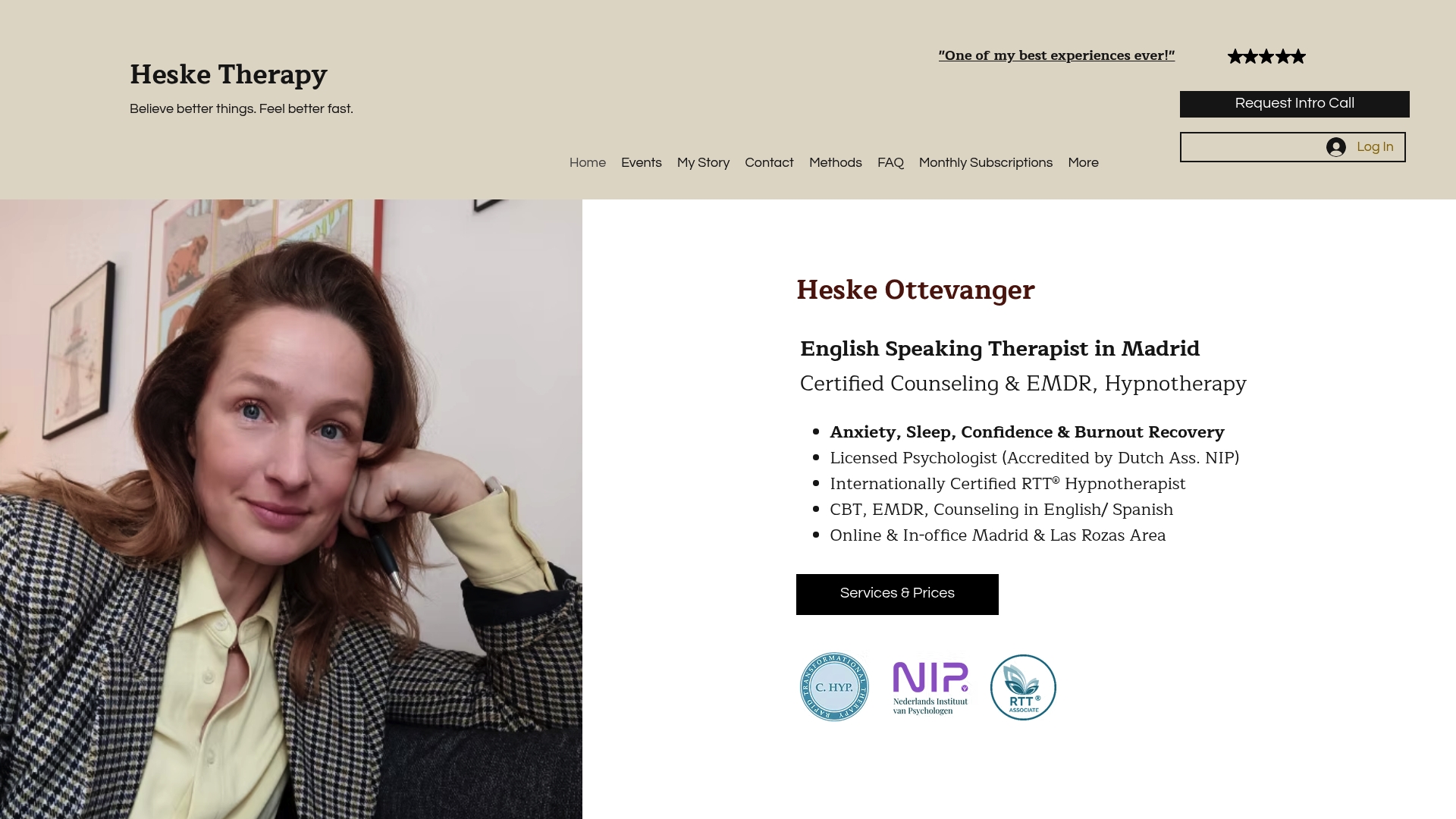
If you have been living with unexplained physical symptoms, chronic pain, fatigue, or stress-related illness and standard medical care has not given you lasting relief, integrated psychotherapy may be the missing piece. Hesketherapy offers evidence-based, personalized therapy for English-speaking adults, combining CBT, EMDR, RTT, and somatic approaches in a compassionate, judgment-free environment, available both online and in-person.
Explore RTT and integrative therapy at Hesketherapy and take the first step toward understanding what your body has been trying to tell you.
Sources
These are the primary clinical and research sources used throughout this article. Each offers a different depth of coverage:
This article is general information, not a substitute for advice from a qualified doctor. Consult a qualified healthcare professional about your own circumstances before acting on anything here.
Recommended
Comments