Role of Rapid Therapy Methods in Expat Mental Health

Feeling overwhelmed by anxiety or burnout is a reality for many American expatriates living in Madrid. The pressure of adapting to a new country can intensify stress, and studies reveal that over half of expats report significant emotional challenges within their first year abroad. Rapid therapy methods such as RTT and hypnotherapy are redefining how international professionals find relief, offering targeted solutions for swift emotional recovery when traditional approaches feel too slow.
Table of Contents
Key Takeaways
Point | Details |
Rapid Therapy Methods | These innovative practices offer swift interventions for mental health, addressing emotional challenges more efficiently than traditional therapy. |
Core Techniques | Notable methods like RTT, EMDR, CBT, and hypnotherapy cater to specific psychological needs, enhancing treatment effectiveness. |
Targeted Approach | Rapid therapies emphasize personalization, allowing practitioners to tailor strategies that resonate with clients’ unique circumstances, especially expatriates. |
Considerations for Use | While quick, these methods require clear communication between therapist and client about expectations and potential risks to ensure effective outcomes. |
Defining Rapid Therapy Methods in Mental Health
Rapid therapy methods represent innovative psychotherapeutic approaches designed to deliver swift and effective mental health interventions for individuals experiencing complex emotional challenges. Unlike traditional therapeutic models that may require prolonged treatment periods, these methods prioritize immediate neurobiological interventions and solution-focused strategies. Rapid therapy techniques aim to provide efficient, goal-directed treatments that capitalize on a client’s existing psychological resources.
The core characteristics of rapid therapy methods include their time-compressed treatment frameworks, pragmatic intervention strategies, and targeted approaches to alleviating psychiatric symptoms. These innovative approaches can achieve symptom relief in minutes or hours, contrasting sharply with traditional therapeutic models that might require weeks or months to demonstrate meaningful progress. Techniques such as Rapid Transformational Therapy (RTT), neurostimulation, and targeted hypnotherapy exemplify these cutting-edge mental health interventions.
Key distinguishing features of rapid therapy methods include their neurobiologically informed strategies, emphasis on immediate therapeutic contexts, and personalized treatment protocols. Mental health professionals utilizing these approaches focus on understanding an individual’s unique psychological landscape, leveraging advanced techniques to address root causes efficiently. By combining evidence-based practices with innovative therapeutic technologies, these methods offer expatriates and international clients precise, accelerated pathways to emotional healing and psychological resilience.
Pro Tip: When exploring rapid therapy options, prioritize practitioners who can clearly articulate their specific methodology and demonstrate measurable therapeutic outcomes.
Key Types: RTT, EMDR, CBT, Hypnotherapy
Rapid therapy methods encompass several specialized approaches designed to address mental health challenges with unprecedented efficiency and precision. These therapeutic techniques represent diverse strategies for psychological intervention, each offering unique mechanisms for facilitating psychological transformation. Rapid Transformational Therapy (RTT), Eye Movement Desensitization and Reprocessing (EMDR), Cognitive Behavioral Therapy (CBT), and Hypnotherapy stand out as primary modalities in this innovative mental health treatment landscape.
Cognitive Behavioral Therapy (CBT) represents a structured, goal-oriented approach that focuses on identifying and restructuring negative thought patterns and behavioral responses. EMDR, by contrast, specializes in trauma reprocessing through bilateral stimulation techniques, enabling clients to desensitize and reframe traumatic memories. RTT uniquely integrates hypnosis, neurolinguistic programming, and psychotherapeutic principles to facilitate deep subconscious reprogramming, addressing root psychological triggers more rapidly than traditional therapeutic methods.
Hypnotherapy emerges as a particularly intriguing rapid therapy method, utilizing guided relaxation and focused attention to access the subconscious mind directly. This approach enables practitioners to bypass conscious resistance and implement transformative psychological interventions. For expatriates experiencing complex emotional challenges, these rapid therapy methods offer personalized, accelerated pathways to psychological healing, addressing issues like cultural adjustment stress, anxiety, and trauma with remarkable efficiency.
Pro Tip: When selecting a rapid therapy approach, consider your specific emotional needs and consult with a professional who can match you with the most appropriate therapeutic technique.
Here’s a comparison of popular rapid therapy methods and their unique techniques:
Method | Core Technique | Best For |
RTT | Hypnosis-driven reprogramming | Deep-rooted emotional triggers |
EMDR | Bilateral stimulation | Trauma and PTSD relief |
CBT | Cognitive restructuring | Negative thought patterns |
Hypnotherapy | Subconscious access via suggestion | Stress and performance blocks |
How Rapid Therapy Delivers Fast Results
Rapid therapy methods achieve remarkable speed in addressing mental health challenges by directly targeting underlying neurobiological pathways. These innovative approaches distinguish themselves from traditional therapeutic models by utilizing advanced neurological and psychological techniques that bypass slower cognitive processing mechanisms. Expatriates experiencing complex emotional challenges can benefit from these accelerated interventions, which are specifically designed to provide swift and effective psychological relief.

The core mechanism behind rapid therapy’s efficiency involves strategically engaging the subconscious mind and neurological networks. By employing focused cognitive restructuring strategies and advanced neurological interventions, these methods can rapidly alter brain network connectivity and neurotransmitter activity. This approach allows practitioners to address deep-seated psychological patterns more quickly and effectively than conventional long-term therapy models, creating transformative changes in significantly reduced timeframes.
For international professionals and expatriates navigating complex emotional landscapes, rapid therapy methods offer targeted interventions that recognize the unique stressors of cross-cultural living. These approaches can swiftly address challenges such as cultural adjustment anxiety, professional burnout, and trauma-related emotional blocks. By combining precise psychological techniques with an understanding of neurological processes, rapid therapy provides a powerful toolkit for individuals seeking immediate and sustainable mental health improvements.
Pro Tip: When exploring rapid therapy options, request a clear explanation of the specific neurological and psychological mechanisms the therapist will employ to facilitate your healing process.
Real-World Applications for Expat Clients
Rapid therapy methods offer specialized mental health support uniquely tailored to the complex challenges faced by international professionals and expatriates, addressing the multifaceted psychological demands of cross-cultural transitions. These innovative therapeutic approaches recognize that expatriate experiences involve more than standard stress management, encompassing profound emotional landscapes shaped by cultural displacement, professional adaptation, and personal reinvention. Digital therapy platforms and teletherapy solutions have dramatically expanded access to culturally sensitive mental health interventions, enabling practitioners to deliver targeted support regardless of geographical constraints.
Specific therapeutic techniques like Eye Movement Desensitization and Reprocessing (EMDR), Cognitive Behavioral Therapy (CBT), Rapid Transformational Therapy (RTT), and hypnotherapy can be strategically applied to address common expatriate psychological challenges. These methods prove particularly effective in managing issues such as cultural adjustment anxiety, professional burnout, imposter syndrome, identity recalibration, and trauma related to significant life transitions. By providing rapid, focused interventions, these approaches help international professionals develop resilience, emotional agility, and psychological adaptability in dynamic and often unpredictable global environments.
The practical applications of rapid therapy for expatriates extend beyond traditional counseling models, offering nuanced interventions that acknowledge the unique stressors of international living. Therapists working with expat populations can leverage these methods to help clients navigate language barriers, process complex emotional experiences, rebuild professional confidence, and develop robust coping mechanisms. These targeted approaches recognize that expatriate mental health requires sophisticated, adaptable strategies that go beyond one-size-fits-all therapeutic models, providing personalized pathways to emotional wellness and professional success.
Pro Tip: When selecting a therapist as an expatriate, prioritize professionals with demonstrated cross-cultural experience and expertise in rapid intervention techniques.
Comparing Rapid Methods With Traditional Therapy
What makes rapid therapy methods distinctively different from traditional therapeutic approaches is their fundamental orientation toward immediate, targeted psychological intervention. Traditional therapy typically follows a long-term, exploratory model where clients gradually unpack complex emotional narratives over multiple sessions, potentially spanning months or years. In contrast, rapid therapy methods prioritize swift, precise interventions that directly address specific psychological challenges, enabling clients to experience meaningful transformation in significantly shorter timeframes.
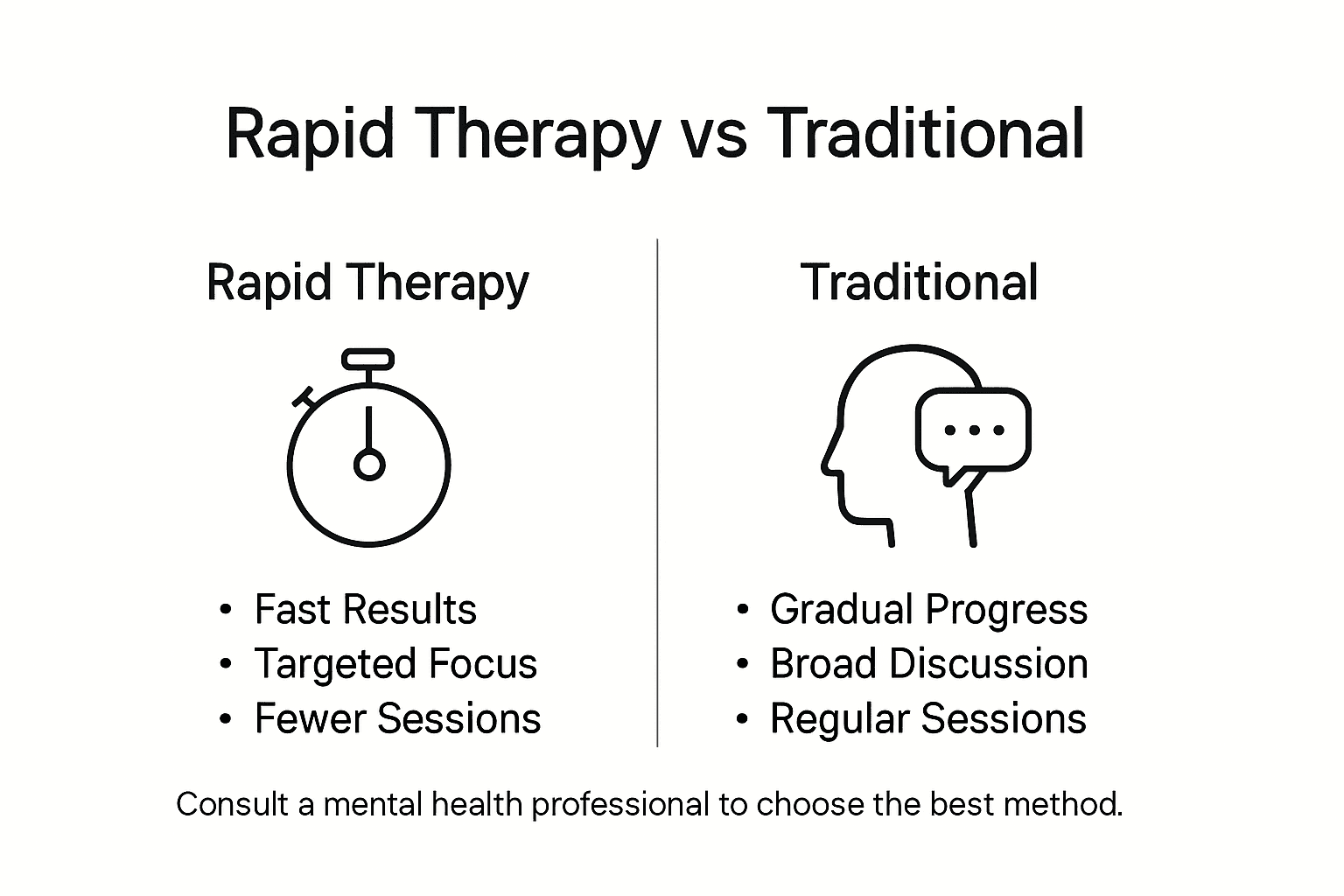
The structural differences between rapid and traditional therapy are profound and multifaceted. Traditional therapeutic models often emphasize prolonged analysis, spending considerable time investigating historical emotional patterns and childhood experiences. Rapid therapy techniques, however, concentrate on present-moment psychological mechanisms, utilizing advanced neurological and cognitive strategies to rapidly reprogram subconscious thought patterns. This approach allows expatriates and international professionals to quickly develop adaptive coping strategies, emotional resilience, and psychological flexibility without becoming entangled in extended, potentially retraumatizing therapeutic processes.
While traditional therapy relies heavily on talk-based interventions and gradual insight development, rapid therapy methods integrate cutting-edge psychological technologies like neurolinguistic programming, hypnotherapy, and targeted cognitive restructuring. These innovative approaches recognize that modern professionals, especially expatriates navigating complex cultural transitions, require efficient, results-oriented mental health support. By focusing on actionable outcomes and leveraging advanced psychological techniques, rapid therapy provides a more dynamic, responsive alternative to conventional long-term counseling models, addressing psychological challenges with unprecedented speed and precision.
Consider these factors when deciding between rapid and traditional therapy approaches:
Criteria | Rapid Therapy | Traditional Therapy |
Treatment Duration | Minutes to weeks | Months to years |
Intervention Style | Focused and direct | Explorative and comprehensive |
Suitability | Immediate issues, adaptation | Complex, chronic conditions |
Outcome Measurement | Short-term, rapid feedback | Long-term, gradual progress |
Pro Tip: Assess potential therapeutic approaches by requesting specific outcome metrics and estimated treatment durations to determine the most appropriate intervention for your unique psychological needs.
Risks, Limitations, and Misconceptions
Rapid therapy approaches face significant skepticism regarding their scientific validation and potential ethical implications, presenting a nuanced landscape of both promise and caution. While these innovative methods offer accelerated psychological interventions, mental health professionals and researchers emphasize the critical importance of understanding their inherent limitations. Potential risks include oversimplifying complex psychological conditions, creating unrealistic client expectations, and potentially overlooking deeper, more intricate emotional challenges that require comprehensive, long-term therapeutic exploration.
Ethical considerations surrounding rapid therapy methods center on informed consent, managing patient expectations, and ensuring equitable mental health access. The fundamental misconception that rapid therapy provides a universal, instantaneous solution to complex psychological issues can be potentially harmful. Expatriates and international professionals must recognize that while these methods offer remarkable efficiency, they are not magical cure-alls. Some mental health conditions require multilayered, sustained therapeutic approaches that cannot be fully addressed through abbreviated intervention models.
Critical evaluation of rapid therapy methods demands a balanced perspective that acknowledges both their innovative potential and inherent limitations. Practitioners and clients alike must engage in transparent communication about expected outcomes, potential challenges, and the specific psychological mechanisms underlying these interventions. For expatriates navigating complex emotional landscapes, this means actively participating in treatment discussions, asking critical questions about methodology, and maintaining realistic expectations about the therapeutic process and potential transformations.
Pro Tip: Always request a comprehensive assessment and detailed treatment plan that outlines potential risks, expected outcomes, and ongoing support strategies before committing to any rapid therapy intervention.
Discover Fast and Lasting Relief with Heske Therapy for Expat Mental Health
Living abroad comes with unique emotional challenges like cultural adjustment anxiety, burnout, and trauma. Rapid therapy methods such as Rapid Transformational Therapy (RTT), EMDR, CBT, and hypnotherapy offer targeted solutions that deliver swift breakthroughs by addressing the root causes of distress. At Heske Therapy, we specialize in these innovative techniques, combining evidence-based approaches with personalized care to help English-speaking expatriates overcome stress, low self-esteem, and emotional blocks with proven, rapid results.
Our practice in Madrid provides both online and in-office sessions tailored to your individual needs. With a multicultural and multilingual team, we understand the specific pressures you face and offer compassionate support in English, Spanish, and Dutch. By choosing Heske Therapy, you benefit from a professional mental health service designed to transform complex psychological patterns efficiently while respecting your cultural background.
Are you ready to start your journey toward emotional resilience and peace of mind with expert guidance in rapid therapy methods?
Take the first step today and schedule your free discovery call to explore how our tailored psychotherapeutic solutions can meet your unique needs. Visit Heske Therapy to learn more about our approach and book your appointment now.
Explore further how rapid interventions make a difference by visiting Rapid Therapy Overview
Find out about specific treatment options like Rapid Transformational Therapy and experience mental health care built for you.
Frequently Asked Questions
What are rapid therapy methods?
Rapid therapy methods are innovative psychotherapeutic approaches designed to deliver swift and effective interventions for complex emotional challenges, focusing on immediate neurobiological strategies and solution-focused techniques.
How do rapid therapy methods differ from traditional therapy?
Unlike traditional therapy, which can take months or years, rapid therapy methods prioritize quick, targeted interventions to address specific psychological challenges, allowing for meaningful transformations in a shorter time frame.
What types of rapid therapy methods are available for expatriates?
Common rapid therapy methods include Rapid Transformational Therapy (RTT), Eye Movement Desensitization and Reprocessing (EMDR), Cognitive Behavioral Therapy (CBT), and hypnotherapy, each offering unique techniques for addressing mental health issues.
Are there risks associated with rapid therapy methods?
Yes, rapid therapy methods may oversimplify complex psychological conditions and create unrealistic expectations. It’s essential to engage in transparent communication with therapists about potential risks and expected outcomes.
Recommended
Comments