Self-Esteem Therapy: Transforming Confidence for Expats

More than 60 percent of American expatriates report feeling isolated and overwhelmed during their first year in Madrid. Emotional challenges often erode self-confidence, making daily life feel heavier and more difficult. For English-speaking expats seeking rapid, effective solutions, self-esteem therapy offers targeted strategies to rebuild resilience and improve mental well-being. You will find practical approaches to regaining your sense of self and navigating these challenges with greater confidence.
Table of Contents
Key Takeaways
Point | Details |
Focus on Self-Perception | Self-esteem therapy helps individuals identify and transform negative self-perception patterns, essential for building confidence. |
Therapeutic Approaches | Cognitive Therapy and Mindfulness Techniques are effective in reshaping negative thoughts and enhancing emotional resilience. |
Personalization is Key | Choosing the right therapy method should align with one’s unique emotional landscape and personal challenges. |
Addressing Misconceptions | Understanding that self-esteem is a dynamic process rather than a fixed trait enables personal growth and authenticity. |
What Self-Esteem Therapy Involves
Self-esteem therapy is a targeted therapeutic approach designed to help individuals recognize, challenge, and transform negative self-perception patterns. By addressing the root causes of diminished confidence, this therapeutic method helps clients develop a more positive and realistic view of themselves, particularly crucial for expatriates navigating complex emotional landscapes.
The core of self-esteem therapy centers on identifying underlying thought patterns that contribute to low self-worth. Therapists utilize cognitive behavioral techniques to help clients examine and deconstruct harmful beliefs, replacing self-critical narratives with constructive, empowering perspectives. For expats experiencing significant life transitions, this process becomes especially important in rebuilding confidence and emotional resilience.
Therapy sessions typically involve structured exercises and conversations that help clients understand their unique self-esteem challenges. These might include exploring childhood experiences, analyzing current relationship dynamics, identifying personal strengths, and developing strategies to combat negative self-talk. Recognizing patterns of self-doubt becomes a critical step in transforming one’s internal dialogue and rebuilding self-confidence.
Pro tip: Keep a daily journal documenting positive experiences and personal achievements to help rewire your brain’s perception of self-worth and gradually build more positive neural pathways.
Key Approaches in Self-Esteem Therapy
Self-esteem therapy encompasses several evidence-based approaches designed to help individuals rebuild their sense of self-worth and personal value. These therapeutic strategies are particularly nuanced for expatriates who often face unique challenges of cultural displacement and identity reconstruction.
One primary approach is cognitive therapy techniques that systematically address and reframe negative thought patterns. By identifying irrational beliefs and challenging distorted self-perceptions, therapists help clients develop more balanced and realistic self-evaluations. This method is especially powerful for expats struggling with imposter syndrome or feeling disconnected from their professional identity in a new cultural context.
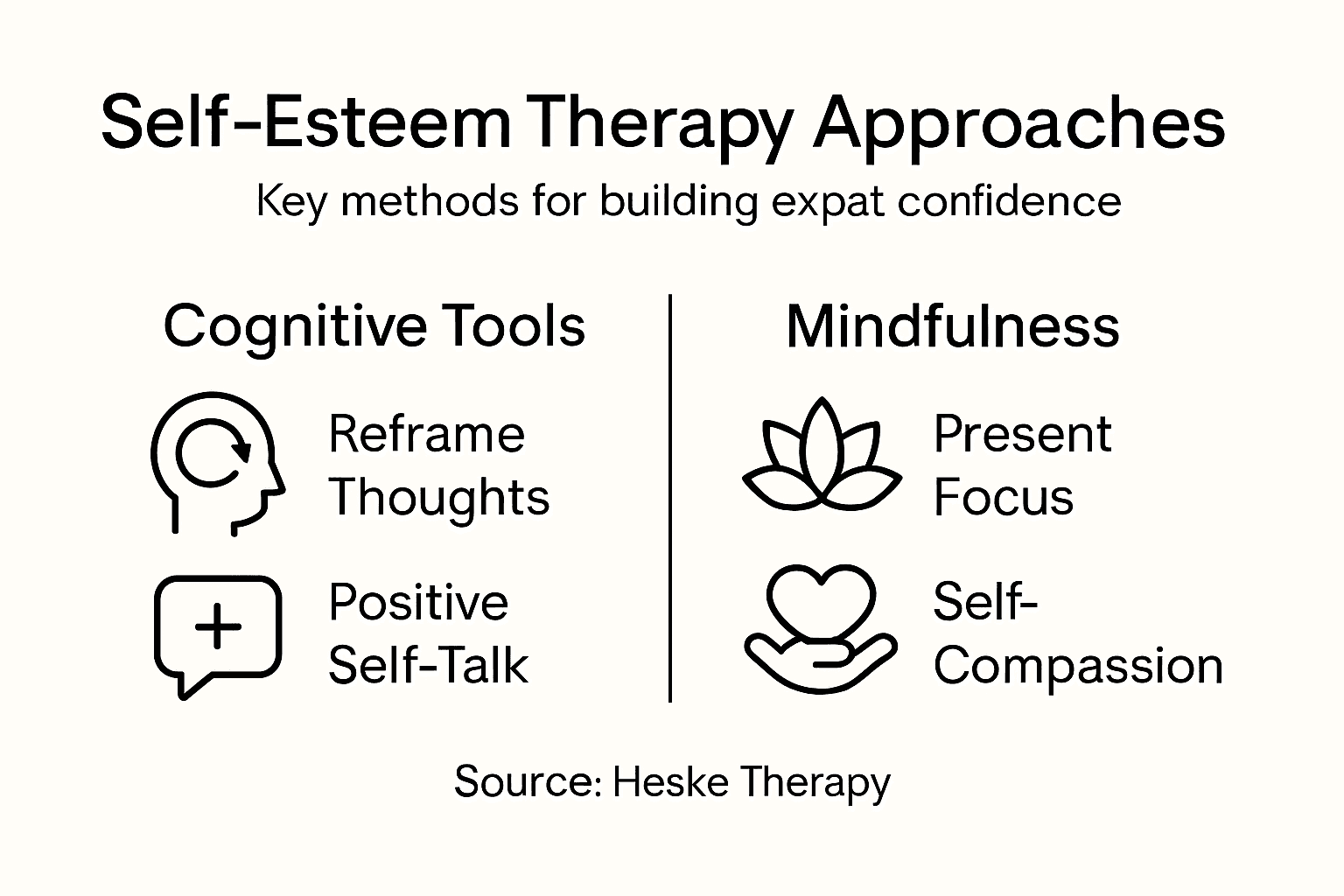
Another transformative approach involves mindfulness-based interventions that promote present-moment awareness and self-acceptance. These practices help clients develop greater emotional resilience by reducing self-critical thoughts and increasing self-compassion. For expatriates experiencing significant life transitions, mindfulness can be a powerful tool in managing stress, rebuilding confidence, and creating a more stable sense of self.
Pro tip: Practice daily positive affirmations specifically tailored to your unique expatriate experience, focusing on your strengths and adaptability in navigating cross-cultural challenges.
Here’s a comparison of key self-esteem therapy approaches often used with expatriates:
Approach Type | Core Focus | Distinct Benefit for Expats | Example Application |
Cognitive Therapy | Restructuring negative beliefs | Builds realistic self-evaluations | Challenging imposter syndrome |
Mindfulness Techniques | Awareness and self-acceptance | Enhances emotional resilience | Managing cross-cultural stress |
Acceptance-Based Therapy | Fostering self-compassion | Encourages balanced self-worth | Coping with identity shifts |
How Therapy Boosts Confidence and Well-Being
Therapy plays a transformative role in rebuilding self-confidence, particularly for expatriates navigating complex emotional landscapes of cultural transition and personal reinvention. By providing structured support and targeted interventions, therapeutic approaches help individuals dismantle harmful thought patterns and reconstruct a more positive self-perception.

Therapeutic interventions targeting self-esteem offer profound benefits beyond immediate emotional relief. These approaches systematically challenge negative self-beliefs, empowering individuals to develop more resilient mental frameworks. For expatriates experiencing disconnection and uncertainty, therapy becomes a critical tool in reframing personal narratives and rebuilding a sense of worthiness and potential.
The process of therapy goes beyond simple problem-solving, creating a holistic pathway to emotional healing and personal growth. Through guided exploration, individuals learn to recognize their inherent strengths, develop healthier coping mechanisms, and cultivate a more compassionate relationship with themselves. This journey of self-discovery enables expats to transform personal challenges into opportunities for profound psychological transformation and renewed confidence.
Pro tip: Create a personal “confidence journal” where you document your therapeutic insights, personal victories, and moments of resilience, helping you track your emotional growth and reinforce positive self-perception.
Choosing the Right Therapy Method for You
Selecting the most appropriate therapy method for improving self-esteem requires careful consideration of your unique emotional landscape, personal history, and specific challenges. Expatriates often face complex psychological dynamics that demand a nuanced and personalized therapeutic approach tailored to their individual experiences of cultural transition and identity reconstruction.
Selecting the right therapeutic approach involves understanding your specific emotional needs and being open to exploring different therapeutic techniques. Some individuals might benefit most from cognitive-behavioral strategies that directly challenge negative thought patterns, while others may find greater healing through mindfulness-based interventions that promote self-compassion and present-moment awareness.
The therapeutic journey is fundamentally about finding a method that resonates with your personal style of processing emotions and confronting challenges. Different therapeutic modalities offer unique strengths: cognitive approaches help restructure thought patterns, mindfulness techniques enhance emotional regulation, and acceptance-based therapies encourage self-compassion. Your ideal therapy method should feel like a collaborative partnership that empowers you to understand yourself more deeply and develop more resilient emotional strategies.
Pro tip: Schedule initial consultations with multiple therapists to assess their approach, communication style, and how comfortable you feel discussing your specific expatriate experiences, ensuring you find the most compatible therapeutic relationship.
Common Mistakes and Misconceptions
Understanding self-esteem therapy requires dismantling several persistent myths that can hinder personal growth and emotional healing. Expatriates, in particular, often struggle with complex self-perception challenges that are frequently misunderstood, making it crucial to recognize and address these common misconceptions.
Self-esteem development involves more than simply receiving external validation or achieving surface-level accomplishments. Many individuals mistakenly believe that self-esteem is a fixed trait determined by past experiences, when in reality, it is a dynamic psychological process that can be intentionally reshaped through therapeutic intervention, personal reflection, and consistent emotional work.
Another significant misconception is conflating healthy self-confidence with arrogance or believing that improving self-esteem means becoming overly self-promotional. In truth, genuine self-esteem represents a balanced, compassionate relationship with oneself that acknowledges both strengths and areas for growth. For expatriates navigating cultural transitions, this nuanced understanding becomes particularly important, as self-worth is not about comparison or competition, but about developing a resilient, authentic sense of personal value.
Below is a summary of common misconceptions versus the actual realities of self-esteem therapy:
Misconception | Reality | Impact on Growth |
Self-esteem is fixed by the past | It can be reshaped intentionally | Empowers improvement |
Confidence equals arrogance | True confidence is balanced and humble | Reduces self-criticism |
External validation builds self-worth | Self-worth grows through inner work | Fosters authenticity |
Pro tip: Challenge your internal narrative by keeping a weekly reflection journal that documents moments of personal growth, cultural adaptation challenges you’ve successfully navigated, and compassionate observations about your ongoing emotional journey.
Rebuild Your Confidence with Expert Therapy Designed for Expats
Navigating the challenges of low self-esteem while living abroad can feel overwhelming. This article highlights how targeted therapy helps expatriates transform negative self-beliefs, manage cultural transitions, and cultivate lasting confidence through methods like cognitive therapy and mindfulness. At Heske Therapy, we understand these unique struggles and offer personalized psychotherapy tailored specifically to English-speaking expatriates in Madrid. Our integrative approaches including Rapid Transformational Therapy, EMDR, and CBT focus on breaking emotional blocks and building resilient self-worth quickly and effectively.
If you are ready to overcome self-doubt and rewrite your personal narrative with compassionate, expert support discover how our specialized therapy can help you regain control of your confidence and well-being. Start your healing journey today with Heske Therapy’s personalized treatment plans designed to address the emotional complexities of expatriate life.
Ready to take the next step toward stronger self-esteem and emotional balance?
Explore the benefits of our therapy services and schedule a free discovery call at Heske Therapy to find the best approach for your unique experience. Transform your confidence now and embrace your full potential.
Frequently Asked Questions
What is self-esteem therapy?
Self-esteem therapy is a therapeutic approach aimed at helping individuals recognize and challenge negative self-perception patterns. It focuses on transforming these patterns into a more positive and realistic view of oneself.
How can self-esteem therapy benefit expatriates?
Self-esteem therapy assists expatriates in navigating cultural transitions and identity reconstruction. It helps rebuild confidence, emotional resilience, and a balanced self-perception, addressing the unique challenges they may face in new environments.
What approaches are used in self-esteem therapy?
Key approaches in self-esteem therapy include cognitive therapy techniques that challenge negative thought patterns and mindfulness-based interventions that promote self-acceptance and present-moment awareness. These strategies help individuals develop greater emotional resilience.
How can I choose the right therapy method for my self-esteem challenges?
Choosing the right therapy method involves considering your unique emotional needs and being open to different techniques. It’s beneficial to schedule initial consultations with multiple therapists to find an approach and communicative style that resonates with you.
Recommended
Comments