Why Therapy for Stress Matters for Expats

Nearly four out of five English-speaking expatriates in Madrid report feeling intense stress within their first year abroad. For many American professionals, the excitement of moving to Spain soon gives way to anxiety and emotional exhaustion as cultural differences and isolation mount. Understanding how stress truly affects expatriates is the first step toward finding relief. This guide reveals how innovative, culturally sensitive therapy can empower you to reclaim your well-being and build resilience far from home.
Table of Contents
Key Takeaways
Point | Details |
Unique Stress for Expatriates | Expatriate stress encompasses cultural adaptation and isolation, requiring resilience beyond typical stress experiences. |
Therapy as a Tool | Professional mental health support aids expatriates in navigating emotional challenges and developing adaptive coping strategies. |
Barriers to Seeking Help | Cultural stigma, language issues, and unrealistic expectations often hinder expatriates from pursuing necessary mental health resources. |
Long-Term Benefits | Consistent therapy enhances emotional resilience and contributes to improved overall health and professional performance. |
Defining Stress and Its Impact on Expats
Life abroad is never just a picturesque postcard moment. For English-speaking expatriates in Madrid, stress emerges as an invisible yet powerful force that can dramatically transform personal and professional experiences. Research examining expatriate challenges reveals complex psychological dynamics that go far beyond typical relocation narratives.
Stress for expats isn’t merely feeling overwhelmed - it’s a multifaceted experience rooted in cultural adaptation, communication barriers, and significant life transitions. When moving to a new country, individuals encounter profound psychological challenges that test their resilience. Professional environments demand rapid adjustment, while personal networks require complete reconstruction. The mental load of navigating unfamiliar social norms, language nuances, and workplace expectations creates substantial psychological pressure.
The impact of chronic stress among expatriates extends beyond emotional discomfort. It can manifest through physical symptoms like sleep disruption, heightened anxiety, decreased immune function, and potential burnout. Expatriates often experience what psychologists term “transition stress” - a complex emotional state where personal identity becomes temporarily destabilized. This stress emerges from continuous negotiation between familiar personal histories and new cultural contexts, creating internal psychological friction that can feel emotionally exhausting.
Pro tip: Create a structured support network before moving abroad, including local connections, online expat communities, and professional mental health resources to proactively manage potential stress triggers.
What Makes Stress Different for Expatriates
Expatriate stress represents a unique psychological landscape that fundamentally differs from standard stress experiences. Unlike typical workplace or local life challenges, international relocation introduces complex layers of psychological adaptation that profoundly impact mental health. Research investigating non-work stressors for expatriate partners demonstrates that social and personal dimensions frequently outweigh professional challenges in determining overall psychological well-being.

The distinctive nature of expatriate stress emerges from multiple interconnected factors. Cultural distance creates significant psychological friction, where familiar social scripts and communication patterns suddenly become ineffective. Expatriates must constantly negotiate between their original cultural framework and the new environment’s unwritten social rules. This continuous mental recalibration generates emotional exhaustion that goes far beyond typical workplace stress, requiring extraordinary psychological resilience and adaptability.
Moreover, expatriate stress is characterized by profound isolation and disrupted support networks. When individuals move abroad, they simultaneously lose established social connections and face substantial challenges in building new meaningful relationships. The emotional labor of recreating personal and professional support systems while managing daily cultural translations can generate sustained psychological tension. Language barriers, cultural misunderstandings, and the absence of familiar comfort zones intensify this stress, making every social interaction a potential source of emotional complexity.
Pro tip: Develop a structured personal adaptation strategy before moving abroad, including language learning, cultural research, and proactive networking to mitigate potential isolation and psychological stress.
How Therapy Addresses Stress in Daily Life
For expatriates navigating complex emotional landscapes, therapy emerges as a transformative tool for managing daily stress and psychological adaptation. Comprehensive research exploring therapy’s role in cultural adjustment reveals that professional mental health support provides crucial strategies for navigating the intricate challenges of international living.
Therapy addresses expatriate stress through multiple targeted approaches. Cognitive behavioral techniques help individuals reframe negative thought patterns that emerge from cultural disorientation, enabling more resilient emotional responses. Therapists work closely with clients to deconstruct anxiety triggers, develop coping mechanisms, and rebuild psychological safety nets that may have been disrupted by international relocation. Using RTT Hypnotherapy to recover from trauma can be particularly effective in processing deeper emotional wounds associated with significant life transitions.
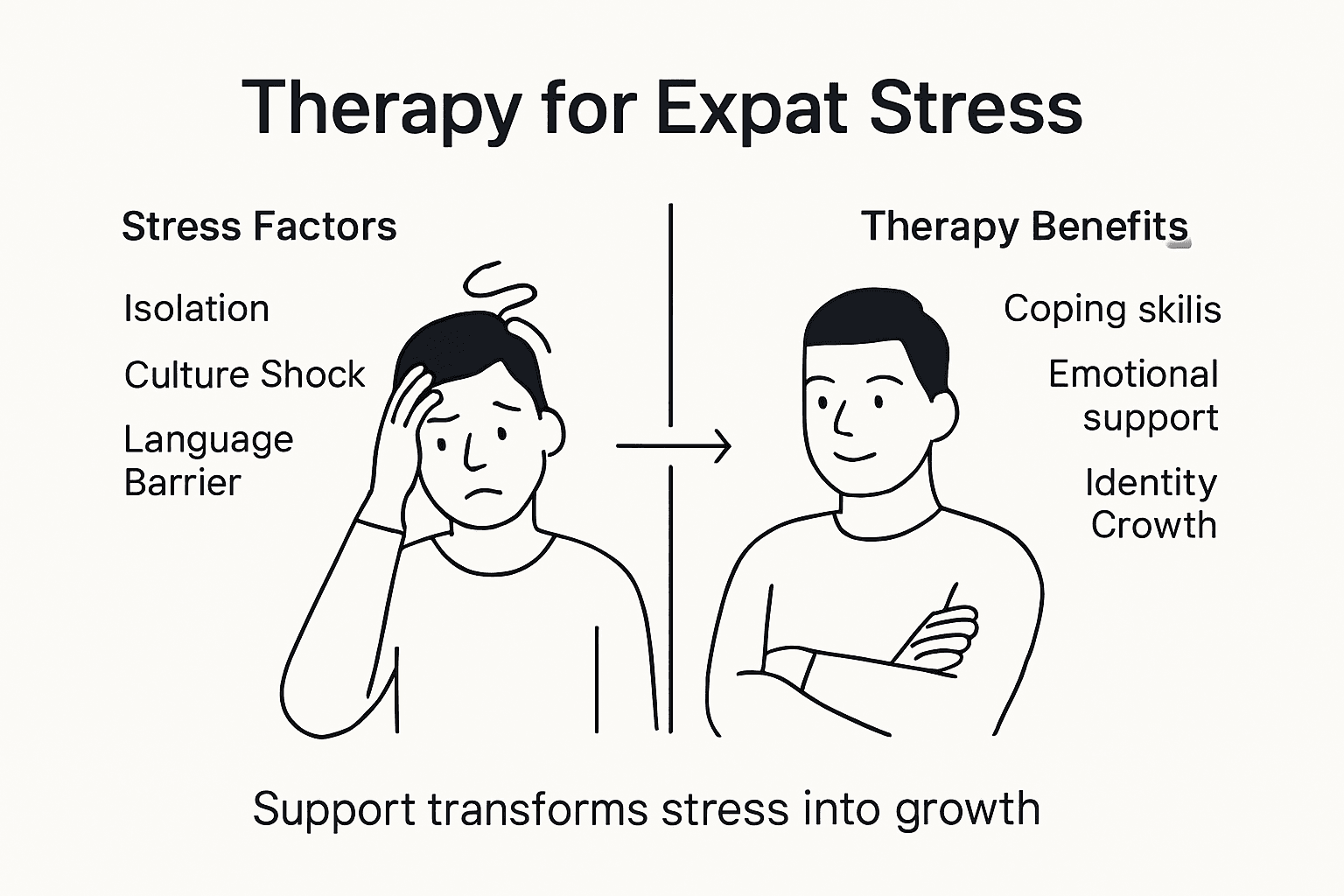
Moreover, therapy provides a structured environment for expatriates to explore identity challenges, cultural shock, and the complex emotions of feeling simultaneously disconnected and overwhelmed. Professional counselors help clients develop practical communication skills, emotional regulation techniques, and personalized strategies for integrating into new social environments. By offering a non-judgmental space for vulnerability, therapy transforms stress from an insurmountable obstacle into a manageable aspect of personal growth and cultural adaptation.
Pro tip: Schedule an initial consultation with a therapist specializing in expatriate experiences to create a personalized emotional support strategy before major life transitions.
Comparing Therapy Modalities for Stress Relief
Expats experiencing chronic stress require nuanced therapeutic approaches that address their unique psychological challenges. Comprehensive research comparing treatment strategies demonstrates that different therapy modalities offer distinct advantages for managing stress and emotional adaptation in international contexts.
Cognitive Behavioral Therapy (CBT) stands out as a particularly effective intervention for expatriates. By helping individuals recognize and reframe negative thought patterns, CBT provides practical tools for managing cultural disorientation and emotional uncertainty. What makes RTT Hypnotherapy different from talking therapy becomes particularly relevant when exploring alternative approaches that can complement traditional talk therapy. Rapid Transformational Therapy (RTT) offers a more intensive method of addressing deeply rooted stress responses, working directly with subconscious patterns that conventional therapies might take longer to unpack.
Beyond traditional approaches, integrative therapy models combine multiple techniques to create personalized stress management strategies. These might include a blend of cognitive behavioral interventions, mindfulness practices, somatic experiencing, and targeted hypnotherapy. The goal is not just symptom management, but holistic psychological transformation that empowers expatriates to develop resilience, emotional flexibility, and adaptive coping mechanisms specific to their unique international experience.
Here’s a comparison of common therapy modalities for expatriate stress:
Modality | Approach Focus | Strengths for Expats | Typical Session Format |
Cognitive Behavioral Therapy | Thought patterns | Reduces anxiety, builds resilience | Structured talk sessions |
Rapid Transformational Therapy | Subconscious change | Addresses trauma, fast results | Guided hypnotherapy |
Integrative Therapy | Multiple techniques | Personalized, flexible strategies | Blend of various methods |
Pro tip: Approach therapy as a collaborative process, openly discussing your specific expatriate challenges to help your therapist design the most effective, personalized treatment strategy.
Common Barriers and Mistakes in Seeking Help
Expatriates often encounter significant psychological obstacles when attempting to access mental health support. Systematic research investigating barriers to mental health service use reveals complex challenges that prevent individuals from seeking timely and effective psychological interventions, particularly in international contexts.
Perhaps the most pervasive barrier is cultural stigma surrounding mental health. Many expatriates internalize societal narratives that perceive therapy as a sign of weakness, creating powerful psychological resistance to seeking help. Language barriers compound this challenge, making communication with mental health professionals feel intimidating. Some expats struggle with finding therapists who understand their specific cultural background, leading to frustration and potential abandonment of treatment seeking. This sense of isolation is further amplified by limited mental health literacy and unfamiliarity with therapeutic approaches available in their new country.
Additional mistakes frequently emerge from misunderstanding the therapeutic process itself. Expatriates might expect immediate solutions or view therapy as a transactional service, rather than a collaborative journey of personal exploration and healing. Unrealistic expectations, combined with previous negative experiences or cultural misconceptions about mental health, can create significant psychological resistance. Some individuals delay seeking help until stress reaches a critical point, inadvertently making their recovery more complex and time-consuming. The key is recognizing that therapy is a proactive investment in personal resilience, not a last-resort intervention.
To better understand barriers faced by expats seeking therapy, here’s an overview table:
Barrier Type | Impact on Expats | Example Challenge |
Cultural Stigma | Hesitation to seek help | Negative perceptions of therapy |
Language Barrier | Difficulty communicating | Misunderstood emotions |
Limited Local Knowledge | Hard to find resources | Unaware of available therapists |
Unrealistic Expectations | Frustration with process | Expecting instant solutions |
Pro tip: Research therapists who specialize in expatriate experiences and offer initial consultations, allowing you to assess compatibility and approach before committing to long-term treatment.
Long-Term Benefits for Emotional and Physical Health
Therapy for expatriates transcends immediate stress management, offering profound transformative potential for long-term emotional and physical well-being. Comprehensive research examining psychological adjustment for international professionals reveals that strategic mental health interventions can dramatically enhance overall life quality and resilience.
The physiological benefits of consistent therapeutic support extend far beyond traditional emotional healing. Chronic stress experienced by expatriates can trigger significant neurological and immunological changes, leading to increased inflammation, compromised immune responses, and heightened risk of stress-related disorders. Regular therapy helps interrupt these harmful biological cascades, promoting neuroplasticity and supporting the body’s natural stress recovery mechanisms. Food & Mood becomes particularly relevant in understanding how psychological interventions can positively influence overall health through interconnected biological systems.
Emotional resilience developed through therapy creates a powerful protective mechanism for expatriates navigating complex international transitions. By developing adaptive coping strategies, individuals learn to transform challenging experiences into opportunities for personal growth. This psychological flexibility not only reduces immediate stress but also builds long-term emotional intelligence, enabling more effective communication, stronger relationship building, and enhanced professional performance in multicultural environments.
Pro tip: Approach therapy as a holistic investment in your personal and professional development, viewing each session as an opportunity to build comprehensive life skills beyond immediate stress management.
Take Control of Stress with Expert Therapy Designed for Expats
Living abroad brings unique stressors like cultural adjustment, language barriers, and social isolation. If the continuous mental load of adapting to a new environment is overwhelming you, know that therapy can provide relief tailored specifically to your expatriate experience. Heske Therapy in Madrid offers specialized psychotherapy that addresses key challenges such as anxiety, burnout, and emotional blocks using integrative methods including Rapid Transformational Therapy and Cognitive Behavioral Therapy. Their focus on rapid and lasting results, combined with personalized treatment plans, helps you rebuild resilience and find emotional balance in your new home.
Discover how professional support can transform stress from a barrier into a path for personal growth. Whether online or in-office, Heske Therapy embraces multicultural understanding to deliver compassionate care in English, Spanish, or Dutch. Don’t wait for stress to escalate. Start developing adaptive coping strategies with expert guidance today by visiting Heske Therapy.
Ready to overcome expatriate stress and embrace your life abroad with confidence Visit Heske Therapy now to schedule your free discovery call and begin a journey toward lasting emotional well-being.
Frequently Asked Questions
What are the main challenges that expats face that contribute to stress?
Expats often deal with cultural adaptation, communication barriers, and the loss of established social networks, which can lead to feelings of isolation and emotional exhaustion.
How can therapy help expats manage stress?
Therapy helps expats by providing coping strategies, emotional regulation techniques, and a supportive environment to explore identity challenges and cultural disorientation.
What are common therapy modalities that are effective for expats?
Common modalities include Cognitive Behavioral Therapy (CBT), which focuses on reframing negative thoughts, and Rapid Transformational Therapy (RTT), which addresses subconscious stress responses.
Why is it important for expats to seek therapy early?
Seeking therapy early can prevent stress from becoming chronic, making recovery more complex. It serves as a proactive investment in personal resilience and emotional well-being.
Recommended
Comments