How therapy transforms physical symptoms: 3 approaches
- Heske Ottevanger
- 4 hours ago
- 8 min read


TL;DR:
Physical symptoms like IBS and migraines often stem from emotional and psychological stress.
Effective therapies include CBT, gut hypnotherapy, and psychodynamic approaches targeting brain-gut communication.
Digital tools and personalized integrated therapies offer accessible options for expats managing stress-related health issues.
Your stomach cramps before every big meeting. Your migraines arrive like clockwork during stressful weeks. You’ve seen the gastroenterologist, the neurologist, and maybe even a dietitian, but the symptoms keep coming back. For many English-speaking expats in Madrid, this cycle is exhausting and confusing. The missing piece is rarely another specialist. It’s the recognition that the brain and body are in constant conversation, and that therapies targeting anxiety, emotional blocks, and stress responses can produce real, measurable relief from physical symptoms like IBS and chronic migraines.
Table of Contents
Key Takeaways
Point | Details |
Mind-body therapy works | Therapies like CBT, hypnotherapy, and psychodynamic approaches directly reduce physical symptoms by targeting underlying emotional patterns. |
Evidence supports integrative care | Research shows psychological therapies can outperform medication for IBS and persistent pain. |
Digital options help expats | Apps and self-hypnosis tools are proven, accessible steps for expats facing therapy barriers. |
Choose therapy for your context | Integrated and personalized therapy is crucial, especially if you’re managing emotional and physical symptoms as an expat. |
Why physical symptoms often have emotional roots
The idea that your gut or your head “just hurts” without any emotional component is one of the most persistent myths in modern medicine. The reality is far more interesting. Your brain and gut share a direct communication highway called the gut-brain axis, a network of nerves, hormones, and immune signals that runs in both directions. When you’re anxious, grieving, or stuck in a chronic stress loop, that axis gets dysregulated. The result? Bloating, cramping, altered bowel habits, or pain that no scan can fully explain.
Migraines follow a similar pattern. Emotional tension, unprocessed grief, and prolonged anxiety all lower the pain threshold in the nervous system, making the brain more reactive to triggers. This isn’t “all in your head” in the dismissive sense. It’s neurological reality.
For expats, this connection is especially relevant. Relocating to Madrid means navigating a new language, a new culture, unfamiliar healthcare systems, and often a thinner social support network. That accumulated stress doesn’t disappear. It tends to land somewhere in the body. Isolation amplifies the effect because without a strong community to process emotions with, feelings get bottled up and the nervous system stays on high alert.
“Psychotherapy, particularly brain-gut behavior therapies, plays a key role in managing physical symptoms by addressing gut-brain axis dysregulation, anxiety, and emotional factors.”
Research confirms that the majority of persistent physical symptoms, especially functional ones like IBS, have significant emotional components. Therapy works because it uses psychotherapy mechanisms that literally reshape how the brain processes pain and gut signals, a process called neuroplasticity. Over time, the nervous system becomes less hypersensitive, and symptoms ease.
Some signs that emotions may be driving your physical symptoms:
Symptoms worsen during stressful periods or after emotional events
Medical tests keep coming back normal despite ongoing pain
You notice your gut reacts to social situations, not just food
Migraines cluster around work deadlines or relationship stress
You’ve been told it’s “stress-related” but haven’t been given a clear path forward
Understanding these emotional healing steps is the first move toward breaking the cycle.
The top therapy approaches for IBS, migraines, and pain
Not all therapies are created equal when it comes to physical symptoms. Three approaches have the strongest evidence base: cognitive behavioral therapy (CBT), gut-directed hypnotherapy, and dynamic psychotherapy.
CBT (cognitive behavioral therapy) teaches you to identify and shift thought patterns and behaviors that keep the stress response activated. For IBS and pain, it targets catastrophic thinking about symptoms, avoidance behaviors, and hypervigilance to bodily sensations.

Gut-directed hypnotherapy uses a relaxed, focused state to send calming messages directly to the gut via the brain-gut axis. It doesn’t require you to “believe” in hypnosis. It works by reducing gut hypersensitivity and retraining the autonomic nervous system.
Dynamic psychotherapy explores the emotional and relational roots of symptoms, often uncovering patterns from earlier life that the body has been carrying. It’s particularly useful when symptoms have been present for years without a clear trigger.
Here’s how they compare on effectiveness for IBS:
Therapy | Risk ratio vs. waiting list | Best for |
CBT | 0.65 | Anxiety-driven IBS, pain catastrophizing |
Gut-directed hypnotherapy | 0.79 | Gut hypersensitivity, visceral pain |
Dynamic psychotherapy | 0.59 | Trauma-linked, long-standing symptoms |
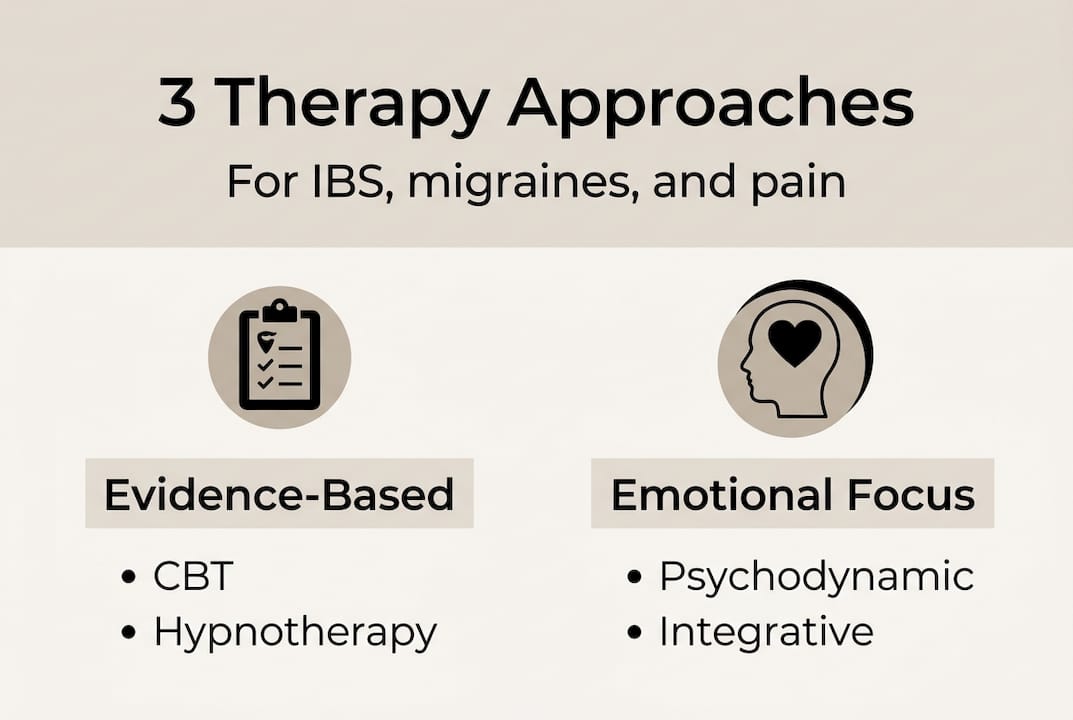
These figures come from a meta-analysis of brain-gut therapies showing CBT and gut-directed hypnotherapy are effective for global IBS symptom improvement. A lower risk ratio means greater symptom reduction compared to no treatment.
How a typical session works:
CBT session: You map a recent symptom flare to the thoughts and behaviors that preceded it, then practice reframing and gradual exposure to feared situations.
Gut-directed hypnotherapy session: After a short induction into a relaxed state, the therapist guides imagery that targets gut calm, warmth, and normal function. Sessions for IBS hypnotherapy typically run 45 to 60 minutes.
Dynamic session: You explore current symptom patterns in the context of past relationships and emotional experiences, building insight that reduces unconscious tension.
Pro Tip: Not every therapist who lists “CBT” or “hypnotherapy” has specific training in gut-directed or pain-focused protocols. Always ask whether they have direct experience treating IBS, migraines, or chronic pain, not just general anxiety. You can also explore stress relief hypnotherapy as a starting point to understand what the process involves.
For a broader overview of how Harvard’s researchers frame these options, Harvard’s guide to IBS therapies is worth reading before your first appointment.
When and why to choose psychodynamic or integrative therapies
Sometimes CBT or hypnotherapy helps but doesn’t go far enough. If your symptoms have been present for years, shift locations (gut pain one month, headaches the next), or feel connected to something deeper than daily stress, psychodynamic or integrative therapy is worth considering.
Psychodynamic therapy works by bringing unconscious emotional conflicts into awareness. Many people with chronic physical symptoms have learned, often in childhood, to suppress emotions rather than express them. The body picks up the slack. By working through those patterns in therapy, the physical load lightens.
Research shows that psychodynamic therapies sometimes outperform CBT for pain reduction, especially in emotion-focused functional somatic disorders and trauma cases. This matters because it means there’s no single “best” therapy. The best one is the one that matches your history and your symptoms.
Approach | Best suited for | Typical timeframe |
CBT | Anxiety, avoidance, pain catastrophizing | 8 to 16 sessions |
Gut-directed hypnotherapy | Visceral sensitivity, IBS flares | 6 to 12 sessions |
Psychodynamic therapy | Trauma, long-standing patterns, emotional avoidance | 3 to 12 months |
Integrative (combined) | Complex or shifting symptoms, expat stress | Flexible |
Signs you might benefit from an integrative or psychodynamic approach:
You’ve tried CBT or medication with limited results
Your symptoms feel emotionally charged but you can’t pinpoint why
You have a history of trauma, loss, or difficult early relationships
Symptoms shift between locations or body systems
You notice emotional numbness or difficulty identifying feelings
Anxiety or depression accompany your physical symptoms
Pro Tip: Integrative therapy isn’t a compromise. It’s a strategic combination. A skilled therapist might use CBT techniques for the anxiety that drives your migraines while using dynamic work to address the underlying emotional pattern. Exploring the emotional healing workflow can help you understand what a layered approach looks like in practice. If your symptoms are connected to the expat experience specifically, trauma therapy for expats addresses the unique pressures of cross-cultural relocation.
For a deeper look at the evidence comparing approaches, the psychodynamic vs CBT evidence literature is growing fast.
Digital and self-help therapy tools: Expats’ guide to accessible care
Not every expat in Madrid can easily access weekly in-person therapy. Language barriers, busy schedules, and the cost of private care all create obstacles. That’s where digital tools and self-help strategies fill a genuine gap.
Digital gut-directed hypnotherapy apps, like Nerva, have been studied in clinical trials. Digital hypnotherapy apps show superior efficacy to control conditions for IBS pain and quality of life. This is meaningful because it means you don’t need to be in a therapist’s office to start seeing results.
Here’s how digital tools compare for IBS outcomes:
| Tool type | Pain reduction | Quality of life improvement | Accessibility | |—|—|—| | In-person hypnotherapy | High | High | Limited by location/cost | | Digital hypnotherapy app | Moderate to high | Moderate to high | High (any time, anywhere) | | Self-hypnosis audio | Moderate | Moderate | Very high | | CBT workbook/app | Moderate | Moderate | High |
To get the most from digital therapy tools as an expat:
Set a consistent time. Morning or before bed works best for hypnotherapy audio. Consistency matters more than duration.
Create a low-stimulation environment. Headphones, a quiet room, and no notifications help your nervous system drop into the receptive state these tools need.
Track your symptoms weekly. Use a simple note or app to log pain, mood, and stress. Patterns become visible within two to four weeks.
Combine with a grounding practice. Even five minutes of slow breathing before a session amplifies results.
Know when to step up. If symptoms are severe, trauma-linked, or not improving after six weeks of consistent use, digital tools should be a bridge to professional support, not a permanent substitute.
A good starting point is the self-hypnosis for relaxation resource, which is designed specifically for people managing stress-related physical symptoms.
What most guides miss about therapy for physical symptoms
Most research on CBT and hypnotherapy for IBS is conducted in stable, mono-cultural populations. Expats don’t fit that profile. You’re managing a relocation, possibly a new language, a different food culture, and the quiet grief of being far from your support network. All of that changes how therapy lands.
The tools that work best for you depend less on your diagnosis and more on your life phase. Someone six months into a Madrid relocation needs something different from someone who has been here five years and is still carrying unresolved isolation. A digital app might be perfect for the first scenario and completely insufficient for the second.
What research rarely measures is the emotional cost of being permanently “the foreigner.” That chronic low-grade stress is real, and it feeds directly into gut-brain axis dysregulation and pain sensitivity. Fast, digital-only solutions can miss this entirely.
Finding a therapist who understands cross-cultural dynamics isn’t a luxury. It’s a clinical necessity for expats. The tailored healing steps that work are the ones built around your actual context, not a generic protocol.
Start your integrative therapy journey in Madrid
If you’ve been managing IBS, migraines, or persistent pain while also navigating expat life in Madrid, you don’t have to keep troubleshooting it alone. Heske Therapy offers personalized, integrative therapy for English-speaking expats, combining CBT, hypnotherapy, EMDR, and Rapid Transformational Therapy (RTT) into a plan that fits your specific symptoms and life situation.
Whether you’re ready for rapid transformation therapy in a structured format, want to explore the 21-day RTT package for a focused reset, or prefer to start with a self-hypnosis product at your own pace, there’s a path that meets you where you are. Book a free discovery call to find out which approach fits your situation best.
Frequently asked questions
How does therapy actually reduce physical symptoms like IBS and migraines?
Therapy targets the brain-gut axis and stress response pathways directly. Therapies modulate brain-gut axis via neuroplasticity, reducing hypersensitivity and calming the overactive signals that produce pain and gut symptoms.
Is therapy as effective as medication for physical symptoms?
For IBS and many persistent pain conditions, the evidence is strong. CBT and gut-directed hypnotherapy show equal or greater symptom reduction compared to medication in randomized controlled trials, with fewer side effects.
Are digital therapy tools like apps effective for expats?
Digital hypnotherapy apps show superior efficacy to control conditions for IBS pain and quality of life, making them a practical option for expats who can’t always access in-person care.
How do I choose the right therapy if I have both physical and emotional symptoms?
Look for an integrative therapist who can assess your full picture. Integrated therapies allow personalized combinations of CBT, hypnotherapy, and dynamic approaches, which consistently outperform single-method treatment for complex or overlapping symptoms.
Recommended
Comments