Why Seek Therapy: Fast Relief for Expatriates

Stress can feel overwhelming when you have left behind familiar faces and support networks to start over in Madrid. Expatriates often encounter unique emotional challenges such as anxiety, burnout, and trauma during their adjustment to a new culture. Psychotherapy offers a structured, supportive environment where individuals can process these issues with a licensed professional using rapid therapy methods like RTT and EMDR. Learn how culturally sensitive, targeted interventions can bring fast relief and greater emotional resilience for those facing the pressures of international relocation.
Table of Contents
Key Takeaways
Point | Details |
Therapy’s Purpose | Therapy helps individuals navigate emotional challenges by developing coping strategies and improving psychological resilience. |
Importance for Expatriates | Expatriates face unique psychological stressors that require tailored professional support for successful emotional adaptation. |
Rapid Therapy Benefits | Rapid therapy methods focus on quick, effective interventions that can provide immediate relief and practical solutions to acute psychological issues. |
Choosing the Right Therapist | Selecting a therapist with cultural competence and relevant experience is crucial for ensuring effective support during international transitions. |
What Therapy Is and Who It Helps
Psychotherapy represents a powerful collaborative approach to mental wellness, offering personalized strategies for individuals navigating complex emotional landscapes. Mental health professionals help individuals develop healthier coping mechanisms through targeted, compassionate interventions designed to address specific psychological challenges.
At its core, therapy provides a structured, supportive environment where people can explore their thoughts, emotions, and behavioral patterns. The process involves working with a licensed professional to:
Identify underlying emotional triggers
Develop adaptive coping strategies
Process traumatic experiences
Improve interpersonal relationships
Enhance overall psychological resilience
Therapy Methods can vary widely, ranging from traditional talk therapy to more specialized approaches like Rapid Transformational Therapy (RTT) and Eye Movement Desensitization and Reprocessing (EMDR). Psychotherapy addresses a broad spectrum of mental health challenges, including but not limited to:
Anxiety disorders
Depression
Stress management
Trauma recovery
Relationship difficulties
Low self-esteem
Grief and loss
For expatriates specifically, therapy offers a unique opportunity to navigate the complex emotional terrain of living in a foreign country. The transition can trigger significant psychological challenges, making professional support crucial for maintaining mental equilibrium.
Therapy is not about fixing something broken, but about empowering individuals to live more fulfilling, authentic lives.
Pro tip: Schedule an initial consultation to understand how therapy can be tailored to your specific expatriate experience and emotional needs.
Unique Stressors for Expatriates Abroad
Moving to a new country represents an extraordinary life transition that brings profound psychological challenges. Expatriates face complex mental health challenges that extend far beyond typical relocation stress, creating a unique landscape of emotional and social obstacles.
The primary stressors for expatriates typically include:
Cultural disorientation and shock
Language communication barriers
Professional adaptation pressures
Social isolation and loneliness
Identity restructuring
Financial uncertainties
Disrupted support networks
Psychological Adaptation involves navigating these intricate challenges while maintaining mental resilience. International populations experience distinct social and emotional pressures that can trigger significant mental health risks, including anxiety, depression, and adjustment disorders.
The emotional landscape of expatriate life is particularly complex. Leaving behind familiar environments, support systems, and cultural contexts can create profound psychological strain. Many expatriates experience a sense of continuous transition, where their sense of belonging feels perpetually suspended between their home country and their current location.
Successful expatriate adjustment isn’t about eliminating stress, but developing adaptive strategies to transform challenges into opportunities for personal growth.
Pro tip: Create a personalized support network by connecting with other expatriates, local professionals, and maintaining regular communication with loved ones back home.
How Rapid Therapy Methods Work
Rapid Therapy represents an innovative approach to mental health treatment designed to deliver swift, targeted psychological interventions. Single-session counseling provides immediate psychological support that addresses critical emotional challenges more efficiently than traditional long-term therapy models.
The core principles of rapid therapy methods include:
Focused, time-limited interventions
Targeted problem-solving strategies
Immediate symptom relief
Minimal time investment from clients
Evidence-based therapeutic techniques
Personalized treatment approaches
Therapeutic Techniques like Rapid Transformational Therapy (RTT) integrate multiple psychological approaches to create powerful, fast-acting treatment protocols. These methods typically combine elements from:
Hypnotherapy
Cognitive Behavioral Therapy (CBT)
Neurolinguistic Programming (NLP)
Solution-focused brief therapy
Psychodynamic interventions
Unlike traditional therapy that might require months or years of sessions, rapid therapy methods are engineered to produce significant psychological shifts in just one to three meetings. This approach is particularly valuable for expatriates experiencing acute stress, anxiety, or adjustment challenges who need quick, practical emotional support.
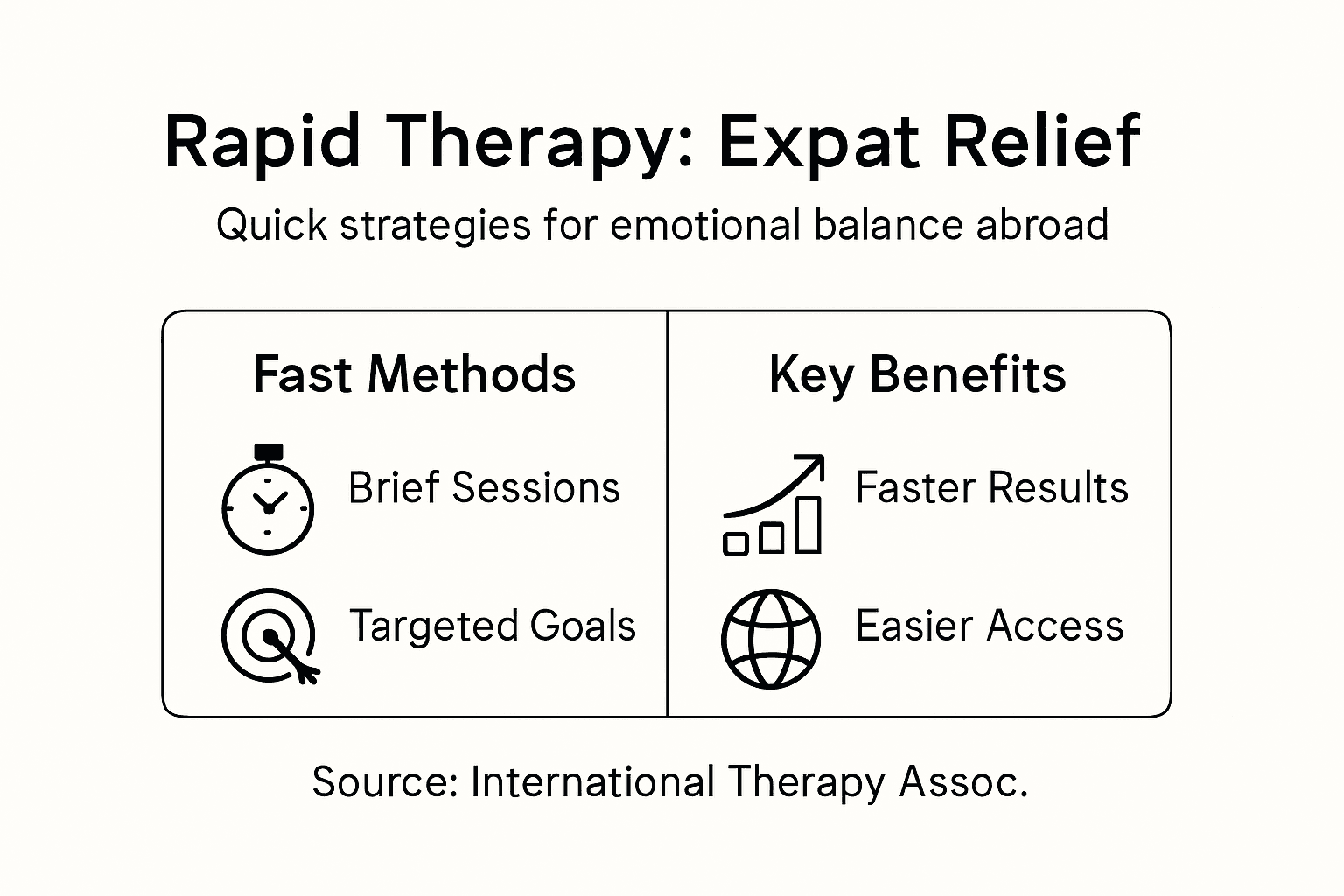
Here’s a summary comparing traditional therapy and rapid therapy methods for expatriates:
Aspect | Traditional Therapy | Rapid Therapy |
Duration | Long-term weekly sessions | 1-3 targeted sessions |
Approach | In-depth exploration over time | Immediate focus on acute issues |
Flexibility | Structured and ongoing | Highly adaptable, brief model |
Suitability | Gradual life changes | Urgent adaptation needs |
Typical Goal | Deep psychological growth | Fast symptom relief and coping |
Example Techniques | CBT, psychodynamic, interpersonal | Hypnotherapy, RTT, solution-focused |
Rapid therapy isn’t about quick fixes, but about providing targeted, efficient pathways to meaningful psychological transformation.
Pro tip: During your initial therapy consultation, explicitly discuss your desire for rapid, results-oriented treatment to ensure alignment with your therapeutic goals.
Key Benefits of Culturally Sensitive Support
Cultural Competence in mental health is far more than a professional requirement—it’s a critical pathway to effective healing for expatriates navigating complex emotional landscapes. Psychological services require deep cultural understanding to create meaningful, transformative therapeutic experiences that respect individual backgrounds and unique life contexts.
The key benefits of culturally sensitive support include:
Increased client trust and engagement
More accurate diagnostic insights
Personalized treatment approaches
Reduced communication barriers
Enhanced emotional validation
Improved treatment outcomes
Deeper psychological understanding
Therapeutic Approaches that prioritize cultural responsiveness recognize that emotional experiences are deeply intertwined with cultural contexts. Culturally responsive health promotion goes beyond surface-level interactions, creating safe spaces where expatriates can explore their experiences without fear of misunderstanding or judgment.
For expatriates, culturally sensitive support means working with therapists who understand the nuanced challenges of international transitions. These professionals recognize that adaptation isn’t just about learning a new language or navigating bureaucratic systems—it’s about maintaining psychological integrity while constantly negotiating between different cultural identities and expectations.
Cultural sensitivity in therapy is not about treating everyone the same, but about recognizing and honoring individual differences.
Pro tip: When selecting a therapist, prioritize professionals with demonstrated experience in cross-cultural counseling and multilingual capabilities.

Comparing Therapy to Self-Help Solutions
Many expatriates wonder whether professional therapy is truly necessary when numerous self-help resources seem readily available. Guided self-help interventions offer promising alternative approaches that can provide meaningful psychological support for individuals experiencing mild to moderate mental health challenges.
Key differences between therapy and self-help solutions include:
Professional expertise and personalized guidance
Structured, evidence-based interventions
Deeper psychological exploration
Real-time emotional processing
Accountability and consistent support
Objective external perspective
Specialized treatment strategies
Self-Help Strategies represent valuable complementary tools that can enhance mental wellness. Professional therapy and self-management techniques work synergistically to support individuals in managing their emotional health, with each approach offering unique benefits.
While self-help resources like meditation apps, online courses, and support groups can provide initial relief and daily management techniques, they cannot replace the nuanced, personalized approach of professional therapy. Expatriates facing complex emotional challenges related to cultural transition, identity negotiation, and stress management require targeted, expert interventions that go beyond generic wellness strategies.
Self-help is a powerful tool, but professional therapy provides the precision and depth needed for transformative healing.
Pro tip: Consider integrating self-help techniques recommended by your therapist to create a comprehensive, holistic approach to mental wellness.
When and How to Choose Your Therapist
Selecting the right therapist is a critical decision that can significantly impact your mental health journey. Choosing a therapist requires careful consideration of multiple factors beyond simple credentials, focusing on personal compatibility and specialized expertise.
Key criteria for selecting an ideal therapist include:
Professional licensure and credentials
Specialized experience with expatriate challenges
Cultural and linguistic competence
Therapeutic approach alignment
Personal comfort and rapport
Professional boundaries
Accessibility and communication style
Evaluation Strategies involve more than reviewing professional backgrounds. Selecting a therapist demands comprehensive assessment of your unique emotional landscape, ensuring the professional can provide targeted, culturally sensitive support.
For expatriates, finding a therapist means identifying someone who understands the complex psychological dynamics of international transitions. This professional should demonstrate not just clinical expertise, but a nuanced appreciation of the emotional challenges inherent in navigating life between cultures, languages, and identities.
The table below outlines essential criteria to prioritize when choosing a therapist abroad:
Criteria | Why It Matters | Example Considerations |
Cultural Awareness | Supports identity and transition | Knows expat challenges |
Language Skills | Eases communication barriers | Offers sessions in your language |
Professional Credentials | Ensures quality of care | Licensed in relevant country |
Personal Compatibility | Builds trust and openness | Comfort during conversations |
The right therapist is a collaborative partner in your mental wellness journey, not just a service provider.
Pro tip: Schedule initial consultations with multiple therapists to assess personal connection and professional compatibility before making a final decision.
Experience Fast, Culturally Sensitive Therapy Designed for Expatriates
Living abroad brings unique emotional challenges such as cultural disorientation, social isolation, and identity restructuring. If you are facing anxiety, stress, or burnout as an expatriate, swift and effective support is essential to reclaim your mental balance. Heske Therapy specializes in Rapid Transformational Therapy (RTT), EMDR, CBT, and hypnotherapy to deliver fast, targeted relief from the pressures of international life. Our integrative approach respects your cultural background and language needs while focusing on lasting emotional breakthroughs.
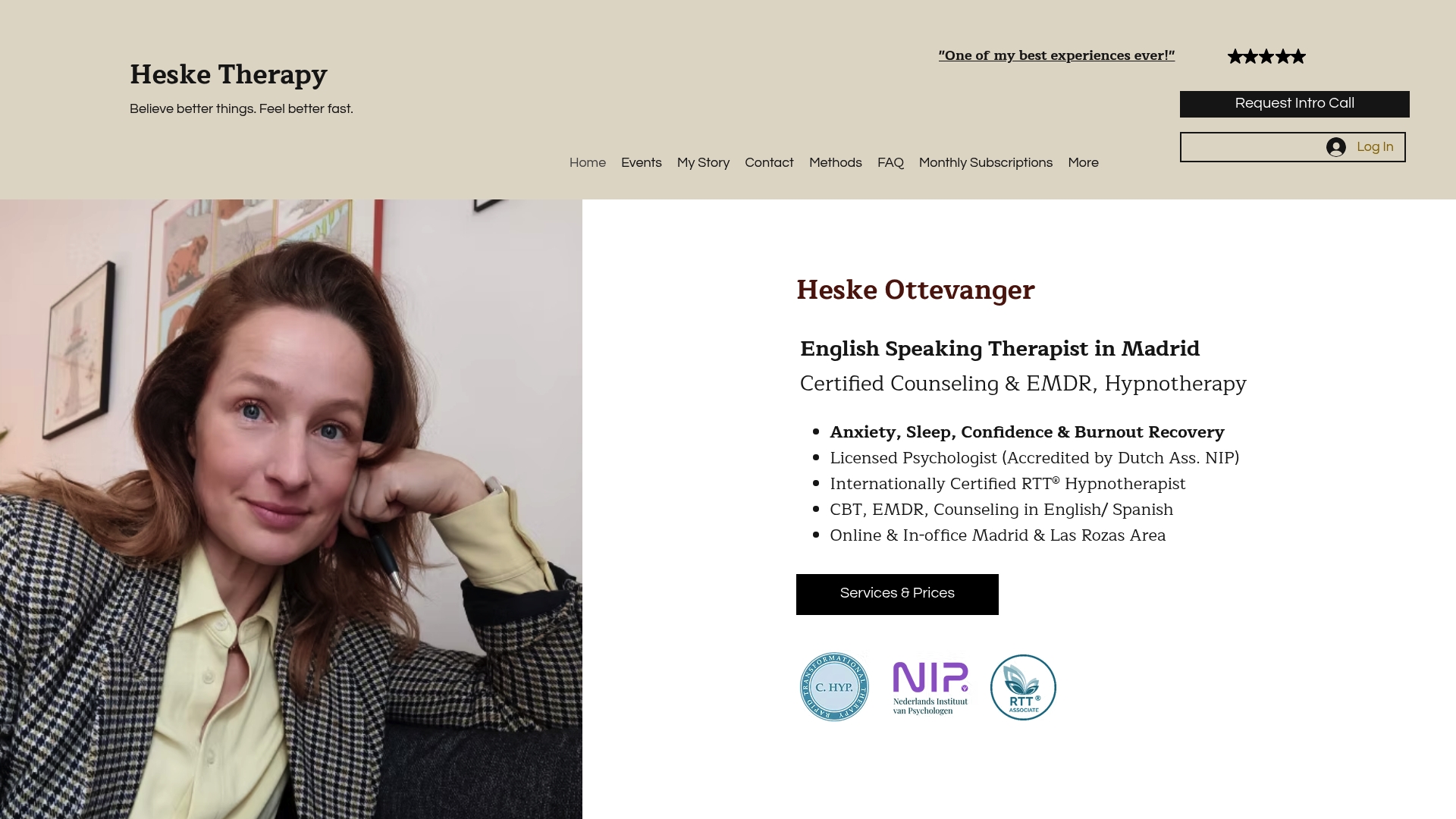
Take charge of your mental wellness today with personalized therapy tailored specifically for English-speaking expatriates in Madrid and online. Discover how our expert team can help you transform stress into resilience with proven rapid therapy methods. Visit Heske Therapy now to schedule your free discovery call and start your journey toward faster, deeper healing. Learn more about our therapy methods and why choosing the right therapist matters for your expatriate experience.
Frequently Asked Questions
What are the benefits of seeking therapy as an expatriate?
Therapy provides tailored support to help expatriates navigate emotional challenges, develop coping strategies, and enhance their mental resilience during significant life transitions.
How does rapid therapy differ from traditional therapy?
Rapid therapy focuses on quick, targeted interventions that can produce significant psychological changes in just one to three sessions, while traditional therapy typically involves longer-term, exploratory sessions.
Why is culturally sensitive support important in therapy for expatriates?
Culturally sensitive support ensures that therapists understand the unique challenges faced by expatriates, which helps build trust and leads to more effective treatment outcomes through personalized approaches.
When should expatriates consider seeking professional therapy?
Expatriates should seek professional therapy when facing acute stress, anxiety, feelings of isolation, or any emotional challenges that interfere with their ability to adapt to a new environment.
Recommended
Comments