Counseling for expat life: rapid mental health relief

Burnout affects up to 55% of expatriates, nearly double the rate seen in general populations. Living abroad brings unique stressors that amplify anxiety, burnout, and trauma beyond typical challenges. Culturally sensitive, integrative counseling offers rapid, effective relief tailored specifically to the expat experience, helping you reclaim your well-being faster than you might expect.
Table of Contents
Key takeaways
Point | Details |
Expatriates face higher mental health risks due to unique stressors | Cultural adjustment, isolation, and workplace pressures create compounded anxiety and burnout. |
Culturally sensitive counseling improves therapy engagement and outcomes | Therapists who understand your background foster trust and reduce dropout rates significantly. |
Integrative therapies like RTT, EMDR, and CBT offer rapid symptom relief | These evidence-based methods accelerate recovery, often within just a few sessions. |
Common counseling misconceptions can deter expats from seeking help | Understanding that counseling includes active interventions clarifies its transformative potential. |
Selecting therapists with cultural and language competence is key for success | Language compatibility and cultural awareness optimize treatment effectiveness and retention. |
Understanding expatriate mental health challenges
Living as an expatriate creates a perfect storm for mental health struggles. You face cultural adjustment hurdles, workplace pressures in unfamiliar systems, and social isolation far from your support network. These stressors compound in ways that rarely affect people living in their home countries.
Anxiety, burnout, and trauma rates climb significantly among expats compared to general populations. Burnout prevalence ranges from 40-55% in expatriate communities, while general populations typically experience rates between 25-30%. This dramatic difference reveals how relocation stress intensifies mental health challenges.
Displacement-related trauma triggers are remarkably common in expat populations. You might experience:
Loss of identity and sense of belonging in a new culture
Constant vigilance navigating language barriers and social norms
Grief over separation from family, friends, and familiar environments
Pressure to succeed professionally while adapting personally
Workplace expectations often ignore these adjustment difficulties. Your employer may expect immediate productivity without acknowledging the emotional toll of starting over in a foreign country. This disconnect between expectations and reality fuels burnout rapidly.
Social isolation amplifies every other stressor. Building meaningful relationships takes time, leaving you without the emotional support networks you once relied on. This isolation creates fertile ground for anxiety to take root and flourish.
Understanding these unique stressors highlights why generic mental health approaches often fall short for expatriates. You need specialized counseling that recognizes and addresses the specific challenges of expat life, not one-size-fits-all solutions designed for settled populations.
Why culturally sensitive counseling is crucial for expats
Cultural sensitivity in counseling means your therapist actively understands and integrates your cultural background into treatment. This goes beyond simple awareness to genuine competence in navigating cross-cultural dynamics. The difference between culturally aware and culturally competent therapy determines whether you feel truly understood or merely tolerated.
Culturally sensitive counseling reduces anxiety by 40-60% in expats within 8-12 weeks, demonstrating measurable impact on your well-being. This effectiveness stems from therapists who grasp how your cultural identity shapes your emotional experience and coping mechanisms.
Therapists with cultural competence consistently yield better outcomes for anxiety and burnout in expatriate populations. They recognize that your stress responses, communication patterns, and help-seeking behaviors are influenced by your cultural framework. This awareness prevents misdiagnosis and ensures interventions align with your values.
Language compatibility plays a massive role in therapy success. When you can express yourself in your primary language, nuances and emotions come through clearly. Therapy dropout rates decrease by 30% when therapists speak your native language, proving that linguistic alignment directly impacts retention and engagement.
Cultural sensitivity improves the therapeutic alliance in measurable ways:
Trust builds faster when your therapist understands your cultural reference points
You feel safe sharing vulnerabilities without fear of judgment or misunderstanding
Treatment plans reflect your actual life context rather than assumptions
Progress accelerates because interventions resonate with your worldview
The impact extends beyond individual sessions. Expats working with culturally competent therapists report higher satisfaction, better treatment adherence, and more sustainable mental health improvements. They’re more likely to complete recommended treatment courses and implement coping strategies successfully.
Pro Tip: Verify your therapist’s experience with expatriate populations and multicultural competence during initial consultations. Ask specific questions about their work with clients from your background and how they adapt treatment approaches for cross-cultural contexts.
Investing in counseling for burnout expats with cultural sensitivity built in transforms therapy from a generic intervention to a tailored support system that genuinely addresses your unique challenges.
Integrative therapy approaches: RTT, EMDR, CBT and beyond
Integrative therapy combines multiple evidence-based methods to accelerate recovery and address the complex nature of expat mental health challenges. Rather than relying on a single approach, integrative models adapt to your specific needs and symptoms.
Rapid Transformational Therapy (RTT) merges hypnotherapy with cognitive behavioral techniques to deliver rapid symptom relief. RTT clients report symptom improvement within 1-3 sessions, dramatically faster than traditional therapy timelines that may require months of weekly sessions. This speed matters when you’re struggling with immediate anxiety or burnout that affects your daily functioning.

Eye Movement Desensitization and Reprocessing (EMDR) specializes in trauma recovery through bilateral stimulation techniques. For expats dealing with displacement trauma or past experiences triggered by relocation stress, EMDR processes traumatic memories efficiently. The method helps your brain reprocess difficult experiences without requiring extensive verbal recounting.
Cognitive Behavioral Therapy (CBT) provides structured coping skills for managing burnout and anxiety through thought pattern recognition and behavioral modification. CBT teaches you to identify unhelpful thinking patterns that intensify stress and replace them with more balanced perspectives. This practical approach gives you tools to use independently between sessions.
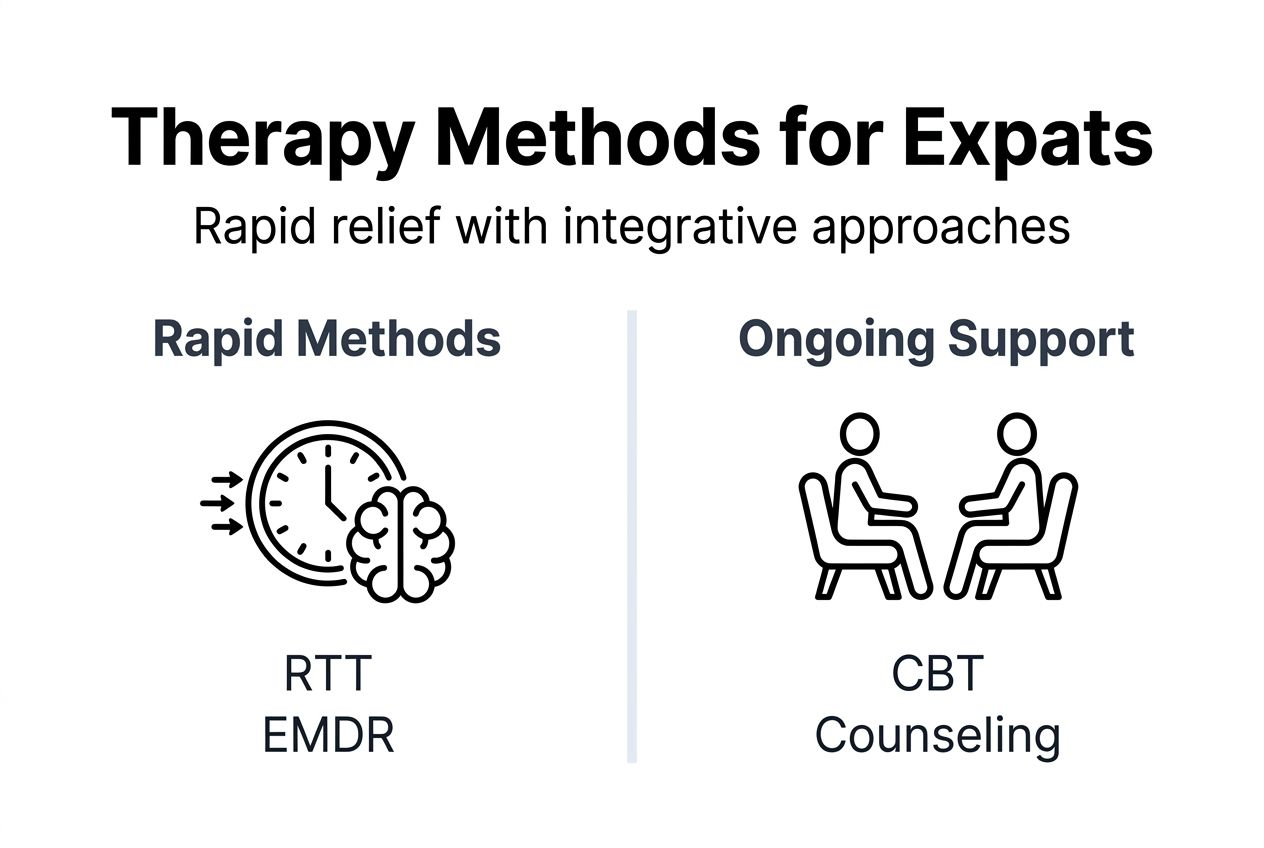
Therapy Method | Primary Focus | Typical Timeline | Best For |
RTT | Root cause resolution | 1-3 sessions | Rapid anxiety relief, deep-seated patterns |
EMDR | Trauma processing | 6-12 sessions | Displacement trauma, past traumatic events |
CBT | Skill building | 12-20 sessions | Burnout management, ongoing anxiety |
Integrative | Comprehensive care | Varies by need | Complex presentations, multiple symptoms |
Integrative models accelerate recovery speed significantly compared to single-method approaches. By drawing from multiple therapeutic frameworks, your therapist can switch techniques based on what works best for you in each session. This flexibility prevents the plateau effect common in rigid treatment protocols.
The combination approach addresses different aspects of your experience simultaneously:
RTT resolves underlying beliefs fueling anxiety or burnout
EMDR processes specific traumatic memories or triggers
CBT builds daily coping skills and thought management
Counseling provides supportive space to process ongoing challenges
Exploring integrative therapy examples for expats helps you understand how these methods work together in practice. Understanding the distinctions between RTT vs CBT therapy clarifies which approach might suit your immediate needs.
Pro Tip: Choose therapy methods aligned with your specific expat stressor. If you need rapid relief from acute anxiety, RTT offers faster results. If you’re processing trauma from relocation or past experiences, EMDR provides targeted trauma resolution. For ongoing stress management skills, CBT delivers practical tools.
Common misconceptions about counseling in expat life
Several persistent myths prevent expatriates from accessing the mental health support they desperately need. Clearing these misconceptions removes barriers to seeking timely, effective treatment.
Counseling extends far beyond simple talk therapy. Modern counseling incorporates active interventions like EMDR bilateral stimulation, CBT homework assignments, and hypnotherapy techniques. You’re not just discussing problems endlessly but actively working through them with evidence-based tools and structured processes.
Many expats assume counseling requires months or years of weekly sessions before seeing results. Integrative therapies like RTT challenge this assumption by delivering measurable symptom relief within just a few sessions. While some issues benefit from longer-term work, you don’t necessarily face an indefinite commitment to experience meaningful improvement.
Cultural and language compatibility aren’t optional extras but crucial elements for therapy success. Some expats settle for therapists who don’t share their cultural context or primary language, assuming therapy works the same regardless. Research and clinical experience prove otherwise. Mismatches in these areas significantly reduce treatment effectiveness and increase dropout likelihood.
Not all counseling approaches yield equal outcomes. Different therapeutic methods suit different problems and personalities. Assuming any licensed therapist will provide identical results ignores the importance of method-to-issue matching. Why seek therapy expatriates explores how tailored treatment outperforms generic approaches consistently.
Key misconceptions to discard:
Counseling means lying on a couch talking about your childhood endlessly
Only people with severe mental illness need therapy
Therapy takes years to produce any noticeable change
Any therapist can effectively treat expat-specific challenges
Seeking help means you’re weak or failing at adaptation
The belief that seeking counseling signals personal failure particularly affects high-achieving expats. You relocated successfully, navigated visa processes, secured employment abroad. Needing mental health support doesn’t negate these accomplishments. It recognizes that extraordinary challenges require extraordinary support.
Understanding these realities encourages timely and informed therapy decisions. When you recognize counseling as an active, efficient process tailored to your specific situation, you’re more likely to seek help before minor stress becomes major crisis.
Choosing the right counseling for English-speaking expats in Spain
Selecting the right therapist determines whether counseling becomes transformative or frustrating. Several key criteria separate effective matches from poor fits for English-speaking expatriates in Spain.
Cultural competence ranks as the primary selection criterion. Your therapist should demonstrate genuine understanding of expatriate experiences, not just theoretical knowledge. Ask about their experience working with international clients and how they adapt treatment for cross-cultural contexts. Therapists familiar with expat challenges recognize relocation stress patterns and adjustment difficulties without needing extensive explanation.
Integrative therapy expertise matters for comprehensive care. Therapists trained in multiple modalities like RTT, EMDR, and CBT offer flexibility to address your changing needs. Single-method practitioners may excel in their specialty but lack tools for issues outside that framework.
Multilingual skills directly impact communication quality and therapeutic outcomes. Therapists fluent in English who work in Spain understand both linguistic nuances and cultural contexts. They navigate the unique position of providing English-language services in a Spanish-speaking country, recognizing how language barriers in daily life compound your stress.
Key criteria for therapist selection:
Demonstrated experience with expatriate mental health challenges
Training in integrative or multiple therapeutic approaches
Fluency in English with understanding of cultural communication styles
Flexibility offering both online and in-person sessions
Transparent about treatment timelines and expected outcomes
Tradeoffs exist between rapid therapies and traditional long-term approaches. RTT and intensive methods offer faster symptom relief but require significant emotional engagement in condensed timeframes. Traditional weekly therapy builds slowly but may feel less overwhelming. Consider your tolerance for intensive work versus your need for quick relief when choosing approaches.
Personalized treatment plans considering your specific expat circumstances prove essential. Generic protocols ignore factors like visa stress, language barriers, or cultural adjustment timelines. Your therapist should factor these elements into treatment planning rather than applying standard interventions.
Resources for finding multilingual, culturally aware therapists in Spain include expat community networks, international health insurance provider directories, and specialized practices serving expatriate populations. Therapy for stress expats often connects you with therapists who understand your specific pressures.
Language practice outside therapy can enhance session effectiveness. If you’re still building English confidence or want to deepen expression, practicing English with natives strengthens your ability to articulate complex emotions during counseling.
Balancing practical considerations like location, cost, and scheduling flexibility with clinical qualifications requires careful evaluation. Prioritize therapist competence and cultural fit over convenience factors when possible, but recognize that accessibility affects your ability to maintain consistent treatment.
Making counseling work: practical steps and expectations
Maximizing counseling benefits requires active participation and realistic expectations about the therapeutic process. Success depends partly on your therapist’s skill and partly on your engagement with the work.
Prepare by identifying your unique stressors and goals before your first session. Write down specific challenges you face as an expat, symptoms you want to address, and what successful treatment would look like for you. This clarity helps your therapist design targeted interventions from the start.
Understand that therapy timelines vary significantly based on method and issue complexity. RTT may yield noticeable relief after just one to three sessions for specific anxiety patterns. EMDR typically requires six to twelve sessions for trauma processing. CBT often spans twelve to twenty sessions for comprehensive skill building. Your therapist should provide realistic timeframes early in treatment.
Communicate openly about your cultural needs and emotional experience throughout therapy. If something feels culturally misaligned or you’re struggling to express yourself, speak up. Effective therapy requires honest dialogue about what’s working and what isn’t. Your therapist can’t adjust approaches they don’t know need modification.
Monitor progress regularly and collaborate with your therapist to adjust plans as needed. Mental health recovery rarely follows perfectly linear paths. Some weeks show dramatic improvement, others feel stagnant. Tracking patterns helps identify what interventions produce results and which need refinement.
Implement strategies and homework between sessions consistently. Therapy happens primarily outside the counseling room as you apply new skills to real situations. Skipping homework or avoiding practice undermines even the best therapeutic interventions. Your between-session work determines how quickly you see sustainable change.
Pro Tip: Track symptom changes in a journal to share at sessions for better personalized care. Note anxiety levels, sleep quality, mood patterns, and specific triggers. This data helps your therapist identify patterns you might miss and adjust treatment precisely to your needs.
Realistic expectations prevent discouragement during the process. Some symptoms improve quickly while others require sustained work. Physical manifestations like sleep disturbances or IBS often take longer to resolve than cognitive symptoms. Understanding this prevents premature abandonment of effective treatment.
Exploring therapy methods for expatriates familiarizes you with different approaches before sessions begin. This knowledge helps you participate more actively in treatment planning and understand your therapist’s reasoning behind specific interventions.
Summary: counseling as an essential tool for thriving in expat life
Counseling significantly reduces anxiety, burnout, and trauma in expatriate populations when delivered with cultural sensitivity and evidence-based methods. The research demonstrates clear effectiveness, with substantial symptom reductions achievable within weeks rather than months or years.
Culturally sensitive, integrative therapy models enable rapid, effective relief by combining multiple approaches tailored to your specific challenges. RTT, EMDR, and CBT each offer unique benefits that address different aspects of the expat mental health experience. Together, they create comprehensive support that adapts as your needs evolve.
Choosing therapists with cultural and language competence dramatically improves treatment success rates. The 30% reduction in dropout rates when working with therapists who speak your primary language isn’t coincidental. Communication quality and cultural understanding form the foundation for effective therapeutic work.
Taking proactive steps to engage with counseling supports long-term well-being far beyond immediate symptom relief. The coping skills, self-awareness, and emotional regulation you develop in therapy serve you throughout your expat journey and beyond. This investment pays dividends across all life areas.
Prioritizing your mental health isn’t indulgent or weak. It’s strategic self-care that empowers you to fully experience the opportunities expatriate life offers. When anxiety, burnout, or trauma no longer dominate your daily experience, you can actually enjoy the adventure you embarked on by moving abroad.
Explore expert counseling options tailored for expats
Transforming knowledge about counseling into actual relief requires connecting with qualified therapists who understand your expat experience. Heske Therapy specializes in exactly this intersection, offering integrative approaches designed specifically for English-speaking expatriates in Spain.
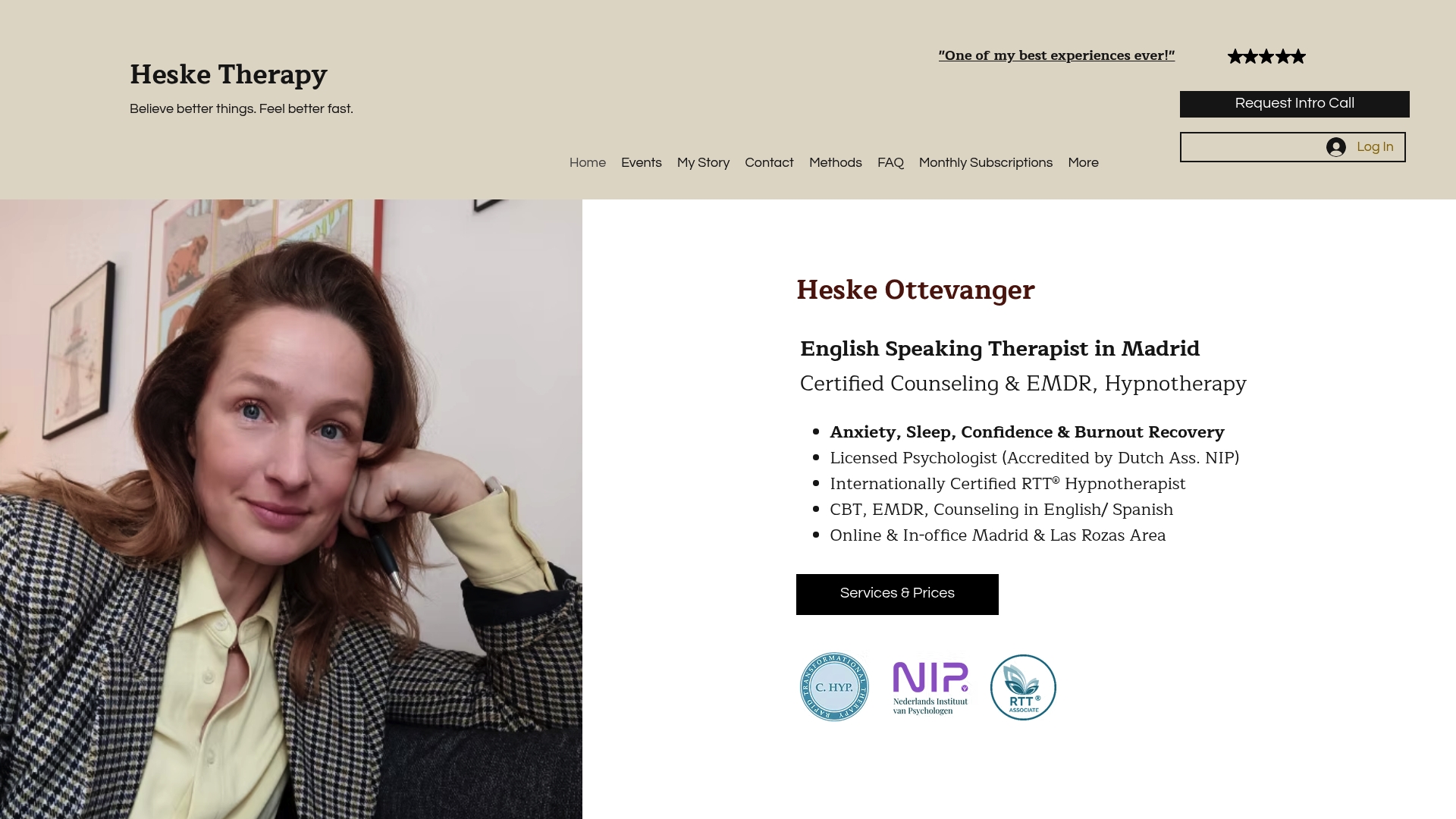
The practice combines RTT therapy method with EMDR, CBT, and counseling to deliver rapid mental health relief tailored to your unique stressors. Services include both online and office sessions, ensuring accessibility whether you prefer face-to-face connection or remote convenience from anywhere in Spain.
Accelerated transformation becomes possible through specialized programs like the 21-day RTT package face-to-face, designed to compress months of traditional therapy into intensive, results-focused sessions. For ongoing support, online counseling sessions provide flexible scheduling around your work and life demands.
Multilingual, culturally sensitive therapists address anxiety, burnout, trauma, and stress through methods proven effective for expatriate populations. This specialized focus means you won’t waste time explaining basic expat challenges or feeling misunderstood by therapists unfamiliar with relocation stress.
Frequently asked questions
What mental health issues do expats in Spain commonly face?
Anxiety, burnout, and trauma linked to cultural adjustment and displacement top the list of mental health challenges for expatriates in Spain. These conditions arise from isolation, workplace stress in unfamiliar systems, and the constant pressure of navigating a new culture. Physical symptoms like sleep disturbances and stress-related conditions often accompany these emotional struggles.
How quickly can integrative therapies like RTT relieve anxiety?
RTT clients report symptom improvement within 1-3 sessions, delivering relief dramatically faster than traditional therapy approaches. EMDR and CBT also provide measurable benefits within weeks rather than months. The exact timeline depends on symptom severity and your specific situation, but integrative methods consistently outpace single-approach therapies for speed of relief.
Why is choosing a culturally sensitive counselor important for expats?
Culturally sensitive, multilingual counselors improve communication quality, build trust faster, and reduce dropout rates by 30% compared to culturally mismatched therapeutic relationships. They adapt therapy methods to fit your cultural context rather than forcing you into frameworks that don’t align with your values or communication style. This cultural competence directly impacts treatment effectiveness and your willingness to engage fully in the therapeutic process.
Can counseling be effective if English is my only language?
Yes, many qualified therapists in Spain offer comprehensive services in English specifically for expatriate populations. Language compatibility ensures you can express nuanced emotions and complex thoughts without translation barriers that dilute meaning. English-speaking therapists in Spain understand both the language and the unique challenges faced by international clients, making them ideally positioned to provide effective care.
What should I expect during my first counseling session as an expat?
Your therapist will explore your cultural background, current stressors, and mental health goals during the initial session. They’ll explain available therapy methods and collaborate with you to design a treatment plan tailored to your expatriate experience. This first meeting establishes rapport, sets expectations, and begins the collaborative process of addressing your unique challenges in a supportive, culturally aware environment.
Recommended
Comments