6 Key Emotional Healing Techniques List for Expat Anxiety Relief

Moving to Madrid can be an exciting new chapter, but anxiety and emotional pain often tag along for the ride. Adjusting to a new culture, navigating unfamiliar systems, and being far from loved ones can make even small challenges feel overwhelming. You might find yourself searching for relief that actually works when anxiety strikes, rather than waiting weeks for change.
The good news is there are practical techniques proven by research to offer immediate calm, emotional healing, and lasting resilience. You will discover actionable methods like mindful breathing, guided visualization, and Cognitive Behavioral Therapy strategies that help you regain control and ease emotional distress anywhere, anytime. These approaches are effective for people from Canada, Australia, and every nationality, meaning you can rely on them wherever you’re from.
Get ready to explore targeted solutions backed by science for instant anxiety relief, deeper healing, and sustainable support as you build your life in Madrid. Each step offers a new way to manage emotional challenges so you can thrive in your new home.
Table of Contents
Quick Summary
Key Insight | Explanation |
1. Practice Mindful Breathing | Use slow, controlled breathing to activate relaxation and tackle anxiety immediately. |
2. Engage in Guided Visualization | Create a mental safe space to alleviate emotional pain and enhance resilience. |
3. Utilize CBT for Negative Thoughts | Challenge distorted thoughts with balanced alternatives to reduce anxiety. |
4. Consider Rapid Transformational Therapy | Address deep-rooted beliefs causing anxiety for more profound emotional relief. |
5. Schedule Regular Counseling | Maintain consistent support to promote mental health and resilience as an expat. |
1. Practice Mindful Breathing for Instant Calm
Mindful breathing is your fastest ticket to emotional stability when anxiety hits. Unlike waiting for therapy sessions or medications to take effect, this technique works within seconds to activate your body’s natural calming system.
Your nervous system controls your stress response. When you breathe slowly and deliberately, you activate your parasympathetic nervous system, the part that tells your body to relax. Research shows that deliberate breath control reduces subjective stress and anxiety immediately, making it one of the most accessible tools for expats managing daily overwhelm.
Here’s why this matters for your Madrid life: anxiety doesn’t wait for a scheduled appointment. You might feel panic during a difficult work conversation, social pressure at a networking event, or loneliness in your apartment. Mindful breathing lets you take back control in those moments.
How to practice mindful breathing right now:
Find a comfortable position, sitting or lying down
Breathe in slowly through your nose for a count of four
Hold the breath for a count of four
Exhale through your mouth for a count of four
Repeat this cycle five to ten times
The magic happens because slow breathing directly modulates your nervous system, reducing the physical sensations of anxiety like chest tightness and racing thoughts. Within just five minutes of this practice, you’ll notice your shoulders drop and your mind quiet down.
Most expats see results immediately because their bodies have been in constant stress mode. The first time you practice this technique, you’re essentially giving your nervous system permission to downshift. Over time, regular practice makes it easier to access this calm state whenever you need it.
Mindful breathing practices show consistent effectiveness for emotional regulation across diverse populations, which means whether you’re from Canada, Australia, or anywhere else, this works for your brain and body.
You can use this technique before important conversations, after stressful interactions, or anytime anxiety creeps in. Some expats practice it first thing in the morning to start their day centered, while others use it during lunch breaks to reset.
Deliberate breath control activates your body’s built-in calm response, delivering relief in seconds rather than hours or days.
Pro tip: Set phone reminders for three breathing breaks throughout your day, especially during your most stressful hours, so calm becomes your default rather than crisis management.
2. Use Guided Visualization to Ease Emotional Pain
Guided visualization is your mind’s way of creating a safe space where emotional pain loses its grip. Instead of fighting difficult feelings, you redirect your attention to calming, healing imagery that rewires how your brain responds to pain.
When you’re struggling with anxiety or past hurts, your mind tends to replay distressing memories on loop. Guided imagery helps your brain process and ease emotional pain by creating positive sensory experiences that counteract those painful patterns. Your nervous system doesn’t distinguish between a real experience and a vividly imagined one, which means your body actually relaxes when you visualize a peaceful scene.
For expats managing homesickness, work stress, or relationship challenges, visualization offers something therapy sessions can’t always provide on demand. You can access this tool anywhere, anytime, without appointments or medications.
How visualization works for emotional healing:
Your brain activates the same neural pathways whether imagining or experiencing events
Positive imagery triggers relaxation responses in your body
Repeated visualization restructures how you emotionally react to difficult situations
The practice promotes cognitive reframing of painful memories
Start by finding a quiet space and closing your eyes. Picture a place where you feel completely safe and calm. This might be a beach in Portugal, a mountains scene, your childhood home, or an entirely imagined sanctuary. Engage all your senses: what do you see, hear, smell, feel, taste?
Spend five to ten minutes in this visualization, letting your body absorb the calm. Notice your breathing becoming slower and your muscles relaxing. Your mind isn’t just daydreaming; it’s actively healing emotional pain by building new neural associations with safety and peace.
Benefits expats experience from regular visualization practice:
Reduced anxiety symptoms between stressful situations
Better emotional regulation during difficult conversations
Improved sleep quality when practiced before bed
Enhanced resilience when facing challenges
Visualization integrated with mindfulness and cognitive techniques offers effective strategies for emotional healing and resilience. Many expats find this especially valuable during seasonal loneliness or career transitions.
Your imagination is not escapism; it’s a powerful neurological tool that literally rewires your emotional responses to pain.
Pro tip: Record yourself describing your safe place in a calm voice, then listen to the recording daily so your mind becomes conditioned to instantly shift into that peaceful state whenever you need relief.
3. Apply CBT Exercises to Challenge Negative Thoughts
Your mind runs on automatic thoughts, and many of them are lies. Cognitive Behavioral Therapy, or CBT, teaches you to identify these distorted thoughts and replace them with realistic, balanced ones that actually match reality.
As an expat, you face unique triggers for negative thinking. You might catastrophize about work performance, assume colleagues judge your accent, or believe you’ll never belong in Madrid. These automatic thoughts feel true, but they’re often distortions amplified by stress and isolation. CBT gives you concrete tools to challenge these thoughts before they spiral into anxiety.
How negative thoughts trap you:
They feel automatic and immediate
You assume they’re facts rather than interpretations
They reinforce anxiety cycles that keep you stuck
They influence your behavior in ways that confirm the original thought
The first step is awareness. Cognitive restructuring and thought challenging techniques help you catch negative patterns by asking yourself simple questions: What evidence supports this thought? What evidence contradicts it? What would I tell a friend having this thought?
Let’s say you think, “I made a mistake in the meeting, so I’m incompetent.” You’d examine the evidence. Maybe you made one small error out of ten good points. You’d then reframe it: “I contributed valuable ideas and made one minor mistake, which is normal and doesn’t define my competence.”
Steps to challenge a negative thought:
Identify the automatic thought as soon as you notice it
Write down what triggered the thought
List evidence that supports and contradicts the thought
Create a balanced, realistic alternative thought
Rate how much you believe the original thought before and after
Worksheets for disputing irrational thoughts provide structured methods to systematically evaluate your thinking patterns. When you write things down, you activate different brain regions than when you just think about problems, making the reframing more effective and lasting.
Expats find CBT especially powerful because it works regardless of cultural background or language. The logic of challenging evidence is universal. You’re not trying to think positively; you’re learning to think accurately.
Your thoughts aren’t facts. They’re interpretations that can be examined, questioned, and changed.
Pro tip: Keep a small notebook in your bag and jot down one negative thought daily, then challenge it using the evidence method, so you build this skill into your automatic response system over time.
4. Try Rapid Transformational Therapy for Deeper Healing
If breathing exercises and thought work haven’t moved the needle on your deepest anxieties, Rapid Transformational Therapy (RTT) works at a different level. This approach accesses your subconscious mind where your core beliefs about yourself, safety, and belonging actually live.
Most of your anxiety doesn’t stem from logical thoughts you can challenge with worksheets. It comes from deep beliefs formed years ago, often before you even had words for them. You might believe you’re not good enough, that people will reject you, or that something bad will happen. These subconscious programs run in the background, generating anxiety automatically.
RTT combines hypnotherapy, cognitive behavioral techniques, and neuro-linguistic programming to create rapid, lasting change. Instead of spending months or years in traditional therapy, RTT leverages neuroplasticity to rewire limiting beliefs often within just one to three sessions.
How RTT works:
Your therapist guides you into a relaxed, focused state similar to meditation
You access memories and beliefs creating your current anxiety patterns
The therapist helps you understand why these beliefs formed and what they protected you from
You consciously reframe and release these beliefs, installing new empowering ones
Your brain actually rewires itself based on these new neural pathways
For expats, RTT is particularly powerful because it targets the root causes of your anxiety rather than just managing symptoms. You might discover that your people-pleasing stems from childhood abandonment fears, or that perfectionism at work protects you from feeling worthless. Once you understand and release the original belief, the anxiety loses its foundation.
The process feels different from traditional talk therapy. You’re not just thinking or talking about your problems; you’re experiencing and releasing them at a subconscious level where your mind stores emotions. Many clients report feeling lighter and calmer after their first session.
What makes RTT different:
Results happen faster than conventional therapy approaches
You access the root cause, not just surface symptoms
The changes feel permanent because you rewired your subconscious beliefs
One session can be more transformative than months of weekly appointments
Rapid Transformational Therapy combines multiple modalities for deep emotional healing, making it especially valuable when you’re ready to move beyond surface-level coping strategies. Expats often choose RTT when they realize anxiety management alone isn’t enough.
RTT doesn’t just help you manage anxiety. It helps you understand why your mind created it in the first place and then rewires your brain to release it permanently.
Pro tip: Schedule your first RTT session during a less stressful work period so you have time to integrate the changes your mind will make without immediately jumping back into high pressure situations.
5. Utilize EMDR to Release Trauma and Triggers
Some anxiety doesn’t come from current circumstances. It comes from past trauma stored in your nervous system, waiting to be triggered by a familiar voice, situation, or even a smell. EMDR, or Eye Movement Desensitization and Reprocessing, specifically targets these deep traumatic memories and neutralizes their emotional charge.
If you experienced a difficult childhood, a previous relationship ending, or even the stress of relocating internationally, those experiences might be locked in your nervous system as unprocessed trauma. Your body reacts as if the threat is happening now, even though logically you know you’re safe in Madrid. Traditional talk therapy can take years to process these memories. EMDR does it differently.
How EMDR works:
Your therapist guides you to think about the traumatic memory while your eyes follow back-and-forth movements
This bilateral stimulation activates both brain hemispheres simultaneously
Your brain reprocesses the memory, removing its emotional intensity
The memory remains, but it no longer triggers your panic or anxiety response
The mechanism seems simple, but the results are profound. EMDR is recognized by major health organizations as a first-line treatment for trauma-related conditions, with research demonstrating its effectiveness in processing traumatic memories with fewer sessions than traditional therapy.
Expats often carry hidden trauma from the relocation experience itself. Leaving your home country, navigating cultural differences, building new relationships, and managing isolation can create psychological wounds that don’t feel dramatic enough to address, yet they still drive your anxiety. EMDR helps your brain process these experiences so they stop controlling your present.
What EMDR can help release:
Intrusive memories or flashbacks from past events
Anxiety triggered by specific situations or people
Shame or self-blame connected to difficult experiences
Physical tension stored from trauma
Negative beliefs formed from painful events
EMDR facilitates reprocessing of distressing memories by integrating bilateral stimulation with cognitive work, alleviating trauma symptoms with strong empirical support across diverse populations worldwide. Many clients feel shifts in how they respond to triggers after just a few sessions.
You don’t need to relive traumatic details or have intense emotional catharsis for EMDR to work. Your therapist guides the process carefully, and you remain in control throughout. The eye movements themselves seem to help your brain naturally process what it couldn’t before.
EMDR doesn’t erase your past. It processes it so your nervous system stops reacting as if danger is imminent.
Pro tip: Ask your therapist about using EMDR specifically for your triggers rather than your entire history, so you see results quickly and build confidence in the method.
6. Schedule Regular Counseling for Ongoing Support
The five techniques above give you powerful tools for managing anxiety in the moment. But lasting emotional healing requires consistent, ongoing support from a trained professional who understands your unique situation as an expat. Regular counseling is the foundation that makes everything else work better.
Think of counseling like going to the gym. One workout doesn’t transform your fitness. One breathing exercise doesn’t eliminate anxiety forever. You need a sustained practice with professional guidance to rewire your nervous system and build resilience that actually lasts. Counseling provides that structured, consistent support.
When you schedule regular sessions, you’re not waiting for crisis to strike. You’re building a relationship with a therapist who knows your history, your triggers, and your specific challenges as an expat. They notice patterns you might miss and help you develop strategies tailored to your actual life, not generic anxiety tips from the internet.
Why ongoing counseling works better than single sessions:
You have continuity with someone who knows your story
Your therapist tracks progress and adjusts approaches based on what works for you
Regular appointments create accountability for practicing techniques
You address deeper patterns, not just surface symptoms
You build a safe relationship where vulnerability becomes possible
Research shows that regular mental health counseling promotes sustained resilience by providing personalized interventions for both emotional and situational challenges. For expats specifically, this means having someone who validates the unique stressors of international life while helping you build coping skills.
Many expats resist scheduling counseling regularly because they believe they should handle things alone or that therapy is only for serious mental illness. But that’s like saying you should only see a doctor when you’re critically ill, never for preventive care. Counseling prevents small issues from becoming big crises.
How to make regular counseling work:
Schedule sessions at the same time each week so it becomes automatic
Choose a frequency that fits your budget and mental health needs (weekly, biweekly, or monthly)
Set specific goals with your therapist so you track progress
Use sessions to practice new techniques and discuss what’s working
Stay consistent even when you’re feeling better; maintenance matters
Counseling sessions provide individual support and improve motivation for ongoing mental health maintenance, particularly when tailored to your specific circumstances. For expats managing work stress, cultural adjustment, loneliness, or relationship challenges, having a professional witness your journey changes everything.
Regular counseling isn’t a sign of weakness. It’s an investment in becoming the version of yourself you want to be.
Pro tip: Commit to at least eight to twelve sessions before deciding if counseling works for you, as research shows meaningful change requires time to build trust and implement lasting shifts.
Below is a comprehensive table summarizing the techniques and strategies for emotional well-being and anxiety management discussed in the article.
Technique | Description | Implementation Steps | Benefits |
Mindful Breathing | A method to activate the parasympathetic nervous system for calm. | Breathe deeply in cycles of four counts for moments of anxiety. | Immediate relief and physical relaxation. |
Guided Visualization | Utilizing mental imagery to create a calm setting, reducing emotional pain. | Imagine a safe, relaxing place and engage all senses during visualization sessions. | Emotional healing and improved mental regulation. |
Cognitive Behavioral Therapy (CBT) | Identifying and reframing negative thought patterns for balanced thinking. | Challenge automatic negative thoughts through evidence evaluation and realistic reframing. | Alleviation of anxiety cycles and accurate self-perception. |
Rapid Transformational Therapy (RTT) | Accessing subconscious beliefs to address and reframe limiting perspectives. | Participate in RTT sessions guided by a trained therapist. | Profound and swift changes to core belief systems. |
Eye Movement Desensitization and Reprocessing (EMDR) | Targeting and neutralizing traumatic memories through bilateral stimulation. | Focus on distressing memories during therapist-guided eye movement exercises. | Reduction in emotional intensity and trauma symptoms. |
Regular Counseling | Maintaining structured mental health support for long-term resilience. | Schedule consistent therapy sessions with a professional. | Sustained emotional improvement and tailored coping strategies. |
Take Control of Expat Anxiety with Expert Emotional Healing
Living as an expatriate in Madrid brings unique emotional challenges such as anxiety, homesickness, and the pressure to adapt. This article highlights powerful techniques like Mindful Breathing, CBT, Rapid Transformational Therapy, and EMDR that help manage and heal deep-rooted anxiety effectively. If you find yourself overwhelmed by persistent negative thoughts or emotional blocks, these methods offer practical relief and lasting change.
At Heske Therapy, we specialize in personalized mental health solutions designed specifically for English-speaking expatriates. Whether you’re seeking rapid relief through RTT or deep trauma release with EMDR, our integrative approach combines these proven techniques with compassionate counseling tailored to your needs. Experience the benefits of expert guidance to build resilience, regulate emotions, and reclaim calm in your day-to-day life.
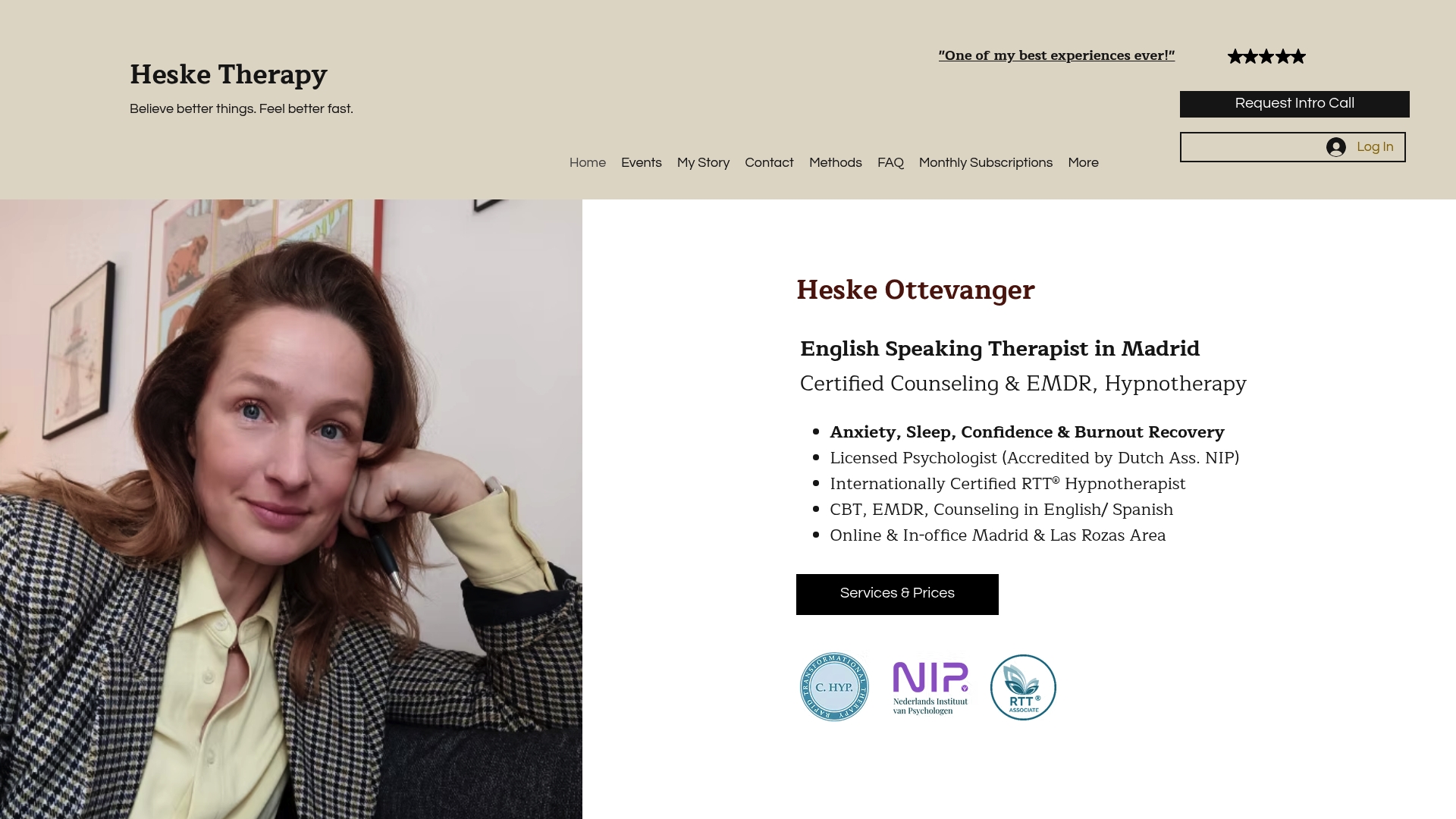
Don’t wait for anxiety to control your Madrid experience. Visit Heske Therapy now to schedule your free discovery call and start exploring transformative therapies that address your unique challenges. With flexible in-office or online options, your emotional healing journey can begin today. Learn more about how Rapid Transformational Therapy and specialized counseling can help you break free from anxiety patterns and embrace a confident, balanced life.
Frequently Asked Questions
What is mindful breathing and how can it help with expat anxiety?
Mindful breathing is a technique that activates your body’s natural calming system. To practice, find a comfortable position, breathe in slowly through your nose for four counts, hold for four counts, and exhale through your mouth for four counts. Repeat this cycle for five to ten times to feel immediate relief from anxiety.
How does guided visualization work for emotional healing?
Guided visualization involves creating positive imagery in your mind to counteract negative emotions. Start by closing your eyes and picturing a place where you feel safe and calm, engaging all your senses for five to ten minutes. This practice can help reduce anxiety symptoms and improve emotional regulation over time.
Can I really change my negative thoughts using Cognitive Behavioral Therapy techniques?
Yes, you can change negative thoughts by using Cognitive Behavioral Therapy (CBT) techniques that help identify and challenge distorted thinking. Write down your automatic thoughts, list evidence that supports and contradicts them, and create a more balanced perspective. By practicing this consistently, you can shift your thoughts within weeks.
What is Rapid Transformational Therapy (RTT) and who can benefit from it?
Rapid Transformational Therapy (RTT) accesses your subconscious mind to address deep-rooted beliefs contributing to anxiety. This method combines hypnotherapy and cognitive techniques to create rapid transformation, often within just one to three sessions. Expats looking to understand and release their anxiety at its core can find significant benefits from RTT.
How does EMDR help release past trauma related to anxiety?
EMDR, or Eye Movement Desensitization and Reprocessing, targets traumatic memories that trigger anxiety responses. During a session, you follow your therapist’s instructions to think about a trauma while engaging in bilateral stimulation, helping your brain process the memory without emotional intensity. Clients often see results in just a few sessions, allowing for healthier emotional responses.
Why is scheduling regular counseling important for managing expat anxiety?
Regular counseling provides consistent support from a professional familiar with your unique challenges as an expat. By committing to sessions at least once every few weeks, you can track progress, build resilience, and develop coping strategies tailored to your life. Over time, this ongoing support can significantly enhance your emotional well-being.
Recommended
Comments