7 Examples of Integrative Therapy for Expats Facing Anxiety
- Methode sure pour gagner a la roulette
- Jan 26
- 16 min read

Finding the right therapy as an expat can feel overwhelming, especially when anxiety, trauma, or emotional blocks show up in unexpected ways. Choosing a single technique often feels too limited for the complex challenges of adjusting to a new country and culture. The good news is that blending proven therapeutic approaches can create faster, more meaningful results for your mental health.
You are about to discover how innovations like combining Cognitive Behavioral Therapy with mindfulness and integrating Eye Movement Desensitization and Reprocessing support real, rapid relief. Research shows these integrated treatments lead to superior outcomes in symptom reduction, emotional regulation, and lasting well-being. If you want therapy that adapts to your unique expat experience and addresses every layer of stress, the following strategies will show you what’s possible—and how to put them into action right away.
Table of Contents
Quick Summary
Key Insight | Explanation |
1. Combine CBT with Mindfulness for Anxiety | This approach targets anxiety through cognitive restructuring and present-moment awareness, yielding quicker relief than using either method alone. |
2. Integrate EMDR with Talk Therapy for Trauma | This combined approach allows for both neurological processing and cognitive reframing, facilitating a deeper understanding and healing of trauma. |
3. Use Hypnotherapy Alongside Counseling for Blocks | Hypnotherapy helps access subconscious emotional blocks while counseling provides context, leading to meaningful, swift changes in behavior and mindset. |
4. Emphasize Personalized Treatment Plans | Customized approaches that integrate multiple modalities address complex anxiety and trauma issues more effectively than standardized therapy. |
5. Address Physical Symptoms with Mind-Body Approaches | Combining mind-body techniques can help regulate physical symptoms impacted by anxiety, enhancing overall emotional well-being for those facing stress. |
1. Combining CBT and Mindfulness for Rapid Anxiety Relief
You might think anxiety treatment requires choosing between talking through your thoughts or meditating in silence. The truth is far more powerful. When you combine Cognitive Behavioral Therapy (CBT) with mindfulness-based interventions, you access a dual approach that targets anxiety from multiple angles simultaneously. CBT works by identifying and restructuring the thought patterns that fuel your anxiety, while mindfulness teaches you to observe those thoughts without judgment or resistance. Together, they create a synergy that produces faster, more lasting relief than either method alone.
Here’s how this integration works in real terms. CBT helps you recognize that the catastrophic thought “I’m going to fail this job interview” isn’t fact, it’s just your anxious brain offering a prediction. Mindfulness then teaches you to notice this thought floating through your mind without attaching emotional weight to it. You don’t fight the thought or try to convince yourself it won’t happen. Instead, you acknowledge it, stay present in this moment, and recognize that right now, in this exact second, you’re actually safe. Research shows that mindfulness-integrated CBT produces superior outcomes in anxiety symptom reduction and emotional regulation compared to standard CBT alone. For expats in Madrid adjusting to a new culture, job market, or social environment, this combination addresses both the ruminating thought patterns that keep anxiety alive and the present-moment awareness that allows you to function despite anxiety’s presence.
The practical beauty of this approach lies in how quickly you can apply it. When anxiety hits, you’re not just analyzing your thoughts for hours. You’re combining brief cognitive reframing with grounding techniques. Take a moment to name one thought driving your anxiety right now. Then practice a 60-second mindfulness pause where you breathe slowly and notice five things you can see around you. This simple combination interrupts the anxiety cycle and brings your nervous system back into balance. Many expats find that combining CBT and mindfulness-based interventions creates moderate to large improvements in anxiety symptoms within weeks, not months. The key difference is that you’re not just changing your thinking or just calming your body. You’re rewiring how your brain processes threats while simultaneously training your mind to stay anchored in what’s real right now.
Pro tip: Start with a simple daily practice: spend just five minutes each morning doing a “thought and breath” exercise where you notice one anxious thought without judgment, then shift your focus to feeling your feet on the ground. This primes your brain to use both tools throughout your day.
2. Integrating EMDR with Talk Therapy to Process Trauma
If you’ve experienced trauma, you know that simply talking about what happened often leaves you feeling stuck. Your rational mind understands the event intellectually, yet your body and emotions remain locked in survival mode. This is where integrating Eye Movement Desensitization and Reprocessing (EMDR) with traditional talk therapy creates a breakthrough. EMDR uses bilateral stimulation, typically through guided eye movements, to help your brain reprocess traumatic memories while simultaneously processing them verbally with your therapist. The combination addresses trauma on multiple levels, engaging both the neurological pathways where trauma lives and the cognitive frameworks where you make meaning of your experience.
Think of it this way. Talk therapy alone helps you construct a coherent narrative about your trauma, but the emotional charge often remains attached to the memory. EMDR’s bilateral stimulation helps your brain reprocess traumatic memories, literally changing how the memory is stored in your nervous system. When you integrate this with ongoing conversation, you’re simultaneously processing the memory neurologically while your therapist helps you examine and reshape the beliefs you formed from that trauma. For example, if you experienced a workplace conflict that left you with the belief “I’m incompetent,” EMDR helps desensitize the emotional charge of the original incident while talk therapy helps you examine evidence that contradicts this limiting belief. This dual approach creates sustainable changes in how you think, feel, and behave around that trauma, rather than just temporarily managing symptoms.
As an expat, trauma processing takes on additional complexity. You might carry unprocessed grief about leaving your home country, difficult immigration experiences, cultural displacement, or previous life events that surface when you’re already adjusting to a new environment. The integration of EMDR and talk therapy accelerates healing because combined therapy addresses symptom reduction and reshapes trauma narratives more comprehensively than either approach alone. During an EMDR session focused on processing a memory, your therapist guides your eye movements while you hold the memory in mind, then pauses to have you verbalize what you noticed, felt, or realized. This alternation between neurological processing and conscious reflection ensures your whole self, not just your thinking mind, is involved in healing. You leave sessions not just having talked about the trauma, but having fundamentally changed your relationship to it.
Pro tip: Before your first EMDR session combined with talk therapy, write down the specific traumatic memory you want to address and note any physical sensations you feel when you think about it, such as tension or numbness. This preparation helps your therapist tailor the integration perfectly to your needs.
3. Using Hypnotherapy Alongside Counseling for Emotional Blocks
You know that feeling when you logically understand something needs to change, yet nothing shifts. You can talk about your fear of rejection for months in counseling, comprehend its origins, and still feel paralyzed when you approach someone new. This is an emotional block, and it lives beneath your conscious awareness in the subconscious mind. When you combine hypnotherapy with traditional counseling, you gain access to the deeper layers where these blocks actually reside. Hypnotherapy induces a focused trance state that bypasses your conscious defenses and allows direct communication with your subconscious, while counseling provides the therapeutic relationship and context that helps you understand and integrate the shifts that occur.
The beauty of this integration is how efficiently it works. During counseling sessions, you and your therapist identify the emotional block that’s holding you back. Then, in hypnotherapy sessions, your therapist facilitates deeper therapeutic engagement by guiding you into a relaxed state where your subconscious becomes receptive to suggestion and reframing. For instance, if anxiety stems from a deeply ingrained belief like “I’m not good enough to succeed abroad,” hypnotherapy can help your mind access and release the original moment where that belief formed, then replace it with resourcefulness and capability. The counseling work ensures you have the emotional vocabulary and conscious awareness to maintain these changes in your daily life. Research shows that adding hypnotherapy to counseling achieves statistically significant improvements in emotional regulation compared to counseling alone, with effects often appearing within weeks rather than months.
For expats in Madrid, this approach proves particularly valuable. Moving to a new country often triggers dormant emotional blocks rooted in family patterns, past rejections, or identity confusion. Maybe your mother always expressed doubt about your choices, and now whenever you make a decision about your career or relationships in Madrid, her voice echoes in your mind. Counseling helps you consciously examine this pattern, but hypnotherapy helps you emotionally release it at the source. Together, they create rapid, lasting shifts in how you relate to yourself and make decisions. You stop just understanding your blocks intellectually, and instead genuinely transform your emotional relationship to them.
Pro tip: Start with a counseling session to clearly define your emotional block and the specific situations where it shows up, then move into hypnotherapy with that clear focus. This preparation makes your hypnotherapy sessions far more targeted and effective.
4. Blending RTT Techniques for Fast, Lasting Results
Most therapy approaches ask you to commit to months or years of weekly sessions, slowly peeling back layers of your psychology. Rapid Transformational Therapy (RTT) operates on a completely different premise. By blending hypnotherapy, cognitive behavioral therapy, and neuro-linguistic programming into a focused, streamlined approach, RTT targets the root causes of your anxiety and emotional pain rather than managing symptoms indefinitely. The result is transformative change that often happens within one to three sessions, not one to three years. For expats already navigating visa bureaucracy, cultural adjustment, and homesickness, the speed of RTT addresses a critical need.
Here’s what makes RTT distinct from traditional talking therapy. During RTT sessions, your therapist uses deep hypnosis to guide you back to the origin moment where your limiting belief formed. Maybe your anxiety about social rejection stems from a specific childhood incident where you felt humiliated. Rather than discussing that event repeatedly in talk therapy, RTT helps you access it directly, understand the survival strategy your mind created at that moment, and fundamentally reframe how that memory is stored in your subconscious. RTT utilizes regression and deep hypnosis to uncover root causes of negative beliefs and emotional pain, then leverages neuroplasticity to rapidly rewire thought patterns. Once reframed, that old belief no longer controls your behavior. You don’t gradually learn to manage anxiety around social situations. You actually transform your subconscious response at its source.
The practical power of this approach becomes immediately apparent. You walk into your first session feeling stuck, and within hours, you notice shifts in how you respond to situations that previously triggered anxiety. This isn’t because you’ve become numb to your emotions, but because your nervous system has actually changed its learned response. For an expat who has already disrupted their entire life by moving to Spain, this rapid relief means you can start genuinely enjoying your new life sooner. You attend that networking event without the crushing self doubt. You pursue that romantic connection without the paralyzing fear of rejection. You make professional decisions from confidence rather than anxiety. The integration of hypnotherapy, CBT, and NLP creates a methodology where each technique amplifies the others, delivering transformative effects often evident after a single session.
Pro tip: Before your RTT session, clearly identify one specific situation or belief that causes you the most anxiety, and be willing to explore when that feeling first appeared in your life. The more specific and honest you are about your challenge, the more precisely your therapist can target the root cause.
5. Personalized Treatment Plans With Multiple Modalities
One size does not fit all in therapy, yet many treatment approaches still follow a standardized protocol. You might spend months in traditional talk therapy working on cognitive patterns, only to realize your core issue is stored in your body as tension and nervous system dysregulation. Or you might benefit from hypnotherapy but struggle without the grounding techniques that mindfulness provides. The most effective approach recognizes that anxiety, trauma, and emotional blocks are complex and multifaceted, requiring thoughtfully tailored combinations of techniques matched specifically to you. Personalized treatment plans that integrate multiple modalities mean your therapy actually addresses your unique psychology, not a generic version of it.
Think about your own experience as an expat. Your anxiety might stem from several sources simultaneously. You experience cultural displacement and homesickness triggering emotional pain. You face professional uncertainty in a new job market, activating performance anxiety. You struggle with social connection and identity questions in a different cultural context. A single therapy modality might address one of these dimensions but leave the others untouched. When your therapist conducts a comprehensive assessment and constructs customized treatment plans drawing from multiple therapeutic techniques, they can design a specific combination that works for your particular constellation of challenges. Maybe you start with RTT to rapidly reframe limiting beliefs about your professional capabilities. Then you integrate mindfulness and somatic awareness to help your body release the physical tension you carry. You add CBT techniques to address thought patterns fueling social anxiety. Each modality serves a specific purpose within your overall treatment arc.
The practical advantage becomes apparent quickly. Rather than hoping a single approach eventually addresses all your issues, you’re receiving targeted interventions that directly match your needs. Personalized mental health interventions that combine multiple modalities optimize treatment efficacy while enhancing your engagement in the process. You feel understood because your therapist isn’t forcing you into a predetermined mold. You experience faster progress because each technique is strategically sequenced. One week you might focus on processing a traumatic memory using EMDR. The next week you might emphasize building resilience and coping skills. Another session integrates somatic work to help your nervous system recognize safety. This flexibility means your treatment adapts as you evolve. What you needed during your first month in Madrid might differ from what serves you six months later, and your treatment plan shifts accordingly.
Pro tip: During your initial consultation, openly discuss all aspects of your anxiety and emotional challenges, including how they show up physically in your body, what thoughts accompany them, and which situations trigger them most. This comprehensive picture helps your therapist design a treatment plan that addresses the full scope of your experience rather than just surface symptoms.
6. Addressing Physical Symptoms like IBS with Mind-Body Approaches
Your stomach tightens before an important presentation. Your digestive system acts up whenever you feel lonely or homesick. You experience bloating and discomfort that seems to have no clear medical cause. If you’re an expat with anxiety, you’ve likely discovered that your gut responds to emotional stress in ways that feel very real and very limiting. This is not coincidental. Your gut and brain are deeply connected through the gut-brain axis, a bidirectional communication system where emotional and psychological stress directly triggers physical gastrointestinal symptoms. This connection means that treating your anxiety requires addressing both your mind and your body simultaneously. Mind-body approaches like cognitive behavioral therapy, mindfulness, and somatic practices offer powerful solutions because they work directly on this mind-body connection rather than treating anxiety and physical symptoms as separate problems.
Consider what happens in your body during anxiety. Your nervous system activates a stress response, flooding your system with cortisol and adrenaline. Your digestive system immediately shifts into survival mode, disrupting the bacteria and neural signaling that keep your gut functioning smoothly. If this activation happens repeatedly, your gut learns to respond to emotional triggers with cramping, bloating, diarrhea, or constipation. Mind-body therapies target the gut-brain axis by reducing stress and improving emotional regulation, which directly mitigates the physical digestive symptoms you experience. When you practice mindfulness, you’re literally training your nervous system to downregulate, which calms your gut. When you use CBT to reframe anxious thoughts, you’re reducing the psychological triggers that set off physical symptoms. When you engage in somatic practices that help you release tension from your body, you’re directly signaling to your nervous system that it’s safe to relax. The remarkable aspect is that these approaches work together, creating a reinforcing cycle where mental calm supports digestive ease, and physical relaxation supports emotional regulation.
As an expat navigating major life changes, your body bears the weight of adjustment stress. The cultural shock, the unfamiliar routines, the distance from family, the professional uncertainties all accumulate in your nervous system and express themselves through your digestive symptoms. Rather than spending months on medications that mask symptoms without addressing the root cause, mind-body approaches provide genuine healing. Research demonstrates that mind-body interventions improve gastrointestinal symptoms and mental health outcomes by addressing the psychological distress fueling physical symptoms. You start noticing that when you practice your calming techniques consistently, your stomach settles. When you address the underlying anxiety driving your symptoms, the physical manifestations ease. You stop living in reactive mode where your body controls your life, and instead step into agency where you actively regulate both your emotional and physical well-being.
Pro tip: Keep a simple journal for one week noting when your physical symptoms appear and what emotions or situations preceded them. This reveals your personal gut-brain patterns, allowing your therapist to tailor mind-body interventions specifically to your triggers.
7. Tailoring Therapy in a Multicultural, Expat-Friendly Setting
Standard therapy often assumes a culturally homogenous client and therapist, which means crucial aspects of your experience get lost in translation. You sit across from a therapist trained in Western psychology models who may not understand the specific stressors of expat life in Madrid. Your therapist might not grasp how family expectations from your home country collide with the independence you’ve found in Spain. They may not recognize that your anxiety partly stems from navigating Spanish bureaucracy, cultural differences in workplace communication, or the particular loneliness of celebrating holidays far from home. This is why therapy specifically tailored to expats in a multicultural setting creates such profound results. When your therapist understands expatriate challenges and brings cultural sensitivity to their work, they address the real sources of your anxiety rather than generic interpretations of stress.
Therapists working in multicultural, expat-friendly settings combine evidence-based therapeutic approaches with deep understanding of expatriate psychology and cultural dynamics. They recognize that moving to Spain represents not just a change of address but a fundamental disruption to identity, community, professional identity, and sense of belonging. This therapist understands that your anxiety about dating in Madrid may connect to cultural differences in courtship norms. They grasp that your impostor syndrome at work might relate to navigating Spanish communication styles and workplace hierarchy different from your home country. Expat-friendly therapy emphasizes multilingual, multicultural psychological services tailored to unique expatriate needs, combining evidence-based practices with cultural sensitivity. Your therapist can conduct sessions in English at whatever depth your emotional expression requires. They understand the specific grief of missing family milestones, the identity questions that arise when you live between cultures, and the unique pressures of building a life in a place that isn’t your native home.
The practical difference becomes apparent immediately. Rather than spending time explaining your context, your therapist already grasps the expat experience. They can address not just your symptoms but the actual life circumstances triggering them. You might work through cultural adjustment challenges using CBT techniques specifically adapted for expat life. You might process homesickness and grief using EMDR while your therapist validates that these feelings are legitimate responses to significant life changes, not personal weakness. You might explore identity questions in a therapy that holds space for existing between cultures rather than pathologizing your bicultural experience. This culturally informed approach means your therapy addresses your real life in Madrid, not a theoretical version of anxiety. Sessions can happen online when in-person isn’t convenient, accommodating your expat schedule. Your therapist speaks your language, understands your cultural background, and recognizes that healing looks different for someone navigating the unique complexity of expat life.
Pro tip: During your initial consultation, explicitly discuss your expat experience and ask how your therapist tailors their approach for clients navigating cultural adjustment and international relocation. A truly expat-friendly therapist will demonstrate familiarity with these specific challenges and explain how they integrate cultural sensitivity into their methods.
Below is a comprehensive table summarizing the key points and strategies discussed throughout the article.
Topic | Description | Benefits |
Combining CBT and Mindfulness | Integrates cognitive reframing with mindfulness practices. | Provides superior anxiety mitigation through complementary methods. |
Integrating EMDR with Talk Therapy | Combines sensory reprocessing with conversational analysis. | Effective trauma processing and belief reassessment. |
Using Hypnotherapy Alongside Counseling | Merges hypnosis and counseling for addressing subconscious blocks. | Promotes deep emotional release and sustainable behavioral changes. |
Blending RTT Techniques | Uses hypnosis, CBT, and NLP to target core challenges quickly. | Enables fast, transformative personal growth. |
Personalized Treatment Plans with Multiple Modalities | Combines various therapies tailored to individual needs. | Ensures comprehensive and adaptive healing approaches. |
Addressing Physical Symptoms with Mind-Body Approaches | Incorporates practices like mindfulness and CBT to treat the mind-gut connection. | Mitigates gastrointestinal symptoms related to stress and enhances well-being. |
Tailoring Therapy for Expats | Adapts therapies to unique challenges of expatriate life. | Addresses cultural challenges and provides relevant support for expats. |
Discover Personalized Integrative Therapy Designed for Expats Facing Anxiety
Living abroad in Madrid is an exciting adventure that also brings unique challenges like anxiety, cultural adjustment, and emotional blocks. This article highlights how combining therapies such as CBT, EMDR, hypnotherapy, and RTT can address both your mind and body simultaneously. If you struggle with anxious thoughts, trauma from past experiences, or physical symptoms like IBS, you deserve a tailored treatment plan that meets your specific needs as an expatriate.
At Heske Therapy, we specialize in providing exactly this type of personalized integrative care. Our expert therapists use proven methods including Rapid Transformational Therapy, EMDR, and mindfulness-based CBT to deliver rapid and lasting relief. We understand the complexities of expat life and offer compassionate support in English, Spanish, or Dutch. You can access our services conveniently online or in-person right here in Madrid. By working with us, you will get a thoughtful combination of therapies designed around the full scope of your experiences and challenges, not just your symptoms.
Take the first step towards reclaiming your well-being and thriving in your new home. Experience therapy that respects your cultural background and expedites healing with advanced methods. Learn more and schedule a free discovery call today at Heske Therapy.
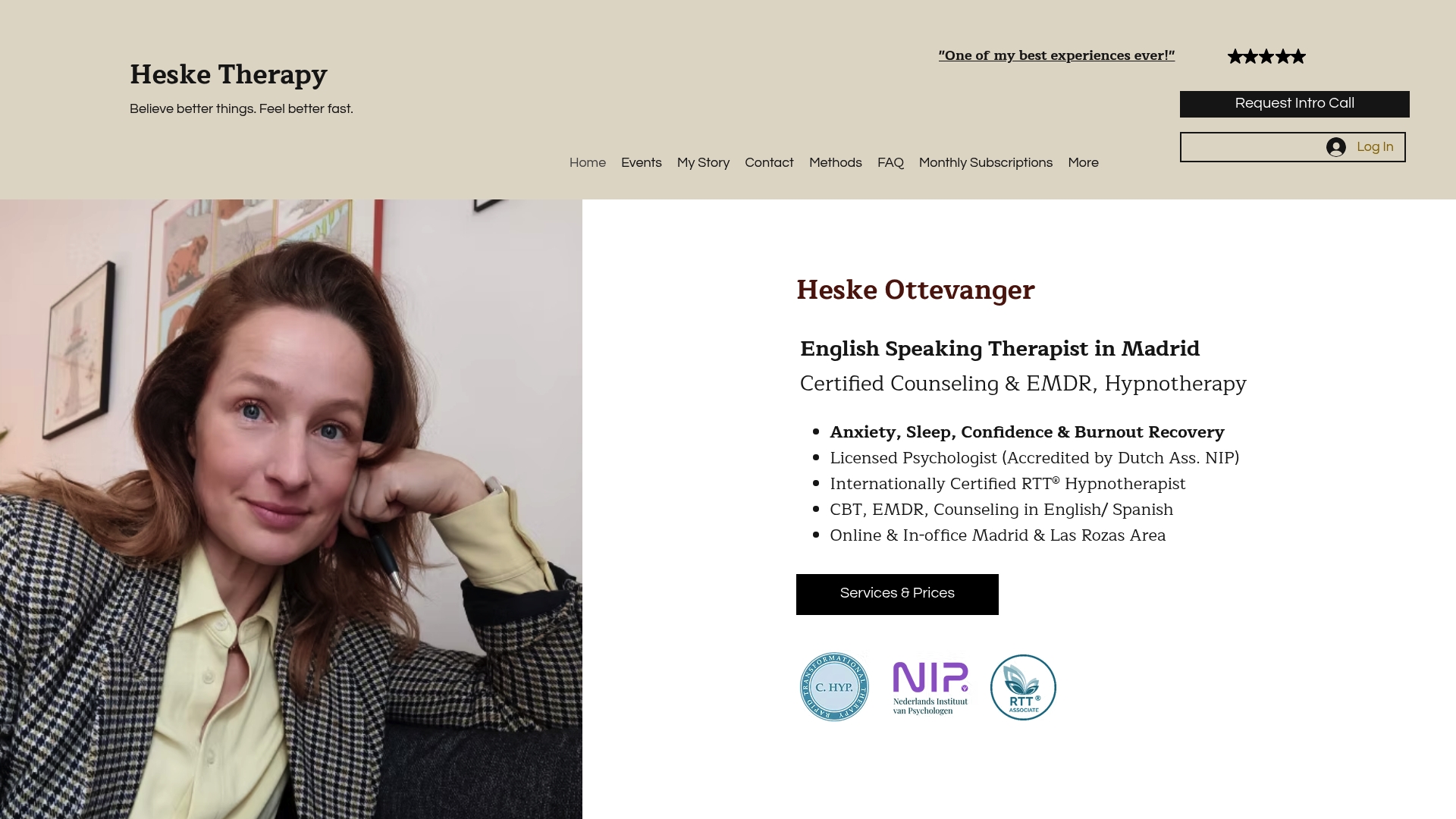
Ready to transform your anxiety into confidence with integrative psychotherapy crafted for expats Like you Discover how our personalized approach can help you live fully in Madrid by visiting Heske Therapy now and booking your free consultation.
Frequently Asked Questions
What is integrative therapy for expats facing anxiety?
Integrative therapy combines various therapeutic techniques to address anxiety holistically. For expats, it adapts to their unique experiences, incorporating practices like Cognitive Behavioral Therapy, mindfulness, and cultural sensitivity. Consider exploring a combination of modalities that resonates with your specific challenges.
How can I identify which integrative therapy techniques are best for my anxiety?
To identify the best techniques, assess your experiences and symptoms related to anxiety. Consider discussing these factors with a mental health professional who specializes in expat issues. This can help you develop a tailored treatment plan that targets your specific needs.
How quickly can I expect to see results from integrative therapy?
Many expats report noticeable improvements in anxiety symptoms within a few weeks of starting integrative therapy. For example, targeted techniques like Rapid Transformational Therapy can lead to shifts in emotional responses and coping strategies after just one to three sessions. Commit to ongoing practice to maximize these benefits.
Can integrative therapy help with physical symptoms associated with anxiety?
Yes, integrative therapy can address physical symptoms, such as gastrointestinal issues, by linking mental and physical health. Techniques that focus on the mind-body connection can help alleviate symptoms like bloating or stress-related digestive problems. Start with a mindfulness practice to begin easing your symptoms.
Is it necessary to have a therapist experienced with expats for integrative therapy?
Yes, working with a therapist experienced with expats is beneficial since they understand the cultural and emotional challenges unique to living abroad. Such a therapist can provide tailored support, helping you navigate anxiety linked to your expat experience. Look for professionals who emphasize a multicultural approach in their practice.
How can I track my progress in integrative therapy?
To track your progress, keep a journal documenting your symptoms, emotional responses, and any physical sensations. This can help you identify patterns and improvements over time. Review your entries regularly to discuss them with your therapist for more effective treatment adjustments.
Recommended
Comments