Why Process Childhood Trauma: Lasting Emotional Relief

Growing up with childhood trauma can shape how you feel about yourself and relate to others long after you leave home. For many English-speaking expatriates in Madrid, the challenges linked to emotional wounds from physical, sexual, or psychological abuse and neglect often resurface in daily life abroad. Understanding how trauma impacts your wellbeing and exploring evidence-based methods for healing offers hope for real change and a path toward stronger emotional health.
Table of Contents
Key Takeaways
Point | Details |
Understanding Childhood Trauma | Childhood trauma significantly impacts emotional and psychological development, often leading to long-term challenges in adulthood. |
Types of Trauma and Effects | Common forms of childhood trauma like abuse and neglect leave lasting scars, shaping future emotional responses and relationship dynamics. |
Processing Trauma | Evidence-based therapies can effectively help individuals reframe traumatic experiences, fostering emotional recovery and resilience. |
Barriers to Healing | Psychological and systemic barriers can complicate the healing journey, but a supportive environment and professional guidance can facilitate recovery. |
Understanding Childhood Trauma and Its Impact
Childhood trauma encompasses deeply painful emotional experiences that overwhelm a child’s capacity to cope and process difficult events. Traumatic experiences during childhood can occur through physical, sexual, psychological abuse, or neglect, often involving interpersonal harm from trusted authority figures like parents or caregivers.
The neurological and psychological impact of childhood trauma is profound and far-reaching. Research demonstrates that early stress exposure can fundamentally alter brain development, potentially creating long-term consequences for emotional regulation, cognitive functioning, and overall mental health. Stress and trauma during childhood uniquely affect multiple aspects of physical and psychological well-being, potentially leading to chronic health conditions and complex emotional challenges.
Children experiencing trauma often develop intricate psychological defense mechanisms to survive emotionally challenging environments. These adaptations might include emotional shutdown, hypervigilance, difficulty forming trusting relationships, and persistent anxiety. The brain’s neuroplasticity means these early experiences can create deeply embedded patterns of perception and response that continue into adulthood, significantly impacting personal relationships, professional success, and overall life satisfaction.
Pro Tip: Recognize that childhood trauma recovery is a journey, not a destination, and seeking professional support can help transform painful experiences into opportunities for healing and personal growth.
Types of Childhood Trauma and Their Effects
Adverse Childhood Experiences (ACEs) encompass a broad spectrum of traumatic events that fundamentally disrupt a child’s sense of safety and emotional well-being. These experiences typically include physical abuse, sexual abuse, psychological abuse, and profound neglect, each leaving unique and lasting psychological scars on a child’s developmental trajectory.
Physical abuse involves deliberate bodily harm inflicted by a caregiver, while sexual abuse represents exploitative interactions that violate a child’s bodily autonomy. Psychological abuse manifests through persistent emotional manipulation, verbal aggression, and humiliation that erode a child’s self-worth. Neglect, often less visibly traumatic, occurs when caregivers fail to provide essential emotional and physical care, creating an environment of emotional abandonment.
The consequences of childhood trauma extend far beyond immediate emotional distress. Research indicates that these experiences can fundamentally reshape neurological pathways, potentially leading to long-term mental health challenges, difficulties in forming healthy relationships, and increased vulnerability to chronic stress responses. Children who experience multiple trauma types often develop complex adaptive mechanisms like emotional dissociation, hypervigilance, and profound trust issues that can persist well into adulthood.
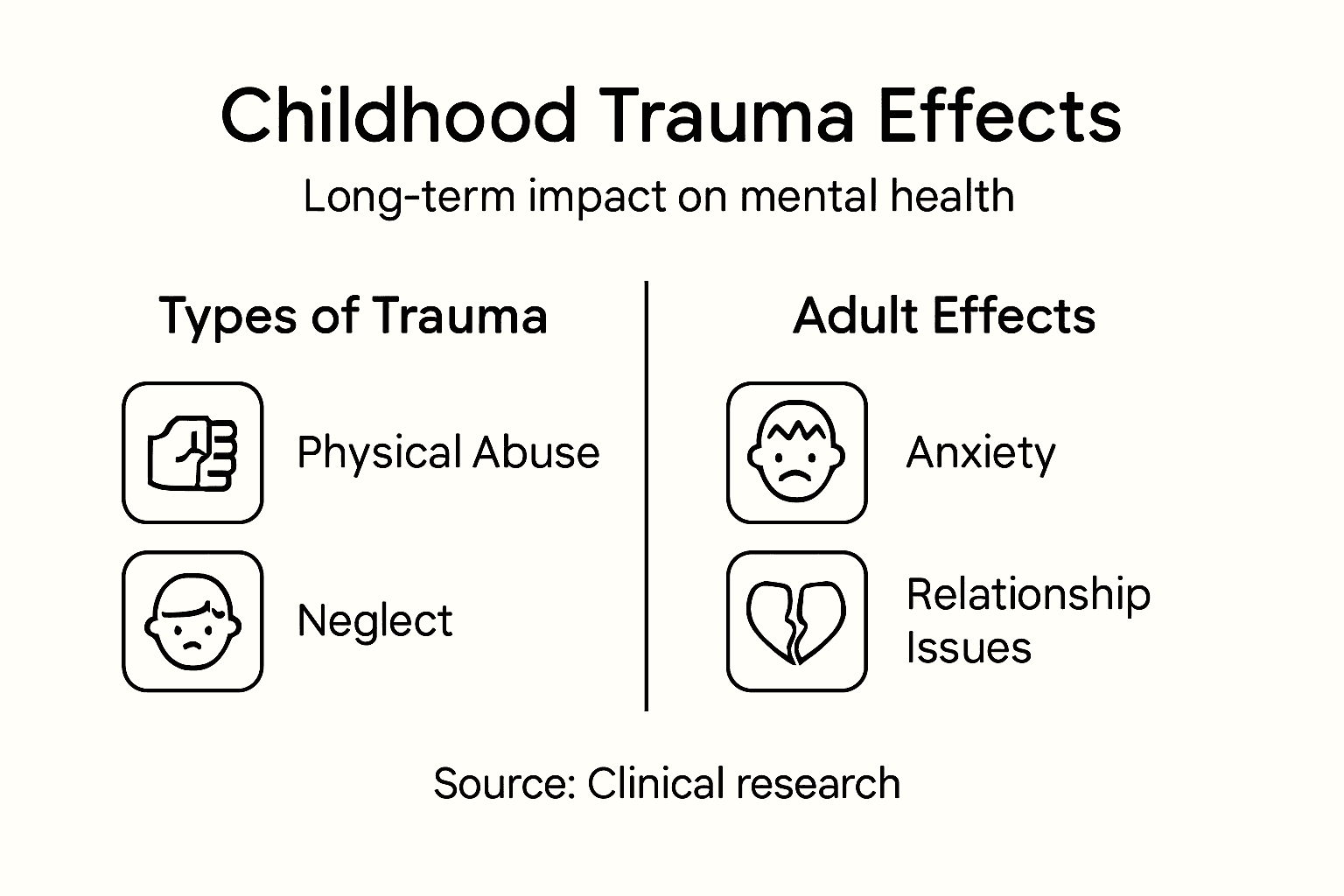
Here’s a summary of common childhood trauma types and their unique long-term effects:
Trauma Type | Characteristic Harm | Common Long-Term Effects |
Physical Abuse | Direct bodily injury from caregivers | Trust issues, chronic anxiety |
Sexual Abuse | Violation of bodily autonomy | Relationship difficulties, shame |
Psychological Abuse | Emotional manipulation, verbal attacks | Low self-worth, persistent fear |
Neglect | Lack of basic emotional or physical care | Emotional abandonment, dissociation |
Pro Tip: Create a safe, supportive environment for trauma survivors by practicing active listening, validating their experiences, and avoiding judgment or attempts to minimize their emotional journey.
How Unresolved Trauma Affects Adult Life
Unresolved childhood trauma creates profound psychological and relational challenges that can significantly disrupt adult functioning. Survivors often experience complex emotional patterns characterized by heightened sensitivity, unpredictable emotional reactions, and deep-seated fears of vulnerability that manifest in multiple life domains including personal relationships, professional environments, and personal self-perception.
Emotional regulation becomes tremendously difficult for trauma survivors, who frequently struggle with intense mood swings, hypervigilance, and an underlying sense of psychological fragility. These challenges can translate into persistent anxiety, depression, and difficulty maintaining stable intimate relationships. Trust issues become particularly pronounced, with many individuals unconsciously creating protective barriers that prevent genuine emotional connection, stemming from early experiences of betrayal or abandonment.

The neurological impact of unresolved childhood trauma extends beyond emotional landscapes, potentially influencing cognitive functioning, decision-making processes, and stress response mechanisms. Many trauma survivors develop complex adaptive strategies like emotional dissociation, perfectionism, or people-pleasing behaviors as unconscious survival mechanisms. These patterns, while initially protective, can ultimately limit personal growth, professional advancement, and the ability to form authentic, reciprocal relationships.
Pro Tip: Recognize that healing is possible by seeking professional support, practicing self-compassion, and understanding that your trauma responses are adaptive survival strategies, not personal failings.
Evidence-Based Methods for Processing Trauma
Evidence-based trauma therapies represent carefully researched interventions designed to address the complex psychological and neurobiological impacts of traumatic experiences. These approaches integrate scientific research, clinical expertise, and individual patient needs to create targeted treatment strategies that promote healing and emotional recovery.
Cognitive Processing Therapy (CPT) and Trauma-Focused Cognitive Behavioral Therapy (TF-CBT) stand out as powerful interventions that help individuals systematically reframe and process traumatic memories. These methods work by identifying and challenging distorted thought patterns related to the trauma, helping patients develop more adaptive cognitive frameworks. Eye Movement Desensitization and Reprocessing (EMDR) offers another innovative approach, utilizing bilateral stimulation to help the brain reprocess traumatic memories and reduce their emotional intensity.
Each therapeutic approach addresses trauma through unique mechanisms, recognizing that healing is not a one-size-fits-all process. Prolonged Exposure Therapy, for instance, guides patients through gradual and controlled engagement with trauma-related memories and situations, helping them reduce avoidance and build emotional resilience. These evidence-based methods share a common goal: empowering individuals to transform traumatic experiences from overwhelming emotional burdens into integrated, manageable memories that no longer control their lives.
Compare these evidence-based approaches for processing trauma:
Therapy Method | Core Technique | Best Suited For |
CPT | Cognitive restructuring | Reframing traumatic memories |
TF-CBT | Integrated cognitive-behavioral | Children and adolescents |
EMDR | Bilateral stimulation | Rapid reduction of distress |
Prolonged Exposure | Gradual memory engagement | Reducing avoidance behaviors |
Pro Tip: Remember that seeking professional guidance is crucial, as trained therapists can help you select and implement the most appropriate trauma processing method for your unique healing journey.
Barriers to Healing and How to Overcome Them
Barriers to trauma treatment encompass complex psychological, financial, and systemic challenges that prevent individuals from accessing effective healing resources. These obstacles can include deeply rooted mental health stigma, financial constraints, geographic limitations, and personal psychological resistance that make the journey toward recovery seem insurmountable.
Psychological barriers often manifest as internal resistance, including fear of confronting painful memories, attachment to trauma identity, and the unconscious belief that healing might somehow diminish the significance of one’s experiences. Many survivors struggle with a profound sense of vulnerability, which creates protective mechanisms that paradoxically prevent them from seeking the very support they desperately need. These internal barriers can be more challenging to navigate than external obstacles, requiring compassionate self-reflection and professional guidance.
Overcoming these barriers requires a multifaceted approach that combines personal commitment, professional support, and systemic understanding. Practical strategies include developing a clear healing plan, seeking culturally competent therapists, exploring flexible treatment options like telehealth, and gradually building trust in the therapeutic process. Recognizing that healing is not linear and that setbacks are a normal part of recovery can help individuals maintain hope and persistence in their emotional transformation journey.
Pro Tip: Create a supportive recovery environment by identifying trusted allies, establishing realistic expectations, and approaching your healing journey with patience and self-compassion.
Long-Term Benefits of Trauma Processing
Long-term psychological treatment outcomes reveal profound transformative potential for individuals who engage deeply in trauma processing. Beyond immediate symptom relief, comprehensive trauma therapy can fundamentally restructure neural pathways, emotional responses, and overall psychological functioning, creating lasting positive changes that extend far beyond the therapeutic environment.
Processing childhood trauma enables individuals to develop enhanced emotional regulation, improved interpersonal relationship skills, and significantly reduced vulnerability to stress-related mental health disorders. Survivors who successfully navigate trauma therapy often report increased self-awareness, stronger personal boundaries, greater emotional resilience, and a more authentic sense of self. These benefits translate into improved professional performance, more stable personal relationships, and a deeper capacity for emotional intimacy and connection.
Clinical research consistently demonstrates that sustained engagement with trauma-focused therapies produces substantial long-term benefits. These include reduced symptoms of post-traumatic stress, decreased likelihood of depression and anxiety, improved cognitive functioning, and a remarkable capacity for psychological adaptation. By systematically addressing and integrating traumatic experiences, individuals can transform their pain into a source of personal strength, wisdom, and profound psychological growth.
Pro Tip: Approach trauma processing as a courageous journey of self-discovery, understanding that healing is not about erasing your past, but about reclaiming your power and creating a more authentic, empowered future.
Transform Your Childhood Trauma Into Lasting Emotional Relief
Childhood trauma creates deep emotional wounds that can affect your mental health, relationships, and daily life for years. If you relate to feelings of anxiety, trust issues, or emotional blocks discussed in this article you are not alone. Healing from unresolved trauma requires personalized support that recognizes your unique experiences and helps you reclaim control over your emotional wellbeing.
At Heske Therapy in Madrid we specialize in treating childhood trauma through proven approaches like EMDR, Rapid Transformational Therapy, and Cognitive Behavioral Therapy. Our culturally sensitive therapists understand the struggles faced by English-speaking expatriates and international clients. By creating customized treatment plans you can experience rapid and lasting relief from symptoms like anxiety, depression, and chronic stress.
Explore our therapy methods and discover how we tailor each session to your needs to break free from the past and rebuild trust in yourself. Don’t wait for another day trapped by trauma. Start your healing journey now with a free discovery call and take the first step toward emotional freedom and resilience.
Take control of your healing journey today
Frequently Asked Questions
What is childhood trauma, and why is it important to process it?
Childhood trauma refers to deeply painful emotional experiences during childhood that can overwhelm a child’s ability to cope. Processing childhood trauma is important because it helps individuals reclaim their emotional well-being and develop healthier coping mechanisms.
What are the common types of childhood trauma and their effects?
Common types of childhood trauma include physical abuse, sexual abuse, psychological abuse, and neglect. These experiences can lead to long-term psychological challenges such as trust issues, anxiety, and emotional dysregulation.
How does unresolved childhood trauma affect adulthood?
Unresolved childhood trauma can lead to significant emotional and relational difficulties in adulthood, including anxiety, depression, trust issues, and challenges in forming healthy relationships. It can also hinder cognitive functioning and decision-making abilities.
What are some effective methods for processing childhood trauma?
Evidence-based methods for processing childhood trauma include Cognitive Processing Therapy (CPT), Trauma-Focused Cognitive Behavioral Therapy (TF-CBT), Eye Movement Desensitization and Reprocessing (EMDR), and Prolonged Exposure Therapy. Each method is designed to address traumatic experiences in distinct ways and promote emotional healing.
Recommended
Comments