Hypnotherapy for Trauma: Lasting Relief Explained

Moving to Madrid as an English-speaking expatriate can bring unexpected emotional struggles, especially when trauma or deep-seated stress takes hold. Finding relief from intrusive memories and constant anxiety matters when you’re trying to adjust to life far from familiar support. Guided relaxation and focused attention are at the heart of hypnotherapy, helping you access powerful states of awareness where real healing happens. Discover how this approach offers fast, meaningful change for expatriates seeking control over their mental health.
Table of Contents
Key Takeaways
Point | Details |
Hypnotherapy Accesses the Subconscious | It allows individuals to reframe traumatic memories and reshape emotional responses through guided relaxation. |
Different Approaches Cater to Individual Needs | Techniques like Ericksonian Hypnosis and Hypnotic Relaxation Therapy target various aspects of trauma processing, making treatment personalized. |
Rapid and Lasting Relief | Many clients report significant reductions in trauma symptoms and improved emotional regulation within just a few sessions. |
Integrates Well with Other Therapies | Hypnotherapy complements cognitive-behavioral therapy and EMDR, enhancing overall treatment effectiveness for trauma. |
What Hypnotherapy for Trauma Involves
When you’re dealing with trauma, your nervous system gets locked into a fight-or-flight response. Hypnotherapy works by accessing a state of heightened focus and awareness, allowing your brain to process traumatic memories differently. Unlike typical talk therapy where you consciously analyze your experiences, hypnotherapy uses guided relaxation and focused attention to help you reach a state often called trance. In this state, you’re not asleep or unconscious. You’re actually hyper-aware, but your conscious mind takes a step back. This is where the real work happens. By accessing your subconscious material in this relaxed state, you can safely reframe traumatic memories and reshape how your emotional responses are wired. Research shows that guided relaxation techniques reduce physiological arousal while helping your brain reprocess traumatic experiences at a deeper level.
The process itself is quite practical. A trained hypnotherapist will guide you through relaxation, using monotonous, rhythmic suggestions to help you dissociate from your immediate environment. This isn’t about forcing you to forget your trauma. Instead, it’s about changing your relationship with that memory. You remain in control the entire time, and you can bring yourself out of the trance state whenever you need to. The hypnotherapist offers therapeutic suggestions tailored to your specific situation, whether that’s reframing a painful memory, managing anxiety responses, or addressing sleep disruption caused by trauma. For expatriates in Madrid navigating the stress of relocation, loss of familiar support systems, or cultural displacement, this approach can be especially effective because it works with your brain’s natural processing mechanisms rather than against them. Clinical hypnotherapy uses modulation of psychological distress through these focused, suggestible states to promote rapid symptom relief.
What makes hypnotherapy particularly useful for trauma is the combination of rapid results and lasting change. Many clients experience noticeable shifts in how they relate to their traumatic experiences within just a few sessions. The effects aren’t temporary either. By reprocessing memories at the subconscious level, your brain rewires its automatic responses. You might notice that specific triggers no longer create the same panic response. Sleep improves. Your body feels less tense. The constant background anxiety that trauma creates begins to ease. Since expatriates often face unique stressors like visa uncertainty, professional transitions, and social isolation, having a treatment that works efficiently is invaluable. You can address deep emotional blocks while still managing your busy life and responsibilities in Madrid.
Pro tip When starting hypnotherapy for trauma, give yourself at least 3-4 sessions before evaluating results, as your subconscious needs time to integrate the reframing work, and the benefits often accumulate and deepen with each session.
Key Approaches and How They Differ
Not all hypnotherapy for trauma is the same. Different approaches target different aspects of how your brain processes traumatic memories, and your therapist will choose based on what works best for your specific situation. The three main approaches you’ll encounter are Ericksonian hypnosis, Hypnotic Relaxation Therapy, and Traditional Hypnosis, each with distinct techniques and goals. Ericksonian hypnosis uses indirect suggestion and storytelling to bypass your conscious resistance and create change at the subconscious level. Instead of direct commands, your therapist might tell a metaphorical story that your mind applies to your own situation without you consciously realizing it. This approach is particularly useful when you have a lot of skepticism or when your trauma involves deep-seated beliefs about yourself. Hypnotic Relaxation Therapy, on the other hand, focuses primarily on inducing a profoundly calm state to reduce physiological stress responses. Your nervous system literally resets during this process, which is why many trauma survivors report immediate relief from physical symptoms like tension, rapid heartbeat, and insomnia. Traditional hypnosis uses more direct, authoritative suggestions to reprogram specific responses and beliefs.
Beyond these foundational approaches, contemporary clinical hypnosis employs diverse techniques tailored to individual trauma presentations. Your therapist might incorporate age regression, where you revisit traumatic moments while in a protected hypnotic state, allowing you to reprocess them with your adult understanding and resources. Visualization techniques help you mentally rehearse new responses to triggers or imagine a future free from trauma symptoms. Cognitive restructuring within hypnosis targets the distorted thoughts trauma creates. For example, if trauma taught your brain that you’re helpless or dangerous, your therapist uses hypnotic suggestions to reframe these beliefs into more accurate, empowering ones. The choice between these techniques depends entirely on your trauma type, how your symptoms show up, and what you want to achieve. An expatriate dealing with relocation trauma might benefit from visualization work that builds confidence in new situations, while someone processing loss might need age regression to safely revisit and recontextualize the painful memory.
What matters most is finding a therapist who can assess your specific needs and match you with the right approach. Some people respond incredibly well to the storytelling nature of Ericksonian work, while others prefer the straightforward directness of traditional hypnosis. Your therapist should explain which approach they’re recommending and why it fits your situation. This isn’t one-size-fits-all work. It’s personalized treatment that recognizes that your trauma is unique, and so is your path to healing. The therapeutic relationship and your comfort with the approach matter just as much as the technique itself.
Here is a comparison of the main hypnotherapy approaches for trauma:
Approach | Key Technique | Best For | Distinguishing Feature |
Ericksonian Hypnosis | Indirect suggestion, stories | Skeptical clients, deep beliefs | Change via metaphor and stories |
Hypnotic Relaxation Therapy | Deep relaxation, calming scripts | Physical symptoms, high arousal | Immediate relief, nervous system reset |
Traditional Hypnosis | Direct authoritarian commands | Concrete issues, open clients | Rapid reprogramming of responses |
Pro tip Ask your hypnotherapist to explain which approach they use and why it’s appropriate for your specific trauma type before your first session, so you know what to expect and can feel more in control of the process.
Benefits and Evidence for Trauma Recovery
If you’re skeptical about hypnotherapy, that’s understandable. But the research backing its effectiveness for trauma is substantial. Studies consistently show that hypnotherapy produces measurable reductions in the symptoms that make trauma so debilitating. Intrusive memories, anxiety, sleep disturbances, and hypervigilance all respond to hypnotic treatment. What’s particularly impressive is the speed. Clinical trials with trauma survivors have documented reductions of up to 40 percent in intrusive trauma memories after just a few hypnotherapy sessions. For someone waking up at 3 AM in a panic or being ambushed by a traumatic memory while sitting in a Madrid café, that kind of rapid relief is life-changing. When hypnotherapy is combined with cognitive-behavioral therapy, the results exceed what either treatment produces alone. Meta-analyses comparing hypnotherapy combined with CBT show significantly greater improvements in PTSD symptoms than CBT alone. This isn’t marginal improvement either. We’re talking about meaningful shifts in how your brain processes and responds to trauma.
The neurological mechanisms behind these benefits are well documented. Hypnotherapy works by accessing the subconscious patterns that trauma establishes in your brain. When you experience trauma, your brain literally gets rewired to perceive danger where it doesn’t exist and to react defensively in safe situations. Hypnotherapy reverses this wiring. By engaging your brain in the focused, suggestible state we discussed earlier, your therapist helps you reframe the traumatic memory and its meaning. Your amygdala (the fear center of your brain) stops treating that memory as an active threat. Your nervous system downregulates from constant alert status. The result is that hypnosis produces medium to large effects on trauma-related distress and related symptoms like anxiety and pain. Veterans, survivors of accidents, people who’ve experienced interpersonal violence, and trauma survivors of all backgrounds report that hypnotherapy gives them back their lives in ways that other treatments couldn’t.

What makes this particularly relevant for expatriates is that hypnotherapy doesn’t require you to relive your trauma in detail. Traditional talk therapy sometimes involves extended processing of the traumatic event, which can feel retraumatizing. Hypnotherapy works differently. You don’t need to spend months talking through what happened. Instead, your subconscious does the processing work while you’re in a calm, protected state. You get effective treatment without the emotional exhaustion. You can start feeling better without derailing your work or your ability to function. Multiple high-quality reviews confirm hypnotherapy’s role as an effective adjunct to conventional trauma treatment, meaning it works alongside other approaches or can stand alone depending on your needs. The evidence is clear. Hypnotherapy for trauma isn’t just anecdotal. It’s backed by rigorous clinical research.
Pro tip Before starting hypnotherapy, ask your therapist for specific research or case outcomes related to your particular trauma type, and discuss realistic timeframes for symptom reduction so you have measurable goals to track your progress.
How Hypnotherapy Fits With Other Therapies
Hypnotherapy doesn’t exist in isolation. It works beautifully alongside other proven trauma treatments, and in many cases, combining approaches produces better results than any single method alone. The most common pairing is hypnotherapy with cognitive-behavioral therapy (CBT). CBT helps you identify and challenge distorted thoughts that trauma created. You learn that the belief “I’m worthless” or “I’ll never be safe again” aren’t facts. CBT gives you logical tools to examine and refute these thoughts. Hypnotherapy complements this by working at the subconscious level, where these beliefs live. While your conscious mind is learning new thought patterns through CBT, your hypnotherapist is helping your subconscious release the emotional grip those old patterns have on you. The two approaches hit different targets. Hypnosis and CBT work synergistically by addressing different therapeutic targets: hypnosis modulating subconscious responses while CBT focuses on conscious cognition and behavior change.
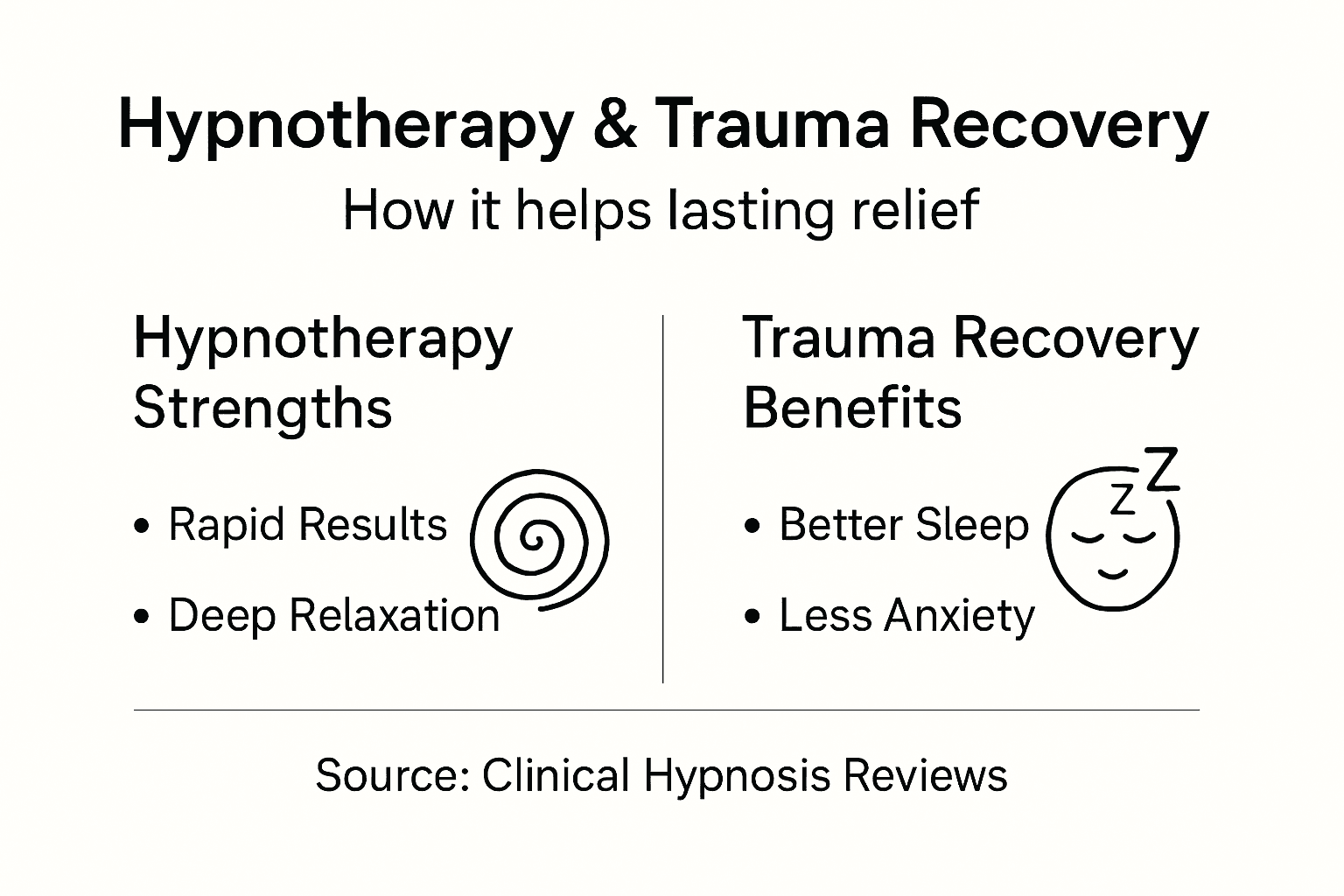
Beyond CBT, hypnotherapy integrates well with other trauma therapies you might encounter. EMDR (Eye Movement Desensitization and Reprocessing) is another evidence-based approach that helps your brain process traumatic memories. Some clients use hypnotherapy first to calm their nervous system, then move into EMDR when they’re more regulated and ready to process. Others use hypnotherapy as follow-up support to maintain and deepen gains from other treatments. The key is that hypnotherapy complements talk therapies by addressing subconscious processes and physiological symptoms like hyperarousal and sleep disturbance. While you’re in talk therapy working through what happened and why it affected you, hypnotherapy is simultaneously downregulating your nervous system’s stress response. Your amygdala stops firing on high alert. Your sleep improves. Your body tension eases. You’re getting treated on multiple levels at once.
What matters is that your therapist or therapists know you’re using multiple approaches. Transparency prevents contradictory work and ensures everyone is pulling in the same direction. A skilled hypnotherapist will coordinate with your other providers, or your primary therapist might recommend adding hypnotherapy as a supportive component. Think of it like this: if trauma is a knot pulled tight across multiple dimensions of your being, untying it often requires working from different angles. CBT addresses the mental angle. Hypnotherapy addresses the subconscious and physiological angles. Together, they accelerate healing in ways that no single approach can achieve alone. This integrated approach is particularly valuable for expatriates managing trauma while juggling relocation stress, work demands, and isolation from support systems. You get faster results with less time commitment.
Use this table to understand how hypnotherapy and other trauma therapies work together:
Therapy | Main Target Area | Typical Benefit | Role in Combined Treatment |
Hypnotherapy | Subconscious responses | Rewires emotional triggers | Deepens and accelerates healing |
CBT | Conscious thoughts | Logical restructuring of beliefs | Builds rational coping strategies |
EMDR | Traumatic memory processing | Eases emotional charge on memories | Complements hypnotherapy, supports processing |
Pro tip When working with multiple therapists, ask them to coordinate their approach and share treatment goals so your hypnotherapy and other therapies reinforce rather than contradict each other.
Risks, Myths, and Choosing a Provider
Let’s address the elephant in the room. Most people have watched movies where hypnosis turns someone into a zombie who does whatever the hypnotist commands. That’s fiction. Complete fiction. One of the most persistent myths about hypnotherapy is that you lose control or that the hypnotist can make you do things against your will. The reality is entirely different. During hypnotherapy, you’re in a state of heightened awareness and focus, not unconsciousness. You hear everything. You’re aware of your surroundings. You can speak, move, or exit the hypnotic state whenever you choose. Your hypnotherapist isn’t controlling you. They’re guiding you. Another common misconception is that hypnotherapy causes memory loss or personality changes. It doesn’t. Hypnotherapy is a safe, voluntary process where clients maintain full awareness and control, and these myths persist mainly because hypnosis has been sensationalized in entertainment for decades. The actual risks of hypnotherapy are minimal. Some clients experience temporary emotional discomfort as buried trauma memories surface during sessions. This isn’t dangerous. It’s actually part of the healing process. Your therapist is trained to help you process these emotions safely. You might feel tired after a session, or you might feel energized. Some people feel emotional relief immediately, while others notice changes gradually over several sessions.
Choosing the right provider matters far more than the risks themselves. You want someone with government-accredited training in hypnotherapy and specific experience treating trauma. Look for practitioners with memberships in professional bodies. In Spain, while regulatory bodies differ from English-speaking countries, a qualified hypnotherapist should have formal training from recognized institutes and professional credentials. Ask about their specific training in trauma work. How many trauma clients have they treated? What’s their approach to handling emotional responses during sessions? Do they have experience working with expatriates or multicultural clients? A good hypnotherapist will answer these questions directly and can explain their methodology in language you understand. They should also be willing to discuss how they coordinate with your other healthcare providers.
Red flags to watch for include practitioners who make unrealistic promises (“guaranteed cure in one session”), who lack formal credentials, or who seem dismissive of your concerns. You want someone who listens carefully to your situation, who explains what will happen, and who respects your autonomy throughout the process. The therapeutic relationship matters. You need to feel safe and trusted with this person. If something feels off during your first consultation, that’s worth paying attention to. A qualified provider will also be transparent about costs, session length, and realistic timeframes for improvement. They won’t pressure you or make you feel rushed. Your comfort and trust form the foundation of effective hypnotherapy.
Pro tip During your initial consultation, ask potential hypnotherapists about their specific training credentials, their experience with your type of trauma, and how they handle emotional responses during sessions, as these answers reveal their professionalism and suitability for your needs.
Experience Lasting Relief from Trauma with Expert Hypnotherapy in Madrid
If trauma triggers constant anxiety, disrupted sleep, or overwhelming emotional blocks, you are not alone. The article explains how hypnotherapy accesses your subconscious to gently rewire your brain’s response, helping you regain control and ease symptoms like hyperarousal and intrusive memories. For English-speaking expatriates in Madrid facing unique stressors such as relocation challenges, visa uncertainty, or cultural displacement, a specialized, personalized approach is essential. At Heske Therapy, we combine Hypnotherapy with other proven methods like Rapid Transformational Therapy (RTT), EMDR, and CBT to deliver rapid and lasting results. Our multicultural, multilingual therapists understand your experience and tailor treatment plans that fit your unique needs.
Discover how our integrative trauma therapies can help you reduce anxiety, improve sleep, and regain calm quickly without reliving painful memories in exhaustive detail. Whether you choose online or in-person sessions, our compassionate environment supports you every step of the way. Take the first step to healing today.
Ready to transform your trauma and reclaim your peace in Madrid? Visit Heske Therapy to schedule your free discovery call and learn more about how our expert hypnotherapy services can support your recovery journey. Explore integrative options including Rapid Transformational Therapy and EMDR to find the right fit for your healing path now.
Frequently Asked Questions
What is hypnotherapy for trauma?
Hypnotherapy for trauma involves accessing a heightened state of focus and awareness to help reprocess traumatic memories and emotional responses. It utilizes guided relaxation to allow clients to reframe their experiences safely and effectively.
How many sessions of hypnotherapy do I need to see results?
Many clients notice significant shifts after just a few sessions. It is recommended to commit to at least 3-4 sessions to allow your subconscious to integrate the reframing work and experience cumulative benefits.
What are the different approaches to hypnotherapy for trauma?
The main approaches to hypnotherapy for trauma include Ericksonian hypnosis, which uses indirect suggestions and storytelling; Hypnotic Relaxation Therapy, focusing on deep relaxation; and Traditional Hypnosis, which employs direct suggestions to target specific issues.
Is hypnotherapy safe for trauma recovery?
Yes, hypnotherapy is considered safe. Clients maintain full awareness and control during sessions, and while they may experience emotional discomfort as buried memories surface, trained hypnotherapists guide them through these emotions safely.
Recommended
Comments