Improve Sleep Hygiene: A Practical Guide for Expats

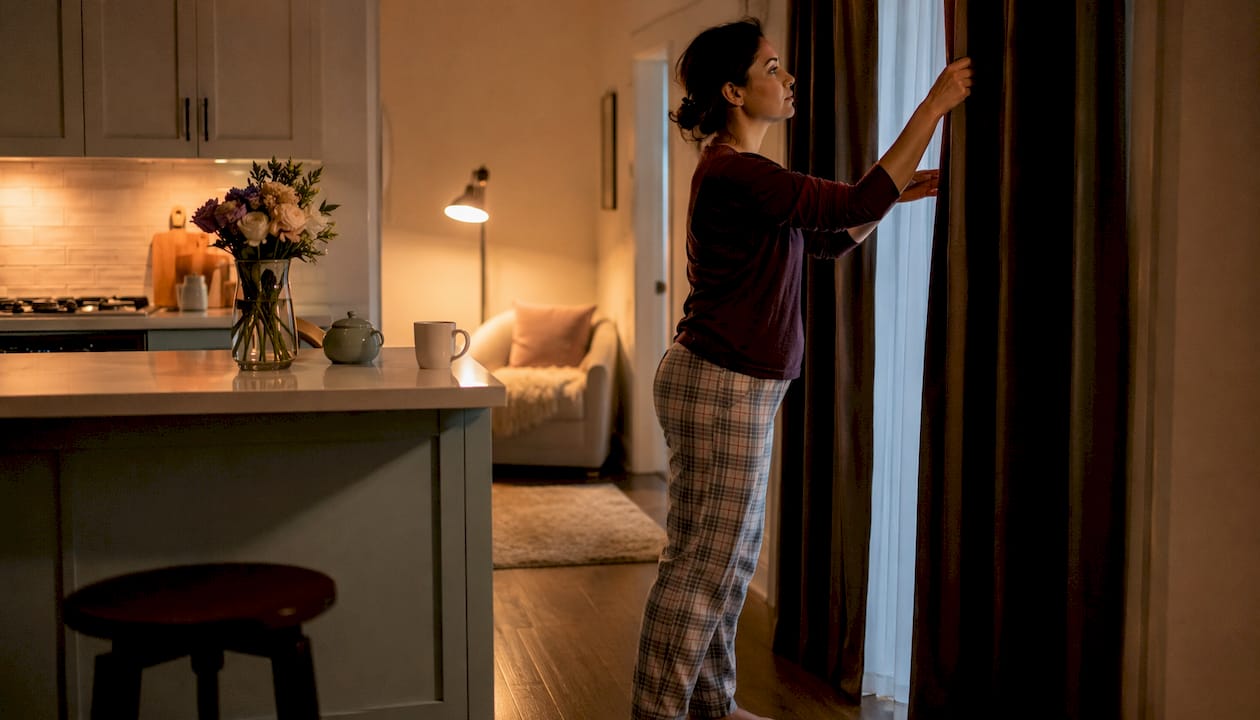
The highest-impact moves you can make tonight are simple: set a fixed wake time, cool your bedroom to 60–68°F, skip caffeine after early afternoon, and start a 60-minute device-free wind-down before bed. Those four habits address the most common reasons sleep breaks down, and you can begin every single one this evening.
Tonight’s quick-start checklist:
Set tomorrow’s alarm for the same time you’ll use every day this week, regardless of when you fall asleep.
Lower your thermostat or open a window to bring the room into the cool range.
Stop caffeine by 2:00 PM. Caffeine’s effects can last up to 8 hours or longer depending on your sensitivity.
Eat your last large meal at least 2–3 hours before bed.
Put your phone in another room 60 minutes before your target bedtime.
Dim all lights in your home for the final hour.
Write down tomorrow’s tasks and any worries in a notebook — a “brain dump” — so your mind can let them go.
If you’re adjusting to a new time zone, get outside for morning light as soon as you wake up.
Pro Tip: If you’re crossing time zones or settling into a new country, anchor your routine to your new local wake time first. Everything else follows from that one fixed point.
Table of Contents
What does sleep hygiene actually do, and when is it not enough?
Sleep hygiene builds the behavioral foundation for good sleep. It does not cure diagnosed disorders. That distinction matters for anyone who has spent weeks trying every tip they can find and still wakes at 3:00 AM.
Healthy adults need at least seven hours of sleep per night; most people don’t need more than eight hours in bed to feel well-rested. Consistent sleep-wake timing, a cool dark room, and reduced evening stimulation all support your circadian rhythm and help maintain sleep continuity, including the REM stages your brain needs for emotional and cognitive recovery.
Sleep hygiene is first-line support, not a ceiling. When sleep problems persist despite consistent habits, that’s the body signaling something deeper — and that signal deserves a clinical response, not more willpower.
When hygiene alone is unlikely to be enough — red flags to watch for:
Sleep problems lasting more than three months, most nights
Significant daytime impairment (concentration, mood, safety at work or driving)
Loud snoring, gasping, or witnessed pauses in breathing
Waking unrefreshed regardless of hours slept
Anxiety or depression that worsens alongside sleep disruption
If any of these apply, CBT-I or a sleep study is the appropriate next step, not another round of sleep tips.
Daily habits that actually improve your sleep quality
Consistent sleep-wake times are the single highest-yield behavioral change for sleep quality. Your circadian rhythm is a biological clock, and it responds to regularity more than to any supplement or gadget.
Timing guidance for common sleep disruptors:
Caffeine: Cut off by early afternoon. Effects can persist for 8 hours or more, so a 2:00 PM coffee can still delay sleep onset at 10:00 PM.
Alcohol: Avoid within 3 hours of bedtime. It may help you fall asleep faster but fragments sleep later and reduces REM, which harms emotional recovery.
Exercise: Regular activity improves sleep quality, but vigorous exercise close to bedtime can delay sleep onset for some people. Morning or early afternoon workouts are the safest bet; experiment with timing if evenings are your only option.
Naps: Keep them to 20–30 minutes and finish before mid-afternoon. Long or late naps eat into your sleep drive.
Meals: Finish large meals at least 2–3 hours before bed. Heavy digestion and sleep don’t mix well.
Morning light: Get bright daylight exposure within an hour of waking. This anchors your circadian rhythm more reliably than any evening ritual.
Behavior | Simple swap |
Afternoon coffee | Morning bright light + water |
Evening alcohol | Herbal tea or sparkling water |
Late gym session | Morning or lunchtime workout |
Long afternoon nap | 20-minute nap before 3:00 PM |
Heavy dinner at 9 PM | Lighter meal at your usual time |
A sleep diary — a daily log of sleep times, substances, naps, and perceived quality — reliably surfaces patterns that memory alone misses. Use one for two weeks before drawing conclusions about what’s working.
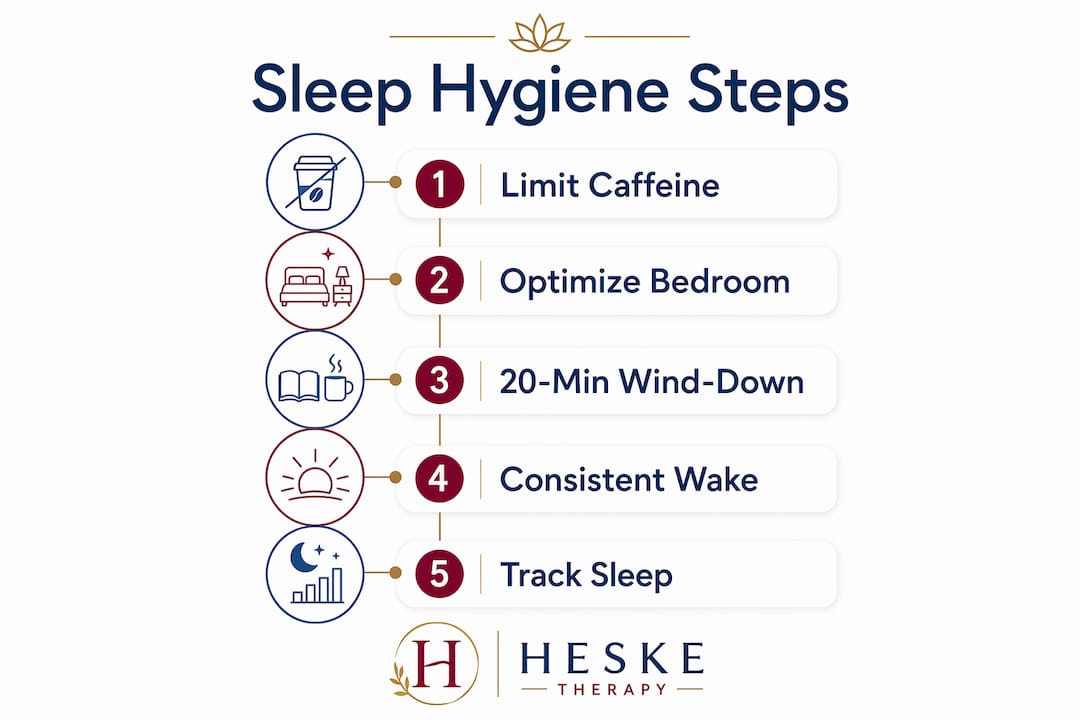
Pro Tip: Track your wake time, not just your bedtime. Most people can’t control when they fall asleep, but they can control when they get up — and that consistency is what trains the clock.

How your bedroom environment affects sleep more than you think
Optimizing temperature, darkness, and sound yields fast, measurable improvement. These are changes you can make tonight with what you already have.
The recommended bedroom temperature for most people is 60–68°F (15–20°C). A room that’s too warm is one of the most common and most overlooked reasons for fragmented sleep.
Environment checklist:
Light: Use blackout curtains or a sleep mask. Dim all overhead lights 60–90 minutes before bed. Even small LED indicators can suppress melatonin.
Sound: White noise machines or a simple fan can mask street noise and neighbor sounds. Foam earplugs work well in temporary housing.
Bedding: A mattress older than 8–10 years and a pillow older than 1–2 years may be actively disrupting your sleep posture and comfort.
Screens: Remove TVs and computers from the bedroom if possible. The bed should be associated with sleep and intimacy only.
For expats in shared housing or noisy urban neighborhoods, a white noise or air purification system can make a significant difference without requiring any structural changes to the space.
Pro Tip: If you can’t control the room temperature, a cooling mattress pad or even a cold shower before bed can lower your core body temperature and trigger the same sleep-onset signal.
A 60-minute wind-down routine you can start tonight
Start a consistent, device-free 60-minute wind-down before bed. That single habit, applied consistently, does more for sleep onset than most supplements combined.
Timed checklist:
60 minutes before bed: Put your phone in another room. Dim the lights. Make herbal tea or water.
45 minutes before bed: Do a “brain dump” — write down tomorrow’s tasks, unresolved worries, or anything looping in your mind. This reduces pre-sleep rumination and is especially useful when stress is high.
30 minutes before bed: Light stretching, reading a physical book, or listening to calm audio. Avoid news, work emails, and anything emotionally activating.
15 minutes before bed: Move to your bedroom. Keep the room cool and dark. Practice slow breathing (4 counts in, 6 counts out) for a few minutes.
Lights out: If you’re still awake after roughly 20 minutes, get up and do something low-stimulation in dim light until you feel sleepy. Don’t lie in bed frustrated.
For anxiety-driven wakefulness, a step-by-step anxiety relief practice before bed can interrupt the rumination cycle more effectively than relaxation alone.
When a full hour isn’t realistic: A 20-minute version works. Dim the lights, write three things on your mind, and do five minutes of slow breathing. Consistency matters more than duration.
Pro Tip: The Cleveland Clinic recommends starting wind-down about 60 minutes before bed with non-screen, calming activities. Even two or three nights of consistent practice begins to signal your brain that this sequence means sleep is coming.
Adjusting your sleep habits as an expat or frequent traveler
After travel or relocation, prioritize morning light exposure and a consistent wake time to re-entrain your circadian rhythm. Everything else is secondary.
Travel checklist:
Set your watch to the destination time zone as soon as you board.
On arrival, get outside in natural light within the first hour of waking, even briefly.
Avoid napping for more than 20 minutes on arrival day if it’s daytime at your destination.
Keep your first few nights’ bedtime within one hour of your new local target time.
Practical adjustments for expat living:
In shared housing with different schedules, earplugs and an eye mask are your first line of defense.
If local meal times run later than you’re used to (common in Spain and Latin America), eat a lighter version at your usual time and join the social meal without making it your main caloric intake.
When navigating healthcare in a new country, bring a two-week sleep diary to your first appointment. It gives any clinician — regardless of language — objective data to work with immediately.
For multilingual households, white noise can neutralize ambient conversation without requiring anyone to change their behavior.
When should you seek clinical help for sleep problems?
Seek clinical assessment when sleep problems are persistent, severe, or causing daytime impairment. Sleep hygiene is a starting point, not a substitute for treatment when the problem has crossed clinical thresholds.
Escalation criteria:
Sleep difficulties most nights for three months or more
Daytime fatigue affecting work performance, relationships, or safety
Loud snoring, gasping, or choking sounds during sleep (possible sleep apnea)
Anxiety or depression that appears linked to sleep disruption
Sleep problems that don’t respond after four weeks of consistent hygiene changes
What to expect from clinical pathways:
CBT-I (Cognitive Behavioral Therapy for Insomnia) is the first-line clinical treatment for chronic insomnia. It addresses the thoughts and behaviors that perpetuate poor sleep, and it produces durable results without medication. A sleep study (polysomnography) is used when apnea or another physiological disorder is suspected. For expats, RTT and integrative therapy approaches can address the emotional and stress-related drivers that standard sleep hygiene doesn’t reach.
Questions to bring to your first appointment:
How long have you been experiencing sleep problems, and how often?
What does your sleep diary show about patterns and triggers?
Are there medications, supplements, or substances that might be affecting sleep?
What is your current stress load, work schedule, and recent travel history?
Key Takeaways
Consistent sleep-wake timing, a cool dark bedroom, a 60-minute device-free wind-down, and early caffeine cutoff are the four highest-impact changes you can make tonight to improve sleep hygiene.
Point | Details |
Sleep duration target | Healthy adults need at least 7 hours per night; most don’t need more than 8. |
Temperature matters | Keep your bedroom at 60–68°F (15–20°C) for faster sleep onset and fewer awakenings. |
Wind-down timing | Start a 60-minute device-free routine before bed; write down worries to reduce rumination. |
Escalate when needed | Seek CBT-I or clinical assessment if problems persist beyond three months or cause daytime impairment. |
Hesketherapy | Offers integrative sleep therapy (RTT, EMDR, CBT, hypnotherapy) for English-speaking expats, online and in-person. |
Sleep and expat life: what the research misses
Most sleep guides treat poor sleep as a behavioral problem with a behavioral fix. For expats, that framing is incomplete. Relocation brings real losses: familiar routines, social networks, a sense of belonging, and sometimes a language in which you can fully express yourself. Those losses activate the stress response, and a chronically activated stress response makes sleep fragile in ways that no amount of blackout curtains will fully address.
The research on sleep hygiene is solid. The habits in this guide genuinely work for people whose sleep problems are primarily behavioral. But the expats I work with most often aren’t struggling because they forgot to dim their lights. They’re struggling because their nervous system hasn’t yet felt safe in a new place, or because the anxiety they carried before they moved followed them across the border.
That’s not a failure of willpower. It’s a signal worth listening to. Combining good sleep hygiene with proactive stress treatment produces better outcomes than either approach alone. If you’ve been doing everything right and still can’t sleep, the missing piece is probably not another habit. It’s support for what’s underneath.
Heske Therapy supports English-speaking expats with sleep and emotional health
Sleep problems that persist despite good habits often have an emotional root — and that’s exactly where Hesketherapy specializes. Rather than managing symptoms alone, the approach here addresses the anxiety, stress, and unresolved emotional patterns that keep the nervous system activated at night.
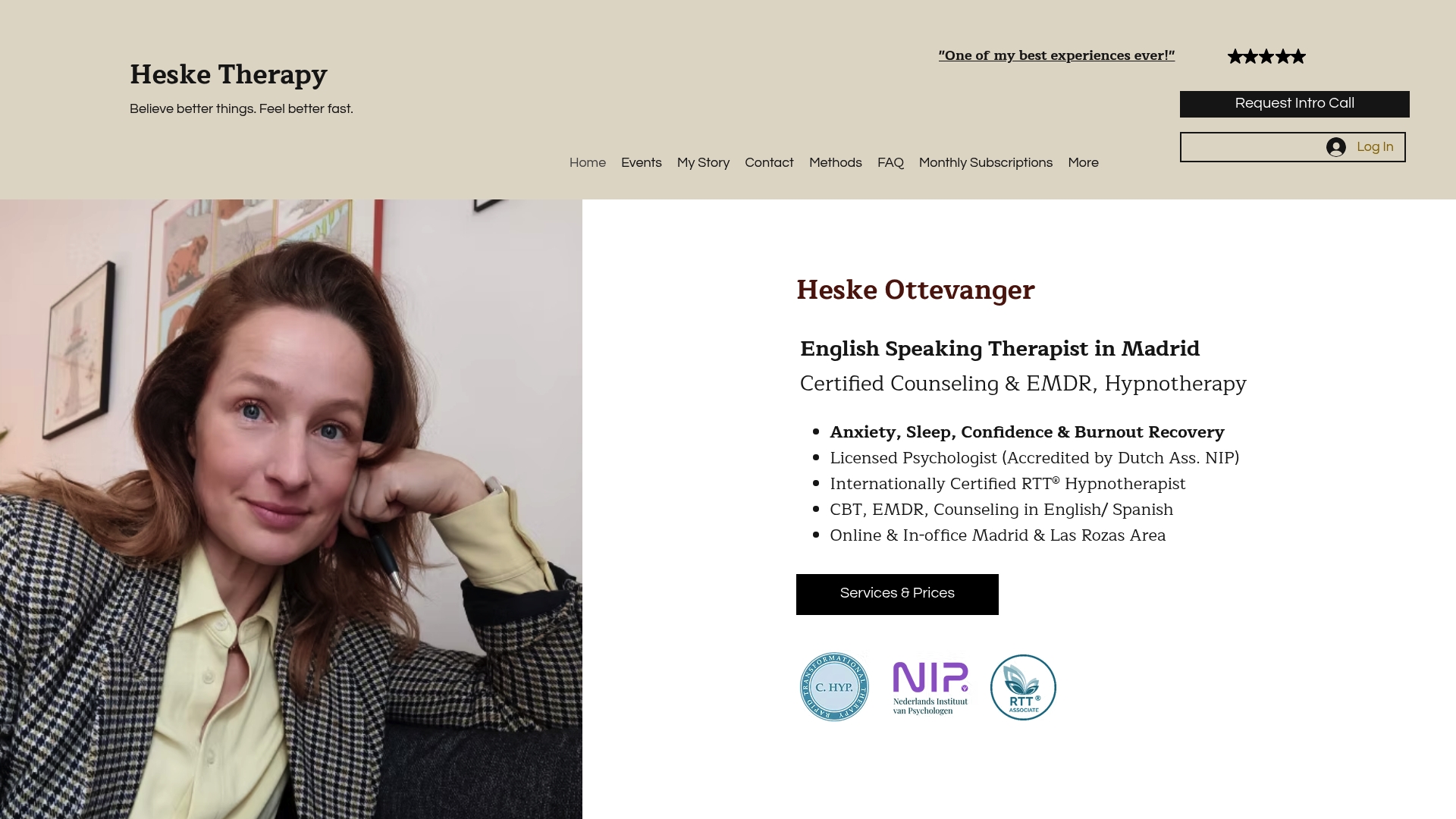
Hesketherapy offers tailored, evidence-informed therapy for English-speaking expats and international adults, available both online and in-person in Madrid. Sessions draw on RTT, EMDR, CBT, and clinical hypnotherapy to address the specific drivers of your sleep difficulties, not just the surface behaviors. Treatment is conducted in English (also Spanish and Dutch), and a typical engagement is structured around a three-month plan so you can see real, lasting change. Everything is confidential, professionally licensed, and designed for people navigating life across cultures.
If sleep hygiene alone hasn’t been enough, a free discovery call is the natural next step. Book yours at hesketherapy.com.
Useful sources and further reading
The following sources informed the clinical guidance and practical recommendations throughout this guide:
Mayo Clinic: Sleep Tips — 6 Steps to Better Sleep — sleep duration recommendations, the 20-minute rule, and brain-dump technique.
Harvard Health: Sleep Hygiene — Simple Practices for Better Rest — temperature guidance, alcohol’s effect on REM sleep.
Cleveland Clinic: Sleep Hygiene — 60-minute wind-down protocol and device-free evening guidance.
Healthline: 12 Tips for Better Sleep Hygiene — caffeine timing, morning light exposure.
Healthline: 15 Tips That May Help Improve Sleep — exercise timing and personalized experimentation.
NHS: Fall Asleep Faster and Sleep Better — napping guidance and shift-worker adaptations.
Mind UK: Tips to Improve Your Sleep — sleep diary as a diagnostic tool.
MedlinePlus: Healthy Sleep — comprehensive behavioral checklist and escalation to clinical care.
Good sleep hygiene is the foundation. When the foundation isn’t enough, professional support — tailored to your life, your stress, and your story — is the next step worth taking.
For expat-focused sleep therapy, visit Hesketherapy to learn more or book a free discovery call.
Recommended
Comments