Complex Trauma Therapy: The Evidence-Based Treatment Path


The most effective clinical approach for complex trauma is an integrative, phase-based program that sequences stabilization, evidence-based trauma processing through EMDR or trauma-focused CBT, and reintegration work. This is the standard of care that most trauma specialists follow today. The goal isn’t to erase what happened but to change your relationship to those memories so they stop hijacking your nervous system, while restoring your capacity to regulate emotions and function day to day.
TL;DR:
Stabilization through safety, grounding, and routine building must occur before trauma processing to prevent setbacks and ensure treatment readiness.
Evidence indicates EMDR and trauma-focused CBT are most effective for symptom reduction, especially when used after stabilization skills are established.
Complex trauma involves chronic interpersonal harm, leading to lasting emotional dysregulation, dissociation, physical symptoms, and negative self-image.
Sequencing treatment phases based on progress markers is crucial; clinicians who prioritize stabilization and gradual exposure outperform those rushing into trauma narration.
Intensive, multi-day EMDR programs can accelerate recovery but require solid preparation and should not replace foundational regulation skills.
Table of Contents
What Is Complex Trauma and How Do Clinicians Diagnose It?
Complex trauma differs from the single-incident model most people associate with PTSD. It develops from chronic, repeated interpersonal harm, childhood neglect, prolonged domestic violence, captivity, or ongoing abuse where escape wasn’t possible. The cumulative exposure changes how the nervous system regulates itself, not just what a person remembers.
Clinicians typically assess complex trauma through a structured interview combined with standardized screening tools. The International Trauma Questionnaire has become a common instrument, built around the CIE-11 criteria for complex PTSD, which requires both classic PTSD symptoms and additional “disturbances in self-organization.”
Risk factors clinicians look for include:
Childhood abuse or neglect over an extended period
Prolonged captivity, trafficking, or domestic violence
Repeated medical trauma or institutional harm
Attachment disruptions in early caregiving relationships
How Does Complex Trauma Show Up in Daily Life?
Complex trauma rarely stays contained to memory. It reshapes emotional regulation, self-perception, and relationships, often in ways clients don’t immediately connect to their history.
Common presentations include:
Emotional dysregulation, sudden intense anger, shame, or numbness
Dissociation, ranging from mild spacing out to losing time
Intrusive memories and flashbacks triggered by ordinary cues
A persistently negative self-image and difficulty trusting others
Somatic symptoms like chronic pain, IBS, migraines, and disrupted sleep
Complex trauma often carries a significant physical toll. Autonomic dysregulation, the nervous system stuck in fight, flight, or shutdown mode, shows up as chronic pain, digestive problems, and sleep disturbance that don’t respond to standard medical treatment alone. This is precisely why treatment can’t be a single technique. A person dealing with flashbacks, body pain, and relationship breakdowns at once needs a plan that addresses regulation before it asks the nervous system to revisit painful material.
Which Therapies Actually Work for Complex Trauma?
Several modalities have real evidence behind them, and each plays a different role. Understanding what each one does helps you evaluate a treatment plan instead of just trusting a label.
EMDR (Eye Movement Desensitization and Reprocessing) uses bilateral stimulation, typically guided eye movements, to help the brain reprocess stuck memories without requiring you to narrate every detail.
Trauma-focused CBT (TF-CBT) pairs gradual, titrated exposure with cognitive restructuring, correcting the distorted beliefs trauma leaves behind (“I caused this,” “I’m permanently broken”).
Dialectical Behavior Therapy (DBT) contributes skills modules for emotion regulation and crisis management, particularly useful when self-harm or suicidal ideation complicates the picture.
Sensorimotor and somatic approaches work from the body upward, addressing the physical bracing and hypervigilance that talk therapy alone often misses.
Compassion-focused work targets the shame and self-attack that chronic interpersonal trauma tends to leave behind.
A Cochrane review of psychological therapies for chronic PTSD found that trauma-focused approaches, specifically TF-CBT and EMDR, produced greater symptom reduction than non-trauma-focused therapies across multiple trials. That’s not a small distinction. It means the modality you choose matters, not just the amount of therapy you attend. DBT and somatic methods aren’t competing with EMDR or TF-CBT; they’re built to handle what those two can’t reach on their own, like acute crisis states or a body that won’t settle regardless of what the mind processes.
How Do Clinicians Sequence Treatment Across Three Phases?
Complex trauma treatment follows a phase-based model that keeps the nervous system within a manageable range, often called the window of tolerance, rather than pushing straight into painful material.
Stabilization. This phase builds safety planning, grounding and breathing skills, sleep and routine repair, and a trusting therapeutic alliance. Nothing else works without this foundation.
Trauma processing. Once regulation skills hold, EMDR or TF-CBT techniques are introduced with careful titration, small, controlled doses of memory activation, with active monitoring for dissociation.
Reintegration. The final phase addresses self-compassion, rebuilding social connection, and re-engaging with work or life goals that trauma had put on hold.
Clinicians don’t move between phases on a calendar. They move based on markers: consistent use of regulation skills, tolerance of brief memory activation without severe dysregulation, and sustained improvement in daily functioning.
Pro Tip: If a therapist suggests diving straight into detailed trauma narration during your first few sessions, ask why stabilization work isn’t happening first. Skipping it is one of the most common causes of setbacks in trauma treatment.
How Do EMDR, TF-CBT, and Somatic Work Actually Apply to Complex Trauma?
EMDR’s eight-phase protocol doesn’t require you to describe every disturbing detail out loud. Bilateral stimulation supports reprocessing while reducing emotional intensity, which is part of why many clients find it more tolerable than exposure-heavy talk therapy. Intensive EMDR formats, delivered across consecutive days rather than weekly, have case-series evidence showing large pre-post symptom reductions in complex PTSD, though larger controlled trials are still needed to confirm those results at scale.

TF-CBT layers cognitive restructuring on top of gradual exposure, adapted for chronic rather than single-incident trauma. Sessions tend to run longer and slower than standard CBT protocols, since the goal is untangling years of distorted self-blame, not correcting a single fear response.
Sensorimotor and somatic work operates differently. It uses interoception (noticing internal body sensations) and movement-based techniques to address bracing, hypervigilance, and the physical freeze response that talk-only therapy tends to miss entirely.
DBT contributes structured modules for:
Emotion regulation during acute distress
Interpersonal effectiveness in damaged relationships
Crisis and self-harm management
Mindfulness skills that support all other phases
The APA’s guidance for adults with complex trauma histories frames the clinical stance as asking “What happened to you?” rather than “What’s wrong with you?” That shift in framing reduces retraumatization and keeps clients engaged in treatment they might otherwise abandon.
Compassion-focused and attachment-repair work close the loop, addressing the identity damage and relational mistrust that chronic trauma leaves behind long after acute symptoms fade.
Weekly Therapy, Intensive Programs, or Both?
Standard weekly sessions remain the most common format, and they work well for most people with steady support systems and manageable daily functioning. Intensive programs, condensed multi-day EMDR blocks, for instance, suit people who need faster symptom relief or who can’t sustain months of gradual weekly work.
Medication typically plays a supporting role rather than a primary one, targeting sleep disruption, mood symptoms, or hyperarousal that make psychotherapy harder to engage with. It’s coordinated with a prescribing physician, not offered as a substitute for processing work.
Weekly outpatient care suits stable routines and gradual pacing
Intensive formats can accelerate progress when safety and preparation are solid
Group therapy adds peer support and normalizes shared experience during reintegration
Mind-body practices, coherent breathing, consistent sleep timing, and moderate aerobic activity, support autonomic recovery between sessions
What Should You Ask Before Choosing a Therapist?
Not every therapist who lists “trauma” on their profile has trained specifically in complex trauma protocols. The difference matters more than most people realize.
Confirm formal EMDR accreditation or DBT team training, not just general trauma familiarity.
Ask directly about their experience treating dissociation and somatic symptoms alongside emotional ones.
Clarify their safety practices: how do they handle a crisis between sessions, and do they collaborate with a physician when needed?
Ask how they decide when to move from stabilization into processing work.
Request the outcome measures they use to track progress, such as the ITQ.
Pro Tip: A therapist who can’t clearly explain their phase-sequencing approach, or who seems eager to start processing traumatic memories in session one, is a signal to keep looking.
What Does Recovery Actually Look Like Over Time?
Timelines vary widely based on how long the trauma lasted and how much dysregulation built up around it. Someone with a single prolonged relationship trauma might see meaningful shifts within months; someone with decades of childhood harm often needs a longer arc.
Early markers of progress tend to show up before symptoms fully resolve: better sleep, fewer dissociative episodes, and a growing ability to notice distress without being swept away by it, consistent with trauma-informed care and staff-centered safety practices that support system-level healing. It’s common to feel worse briefly when processing begins, since disturbed memories can surface before they settle. A skilled clinician expects this and adjusts pacing rather than pushing through it. Long-term recovery planning includes relapse-prevention strategies, identifying early warning signs and reinforcing regulation skills before old patterns take hold again.
How Heske Therapy Applies This Model in Practice
Heske Therapy works from this same integrative, phase-based framework, offering EMDR, Rapid Transformational Therapy, CBT, and clinical hypnotherapy across both online and in-clinic sessions in Madrid. Sessions are available in English, Spanish, and Dutch, which matters for expats navigating trauma recovery far from their native language and support systems.
Integrative modality selection matched to your presentation, not a one-size protocol
Multilingual delivery for international clients
Regulation-focused techniques suited to expat isolation and cultural adjustment stress
Outcome tracking to mark real progress across treatment phases
What This Article’s Evidence Actually Supports
Most conventional advice on trauma recovery treats it as a single technique problem, find the right modality, apply it consistently, wait for results. That framing undersells what actually matters: sequencing. The evidence favors EMDR and TF-CBT for symptom reduction, but neither works well if stabilization skills aren’t in place first. I’d argue the biggest gap between what’s promised and what actually helps is that most people seeking help skip straight to “which therapy is best” instead of asking “am I ready for processing work yet.”
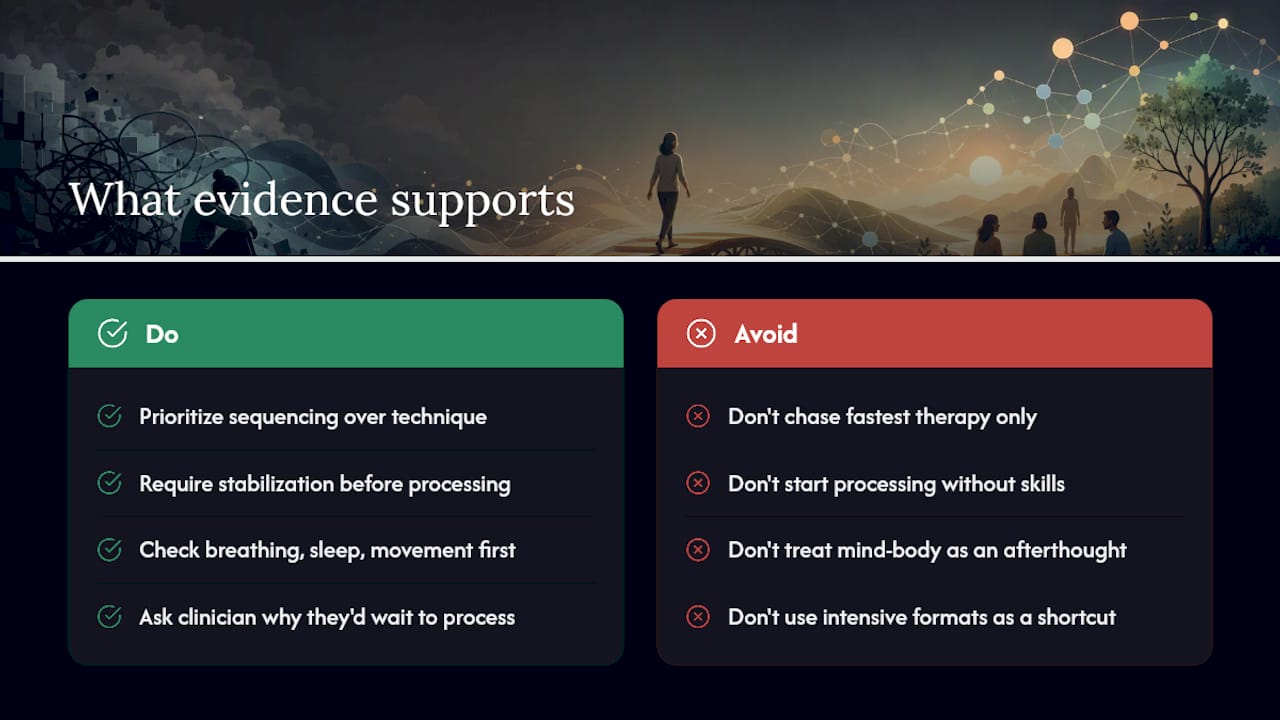
The overrated piece here is speed. Intensive EMDR formats have promising case-series results, but they’re not a shortcut for someone who hasn’t built basic regulation capacity. The underrated piece is the mind-body layer, breathing, sleep, movement, that most people treat as an afterthought rather than the groundwork that makes processing tolerable at all.
If you’re evaluating a therapist right now, prioritize their sequencing logic over their technique menu. A clinician who can explain why they’d wait before processing a specific memory knows more than one who promises fast results from day one.
— Heske
Ready to Start Your Own Phase-Based Treatment Plan?
Hesketherapy is the alternative to piecing together separate specialists for trauma work in Madrid, one clinic offering EMDR, RTT, CBT, and hypnotherapy under a single integrative plan, so stabilization, processing, and reintegration happen with one team who already knows your history. That continuity matters when complex trauma involves multiple symptom layers at once, and it means you’re not re-explaining your story to a new provider every time you need a different modality.
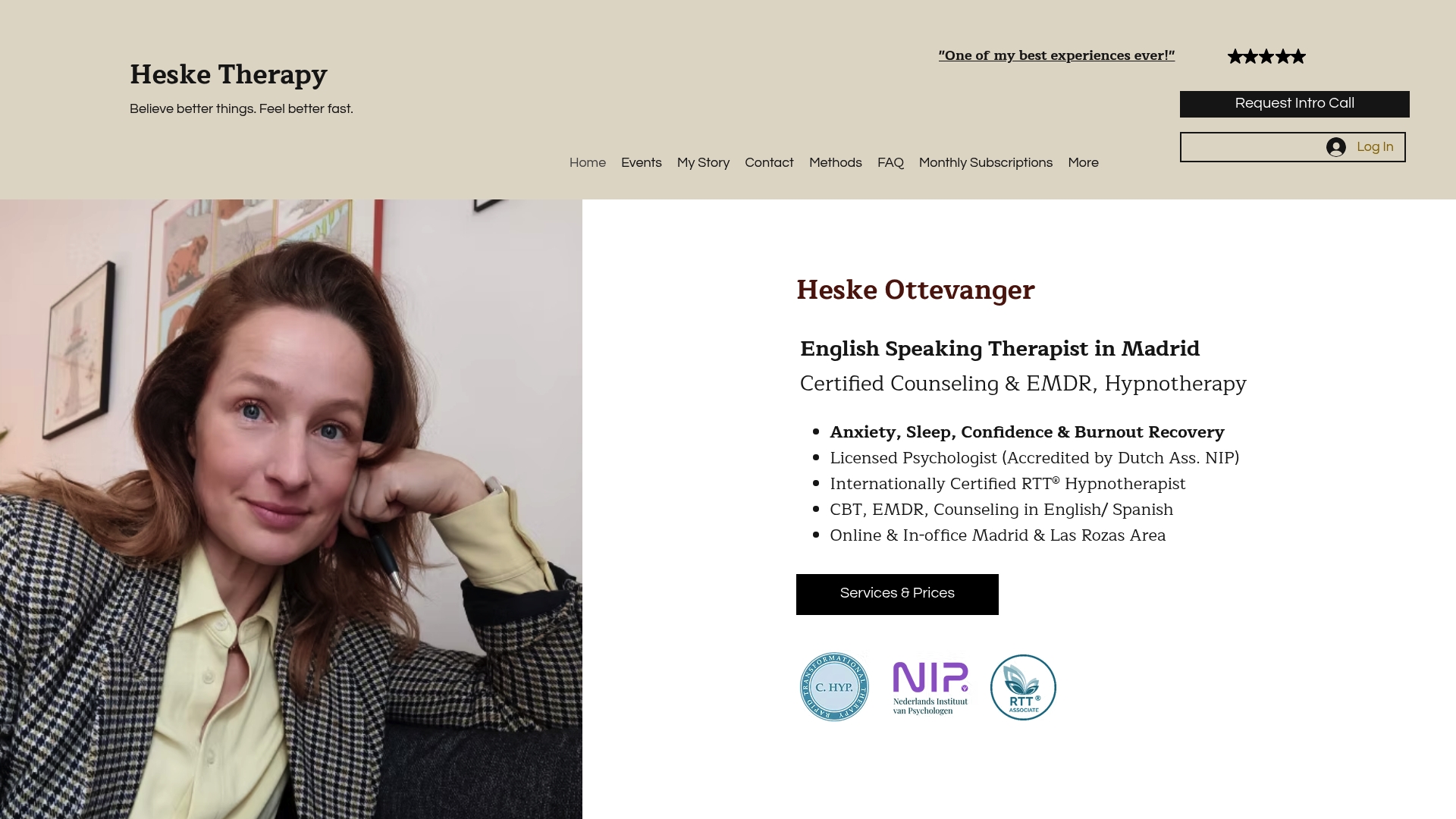
Sessions run online or in-clinic in Madrid, with English, Spanish, and Dutch support for expats who don’t want to navigate trauma recovery in a language that isn’t their own. If you’re ready to talk through where you are in this process, book a discovery call through Heske Therapy’s Spanish landing page and find out which phase of treatment fits your situation now.
This article is general information, not a substitute for advice from a qualified doctor. Consult a qualified healthcare professional about your own circumstances before acting on anything here.
Recommended
Comments