How to Overcome Burnout Naturally for Rapid Recovery

Feeling drained after another demanding week in Madrid, you might notice a persistent fatigue that rest alone cannot fix. For many English-speaking expatriates, the intense pressures of adapting to a new culture while juggling high-stakes jobs make spotting the early signs of burnout a real challenge. Recognizing these signals early is your first step toward effective mental health recovery using personalized, rapid therapy techniques designed to restore your energy and well-being.
Table of Contents
Quick Summary
Key Insight | Explanation |
1. Recognize Burnout Symptoms | Identify persistent exhaustion, emotional detachment, and irritability to prevent further decline in mental health. |
2. Identify Stress Triggers | Analyze professional, personal, and environmental factors that contribute to stress for targeted management. |
3. Tailor Recovery Plans | Develop personalized strategies for burnout recovery that include diverse therapy modalities and adapt to individual needs. |
4. Establish Healthy Boundaries | Set clear professional and personal boundaries to protect emotional health and promote balance in daily routines. |
5. Monitor Recovery Progress | Regularly assess emotional and physical health to adjust recovery strategies based on changing needs and circumstances. |
Step 1: Recognize the Warning Signs of Burnout
Identifying burnout early can save you from prolonged mental and physical exhaustion. This section will help you understand the subtle yet critical signals your body and mind are sending about potential burnout.
Burnout is more than just feeling tired - it’s a complex state of emotional and physical depletion that gradually erodes your professional and personal wellbeing. The warning signs often emerge incrementally, making them challenging to recognize immediately.
Here are the key indicators you should watch for:
Persistent Physical Exhaustion: Feeling chronically tired, even after rest
Emotional Detachment: Developing a cynical or indifferent attitude toward work
Reduced Performance: Noticing a significant drop in productivity and motivation
Increased Irritability: Experiencing more frequent mood swings and heightened stress responses
Physical Symptoms: Frequent headaches, muscle tension, and weakened immune system
Your burnout might manifest differently from someone else’s, so pay close attention to your unique signals. Expats in high-pressure Madrid jobs are especially susceptible to these symptoms due to the intense professional environment.
Early recognition is your most powerful tool in preventing complete mental and emotional breakdown.
Pro tip: Create a weekly self-check journal to track your energy levels, mood, and stress indicators systematically.
Step 2: Identify and Remove Sources of Stress
Mastering stress management begins with understanding and systematically eliminating its root causes. This section will guide you through a strategic approach to recognizing and neutralizing stress triggers in your professional and personal life.
Stress isn’t just a mental state - it’s a complex physiological response with tangible impacts on your health. Chronic stress damages physical and emotional wellbeing, making it crucial to develop a comprehensive stress identification strategy.
Here are key methods for identifying your primary stress sources:
Professional Stressors: Analyze workplace dynamics, workload, and job expectations
Personal Relationship Triggers: Examine interpersonal conflicts and emotional dynamics
Financial Pressures: Review monetary concerns and financial management strategies
Lifestyle Factors: Evaluate sleep patterns, nutrition, and exercise habits
Environmental Influences: Consider living conditions, commute, and daily surroundings
Expats in high-pressure environments like Madrid often experience unique stressors related to cultural adaptation and professional expectations. Recognizing these specific challenges is the first step toward effective stress management.
Understanding your stress triggers empowers you to create targeted, personalized intervention strategies.
Pro tip: Create a weekly stress journal documenting triggers, emotional responses, and potential resolution strategies to develop deeper self-awareness.
Step 3: Implement Personalized Rapid Recovery Therapies
Successfully overcoming burnout requires a tailored approach that addresses your unique psychological and physiological needs. This section will help you design a personalized recovery strategy that goes beyond generic solutions.
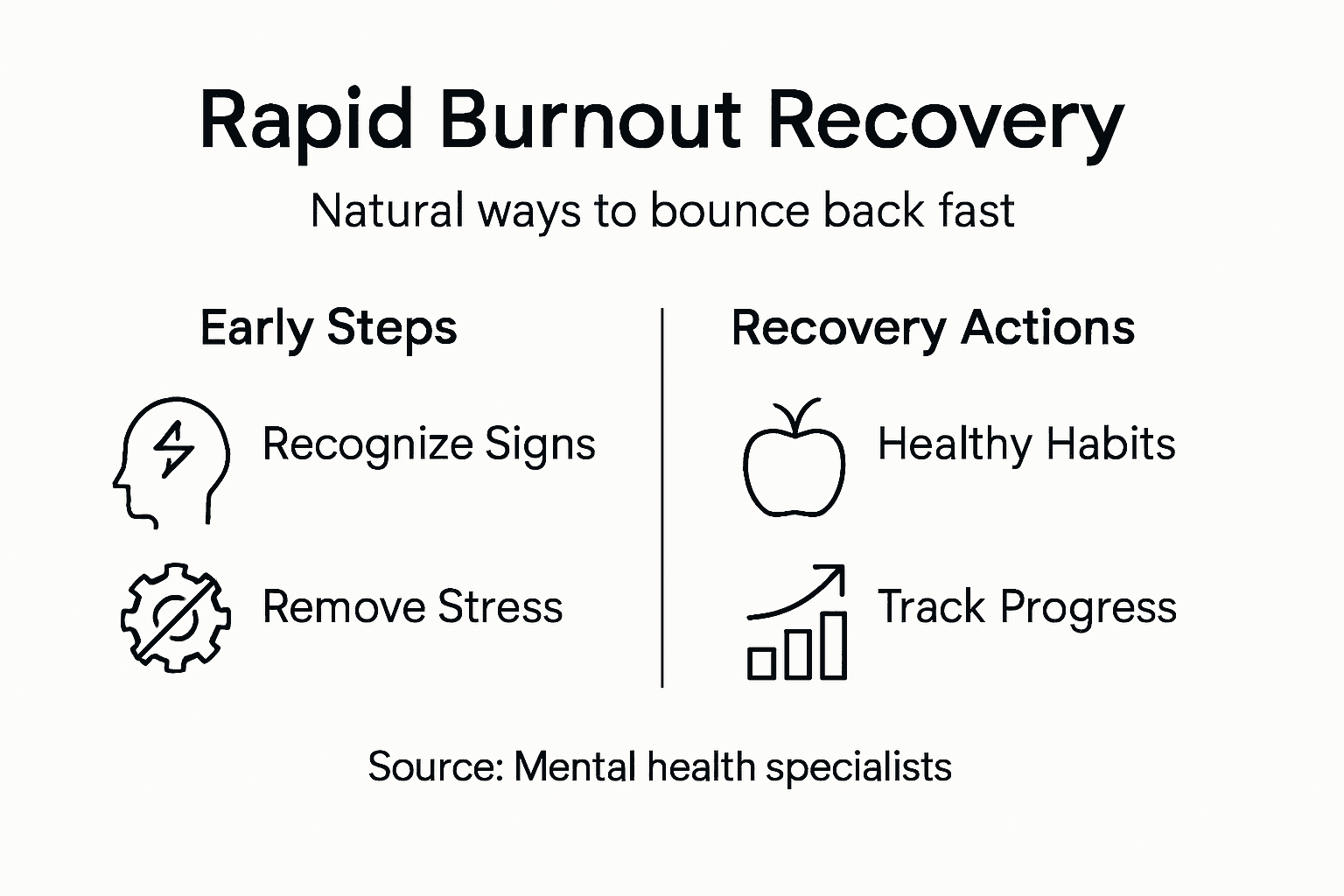
Emerging research reconceptualizes burnout as a dynamic network of symptoms, enabling more targeted and effective therapeutic interventions. Your recovery journey should be as individual as the stressors that brought you to this point.
Key components of your personalized rapid recovery plan include:
Comprehensive Assessment: Conduct a thorough evaluation of your specific burnout symptoms
Integrated Therapy Approaches: Combine multiple treatment modalities
Targeted Symptom Management: Focus on your most critical stress indicators
Adaptive Recovery Strategies: Regularly adjust your approach based on progress
Holistic Wellness Integration: Address mental, physical, and emotional dimensions
Expats in high-pressure environments like Madrid require nuanced approaches that consider cultural adaptation, professional challenges, and individual resilience. Your therapy should be as dynamic and flexible as your international lifestyle.
Here is a comparison of rapid recovery therapy strategies for burnout:
Strategy Type | Key Benefit | Ideal Use Case |
Cognitive Therapy | Reshapes negative thought | Persistent self-criticism |
Physical Wellness Plan | Restores energy & immunity | Fatigue, frequent illness |
Mindfulness Practices | Reduces emotional overload | High stress reactivity |
Cultural Adaptation Help | Eases expat transitions | Working in a new country |
Personalized interventions are the key to transforming burnout from a debilitating condition into an opportunity for profound personal growth.
Pro tip: Schedule monthly check-ins with your therapist to recalibrate your recovery strategy and track your progress systematically.
Step 4: Establish Healthy Boundaries and Daily Routines
Transforming your burnout recovery requires creating intentional structures that protect your mental and emotional wellbeing. This section will help you design boundaries and routines that restore balance and prevent future exhaustion.

Setting healthy boundaries is crucial for preventing emotional burnout, especially for expats navigating complex professional and personal landscapes. Your boundaries are not just protective walls - they are personal declarations of self-respect and emotional health.
Key strategies for establishing effective boundaries include:
Professional Boundaries: Clearly define work hours and communication expectations
Personal Space Management: Create dedicated time for rest and personal activities
Communication Skills: Learn to say no without guilt or extensive explanation
Energy Conservation: Prioritize tasks and eliminate unnecessary commitments
Self-Care Scheduling: Build consistent wellness practices into your daily routine
Expats in Madrid’s high-pressure work environments often struggle with boundary setting, particularly when cultural expectations differ from personal needs. Your routine should reflect your unique lifestyle and professional demands.
Boundaries are not walls to isolate you, but bridges that help you maintain healthy connections while preserving your inner resources.
Pro tip: Conduct a weekly review of your boundaries, adjusting them proactively to maintain a sustainable balance between professional responsibilities and personal well-being.
Step 5: Monitor Progress and Adjust Recovery Strategies
Successful burnout recovery is a dynamic journey that requires continuous self-reflection and strategic adaptation. This section will guide you through systematically tracking your healing process and making informed adjustments to your recovery plan.
Recovery involves continuous self-assessment and strategic intervention, ensuring your approach remains responsive to your evolving emotional and physical needs. Think of your recovery as a personalized roadmap that can be recalibrated as you progress.
Key strategies for monitoring and adjusting your recovery include:
Symptom Tracking: Document changes in energy levels, emotional state, and stress responses
Regular Self-Evaluation: Conduct weekly personal assessments of your mental and physical health
Flexible Goal Setting: Create adaptable recovery milestones that can be modified
Professional Guidance: Schedule regular check-ins with your therapist
Holistic Progress Metrics: Assess improvements across multiple life dimensions
Expats in high-pressure environments like Madrid often face unique challenges that require nuanced monitoring. Your recovery strategy should be as dynamic and resilient as your international lifestyle.
To help you track burnout recovery, use this progress monitoring matrix:
Metric | How To Measure | When To Review |
Emotional State | Mood logs, journal entries | Weekly |
Physical Wellbeing | Energy surveys, sleep quality | Weekly |
Work-Life Balance | Hours worked vs. personal time | Weekly |
Therapy Effectiveness | Milestone and feedback sessions | Monthly |
Progress is not linear - it’s a complex, multidimensional journey of healing and self-discovery.
Pro tip: Create a digital or physical recovery journal to systematically log your progress, insights, and emotional shifts, enabling more informed and personalized healing.
Take Control of Burnout with Expert Support in Madrid
Recognizing and overcoming burnout requires more than willpower. If you feel trapped by relentless stress, emotional exhaustion, or a loss of motivation, personalized therapy designed specifically for English-speaking expatriates in Madrid can transform your recovery journey. At Heske Therapy, we understand the complex challenges highlighted in this article such as emotional detachment, persistent fatigue, and the demand for rapid, tailored recovery strategies. Our integrative mental health services combine Rapid Transformational Therapy, EMDR, CBT, and hypnotherapy to address burnout at its core and renew your energy with lasting results.
• Specialized care for expats facing high-pressure environments and stressors unique to living abroad • Individualized treatment plans that adapt as you progress with ongoing professional guidance • Convenient options including in-office and online therapy sessions to suit your lifestyle
Discover how personalized therapies can restore your mental balance and empower you to establish healthier boundaries and routines. Begin your healing now with a free discovery call at Heske Therapy and take the important step toward rapid burnout recovery.
Ready to reclaim your wellbeing and thrive in Madrid’s demanding environment Start your personalized healing journey today with Heske Therapy where expert care meets sustainable transformation.
Frequently Asked Questions
How can I recognize the signs of burnout?
To recognize the signs of burnout, look for persistent physical exhaustion, emotional detachment, and a decrease in your work performance. Regularly assess your energy levels and mood using a self-check journal to identify any concerning patterns within a week.
What are effective strategies for removing stress sources?
Effective strategies include analyzing your professional obligations, personal relationships, and lifestyle factors that create stress. Make a list of your stressors and prioritize addressing the most impactful ones to reduce overall stress within a month.
What personalized recovery therapies can help address burnout?
Personalized recovery therapies may include cognitive therapy, mindfulness practices, and physical wellness plans tailored to your unique symptoms. Evaluate your current situation and integrate at least two recovery methods to start seeing improvements in your wellbeing within 30 days.
How do I set healthy boundaries to prevent burnout?
Setting healthy boundaries involves defining your work hours, managing personal space, and learning to say no to additional commitments. Review your schedule weekly to ensure you’ve dedicated enough time for rest and personal activities, helping you maintain emotional balance.
What should I monitor during my burnout recovery?
During your burnout recovery, monitor your emotional state, physical wellbeing, and work-life balance regularly. Track these metrics with a recovery journal to assess your progress and make necessary adjustments every month.
How can I effectively adjust my recovery strategies?
To effectively adjust your recovery strategies, conduct weekly self-evaluations and keep track of your symptoms. Use this feedback to modify your approach and ensure you’re addressing your evolving needs, aiming for actionable changes each month.
Recommended
Comments