Hypnotherapy Uses for Anxiety: 8 Proven Techniques


TL;DR:
Clinical hypnotherapy is an evidence-based technique that uses focused attention and relaxation to reduce anxiety at conscious and subconscious levels. It improves symptoms significantly by activating the parasympathetic nervous system and reframing subconscious patterns, often with measurable results after a few sessions. Personalization and combining techniques like progressive relaxation, CBH, and visualization enhance its effectiveness for various anxiety types.
Clinical hypnotherapy is defined as a structured, evidence-based method that uses focused attention and guided relaxation to reduce anxiety symptoms at both the conscious and subconscious level. Research shows that hypnotherapy uses for anxiety produce measurable results: participants reduced anxiety more than 79% of control participants after treatment, and 84% at follow-up. That is not a marginal improvement. It means hypnotherapy, when applied correctly, outperforms doing nothing by a significant margin. Sessions typically run 30–60 minutes and use techniques like progressive relaxation, cognitive-behavioral hypnotherapy (CBH), and visualization. Hesketherapy uses all of these methods with clients managing anxiety in Madrid and online.
1. What are hypnotherapy uses for anxiety?
Hypnotherapy for anxiety works by guiding you into a focused, relaxed state where your mind becomes more open to change. In that state, a trained therapist can help you identify and reframe the subconscious patterns that drive anxious thinking. The hypnotic state is not unconsciousness. You stay aware and in control throughout. What changes is your cognitive flexibility, which makes it easier to let go of fear-based responses.
The role of hypnotherapy in anxiety is not to replace medication or other therapy. It works best as part of a broader treatment plan that may include CBT, EMDR, or counseling. Think of it as a tool that makes your nervous system more receptive to the work you are already doing.
2. Progressive relaxation: the foundation of hypnotic anxiety relief
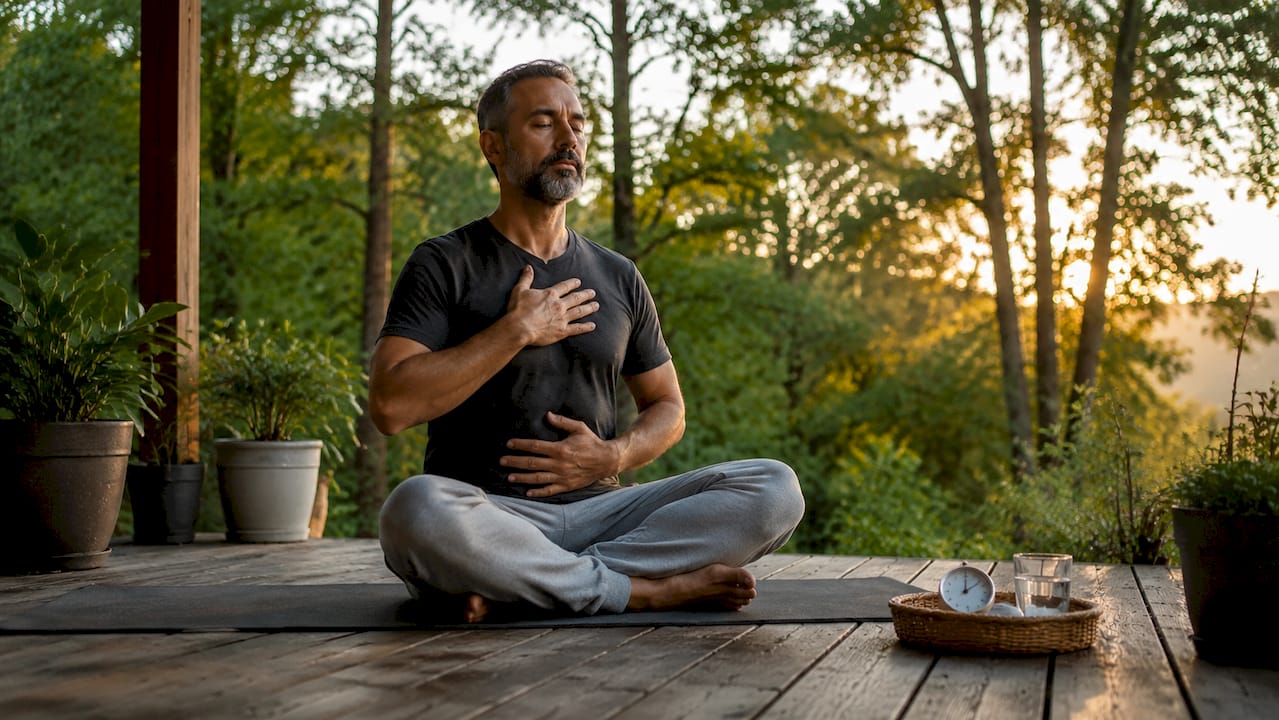
Progressive relaxation is the most widely used induction method in clinical hypnotherapy for anxiety. It works by systematically releasing tension from each muscle group, starting at the feet and moving upward to the head. Each release signals the brain that the body is safe. That signal activates the parasympathetic nervous system, which lowers heart rate and reduces stress hormones like cortisol.
Here is how a typical progressive relaxation sequence works:
Settle into a comfortable position with eyes closed and feet flat on the floor.
Focus on your feet. Tense the muscles for five seconds, then release completely.
Move upward through calves, thighs, abdomen, chest, shoulders, and face, repeating the tense-and-release pattern.
Breathe slowly between each muscle group, exhaling longer than you inhale.
Notice the contrast between tension and release. That contrast is what deepens the trance and activates calming alpha and theta brain waves.
This technique breaks the anxiety feedback loop. Anxiety tightens the body, and a tight body signals more anxiety. Progressive relaxation interrupts that cycle at the physical level, which is often faster than trying to reason your way out of anxious thoughts.
Pro Tip: Do not rush the release phase. Linger on each muscle group for a full breath cycle. The slower you go, the deeper the relaxation response.
3. Cognitive-behavioral hypnotherapy (CBH): combining hypnosis with CBT
Cognitive-behavioral hypnotherapy, or CBH, integrates the thought-restructuring tools of CBT with the receptive state created by hypnosis. The result is a method that targets both your conscious worries and the subconscious beliefs that fuel them. A 2024 study of 60 adults with generalized anxiety found that CBH delivered in eight 60-minute sessions matched traditional CBT for reducing perceived stress and outperformed it on cognitive avoidance reduction. That last point matters. Cognitive avoidance is the habit of mentally sidestepping feared thoughts, which keeps anxiety alive.
Key advantages of CBH over stand-alone methods include:
Dual-level processing. CBH addresses both the rational mind and the emotional, subconscious layer simultaneously.
Faster behavioral change. Hypnosis increases receptiveness to new thought patterns, so CBT techniques take hold more quickly.
Reduced cognitive avoidance. Clients learn to face anxious thoughts without being overwhelmed by them.
Structured format. Eight sessions provide a clear arc with measurable progress points.
Complementary fit. CBH pairs well with EMDR and counseling, which is why Hesketherapy incorporates it into integrative anxiety treatment.
The pre-talk before each CBH session is as important as the technique itself. Setting clear expectations and building rapport determines how deeply a client can enter the hypnotic state.
4. Self-hypnosis for immediate anxiety relief
Self-hypnosis gives you a tool you can use anywhere, without a therapist present. A single personalized session can produce measurable reductions in heart rate and muscle tension, even in people who have never been hypnotized before. That means the benefits of hypnotherapy are not locked behind months of treatment. One well-structured session can shift your physiology.
Practical techniques for effective self-hypnosis include:
Anchor a calm phrase. Choose a short phrase like “I am safe” and repeat it as you slow your breathing. Over time, the phrase becomes a trigger for the relaxed state.
Use the 4-7-8 breath. Inhale for four counts, hold for seven, exhale for eight. This pattern activates the parasympathetic nervous system within minutes.
Fractionation. Briefly open your eyes, then close them again. Each cycle deepens the relaxed state faster than staying still. This technique is used by professional hypnotherapists to accelerate trance depth.
Focus on absorption, not effort. The biggest mistake beginners make is trying too hard to feel hypnotized. Absorption in a sound, sensation, or image produces better results than striving.
Pro Tip: Watch for physical trance signs: heavy eyelids, a slight tingling in the hands, or a sense that your body feels distant. These are signals that the technique is working. Do not analyze them. Just let them deepen.
Hesketherapy offers a self-hypnosis audio product designed specifically for relaxation and anxiety relief, which is useful between sessions or as a standalone tool.
5. Visualization and mental rehearsal for lasting calm
Visualization uses guided imagery to activate the same parasympathetic response as actual relaxation. When you vividly imagine a safe, familiar environment, your nervous system responds as if you are physically there. Hypnotic relaxation techniques that incorporate imagery reduce muscle tightness, slow heart rate, and quiet the overthinking that drives anxiety.
Three core visualization methods used in clinical hypnotherapy include:
Safe place visualization. You mentally construct a location where you feel completely at ease. The therapist guides you to add sensory detail: temperature, sounds, textures. The richer the detail, the stronger the calming effect.
Anchoring. A specific physical sensation, like pressing your thumb and forefinger together, is paired with the calm state during hypnosis. After repeated practice, that gesture alone can trigger relaxation outside of sessions.
Mental rehearsal. You visualize yourself moving through an anxiety-provoking situation with calm and confidence. This is especially effective for performance anxiety, social anxiety, and fear of medical procedures. Research on dental phobia shows hypnotherapy significantly reduces anticipatory anxiety before clinical appointments.
Personalization is non-negotiable here. Generic peaceful scenes can backfire if they accidentally touch a client’s triggers. A skilled therapist maps your personal history before selecting imagery. Physical sensations, such as warmth or heaviness, often work better than visual scenes for people whose anxiety is primarily body-based.
6. Hypnotherapy relaxation methods: which technique fits your needs?
Choosing the right hypnotherapy approach depends on your anxiety type, severity, and personal preferences. The table below compares the four main methods.
Technique | Session length | Primary mechanism | Best suited for |
Progressive relaxation | 30–60 minutes | Parasympathetic activation via muscle release | General anxiety, first-time clients |
Cognitive-behavioral hypnotherapy (CBH) | Eight 60-minute sessions | Cognitive restructuring plus hypnotic receptivity | Generalized anxiety disorder, chronic worry |
Self-hypnosis | 10–20 minutes | Absorption and breath-based nervous system regulation | Daily maintenance, remote use, mild anxiety |
Visualization and anchoring | 30–60 minutes | Sensory imagery and conditioned calm responses | Performance anxiety, phobias, trauma-linked anxiety |
No single technique works for everyone. Many clients at Hesketherapy combine progressive relaxation as an entry point with CBH for deeper cognitive work. Self-hypnosis then bridges the gap between sessions. The effectiveness of any method depends heavily on client receptivity and the quality of the therapeutic relationship. If you are new to hypnosis, starting with a professional session builds the foundation that makes self-practice far more effective. You can explore anxiety therapy options to see how hypnotherapy fits alongside other evidence-based approaches.
7. How hypnotherapy reduces anxiety: the physiological mechanism
Hypnotherapy reduces anxiety by shifting the nervous system from sympathetic dominance, the fight-or-flight state, to parasympathetic activity, the rest-and-digest state. This shift is not metaphorical. It produces measurable changes: lower cortisol, reduced heart rate, slower breathing, and decreased muscle tension. The pacing and leading technique used by trained hypnotherapists mirrors the client’s breathing rhythm first, then gradually slows it. The client’s nervous system follows without resistance.
Anxiety lives in the body before it reaches conscious thought. Most people notice physical symptoms, a tight chest, shallow breathing, clenched jaw, before they identify the anxious thought. Hypnotherapy targets those physical entry points directly. That is why it often works faster than talk therapy alone for somatic anxiety presentations.
The hypnotic state also enables de-identification from distressing thoughts. Instead of being inside the anxious thought, you observe it from a slight distance. That cognitive flexibility is what allows new patterns to form. It is the same mechanism that makes mindfulness effective, but hypnotherapy reaches it faster for many clients.
8. What to expect in your first clinical hypnotherapy session
Your first session at a practice like Hesketherapy focuses more on conversation than hypnosis. The therapist gathers your history, explains what hypnosis actually feels like, and addresses any concerns about loss of control. That pre-talk is not a formality. Rapport and expectation-setting are more predictive of session success than the induction technique itself.
The actual hypnosis portion typically begins with a breathing-based or progressive relaxation induction. You will not fall asleep. You will likely feel pleasantly heavy, calm, and focused. Most clients describe it as similar to the state just before sleep, where the body is still but the mind is gently alert. After the session, the therapist will debrief with you and may assign a self-hypnosis practice to reinforce the work done in session.
Expect to feel noticeably calmer after your first session. Deeper changes, particularly in thought patterns and anxiety triggers, typically emerge across three to eight sessions depending on the method used and the complexity of your anxiety.
Key takeaways
Hypnotherapy reduces anxiety through structured nervous system regulation, and its effects are measurable from the first session onward.
Point | Details |
Efficacy is research-backed | Hypnotherapy outperforms control conditions, reducing anxiety in up to 84% of participants at follow-up. |
Progressive relaxation is the entry point | Muscle-release sequences activate the parasympathetic nervous system and break the body-mind anxiety loop. |
CBH combines two proven methods | Cognitive-behavioral hypnotherapy reduces cognitive avoidance more effectively than CBT alone in eight sessions. |
Self-hypnosis extends results | A single personalized session produces measurable physical changes; daily self-practice maintains those gains. |
Personalization determines success | Visualization and anchoring must be tailored to your history to avoid triggers and build lasting calm. |
Why I think hypnotherapy deserves more credit than it gets
I have worked with anxious clients long enough to know that the biggest barrier to hypnotherapy is not skepticism about the science. It is the fear of losing control. People picture a stage show, someone clucking like a chicken against their will. That image has nothing to do with clinical hypnotherapy. What actually happens is closer to the opposite: you become more aware of your own patterns, not less.
What I have found is that the pre-talk matters more than most practitioners admit. A client who walks in tense and mistrustful will not reach a useful trance depth, no matter how skilled the induction. Rapport is the technique. Everything else follows from it.
I also want to push back on the idea that hypnotherapy is a last resort for people who have tried everything else. For anxiety that shows up primarily in the body, tight chest, shallow breathing, chronic muscle tension, it is often the most direct route. Talk therapy asks you to think your way to calm. Hypnotherapy asks your body to lead the way, and the mind follows. For many of my clients, that sequence is exactly what was missing.
Hypnotherapy is not a cure. It is a skill you build, and like any skill, it gets sharper with practice. The clients who see the most lasting results are the ones who treat self-hypnosis as a daily habit, not a crisis tool. Start there.
— Heske
Start your hypnotherapy journey with Hesketherapy
If you are ready to move beyond managing anxiety and start changing the patterns behind it, Hesketherapy offers personalized hypnotherapy sessions both in-office in Madrid and online. Sessions integrate progressive relaxation, CBH, and visualization techniques tailored to your specific anxiety profile.
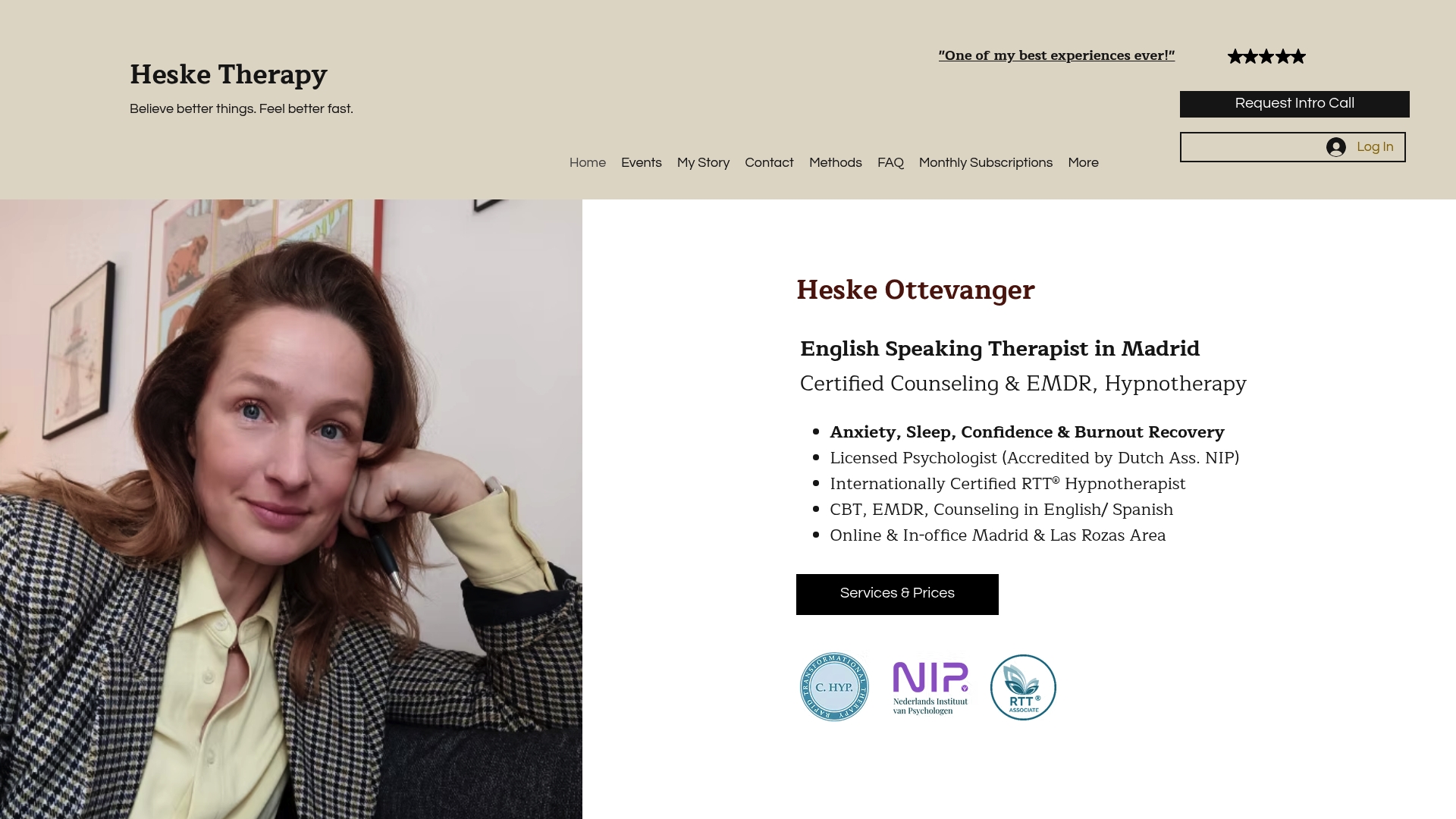
Hesketherapy also offers Rapid Transformational Therapy (RTT), a method that combines hypnosis with CBT and NLP for faster results, as well as a self-hypnosis audio program you can use between sessions. Whether you prefer a pack of online sessions or want to explore all available options, the first step is a free discovery call. Book your consultation and find out which approach fits your needs.
FAQ
What is clinical hypnotherapy for anxiety?
Clinical hypnotherapy is a structured therapeutic method that uses guided relaxation and focused attention to reduce anxiety symptoms. It targets both conscious thought patterns and subconscious fear responses within a safe, collaborative setting.
How many hypnotherapy sessions are needed for anxiety?
Research on cognitive-behavioral hypnotherapy shows significant results in eight 60-minute sessions, though a single personalized session can produce measurable reductions in physical anxiety markers. The number of sessions depends on anxiety severity and the method used.
Is hypnotherapy safe for anxiety management?
Hypnotherapy is a safe, evidence-informed tool for nervous system regulation. You retain full awareness and control throughout every session, and no reputable therapist uses it to override your judgment or autonomy.
Can self-hypnosis help with daily anxiety?
Yes. Self-hypnosis techniques like breath pacing, anchoring, and fractionation can reduce physiological anxiety markers within a single practice session. Daily use between professional sessions reinforces and extends the results achieved in therapy.
Does hypnotherapy work for all types of anxiety?
Hypnotherapy is effective across multiple anxiety types, including generalized anxiety, performance anxiety, social anxiety, and phobias. Technique selection should be personalized to your specific triggers and history for the best outcome.
Recommended
Comments