International Online Therapy Access: A Global Guide
- Heske Ottevanger
- Jul 10
- 8 min read


TL;DR:
International online therapy allows licensed mental health care to be delivered remotely across borders using secure video platforms. It is equally effective as in-person treatment for issues like anxiety, depression, and trauma, when sessions take place in a private setting with reliable internet. Proper licensing, cultural competence, and awareness of legal and privacy standards are essential for choosing and preparing for cross-border therapy.
International online therapy access is professional mental health counseling delivered remotely through secure video platforms, enabling licensed care regardless of where you live. Teletherapy, the recognized clinical term for this model, works as well as in-person treatment for anxiety, depression, burnout, and trauma. Sessions typically run 50 minutes and follow the same confidentiality standards as office-based care. For expats, global citizens, and anyone living far from quality mental health resources, this model removes the single biggest barrier: geography. Hesketherapy serves this exact population, offering English, Spanish, and Dutch sessions to international clients from its Madrid base.
How effective is international online therapy access for real mental health conditions?
Teletherapy produces outcomes comparable to face-to-face therapy for the most common presenting issues. Research confirms comparable effectiveness for anxiety, depression, adjustment difficulties, burnout, and trauma when sessions take place in a private setting with a reliable internet connection. That finding matters because it removes the assumption that remote care is a lesser option.
The therapeutic approaches that translate best to online settings include Cognitive Behavioral Therapy (CBT), Eye Movement Desensitization and Reprocessing (EMDR), and counseling. Rapid Transformational Therapy (RTT) and hypnotherapy also work effectively via video when the client has a quiet, distraction-free space. Not every modality transfers equally, so asking your therapist which techniques they adapt for online delivery is worth doing before your first session.
Access varies globally due to three practical factors: internet reliability, language availability, and time zone coverage. A client in Southeast Asia connecting with a therapist in Europe needs both a stable broadband connection and a scheduling window that works across a significant time difference. Language is equally critical. Receiving therapy in your native language, or at minimum in a language you speak fluently, directly affects how deeply you can process emotional material.
A private, quiet room with a closed door is the minimum setup for effective sessions.
A wired internet connection or strong Wi-Fi reduces the risk of dropped calls mid-session.
Headphones improve audio clarity and add a layer of privacy.
A charged device with an updated video app prevents technical interruptions.
Pro Tip: Test your video connection 10 minutes before your first session. A brief technical check prevents the anxiety of a dropped call right when you are trying to open up.
For clients managing anxiety or burnout, online therapy for anxiety delivered by a culturally informed therapist consistently outperforms generic digital wellness apps. The human relationship is the active ingredient, not the platform.

What does international online therapy actually cost?
Pricing for global online therapy follows two main structures: subscription plans and per-session fees. Subscription platforms charge $69–$110 per week, which typically includes messaging access between sessions. Per-session rates without insurance run approximately $185–$195 per session. That gap is significant, and the right model depends on how frequently you plan to attend.
Insurance changes the math considerably. When international insurance covers teletherapy, copays average $15–$28 per session. That figure assumes your insurer recognizes the therapist’s license and the platform’s credentials. Many international health insurance plans now include mental health coverage, but the specifics vary by policy and country of residence.
For clients without insurance or with limited budgets, lower-cost options exist. University clinic programs offer supervised care with sliding-scale fees as low as $1 per session. Clinicians in training provide the sessions under licensed supervision, which keeps quality standards intact while reducing cost. Publicly funded mental health services in some countries also offer free or subsidized teletherapy for residents.
Pro Tip: Before signing up for any platform, verify insurance acceptance and therapist specialties directly. Checking these upfront prevents surprise billing and confirms the therapist has experience with your specific concern, whether that is trauma, burnout, or anxiety.
Cost model | Typical range | Best for |
Subscription plan | $69–$110/week | Frequent sessions plus messaging |
Per-session, no insurance | $185–$195/session | Occasional or one-off sessions |
Insurance copay | $15–$28/session | Those with qualifying international coverage |
Sliding scale or university clinic | As low as $1/session | Budget-constrained clients |
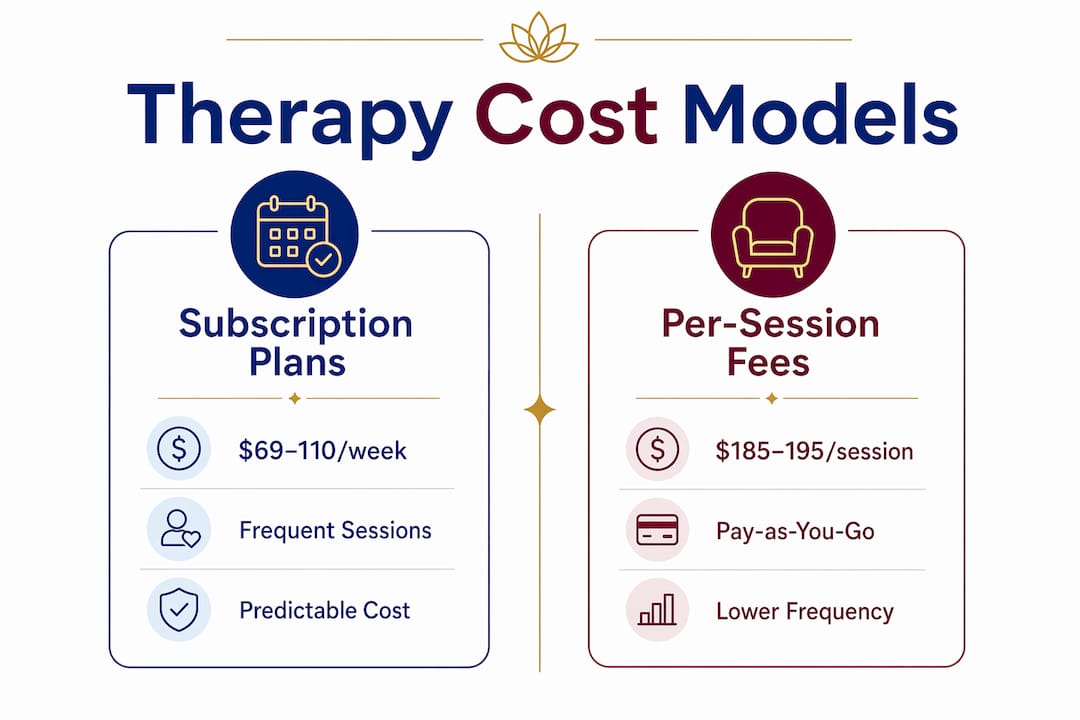
One often-overlooked option is a pack of sessions purchased in advance. Bundled pricing typically reduces the per-session cost and creates a structured commitment that supports consistent progress. Clients who book in blocks tend to attend more regularly, which directly improves outcomes.
What legal and ethical factors affect cross-border therapy?
Licensing is the most complex legal issue in cross-border therapy solutions. A therapist licensed in Spain cannot legally practice under that license in every country where their clients reside. Most professional bodies, including those aligned with American Psychological Association (APA) standards, require therapists to hold a license recognized in the client’s jurisdiction or to operate under specific international exemptions. Reputable providers disclose their licensing status clearly.
Privacy and data security are non-negotiable. Encrypted video sessions and adherence to professional confidentiality standards protect client information across borders. Clients should confirm that their platform uses end-to-end encryption and stores data in compliance with applicable privacy regulations, such as the European Union’s General Data Protection Regulation (GDPR) for clients based in Europe.
The most critical limitation of remote mental health support is crisis care. Online therapy is not appropriate for emergency or acute psychiatric situations. If you are in immediate danger or experiencing a mental health crisis, contact local emergency services. No video platform can substitute for in-person crisis intervention.
Ethical considerations also include:
Informed consent must cover the cross-border nature of the service and its legal limitations.
Therapists should disclose their license type, issuing country, and any restrictions on international practice.
Continuity of care plans should address what happens if technical failure interrupts a session.
Clients should receive clear information about how their data is stored, who can access it, and for how long.
Understanding these factors before you start protects you legally and helps you choose a provider who operates with full transparency.
How to choose and prepare for international online therapy sessions
Selecting the right therapist across borders requires more than checking credentials. Cultural competence is the ability of a therapist to understand and work effectively within your cultural context. For expats and international clients, this matters as much as clinical training. A therapist who has never worked with clients navigating dual-culture identity, relocation stress, or language barriers will miss significant dimensions of your experience.
Follow this process when evaluating a therapist for virtual therapy across borders:
Confirm licensing and specialty. Verify the therapist holds a recognized license and has documented experience with your presenting issue, whether that is anxiety, trauma, burnout, or adjustment disorder.
Assess language fluency. Therapy conducted in your strongest language produces better outcomes. If you are bilingual, ask whether the therapist can switch languages mid-session when needed.
Check time zone compatibility. Coordinate scheduling across time zones before committing. A therapist who can only offer sessions at 2:00 AM your time is not a practical fit.
Review their online therapy experience. Ask directly how long they have been delivering teletherapy and which modalities they use in video sessions.
Request a discovery call. Most reputable therapists offer a brief introductory call before the first paid session. Use it to assess rapport, communication style, and whether they ask meaningful questions about your background.
Prepare your environment. Choose a room where you will not be interrupted, silence your phone, and close other browser tabs before each session.
Set clear expectations. Discuss session frequency, between-session contact, and what happens if you need to reschedule or pause treatment.
The advantages of online counseling include flexibility and access to specialists who would be geographically unavailable otherwise. That flexibility only delivers value when the logistical groundwork is solid. Therapist selection and session preparation are where most clients either set themselves up for progress or inadvertently undermine it.
For clients from diverse cultural backgrounds, multicultural therapy with a therapist trained in cross-cultural dynamics produces meaningfully better outcomes than standard care. The research on this is consistent. Cultural mismatch between client and therapist is one of the leading reasons people drop out of therapy prematurely.
Complementary habits also support your mental health between sessions. Daily practices for managing anxiety and depression, such as structured sleep, physical movement, and social connection, reinforce the work you do in therapy and reduce the time it takes to see results.
Key Takeaways
Effective international online therapy access requires the right therapist, the right platform, and clear knowledge of cost, licensing, and privacy standards before you book your first session.
Point | Details |
Effectiveness is established | Online therapy matches in-person care for anxiety, burnout, trauma, and depression when conducted in a private setting. |
Cost varies widely | Per-session rates range from $1 (sliding scale) to $195 (no insurance), so verifying coverage upfront prevents surprise costs. |
Licensing matters across borders | Confirm your therapist holds a recognized license and understand any legal limitations of cross-border care before starting. |
Cultural competence is non-negotiable | Therapists with cross-cultural training produce better outcomes for expats and international clients. |
Crisis care requires local resources | Online therapy cannot replace emergency services. Always have local crisis contacts available. |
What I have learned from working with international clients
Working with expats and international clients over years of practice has taught me one thing above all: geography is rarely the real barrier. The real barrier is finding a therapist who actually understands what it means to live between cultures, to grieve a home you chose to leave, or to carry anxiety that does not fit neatly into the diagnostic language of your host country.
Teletherapy has genuinely changed what is possible for this population. I have worked with clients across multiple time zones using EMDR for trauma and RTT for deep-rooted anxiety, and the outcomes are real. The video screen does not dilute the therapeutic relationship when both parties show up prepared and committed.
What I see clients underestimate most is the insurance and licensing piece. People spend weeks comparing platforms on price and then discover their insurer does not recognize the provider, or that the therapist’s license does not cover their country of residence. That is a solvable problem, but only if you ask the right questions before you start.
The future of accessible mental health services internationally will involve more integrated licensing frameworks and better insurance portability across borders. Until that infrastructure catches up, the responsibility falls on clients to verify credentials and on therapists to be transparent about what their license covers. The role of online therapy for expats will only grow as more people build lives across borders. The quality of that care depends on both sides of the screen.
— Heske
Hesketherapy: online counseling for international clients
Hesketherapy offers licensed psychotherapy sessions via secure video for English-speaking expats and international clients worldwide. The practice specializes in anxiety, burnout, trauma, and emotional blocks, using integrative methods including CBT, EMDR, RTT, and hypnotherapy.
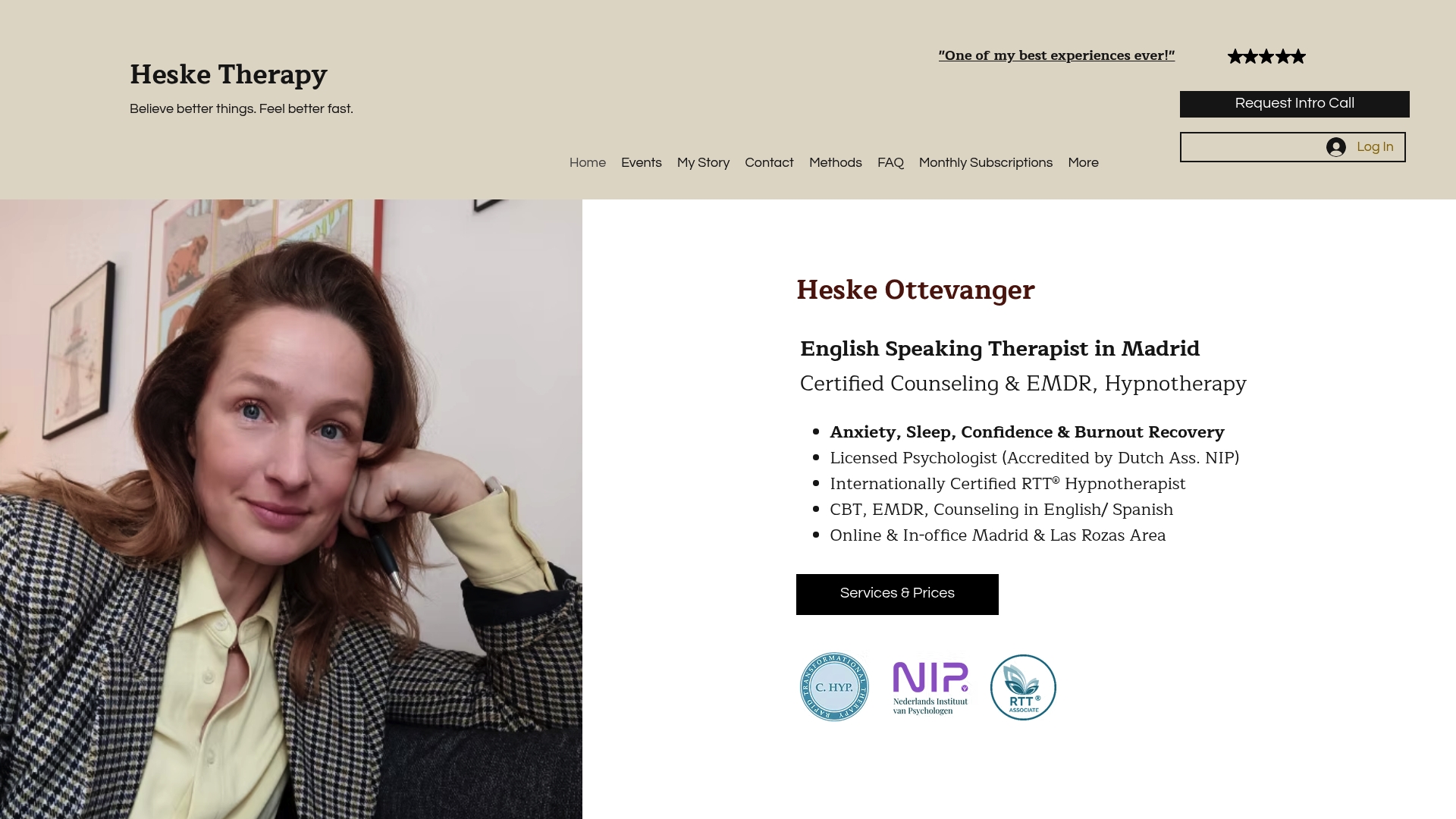
Sessions are available in English, Spanish, and Dutch, with scheduling designed to accommodate clients across time zones. Every session follows strict confidentiality standards and is conducted by a licensed therapist with direct experience in cross-cultural care. Whether you are looking for a single session or a structured program, you can book a session directly online and find a time that works for your schedule and location.
FAQ
What is international online therapy?
International online therapy is licensed mental health care delivered via secure video platforms across national borders. Sessions follow the same professional and confidentiality standards as in-person treatment.
Is online therapy as effective as in-person therapy?
Research confirms that online therapy produces comparable outcomes to in-person care for anxiety, depression, burnout, and trauma when conducted in a private setting with a stable internet connection.
How much does international online therapy cost?
Costs range from $69–$110 per week on subscription platforms to $185–$195 per session without insurance. Insurance copays average $15–$28 per session, and sliding-scale options can be as low as $1 per session.
Can I use online therapy in a mental health crisis?
Online therapy is not suitable for crisis or emergency situations. Contact local emergency services or a crisis line immediately if you are in acute distress.
How do I find a therapist who understands my cultural background?
Look for therapists who list cultural competence or multicultural experience in their profile, and ask directly during a discovery call whether they have worked with clients from your specific cultural or expat background.
Recommended
Comments