RTT Breakthrough Session Explained: What to Expect


TL;DR:
Rapid transformational therapy uses hypnosis to access and reframe subconscious beliefs in about one to three sessions. It focuses on root causes of emotional issues, delivering faster results than traditional therapy through active client participation. Online or in-person, the therapy involves structured phases including regression, reframing, and daily post-session recordings for lasting change.
Rapid Transformational Therapy (RTT) is defined as a short-term, structured therapy that accesses the subconscious mind through clinical hypnosis to identify and reframe the root causes of emotional blocks, anxiety, and trauma. An RTT breakthrough session is the core format of this approach: a single, goal-focused appointment lasting 90–120 minutes that targets one specific issue. Unlike traditional talk therapy, which works at the conscious level over many months, RTT works where beliefs actually form. The American Psychological Association recognizes hypnosis as a state of focused attention and heightened responsiveness to suggestion, which is the foundation RTT builds on. If you have been searching for an rtt breakthrough session explained in plain terms, this article covers the full picture.

What happens during an RTT breakthrough session?
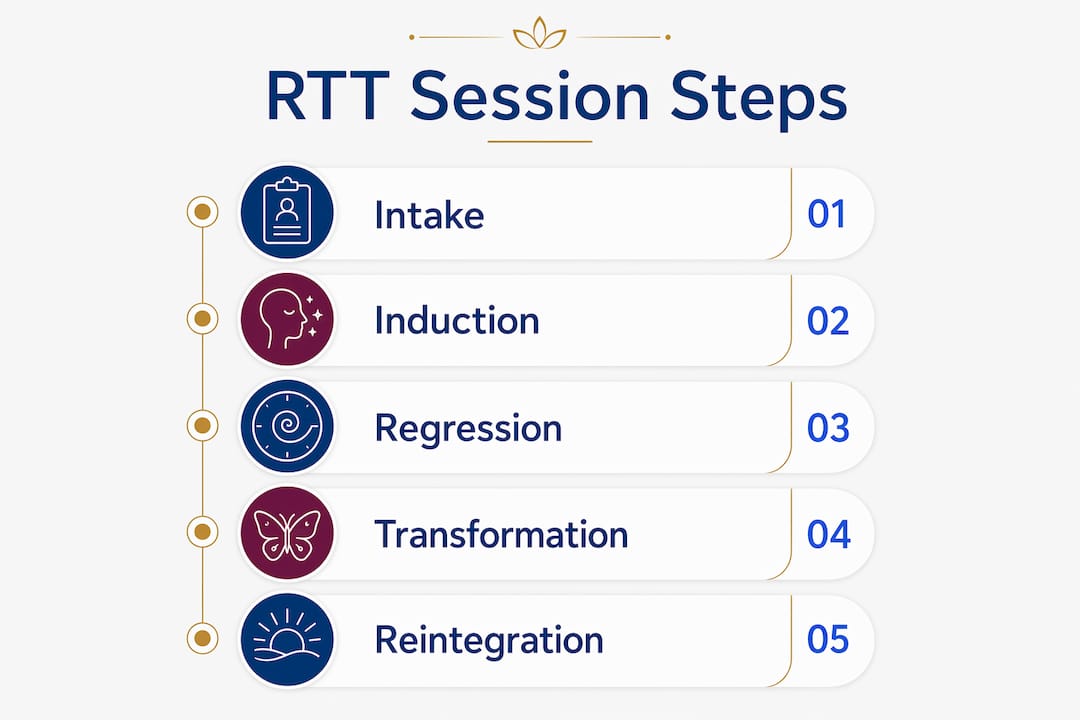
An RTT breakthrough session follows a clear, repeatable structure. Each phase has a specific purpose, and understanding that structure removes the mystery before you walk in.
Intake and goal-setting. The session opens with a focused conversation about the issue you want to address. Your therapist clarifies the goal, asks about the history of the problem, and sets the intention for the session. This is not casual small talk. It directly shapes the hypnosis work that follows.
Hypnosis induction. Your therapist guides you into a deeply relaxed, focused state using a clinical hypnosis induction. You remain fully aware throughout. The hypnotic state is simply one of concentrated attention, not unconsciousness or loss of control.
Regression and root-cause exploration. Once in hypnosis, your therapist uses regression techniques to guide you back to emotionally significant memories. Regression accesses memories safely to reframe and reduce their emotional charge. This is where RTT differs most sharply from surface-level approaches. You find the origin of the belief, not just its symptoms.
Reframing and reprogramming. Your therapist helps you reinterpret those memories through an adult, empowered perspective. Limiting beliefs formed in childhood or during trauma get replaced with accurate, supportive ones. This is the core of the RTT method, combining principles from CBT and NLP with hypnotic suggestion.
Post-session audio recording. After the session, you receive a personalized audio recording. Clients listen daily for a minimum of 21 days to consolidate the changes made during hypnosis. Many clients report noticing new layers of insight each time they listen.
Pro Tip: Write down your main goal before the session and keep it to one specific issue. Broad goals like “fix everything” dilute the session’s focus and reduce its effectiveness.
The full session typically runs 90 minutes to 2 hours. Expect to feel tired afterward. That fatigue is normal and reflects genuine mental work, not a side effect to worry about.
How does RTT differ from traditional therapy?
RTT targets the subconscious mind directly. Traditional talk therapy works primarily at the conscious level, helping clients analyze thoughts and behaviors through conversation. That process has real value, but it rarely reaches the subconscious beliefs that drive emotional reactions in the first place.
RTT combines clinical hypnosis with CBT and NLP to reframe subconscious beliefs at their origin. This integration is what makes the approach distinct. CBT provides the cognitive reframing structure. NLP contributes language patterns that shift internal representations. Hypnosis creates the access point. No single one of these methods alone achieves what the combination does.
“RTT does not ask you to talk your way out of a problem your conscious mind did not create. It goes to the source, finds the belief that started the pattern, and changes it there. That is why results can appear after one session rather than after one year.”
The speed of results is the most frequently cited difference. Many clients achieve significant results within 1–3 sessions, compared to months or years in conventional therapy. That is not a marketing claim. It reflects the method’s focus on root causes rather than symptom management.
RTT also differs from standard hypnotherapy. General hypnotherapy often uses direct suggestion to change behavior. RTT adds regression, psychodynamic insight, and active reframing. The client is not a passive recipient of suggestions. The client participates in understanding and rewriting the belief. That active role is central to why the changes tend to last.
Feature | RTT | Traditional talk therapy |
Primary access point | Subconscious mind | Conscious mind |
Session frequency | 1–3 sessions typical | Months to years |
Core techniques | Hypnosis, CBT, NLP, regression | Conversation, analysis, behavioral tools |
Client role | Active participant in reframing | Reflective, conversational |
Focus | Root cause of belief | Symptom management and coping |
RTT also aligns with trauma-informed and person-centered care standards adopted in UK clinical and addiction recovery settings in 2026. That alignment matters because it means RTT is not a fringe method. It fits within recognized frameworks for ethical, client-centered care.
RTT session logistics: length, online vs. in-person, and how to prepare
A standard RTT session runs 90 minutes to 2 hours. Block out the full 2 hours and do not schedule anything demanding immediately after. Your mind needs time to settle.
Online vs. in-person sessions
Online RTT sessions are fully effective when the environment is managed correctly. Success depends on the client maintaining a private, quiet space with zero interruptions for the full session. This is not optional. A disruption mid-hypnosis breaks the trance state and can cut the session short before the reframing work is complete.
In-person sessions give your therapist more direct control over the environment. Online sessions give you more flexibility, which matters if you are an expat living abroad or traveling. Hesketherapy offers both formats, and the clinical outcomes are comparable when clients prepare properly.
How to prepare for your session
Eat a light meal beforehand. Hunger is distracting and works against relaxation.
Avoid caffeine for at least 2 hours before the session.
Choose comfortable clothing. Physical comfort supports mental relaxation.
Write down 2–3 specific examples of how your issue shows up in daily life. Your therapist will use these during the regression phase.
For online sessions, test your audio and video connection in advance. Use headphones for better sound quality during the induction.
Pro Tip: Tell someone in your home that you are not to be disturbed for 2 hours. A locked door and a “do not knock” note are not excessive. They protect the depth of your session.
After the session
Listen to your personalized audio recording every day for at least 21 days. Many clients notice the biggest shifts between days 7 and 14 as the subconscious integrates the new beliefs. Emotional responses in the days after a session, including vivid dreams, unexpected tears, or sudden calm, are normal signs that the work is continuing.
Who benefits from RTT, and what results can you expect?
RTT is well-suited for people dealing with anxiety, trauma, phobias, emotional blocks, low self-esteem, and deeply ingrained habits. It also shows strong results in addiction recovery contexts, where subconscious beliefs about identity and worth drive relapse patterns. You can read more about RTT for anxiety relief and how it applies to specific emotional challenges.
Clients describe feeling lighter, calmer, and less affected by previous emotional triggers after RTT sessions. That shift is not just subjective. It reflects a genuine change in how the subconscious processes the original memory or belief. The emotional charge attached to a trigger reduces because the belief that created it has been reframed.
Common outcomes clients report include:
Reduced anxiety in situations that previously felt unmanageable
Improved confidence and clearer sense of self-worth
Emotional distance from traumatic memories without suppression
Fewer physical symptoms tied to stress, such as tension headaches or disrupted sleep
Greater ability to set boundaries and make decisions without guilt
RTT fits within the role of trauma-informed care in modern mental health practice. Person-centered approaches recognize that lasting change requires addressing the emotional learning stored in the body and mind, not just changing surface behaviors. RTT does exactly that. Results are not guaranteed in a single session for every person or every issue, but significant transformation within 1–3 sessions is the intended and frequently reported outcome.
Key Takeaways
An RTT breakthrough session is a 90–120 minute, subconscious-focused therapy that combines clinical hypnosis, CBT, and NLP to identify and reframe limiting beliefs at their root, typically producing significant results within 1–3 sessions.
Point | Details |
Session structure | Each session follows five phases: intake, induction, regression, reframing, and post-session audio reinforcement. |
Speed of results | Many clients report significant change within 1–3 sessions, unlike months-long traditional therapy. |
Post-session audio | Daily listening for a minimum of 21 days consolidates subconscious changes made during hypnosis. |
Online preparation | A private, quiet, interruption-free environment is required for online sessions to maintain trance depth. |
Best-fit issues | RTT addresses anxiety, trauma, phobias, emotional blocks, low self-esteem, and habit-based patterns. |
What I have learned from working with RTT clients
The question I hear most before a first session is: “Will I lose control?” The answer is no, and understanding why matters more than just being reassured. In hypnosis, your critical mind is quieter, but it is still present. You will not say or do anything against your values. What changes is your willingness to look at old memories without the usual defenses in the way.
What surprises most clients is not the depth of the session. It is the speed of the shift. People who have carried anxiety for 20 years sometimes walk out feeling genuinely different after 90 minutes. That does not mean the work is done. The audio recording and the integration period are not optional extras. They are where the session becomes permanent.
The clients who get the least from RTT are the ones who treat it passively, as if the therapist does all the work. RTT asks you to be present and willing. You do not need to believe it will work. You just need to show up without resistance. Skepticism is fine. Closed-off is not.
For anyone hesitant about trying therapy at all, RTT is often a better entry point than traditional approaches. It is time-limited, goal-focused, and does not require you to talk about your feelings for months before anything changes. If you are curious about whether it could work for you, a free discovery call is a low-pressure way to find out.
— Heske
RTT sessions at Hesketherapy: where to start
Hesketherapy offers RTT breakthrough sessions for clients dealing with anxiety, trauma, burnout, emotional blocks, and related challenges, both online and in-person in Madrid.
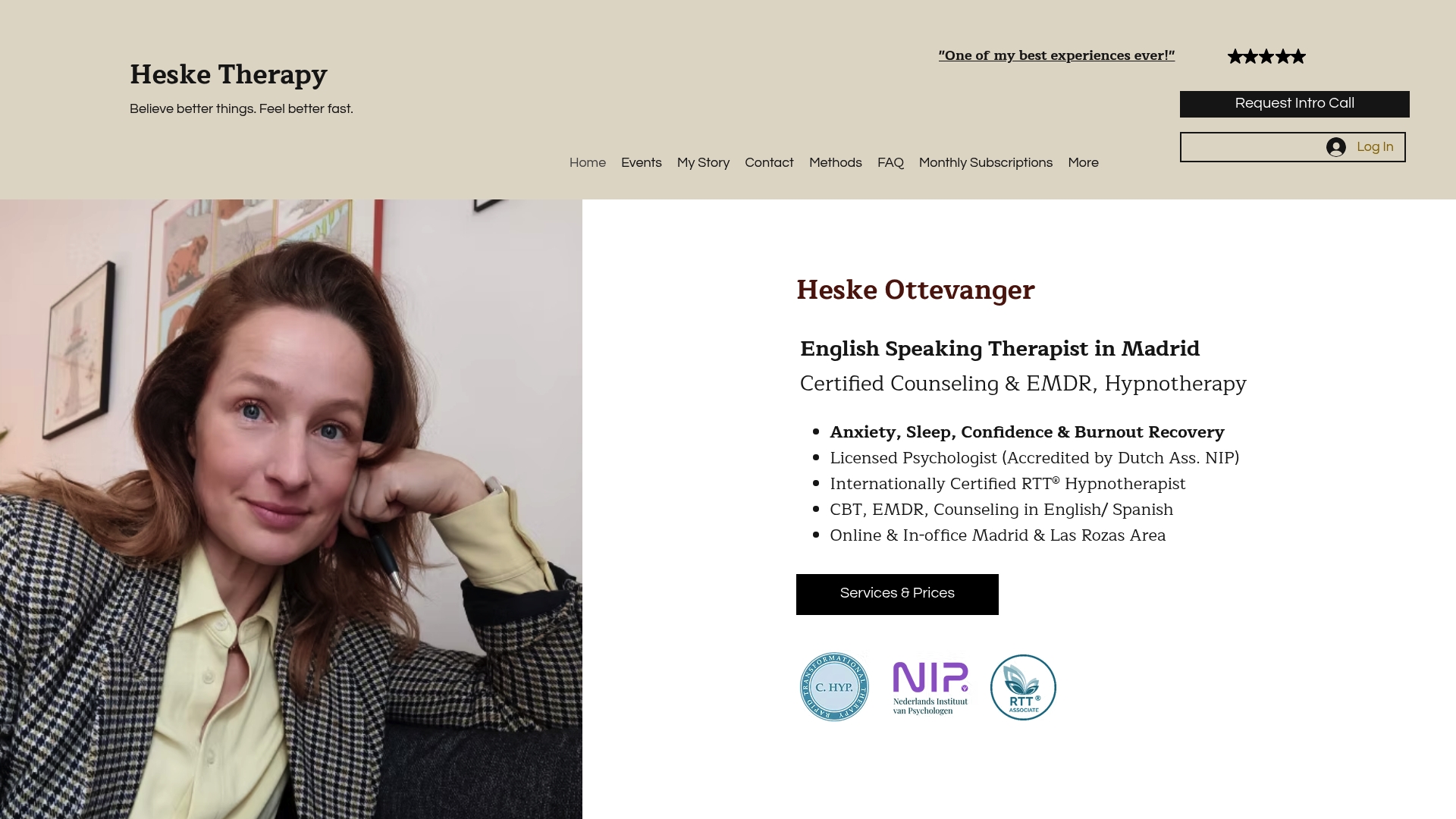
Sessions are personalized from the first contact. Hesketherapy works in English, Spanish, and Dutch, which makes it a practical choice for expatriates and international clients who want therapy in their own language. Each client receives a customized post-session audio recording and follow-up support to reinforce the work done in session. If you are ready to understand what an RTT session can do for your specific situation, visit the RTT therapy page at Hesketherapy to learn more and book a free discovery call.
FAQ
What is an RTT breakthrough session?
An RTT breakthrough session is a structured, 90–120 minute therapy that uses clinical hypnosis, CBT, and NLP to identify and reframe subconscious beliefs driving emotional blocks, anxiety, or trauma. It is goal-focused and typically addresses one core issue per session.
How long does an RTT session last?
A standard RTT session lasts 90 minutes to 2 hours. Clients should block out the full 2 hours and avoid scheduling demanding activities immediately after.
Can RTT sessions be done online?
Yes. Online RTT sessions are fully effective when the client maintains a private, quiet, and interruption-free environment for the entire session. Using headphones and testing audio and video connections in advance improves session quality.
How many RTT sessions do I need?
Many clients achieve significant results within 1–3 sessions. The number depends on the complexity of the issue, but RTT is designed for short-term, intensive work rather than ongoing weekly appointments.
What do I do after an RTT session?
Listen to your personalized audio recording every day for a minimum of 21 days. This daily listening consolidates the subconscious changes made during the session and is a required part of the RTT process, not an optional add-on.
Recommended
Comments