Types of Burnout Recovery Strategies: A Practical Guide


TL;DR:
Burnout recovery requires a tailored, multi-phase approach that addresses psychological, physical, social, and structural factors.
Matching recovery strategies to specific burnout types and phases improves effectiveness and prevents relapse.
Burnout recovery is defined as a structured, multi-phase process of restoring energy, emotional function, and professional engagement after chronic stress depletes them. The types of burnout recovery strategies that work best depend on your specific burnout type, not on generic wellness advice. Frameworks like the “Four Rs of Recovery” (Release, Reframe, Realign, Reconnect) and phased return-to-work protocols give you a map. Without that map, you risk applying the wrong fix to the wrong problem, which extends recovery or triggers relapse. Moderate burnout typically takes 3–6 months to resolve, while severe burnout can stretch from 6 months to 2 years. That timeline alone makes early, targeted action the most important decision you can make.
What are the main types of burnout recovery strategies?
Recovery from burnout does not follow a single path. The most effective approach combines four categories of strategies, each targeting a different dimension of the problem.
Psychological strategies address the mental patterns that sustain burnout. These include cognitive reframing through therapies like CBT (Cognitive Behavioral Therapy) or ACT (Acceptance and Commitment Therapy), mindfulness meditation, and working through perfectionism or rigid work-identity beliefs. CBT and ACT improve burnout recovery outcomes by replacing maladaptive thought patterns with more flexible ones. That shift is not cosmetic. It changes how you respond to pressure before it accumulates again.
Physical strategies restore the biological systems burnout damages. Sleep hygiene is the foundation, since burnout elevates cortisol and disrupts restorative sleep. Moderate physical activity, adequate nutrition, and limiting stimulants all support nervous system repair.

Social strategies rebuild the support network that chronic stress erodes. Deliberate reconnection with trusted people and clear boundary setting are among the strongest protective factors against relapse.
Structural strategies change the conditions that caused burnout in the first place. These include workload adjustments, role redesign, and phased return-to-work protocols. Without structural change, psychological recovery alone rarely holds.
How should burnout recovery strategies be tailored to burnout types?
The “Four Rs of Recovery” framework maps specific strategies to three distinct burnout types: Overload, Overwhelm, and Underwhelm. Using the wrong strategy for your burnout type can make symptoms worse, not better.
Burnout type | Core experience | Best starting strategy | Why it fits |
Overload | Too much, too fast, too long | Reframe | Challenges distorted beliefs driving overwork |
Overwhelm | Loss of control, helplessness | Release | Reduces physiological stress load first |
Underwhelm | Boredom, disengagement, meaninglessness | Realign | Reconnects with values and new sources of meaning |
Overload burnout hits people who push past their limits because they believe they must. The primary recovery tool is Reframe: using CBT or similar approaches to challenge the perfectionism and over-responsibility beliefs that keep the cycle running. Rest alone does not fix Overload burnout because the person typically cannot tolerate rest without guilt.
Overwhelm burnout is driven by a felt loss of control. The Release strategy prioritizes reducing physiological stress first, through breathwork, nervous system regulation, and removing immediate stressors. Jumping straight into reframing or goal-setting at this stage backfires because the nervous system is still in threat mode.
Underwhelm burnout is the least recognized type. It comes from chronic under-stimulation, boredom, or a mismatch between your skills and your role. Applying meditation or passive rest to this type can deepen disengagement rather than relieve it. The Realign strategy works here by introducing mastery experiences outside work, which reactivate the brain’s reward circuits safely before work identity is rebuilt.
Pro Tip: Before choosing a recovery method, identify your burnout type first. Ask yourself: “Am I exhausted from too much, from feeling trapped, or from feeling pointless?” Your honest answer determines your starting point.
What are effective physical and behavioral burnout recovery strategies?
Physical recovery is not optional. Burnout causes measurable biological changes, particularly in cortisol regulation and sleep architecture, that require direct intervention.
Sleep restoration
Burnout disrupts sleep through elevated cortisol, producing restless, unrefreshing nights even when you are exhausted. Sleep hygiene is a clinical intervention here, not a lifestyle preference. Consistent wake times, a cool and dark sleep environment, and eliminating screens before bed all help reset the cortisol rhythm. If sleep does not improve within 3–4 weeks of consistent hygiene practices, clinical support is warranted.
Physical activity without performance goals
Exercise is one of the most evidence-backed coping strategies for burnout, but the type matters. A 10-minute walk improves mood for up to 2 hours, and consistent moderate exercise rebuilds physical resilience over weeks. More specifically, 40-minute walks in natural environments reduce rumination significantly more than urban walks. The goal is movement without metrics. Drop the fitness tracker and walk for the sake of walking.
Behavioral adjustments
Limit caffeine after noon. Caffeine raises cortisol levels and interferes with the nervous system recovery that sleep is supposed to provide.
Reduce multitasking. Cognitive load is a real physiological burden during burnout recovery. Single-task work protects limited mental energy.
Schedule recovery rituals. Block time for activities that genuinely restore you, whether that is reading, cooking, or sitting outside. These are not rewards for productivity. They are part of the recovery protocol.
Pro Tip: Watch for “performative rest.” Treating leisure as another productivity task undermines true recovery. Real rest has no agenda, no output, and no optimization.
How to manage the social and work environment during burnout recovery
The social and structural dimensions of recovery are where most people cut corners. That is also where relapse begins.
Rebuild social connection deliberately. Burnout isolates. The shame of struggling professionally makes people withdraw from the people who could help most. Honest acknowledgment of burnout and overcoming the fear of professional consequences is a critical first step. Start with one or two trusted people, not a full social calendar.
Set and communicate boundaries clearly. Vague boundaries collapse under pressure. Name specific limits: no work emails after 7:00 PM, no meetings before 10:00 AM during recovery, one protected day off per week. Write them down and share them with the people who need to know.
Use a phased return to work. Returning at full intensity immediately causes relapse within 6–8 weeks in a significant portion of cases. A phased return starting at 50–60% capacity for 4–6 weeks produces better outcomes at the 12-month mark. This is not weakness. It is the evidence-based approach. A practical step-by-step recovery workflow can help you structure this phase.
Make structural changes, not just behavioral ones. If the workload, the role, or the culture caused the burnout, returning to the same conditions without change is not recovery. It is a countdown to the next episode. Negotiate workload reductions, role adjustments, or schedule changes before returning full time.
Know when to seek professional help. If symptoms persist beyond 6–8 weeks of self-directed recovery, or if depression, anxiety, or physical symptoms like migraines or sleep disorders are present, professional therapy is the right next step. Therapy for burnout recovery provides structured support that self-help cannot replicate.
Which recovery strategies fit different phases and severities?
Recovery evolves. The strategies that help in week one are not the same ones you need in month six.
Recovery phase | Focus | Key strategies | Expected duration |
Acute (immediate) | Rest and stabilization | Sleep hygiene, removing stressors, social support | Weeks 1–4 |
Rebuilding | Gradual re-engagement | Moderate exercise, CBT/ACT, phased work return | Months 1–3 |
Consolidation | Sustainable habits | Boundary maintenance, mastery activities, relapse prevention | Months 3–6+ |
Maintenance | Long-term resilience | Ongoing therapy, structural safeguards, regular review | Ongoing |
Moderate burnout follows a 3–6 month recovery arc when strategies are applied consistently. Severe burnout requires 6 months to 2 years, and that timeline is not a failure. It reflects the depth of biological and psychological depletion involved. Rushing the rebuilding phase is the most common mistake people make.
The maintenance phase is where most guides stop. It is also where relapse risk is highest. Deliberate social engagement and boundary setting during this phase protect against recurrence. Treat maintenance as an active practice, not a passive state. You can also explore natural recovery approaches that support long-term resilience without relying solely on clinical intervention. For a broader look at how recovery transforms daily life, the changes extend well beyond work performance.
Key takeaways
Burnout recovery requires matching your strategy to your burnout type, your recovery phase, and the biological, psychological, social, and structural factors at play.
Point | Details |
Match strategy to burnout type | Overload, Overwhelm, and Underwhelm each respond to different starting approaches. |
Prioritize sleep as a clinical intervention | Cortisol dysregulation from burnout requires targeted sleep hygiene, not generic rest advice. |
Phase your return to work | Starting at 50–60% capacity for 4–6 weeks reduces relapse risk significantly. |
Address structural causes | Behavioral recovery without changing the conditions that caused burnout will not hold. |
Maintenance is active, not passive | Ongoing boundary setting and social connection protect against relapse long after symptoms resolve. |
What I have learned from working with people through burnout
The shame barrier is the most underestimated obstacle in burnout recovery. People spend weeks, sometimes months, minimizing what they are experiencing because they fear how it will look professionally. By the time they seek help, the depletion is far deeper than it needed to be. Acknowledging burnout early is not a sign of weakness. It is the decision that shortens recovery time.
The second thing I have seen consistently is the trap of performative rest. People take a week off, fill it with self-improvement activities, and return to work more depleted than when they left. Real recovery requires unstructured time with no output expected. That is genuinely hard for high achievers, and it is exactly why it matters.
The third insight is one that most guides miss entirely: the wrong strategy for your burnout type actively makes things worse. I have worked with people who tried meditation during Underwhelm burnout and felt more disconnected and hopeless as a result. Matching the method to the mechanism is not a refinement. It is the whole game. If you want to understand the signs and root causes before choosing a strategy, that clarity will save you months of misdirected effort. For those looking to deepen their healing practice beyond the basics, sustainable recovery is built in layers, not in a single intervention.
— Heske
Hesketherapy’s approach to burnout recovery
Burnout recovery works best when it combines evidence-based therapy with a clear understanding of your specific burnout type and phase.
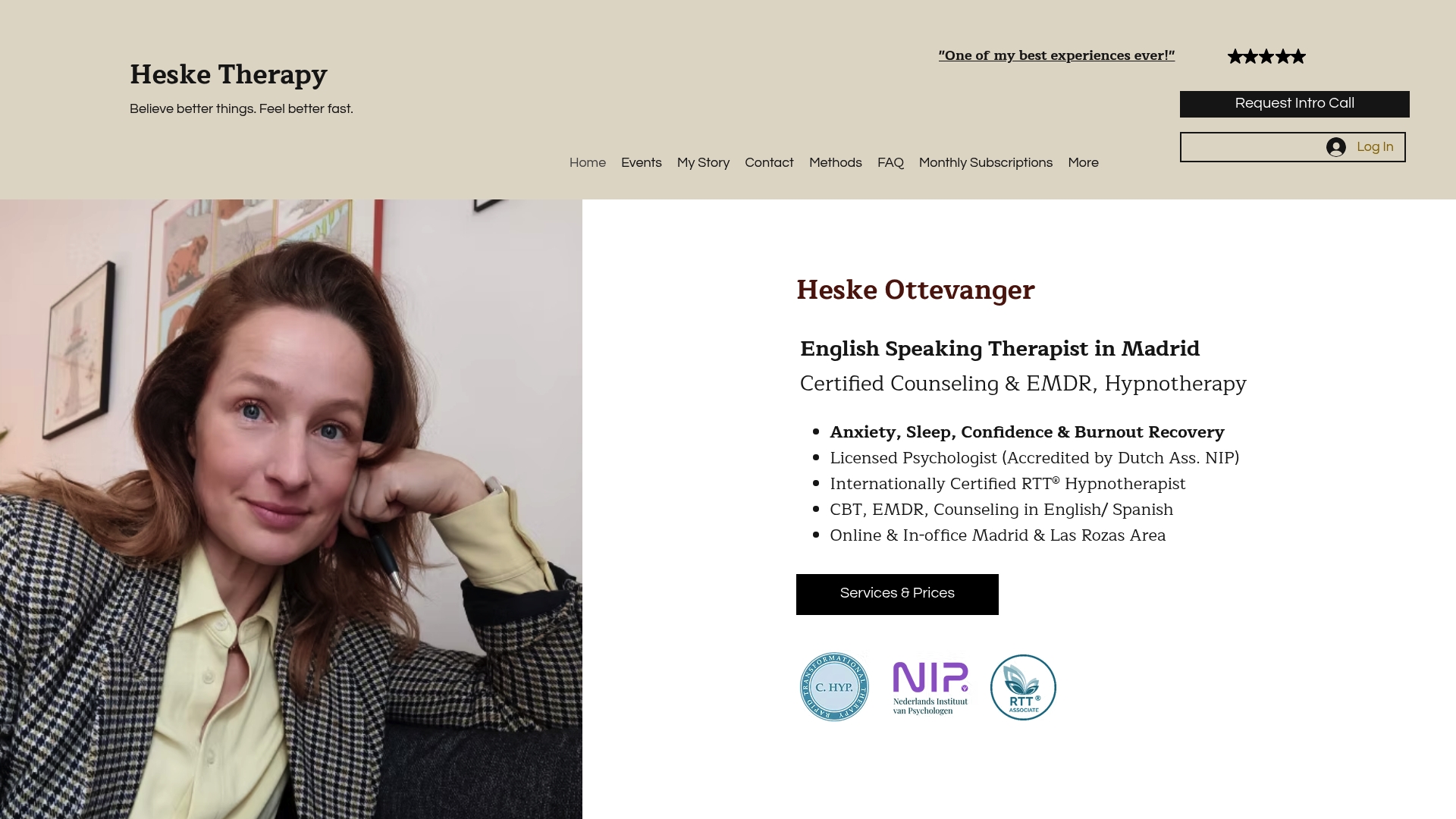
Hesketherapy specializes in exactly that combination. Using Rapid Transformational Therapy (RTT), EMDR, CBT, and hypnotherapy, Hesketherapy works with clients to address the psychological roots of burnout, not just the surface symptoms. Sessions are available online and in-office in Madrid, in English, Spanish, and Dutch, making support accessible for expatriates and international clients wherever they are. If you are ready to move from exhaustion to clarity, a free discovery call is the first step.
FAQ
How long does burnout recovery typically take?
Moderate burnout takes 3–6 months of intentional recovery. Severe burnout can require 6 months to 2 years, depending on depth of depletion and quality of support.
What are the three types of burnout?
The three types are Overload (too much demand), Overwhelm (loss of control), and Underwhelm (chronic disengagement or boredom). Each response to different recovery strategies.
Can the wrong recovery strategy make burnout worse?
Yes. Applying meditation or passive rest to Underwhelm burnout can deepen disengagement. Matching your strategy to your burnout type is the most critical factor in effective recovery.
When should I return to work after burnout?
A phased return starting at 50–60% of normal capacity for 4–6 weeks produces better 12-month outcomes than returning at full intensity, which frequently causes relapse within 6–8 weeks.
Is therapy necessary for burnout recovery?
Therapy is not always required for mild burnout, but it significantly improves outcomes for moderate to severe cases. CBT, ACT, and RTT each address the cognitive and emotional patterns that sustain burnout beyond the initial depletion.
Recommended
Comments