Manage anxiety fast: rapid relief methods and therapy


TL;DR:
Living in Madrid as an expat can provoke intense anxiety from bureaucracy, language barriers, and cultural adjustment.
Effective management involves preparing tools like grounding techniques, worry scheduling, and therapy while maintaining consistent self-care routines.
Living in Madrid as an expat is exhilarating until the weight of it all hits at once. The bureaucracy, the language barrier, the distance from your support network, the pressure to perform at work while adjusting to an entirely new culture. For many English-speaking expats, this combination creates a perfect storm of chronic worry, physical tension, and sleepless nights. Anxiety does not wait for a convenient moment. It shows up during your commute, before a work presentation, or at 2 a.m. when everything feels impossible. This guide gives you practical, evidence-backed strategies and a clear-eyed look at therapy options that actually work fast.
Table of Contents
Key Takeaways
Point | Details |
Prepare with the right tools | Having a calm kit and flexible mindset makes quick relief strategies effective. |
Use evidence-backed rapid techniques | Grounding methods like the 5-4-3-2-1 exercise offer fast anxiety reduction. |
Choose therapy wisely | CBT, RTT, and new therapies offer different speeds and results—pick what suits you best. |
Troubleshoot and seek support | If anxiety persists or worsens, don’t hesitate to consult a specialist. |
Blend quick fixes with deep work | Lasting change comes from combining immediate tools with ongoing therapy. |
Preparation: What you need to manage anxiety rapidly
Before you can apply any relief technique effectively, you need to be set up for it. Think of managing anxiety like fighting a fire: having the right tools ready before the flames spread makes all the difference. Many expats make the mistake of scrambling for help mid-crisis, which only adds to the panic.
Start by gathering specific information about your own anxiety. When does it spike? Is it triggered by work emails, social situations, or quiet moments alone? Keeping even a rough mental note of your triggers helps you anticipate and prepare rather than simply react. A small notebook or a notes app on your phone works perfectly.
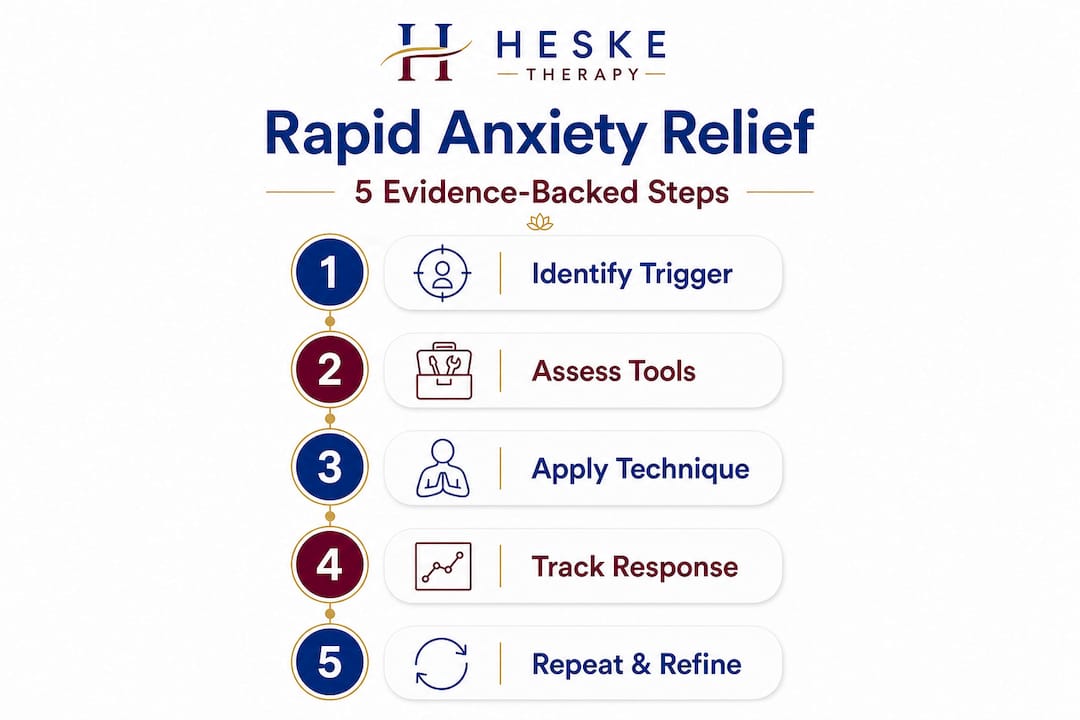
Next, consider what anxiety therapy types are available and which tools suit your lifestyle. Not every method works for every person, and that is completely normal. Approaching anxiety management with curiosity rather than desperation dramatically improves your chances of finding something that sticks.
Here is a quick-reference table of rapid relief methods and what you need for each:
Method | What you need | Time required |
Guided breathing | Quiet space, app optional | 3 to 5 minutes |
5-4-3-2-1 grounding | Any environment works | 2 to 3 minutes |
Worry time scheduling | Notebook or phone notes | 15 minutes daily |
Progressive muscle relaxation | Quiet room, loose clothing | 10 to 15 minutes |
Therapy session (CBT/RTT) | Device or in-person access | 60 to 90 minutes |
According to NICE stepped care guidelines, the best approach for generalized anxiety disorder (GAD) starts with low-intensity self-help before escalating to intensive therapy or medication. That means your preparation tools are not just a temporary fix; they are the foundation everything else builds on.
Key tools to have ready:
A meditation or breathing app (Calm, Insight Timer, or Headspace work well)
A quiet space you can access within minutes, even a bathroom stall counts
The contact information for a trusted therapist or mental health professional
A notebook for jotting trigger patterns or racing thoughts
Soothing audio, whether music, nature sounds, or a guided body scan
Pro Tip: Build a physical “calm kit.” Pack a small bag or drawer with your headphones, a notebook, a grounding object like a smooth stone, and a printed list of your go-to techniques. Having everything in one place removes the friction of finding it when you are already overwhelmed.
Step-by-step: Evidence-backed rapid anxiety relief techniques
With your tools prepared, you can start applying simple but powerful techniques to cut anxiety off before it escalates. The key insight here is that anxiety feeds on itself. The faster you interrupt the cycle, the less fuel it has to grow.
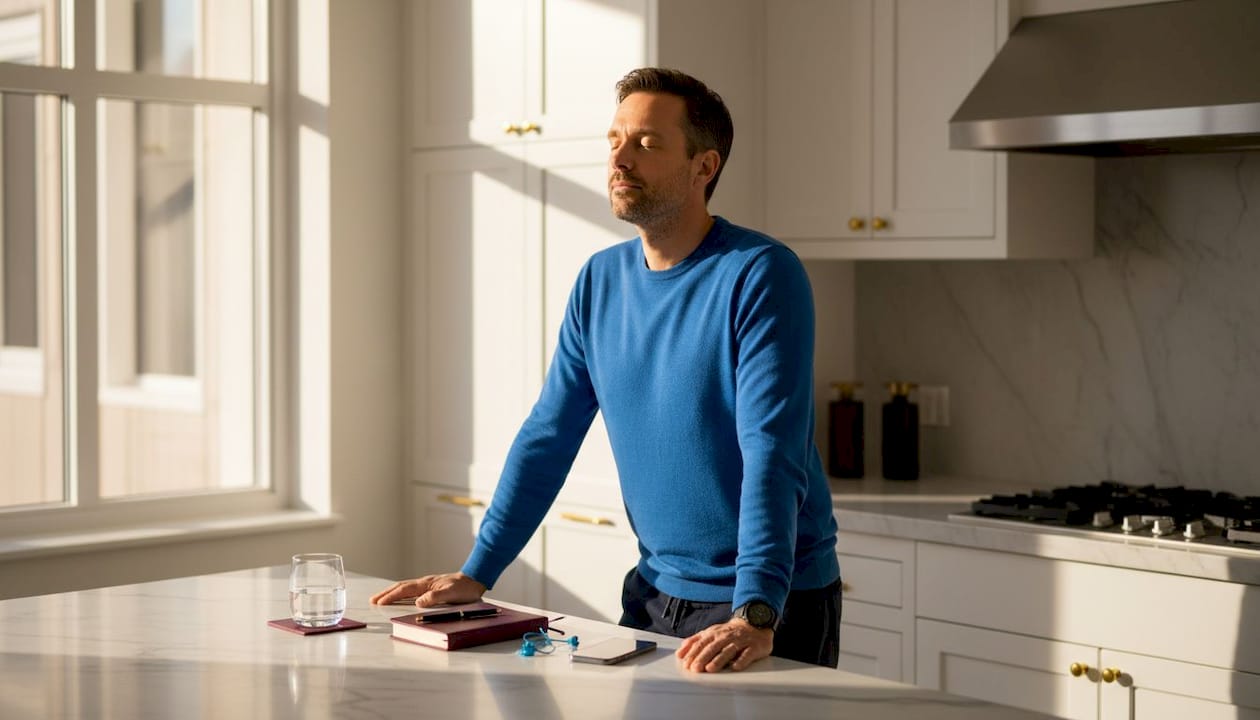
The 5-4-3-2-1 grounding technique is one of the most reliable ways to stop an anxiety spiral in its tracks. It works by pulling your attention into your physical senses, which short-circuits the mental loop of worry.
Here is how to use it:
Name 5 things you can see. Look around the room. Be specific: “a blue pen,” “a crack in the ceiling.” This forces present-moment attention.
Name 4 things you can physically feel. The pressure of your feet on the floor, the fabric of your shirt, the temperature of the air on your skin.
Name 3 things you can hear. Traffic outside, a clock ticking, your own breathing.
Name 2 things you can smell. Even subtle scents count: coffee, fresh air from a window, your own hand cream.
Name 1 thing you can taste. This final step often gets a small laugh, which itself has a calming effect.
The 3-3-3 rule is even faster. Look around and name three things you see, three sounds you hear, then move three parts of your body, like your fingers, shoulders, and feet. It takes less than 90 seconds and is ideal when you need a quick reset before a meeting or stressful conversation.
Worry time scheduling sounds deceptively simple, but it is highly effective. You set aside a specific 15-minute window each day, say 6 p.m., and allow yourself to worry freely during that window. Whenever anxious thoughts arise outside that time, you write them down and mentally defer them. This trains your brain to contain worry rather than let it bleed into every part of your day.
Research supports this strongly. Grounding techniques, worry scheduling, and the 3-3-3 rule are recognized CBT and ACT tools for interrupting anxiety spirals quickly and restoring a sense of control, even in high-stress environments.
You can also explore types of rapid therapy that incorporate these self-help tools within a structured therapeutic framework. For expats whose schedules are already packed, rapid therapy methods can provide structure without demanding hours each week.
Pro Tip: Practice these techniques on low-anxiety days first. Like any skill, they work best when they are already familiar. Trying a grounding exercise for the first time mid-panic is like reading a fire escape map while the building is burning. Regular daily practice, even for five minutes, creates automatic recall under pressure. Approaches like RTT for rapid anxiety results also use repetition to rewire how your mind responds to stress triggers.
Therapy methods: What works best for rapid anxiety relief?
While DIY strategies can help on-the-spot, many people benefit most from targeted therapy, especially methods designed to create rapid change. As an expat in Madrid, your access to English-speaking, culturally aware support matters enormously. Here is a clear breakdown of the main options.
Cognitive behavioral therapy (CBT) is the most widely researched treatment for anxiety. It works by identifying and changing distorted thought patterns that fuel worry. CBT typically runs for 8 to 16 sessions and gives you practical skills you keep using long after therapy ends. It is highly structured, which suits expats who appreciate having a clear framework.
Rapid Transformational Therapy (RTT) works differently. Developed by Marisa Peer, RTT combines elements of hypnotherapy, CBT, and neuro-linguistic programming to identify root causes of anxiety at a subconscious level. Many clients notice significant shifts within one to three sessions. If you are curious about the details, RTT for anxiety explains the mechanism clearly.
Applied relaxation is a structured technique originally developed for GAD that teaches you to relax specific muscle groups on demand. It requires consistent practice but produces reliable physical calming effects, making it useful for people whose anxiety is primarily physical: tight chest, racing heart, shallow breathing.
Acceptance and Commitment Therapy (ACT) teaches you to stop fighting anxious thoughts and instead commit to values-driven action despite the presence of anxiety. Rather than trying to eliminate worry, you learn to change your relationship with it. This is particularly helpful for expats dealing with ongoing uncertainty, since it builds psychological flexibility rather than trying to create false certainty.
Here is a comparison of the major options:
Therapy | Speed of relief | Ideal for | Sessions needed |
CBT | Moderate (weeks) | Structured learners | 8 to 16 |
RTT | Fast (1 to 3 sessions) | Root cause, rapid change | 1 to 3 |
Applied relaxation | Moderate (weeks) | Physical anxiety symptoms | 8 to 12 |
ACT | Gradual | Chronic uncertainty | 8 to 12 |
Medication (SSRIs) | Slow (weeks) | Severe or treatment-resistant cases | Ongoing |
Key considerations per approach:
CBT: Evidence-based and widely available; requires active homework between sessions
RTT: Fast results; works well combined with other therapies; CBT for expats in Madrid and RTT together create a strong combined approach
ACT: Excellent for long-term resilience; less focused on symptom elimination
SSRIs: The NICE guideline recommendation for first-line medication when therapy is insufficient; not a standalone fix
It is also worth noting that the standard NICE guidelines have received significant criticism from professional bodies including the British Psychological Society, which argues the guidelines are outdated and ignore effective options like ACT and psychodynamic therapy. In practice, many clinicians already work beyond these limits. Practical CBT techniques for anxiety are a solid starting point, but your therapist should be willing to adapt based on what actually works for you.
Maintaining progress and troubleshooting setbacks
Even with fast relief tools and effective therapy, maintaining long-term progress can be challenging, especially when living far from home. Knowing what to expect prevents small setbacks from feeling like failures.
Maintenance looks less glamorous than the breakthrough moments. It means setting phone reminders to practice your grounding exercises. It means returning to your trigger journal after a difficult week instead of abandoning it. It means scheduling your next therapy session even when you feel fine, because consistency is what prevents regression.
Common setbacks expats face:
Busy schedules that crowd out self-care and practice time
Social isolation, particularly common in the first year in Madrid, which amplifies anxiety
Cultural and language barriers that make navigating healthcare confusing and exhausting
Pressure to appear fine in professional expat circles, where vulnerability can feel risky
Disrupted routines during visits home or holidays, which can trigger anxiety spikes upon return
Knowing these pitfalls exist means you can plan around them. For example, if you know a family visit disrupts your routine, you might increase your grounding practice the week before and the week after.
Important caveat on medication: Treatment-refractory anxiety and anxiety complicated by depression require specialist, multi-agency input. Long-term benzodiazepine use should be avoided; it can worsen outcomes over time even as it provides short-term relief.
The red flags that tell you it is time to seek specialist support rather than relying on self-help are specific. Look for: anxiety that stops you from doing basic daily tasks for more than two weeks, a growing sense of hopelessness or depression running alongside the worry, physical symptoms like chest pain or dizziness that are worsening, or a complete loss of effectiveness from tools that used to help. At that point, CBT techniques for trauma and anxiety combined with professional oversight are the appropriate next step, not more self-help apps.
A fresh perspective: Why blending fast fixes and deep therapy works best
Here is something most online guides will not tell you: the expats who manage anxiety most successfully are not the ones who find the perfect technique. They are the ones who stay curious and flexible long enough to find their combination.
There is enormous pressure in expat culture to be adaptable, resilient, and thriving. That pressure often translates into a frantic search for a single, rapid solution. If I just learn this breathing technique, or if I just do a few therapy sessions, everything will be fine. That mindset, while understandable, sets people up for disappointment.
In practice, the fastest and most durable anxiety relief comes from layering. Rapid techniques like grounding and worry scheduling provide immediate breathing room. That breathing room creates the mental and emotional space needed to engage meaningfully with deeper therapeutic work. Without the quick tools, people are too dysregulated to benefit from therapy. Without the therapy, the quick tools only manage symptoms without ever addressing what is underneath.
Many clients come in expecting RTT or CBT to be a one-time fix. What they discover instead is that blending rapid and in-depth therapy creates something more powerful: resilience. Not the absence of anxiety, but a reliable ability to move through it without being consumed.
The expats who do best are the ones who treat their mental health like their physical fitness. You do not go to the gym once and declare yourself fit. You build a practice over time, adjust when life changes, and ask for professional guidance when you hit a wall. That same experimental, committed mindset applied to anxiety management is what creates lasting change.
How HESKE Therapy can help you transform anxiety for good
If you are ready to combine fast-acting tools with personalized therapy, the next step does not have to feel overwhelming.
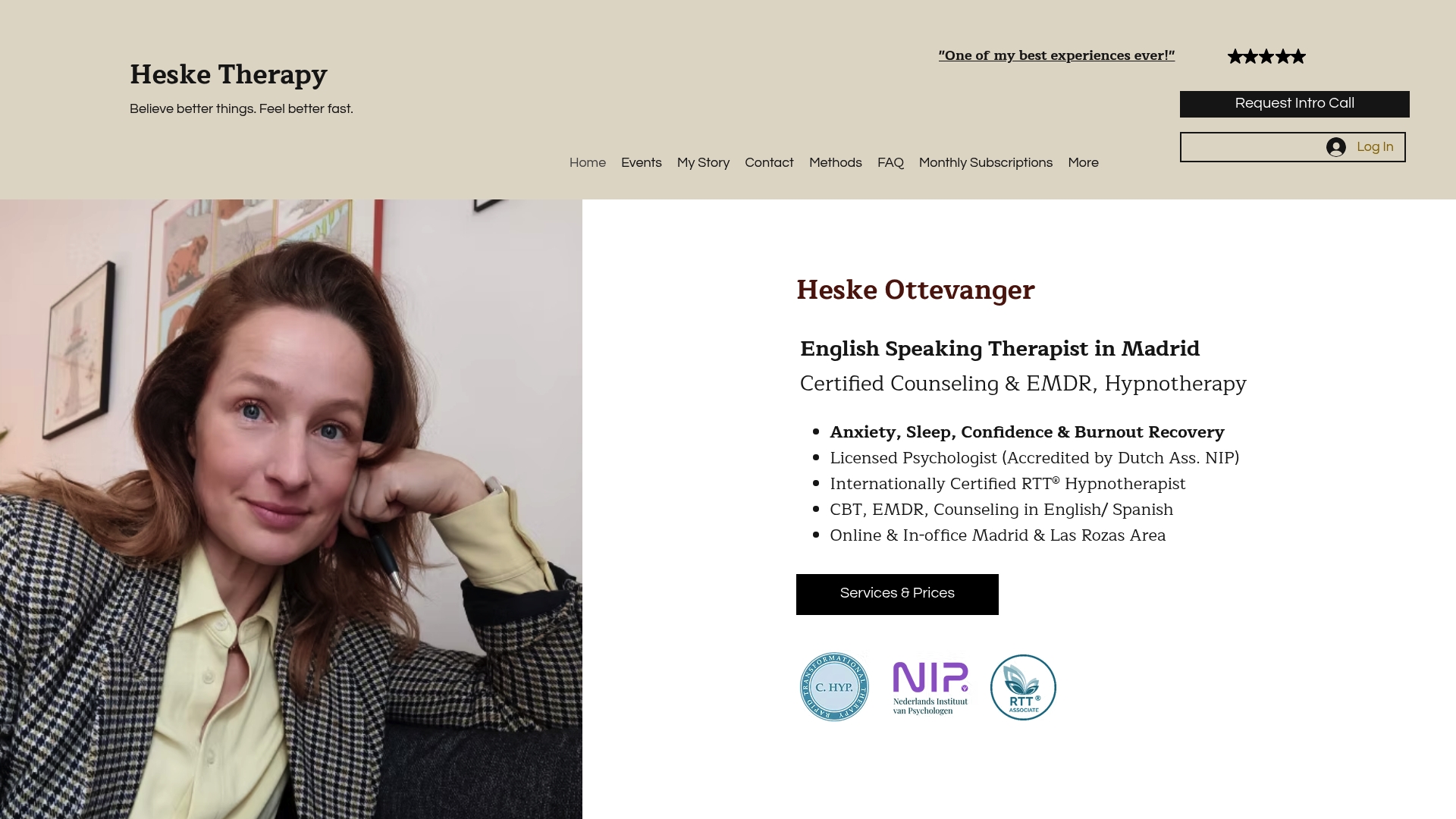
At HESKE Therapy, we specialize in working with English-speaking expats in Madrid who are tired of managing anxiety one difficult day at a time. Our integrative approach draws on RTT Therapy, EMDR, CBT, and counseling to create a personalized plan that fits your life, your schedule, and your specific anxiety triggers. Sessions are available both in-office in Madrid and online, so you can access support in English without the added stress of language barriers or long waiting lists. If you are ready to stop managing and start transforming, we invite you to book a free discovery call and find out which approach fits you best.
Frequently asked questions
What therapy is best for fast anxiety relief in Madrid?
RTT and CBT are among the most effective options for quick results, especially when combined with grounding tools practiced daily between sessions.
Can exercise really help anxiety, or do I need therapy?
Aerobic exercise, yoga, and strength training reduce anxiety symptoms by boosting endorphins and lowering cortisol, but therapy offers the deeper skills and root-cause work that exercise alone cannot provide.
What are warning signs that I need specialist help?
Seek specialist input if anxiety severely disrupts daily life, if comorbid depression is present, or if self-help strategies that previously worked have stopped having any effect.
Are medication options available for anxiety treatment?
SSRIs like sertraline are recommended as a first-line pharmacological option when therapy alone is not sufficient, and should always be managed by a qualified doctor.
Is it normal for expats to feel more anxious?
Yes, relocating abroad is a significant life stressor, and many expats experience elevated anxiety due to cultural adjustment, language challenges, social disruption, and the constant pressure to adapt.
Recommended
Comments