Understanding emotional blocks: targeted therapies for expats


TL;DR:
Emotional blocks are internal barriers that hinder feelings, connections, and personal growth for expats in Madrid. Modern therapies like CBT, EMDR, DBT, and somatic approaches effectively target these deep-seated issues, especially when employed in phased stabilization and processing. Tailored support in Madrid offers expats a path to relief by addressing their unique cultural and emotional challenges safely and gradually.
Many expatriates in Madrid dismiss their persistent feelings of numbness, disconnection, or inability to move forward as simple stress or “bad moods” caused by the challenges of living abroad. That misunderstanding is costly. Emotional blocks are not mood swings that a good weekend fixes. They are deeply rooted internal barriers that interfere with your ability to process feelings, form connections, and build the fulfilling life you came to Madrid to create. The good news is that modern, evidence-based therapies offer precise, targeted solutions that go far beyond generic advice about self-care.
Table of Contents
Key Takeaways
Point | Details |
Emotional blocks are complex | They involve both emotional and physiological barriers, especially in expat life transitions. |
Therapy must be tailored | No single approach works for everyone; evidence-based models should match symptom complexity. |
Phased therapy protects well-being | Stabilization before trauma processing prevents overwhelm and setbacks. |
EAET shows strong results | Emotional Awareness and Expression Therapy appears superior to CBT for persistent physical symptoms. |
Practical strategies matter | Self-regulation, knowing when to seek help, and trying body-oriented work can start positive change. |
What are emotional blocks and why do they matter?
An emotional block is an internal barrier that prevents you from fully processing, expressing, or moving through a feeling. Think of it like a drain clogged with debris. Water (your emotions) keeps accumulating, but it cannot flow freely. You might feel perpetually stuck in the same loop of anxiety, numbness, or emotional overwhelm, no matter how many positive lifestyle changes you make.
For English-speaking expats in Madrid, emotional blocks often develop quietly. The emotional blocks overview for expat populations shows they emerge from the accumulation of transitions: leaving your home country, managing a new language and culture, rebuilding a social network from scratch, and often doing all of this while maintaining professional performance. The emotional load is enormous, and the support systems that would normally help you process it are far away.
Common signs that you might be dealing with an emotional block rather than ordinary stress include:
Feeling emotionally flat or numb for weeks at a time
Being unable to cry or express emotions even when you want to
Repeatedly feeling overwhelmed without a clear trigger
Physical tension that does not resolve with rest
A persistent sense of being “stuck” in your life despite external progress
That last point about physical tension matters more than most people realize. Emotional blocks are not just mental events. They live in the body. Somatic/body-oriented work is often used to address the “stuck” physiological side of emotional processing, though the evidence base for specific techniques continues to evolve.
“The body keeps score not just of traumatic events, but of the small, repeated moments of emotional suppression that accumulate across a lifetime of transitions.” This insight from somatic research is particularly relevant for expats navigating constant adaptation.
Core therapies for emotional blocks: CBT, EMDR, DBT, and body-oriented approaches
Not every therapy works the same way, and not every emotional block responds to the same intervention. Understanding your options helps you make a faster, smarter decision about where to invest your energy and time.

Cognitive Behavioral Therapy (CBT) targets the relationship between thoughts, feelings, and behaviors. It is structured, measurable, and widely available. CBT works well for anxiety, depression, and emotional blocks rooted in distorted thinking patterns.
Eye Movement Desensitization and Reprocessing (EMDR) uses bilateral stimulation to help your brain reprocess distressing memories that contribute to emotional blocks. It is particularly effective for trauma-related stuckness. You can explore trauma therapy healing in detail to understand how this reprocessing actually changes brain function.
Dialectical Behavior Therapy (DBT) combines cognitive techniques with mindfulness and distress tolerance skills. It was originally developed for borderline personality disorder but has expanded significantly into trauma treatment. Research via BMJ Mental Health clinical guidelines indicates that DBT-for-PTSD may show stronger effects for complex cases, while CBT and EMDR remain strong for more straightforward trauma presentations.
Somatic and body-oriented therapies focus on releasing trauma stored in the nervous system through physical awareness and movement. Somatic Experiencing is one example.
Therapy | Best suited for | Key strength | Limitation |
CBT | Anxiety, mild to moderate emotional blocks | Structured, evidence-rich | Less effective for body-stored trauma |
EMDR | Trauma-related blocks, PTSD | Rapid reprocessing of memories | Requires trained specialist |
DBT | Complex PTSD, emotional dysregulation | Combines skills and processing | Time-intensive program |
Somatic therapy | Body-stored tension, nervous system dysregulation | Works below conscious thought | Evidence base still growing |
Choosing between these approaches is not about picking the “best” therapy in general. It is about matching the approach to your specific symptoms, history, and level of nervous system activation. If you are uncertain, reviewing CBT vs RTT for trauma can help clarify which framework suits your situation.
Pro Tip: If you have tried talk therapy and still feel stuck, that is often a signal that your emotional block has a significant somatic component. Your therapist should be working with your body, not just your thoughts.
The phased approach: Stabilization before trauma processing
One of the most overlooked concepts in trauma-informed therapy is sequencing. Jumping straight into processing traumatic memories without first building internal stability is one of the most common reasons people feel worse after therapy, not better.
Phased approaches include stabilization, trauma processing, and reintegration, and they are specifically designed to reduce re-traumatization risk. Here is how the three core phases work in practice:
Stabilization. This phase is about building your internal capacity to tolerate difficult emotions without becoming overwhelmed. It involves grounding techniques, breathing regulation, and developing a felt sense of safety in your body.
Trauma processing. Once you have a stable foundation, the actual work of revisiting and reprocessing distressing memories or emotional patterns begins. This is where modalities like EMDR or somatic techniques are most actively used.
Reintegration. After processing, the goal is to consolidate new patterns, rebuild identity and meaning, and integrate the changes into everyday life in Madrid.
Skipping phase one, or rushing through it, often leads to destabilization. You can read about this emotional healing workflow in more detail to understand why the sequence is not arbitrary. For expats, stabilization is particularly important because the external environment (new city, new language, reduced social support) is already destabilizing. Your therapy needs to compensate for that.
Complex PTSD often involves disturbances in self-organization, meaning the ability to regulate your emotions, sense of self, and relationships has been fundamentally disrupted. Stabilization rebuilds these foundations.
The rapid recovery workflow builds on this framework, offering practical guidance on how to move through these phases without losing momentum.
Pro Tip: Stabilization techniques like the 5-4-3-2-1 grounding exercise (naming five things you see, four you can touch, three you hear, two you smell, one you taste) are simple to practice daily and genuinely reinforce nervous system regulation before you enter deeper processing work.
Emotional Awareness and Expression Therapy (EAET): A targeted solution
If you have tried CBT and found it helpful but incomplete, or if your symptoms include persistent physical complaints like headaches, IBS, or chronic fatigue alongside emotional numbness, Emotional Awareness and Expression Therapy (EAET) deserves your attention.
EAET is a short-term therapy that targets emotional awareness and expression as primary mechanisms for healing. EAET shows superior results to CBT in persistent symptoms by reframing how those symptoms are explained and experienced. Rather than focusing primarily on changing thoughts, EAET works with the emotional experiences underneath the thoughts.
Key components of EAET include:
Psychoeducation about the link between emotional suppression and physical symptoms
Guided exercises to identify and express core emotions like anger, grief, and fear
Corrective interpersonal experiences within the therapeutic relationship
Reframing symptoms as signals from a nervous system carrying unprocessed emotion
Outcome measure | EAET result | CBT result |
Persistent symptom reduction | Significantly higher | Moderate |
Emotional awareness increase | High | Moderate |
Sustained improvements at 6 months | Strong | Moderate |
Patient reported satisfaction | High | High |
For expats specifically, EAET addresses something that standard CBT often misses: the emotional backlog that builds when you suppress feelings in order to “stay functional” during major life transitions. Many expats arrive in Madrid feeling pressure to appear fine, to adapt quickly, and to justify their life choice by succeeding. That pressure creates exactly the kind of emotional suppression that EAET is designed to address.
Expats carrying unprocessed family dynamics or childhood trauma processing challenges often find that EAET accelerates breakthroughs that years of cognitive work alone did not produce. If you are transforming emotional well-being after a significant life transition, EAET combined with RTT is worth exploring seriously. For a deeper look at RTT trauma healing, the research context makes a compelling case.
Practical steps and strategies for overcoming emotional blocks
Understanding therapy models is important, but you also need a practical starting point. Here is how to begin moving through your own emotional block, wherever you currently are in the process.
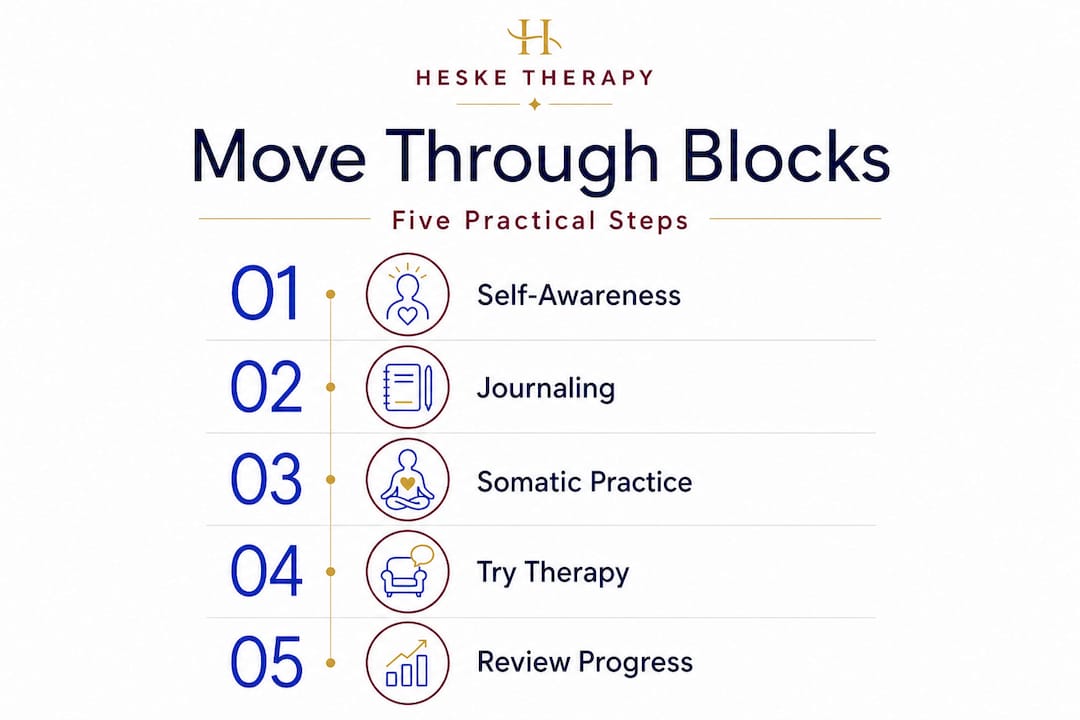
Start with self-awareness. Before you can address a block, you need to identify it clearly. Journaling for ten minutes each morning about what you are feeling physically and emotionally (not what happened, but how your body and heart actually feel) builds the awareness that therapy will later work with.
Practice basic somatic techniques. Long exhale breathing (inhaling for four counts, exhaling for eight) directly activates the parasympathetic nervous system, signaling safety to your body. Do this for five minutes before stressful situations or when you notice emotional numbness.
Find the right therapist. In Madrid, this means actively looking for someone trained in trauma-informed approaches and who speaks fluent English. Expat-specific emotional challenges require a therapist who understands the cultural, relational, and identity dimensions of living abroad.
Steps to begin overcoming your emotional blocks:
Name your block clearly (is it numbness, avoidance, overwhelm, or shutdown?)
Identify when it started and what life event may have triggered it
Begin a daily grounding or somatic self-regulation practice
Research therapists in Madrid with EMDR, RTT, or somatic training
Book a discovery call to assess fit before committing to a full program
Track your progress with a simple weekly mood and body awareness journal
Evidence suggests that Somatic Experiencing may improve psychological and physiological safety after just one session. That means the barrier to starting is lower than most people assume.
Pro Tip: Try a single session of body-oriented work, whether somatic therapy, RTT, or EMDR, before deciding whether you need a longer program. One session can shift the experience of being stuck more dramatically than months of talk therapy, giving you important information about which path to take.
You can find an overview of rapid therapy solutions that are specifically designed for expats experiencing persistent blocks.
A deeper perspective: Why the standard advice misses key nuances
Most guides on emotional blocks offer the same advice: recognize your emotions, practice mindfulness, see a therapist. That advice is not wrong. But it misses something critical that we see repeatedly in real clinical work with expats.
The standard narrative underestimates how destabilizing it is to do emotional processing work while your external life is also unstable. When you are still building your support network in Madrid, still navigating Spanish bureaucracy, still adjusting to a new work culture, your nervous system is running a heavy background load. Pushing into deep trauma processing in that state can genuinely make things worse.
Phased, stabilization-first approaches are crucial not just as a clinical nicety but as a genuine protective mechanism. Stabilization is not the “waiting room” before real therapy begins. It is often where the most important and lasting work happens. Building your capacity to tolerate difficult emotions without shutting down or spiraling is itself a profound form of healing.
We also see expats who come to therapy with significant emotional blocks and immediately want to “go deep” because they are frustrated with feeling stuck. That urgency is completely understandable. But urgency applied to trauma work often produces overwhelm rather than relief. Learning to respect the pace of your own nervous system is not weakness or avoidance. It is precision.
The real insight from trauma healing perspective work with expat clients is this: your block is not a character flaw. It is your nervous system’s intelligent response to too much demand with too little support. The path through is not force, but gradually expanding what you can feel safely.
Find tailored therapeutic support in Madrid
Living abroad with unresolved emotional blocks does not have to be your ongoing reality. Heske Therapy specializes in working with English-speaking expatriates in Madrid who are ready to move from feeling stuck to experiencing genuine, lasting relief.
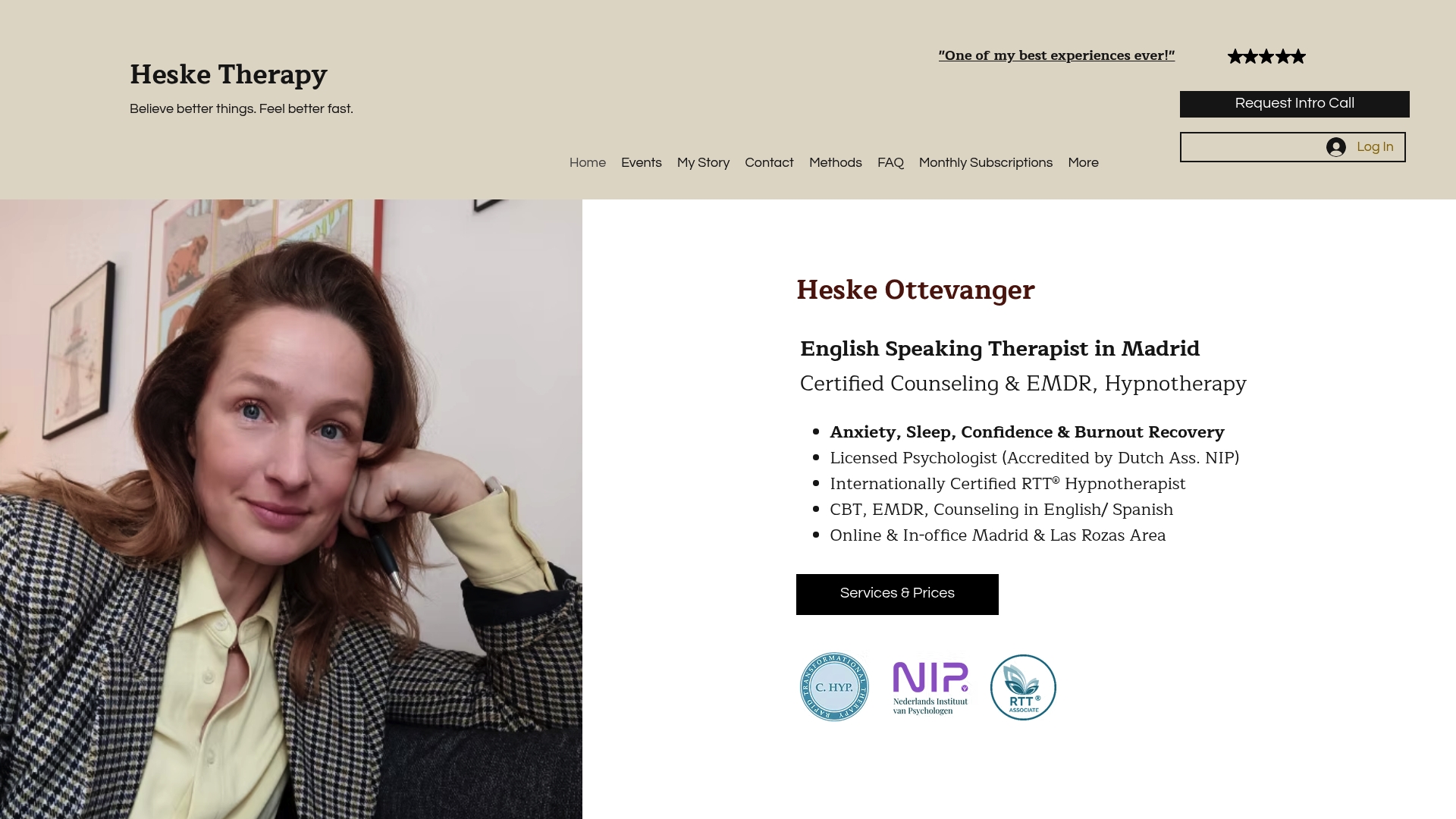
With an integrative approach combining RTT, EMDR, CBT, somatic techniques, and counseling, treatment is tailored to your specific emotional blocks rather than a one-size-fits-all program. Sessions are available in English, Spanish, and Dutch, both in-office in Madrid and online. Whether you are dealing with anxiety, burnout, trauma, or persistent physical symptoms driven by emotional suppression, Heske Therapy offers the precise, targeted support you need. Learn more about the RTT therapy overview or book counseling online to schedule a free discovery call today.
Frequently asked questions
How do emotional blocks differ from everyday stress?
Emotional blocks are persistent barriers to emotional processing, while stress is a normal reaction that usually resolves on its own once the stressor passes. Somatic body-oriented work specifically targets the physiological “stuck” quality that distinguishes a block from ordinary stress.
What therapy is most effective for trauma-related emotional blocks?
It depends on the complexity of your trauma. DBT-for-PTSD benefits complex cases, while CBT and EMDR are often preferred for more straightforward trauma presentations. An assessment by a trained therapist helps identify the best match.
Can emotional blocks cause physical symptoms?
Yes, absolutely. Suppressed emotions frequently manifest as physical symptoms including chronic pain, IBS, migraines, and fatigue. EAET outperforms CBT for these persistent symptoms by directly targeting the emotional processing mechanisms driving them.
How quickly can I expect results from somatic or body-oriented therapies?
Faster than most people expect. Research shows improvements in psychological safety after a single Somatic Experiencing session, which makes body-oriented work a valuable early intervention even before committing to a longer program.
Why is stabilization vital before trauma processing?
Stabilization builds the internal capacity to tolerate difficult emotions without becoming overwhelmed. Phased approaches reduce the risk of re-traumatization by ensuring the nervous system is resourced and regulated before deep processing begins.
Recommended
Comments