Online Therapy Session Preparation: Your Practical Guide


TL;DR:
Preparing for online therapy involves testing technology, creating a private space, and setting mental intentions. Proper planning enhances engagement, reduces anxiety, and maximizes session effectiveness.
Online therapy session preparation is the practice of readying your technology, environment, and mindset before a virtual therapy appointment to ensure a productive and comfortable experience. Also called telehealth readiness in clinical settings, it covers everything from testing your internet connection to setting a personal intention for the session. Skipping this step is the single most common reason first-time clients feel disconnected or anxious during their appointment. The good news: a focused 15-minute routine before each session can close that gap entirely. Hesketherapy works with clients across time zones and consistently finds that prepared clients engage more openly from the very first session.
What does online therapy session preparation actually involve?
Preparation for virtual therapy falls into three categories: technical setup, physical environment, and mental readiness. Each one affects the others. A perfect internet connection means nothing if your room is noisy and you cannot think clearly. Online psychotherapy works best when all three categories are addressed together, not treated as separate checklists.
Most telehealth platforms use encrypted, HIPAA-compliant technologies to protect your privacy during sessions. That compliance matters because it means your conversations are legally protected, just as they would be in a physical office. Knowing this upfront removes one of the most common sources of pre-session anxiety for new clients.
How do you set up your technology for a smooth session?
Technical problems are the number one disruption in virtual therapy. They break focus, waste session time, and create unnecessary stress right before you need to be calm. The fix is simple: test everything at least 24 hours before your appointment.
A stable connection of at least 5 Mbps upload and download speed is the minimum for clear video therapy. Anything below that threshold produces freezing, audio lag, or dropped calls. Run a speed test at speedtest.net before your session and restart your router if the numbers fall short.
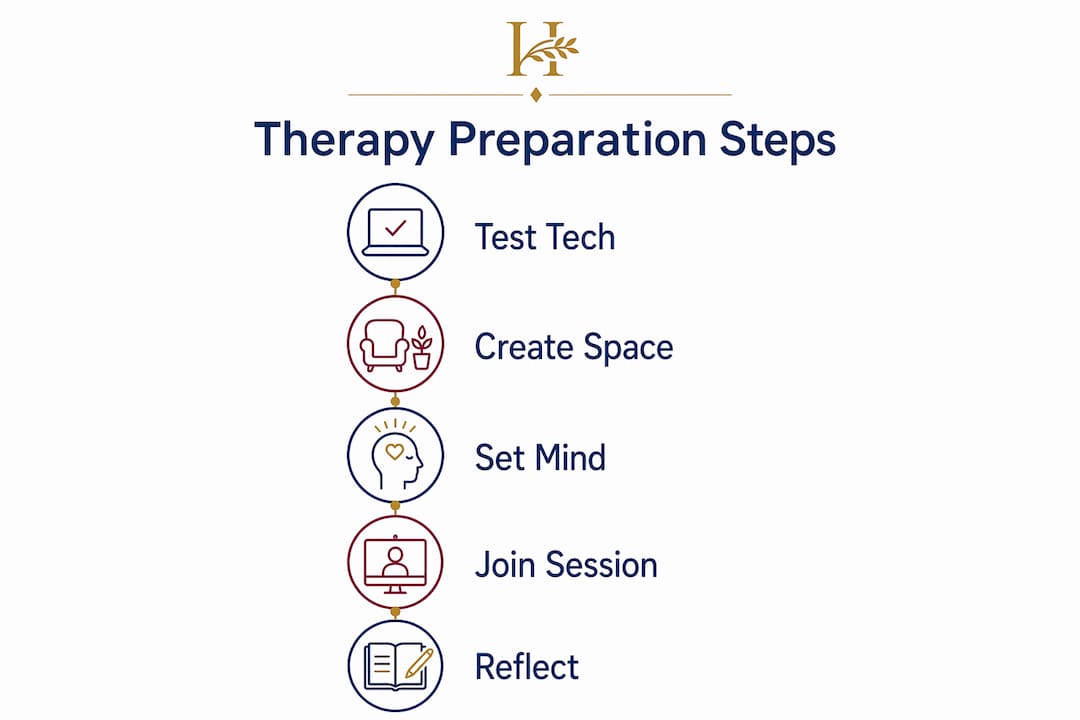
Here is the full technical checklist to run before every session:
Device: Use a laptop, tablet, or desktop with a working camera and microphone. Phones work but a larger screen reduces eye strain over 45–60 minutes.
Internet: Test your speed and sit close to your router. Avoid streaming or large downloads on the same network during your session.
Platform link: Open the telehealth link your therapist sends and confirm it loads correctly. Do not wait until the session starts to click it for the first time.
Camera and microphone: Check both in your device settings or inside the platform itself. Many platforms have a built-in test function.
Battery: Plug in your device or charge it fully beforehand. A dying battery mid-session is a preventable disruption.
Backup plan: Know your therapist’s phone number in case the video call fails. A phone session is always better than a missed one.
Pro Tip: Close all browser tabs and apps you do not need before the session starts. Background processes slow your connection and create notification sounds that interrupt the conversation.
For a deeper look at what technical setup essentials matter most across different platforms, that resource covers the specifics in detail.
How do you create a private space for online therapy?
Your physical environment shapes how emotionally open you can be. A room where you feel watched or interrupted keeps your nervous system on alert, which works directly against the therapeutic process. Privacy is not a luxury in therapy. It is a clinical requirement.
The gold standard is a room with a closed door and no other people present. If that is not available at home, a parked car offers sound isolation and visual privacy that many indoor spaces cannot match. Clients who live with roommates or family members often find this option genuinely useful, not just a last resort.
Follow these steps to prepare your space before each session:
Choose your spot and keep it consistent. A dedicated therapy-only location acts as a Pavlovian cue that signals your brain to shift into a reflective mindset. The same chair in the same corner works better than a different room each week.
Adjust your lighting. Natural light from the front or side makes your face visible and reduces eye strain for both you and your therapist. Avoid sitting with a bright window directly behind you.
Check your background. A plain wall or tidy space is enough. You do not need a professional setup, but a cluttered or distracting background can pull focus.
Set up sensory comfort items. Keeping water, tissues, and grounding objects nearby supports emotional openness during difficult conversations. A blanket or a familiar object can help regulate your nervous system.
Manage household members. Tell anyone in your home that you are unavailable for the session duration. Put a note on the door if needed. Silence your phone and disable smart speakers.
Pro Tip: If you struggle with background noise, use headphones with a built-in microphone. They improve audio quality dramatically and create a sense of personal space even in a shared environment.
How do you prepare mentally before a virtual therapy session?
Mental preparation is the most overlooked part of online counseling preparation. Most people focus on the tech and the room, then sit down for their session still mentally running through their to-do list. That transition gap costs real session time.
Writing down a session intention or a short list of topics before the session prevents you from forgetting what mattered most during the week. It does not need to be formal. Three bullet points on your phone are enough to anchor the conversation and stop your mind from going blank when your therapist asks, “What would you like to focus on today?”
Give yourself a 10-minute buffer before the session starts. Step away from work, screens, or any stressful activity. Breathe slowly, drink some water, and let your body settle. Pre-session reflection amplifies therapy effectiveness by activating self-awareness and emotional readiness before the session even begins.
A few more practices that make a real difference:
Accept that the first few sessions feel awkward. Emotional vulnerability through a screen takes adjustment. That discomfort is normal and fades quickly.
Complete intake paperwork in advance. Finishing consent and intake forms before the first session lets your therapist focus on connection rather than administration.
Be honest about what is and is not working. Clients who communicate openly about their session experience allow therapists to adjust their approach and improve outcomes faster.
Use grounding techniques if anxiety spikes. Press your feet flat on the floor, hold a cool glass of water, or name five things you can see. These body-based tools work during the session, not just before it.
For clients who want to understand how organizing thoughts and intentions enhances therapy outcomes, that resource explains the mechanism clearly.
What should you expect during and after your session?
Knowing the structure of a session removes the uncertainty that feeds pre-session anxiety. Online therapy sessions typically last 45–60 minutes and follow a consistent pattern regardless of the therapeutic approach used. Understanding that pattern lets you participate rather than just react.
The typical session flow breaks down like this:
Phase | What happens | Your role |
Virtual waiting room | You join the secure link and wait briefly | Stay calm, breathe, review your notes |
Check-in | Therapist asks how you are and what you want to focus on | Share your intention or topic list |
Core therapeutic work | Therapist guides the session using CBT, EMDR, RTT, or another method | Engage honestly, ask questions |
Wrap-up | Therapist summarizes insights and suggests next steps | Note any homework or reflections |
Post-session | You leave the call and process what came up | Decompress before returning to daily life |
The post-session phase deserves more attention than most guides give it. Buffer time after the session supports emotional integration. A short walk, five minutes of journaling, or quiet breathing helps your nervous system process what surfaced during the conversation. Jumping straight back into work or social media right after therapy reduces how much you retain from the session.
For clients navigating online therapy across different countries, platform security and session structure remain consistent with the same HIPAA-compliant standards.
Key Takeaways
Effective online therapy session preparation combines technical readiness, a private physical environment, and deliberate mental focus to maximize what you get from every session.
Point | Details |
Test technology early | Check internet speed, camera, and microphone at least 24 hours before your session. |
Secure a private space | Use a closed room or parked car to protect confidentiality and emotional openness. |
Write down your intention | A short topic list before the session anchors the conversation and prevents blank-mind moments. |
Build in transition time | Give yourself 10 minutes before and after the session to shift mental gears. |
Communicate with your therapist | Tell your therapist what is and is not working so they can adjust their approach. |
Preparation is an act of self-respect, not a chore
I have worked with clients who spent the first 10 minutes of a session troubleshooting their audio, and clients who arrived mentally scattered from a stressful commute or a difficult call. The session still happened, but the depth of the work was shallower. Preparation is not about being perfect. It is about giving yourself the best possible conditions to do something genuinely hard.
One thing I notice consistently: clients who treat preparation as a ritual, not a task, get more from therapy faster. Lighting a candle, making tea, sitting in the same chair each week. These small acts tell your nervous system that this time is different. That signal matters more than people expect.
The other misconception I hear often is that virtual therapy is somehow less “real” than in-person work. It is not. The therapeutic relationship, the emotional processing, the breakthroughs, they all happen through a screen just as powerfully. What changes is the environment you control. That is actually an advantage. You are in your own space, which for many people feels safer than a clinical office.
Be patient with yourself during the adjustment period. The awkwardness of the first session or two is not a sign that therapy is not working. It is a sign that you are doing something new. Preparation shortens that adjustment curve significantly. For clients dealing with anxiety, managing anxiety through teletherapy shares useful perspectives on overcoming emotional barriers in virtual care settings.
— Heske
Hesketherapy’s approach to online sessions
Hesketherapy offers licensed, HIPAA-compliant virtual sessions for English-speaking clients worldwide, including those based in Madrid and across Europe. Sessions are available in English, Spanish, and Dutch, with no waitlist pressure and flexible scheduling to fit international time zones.
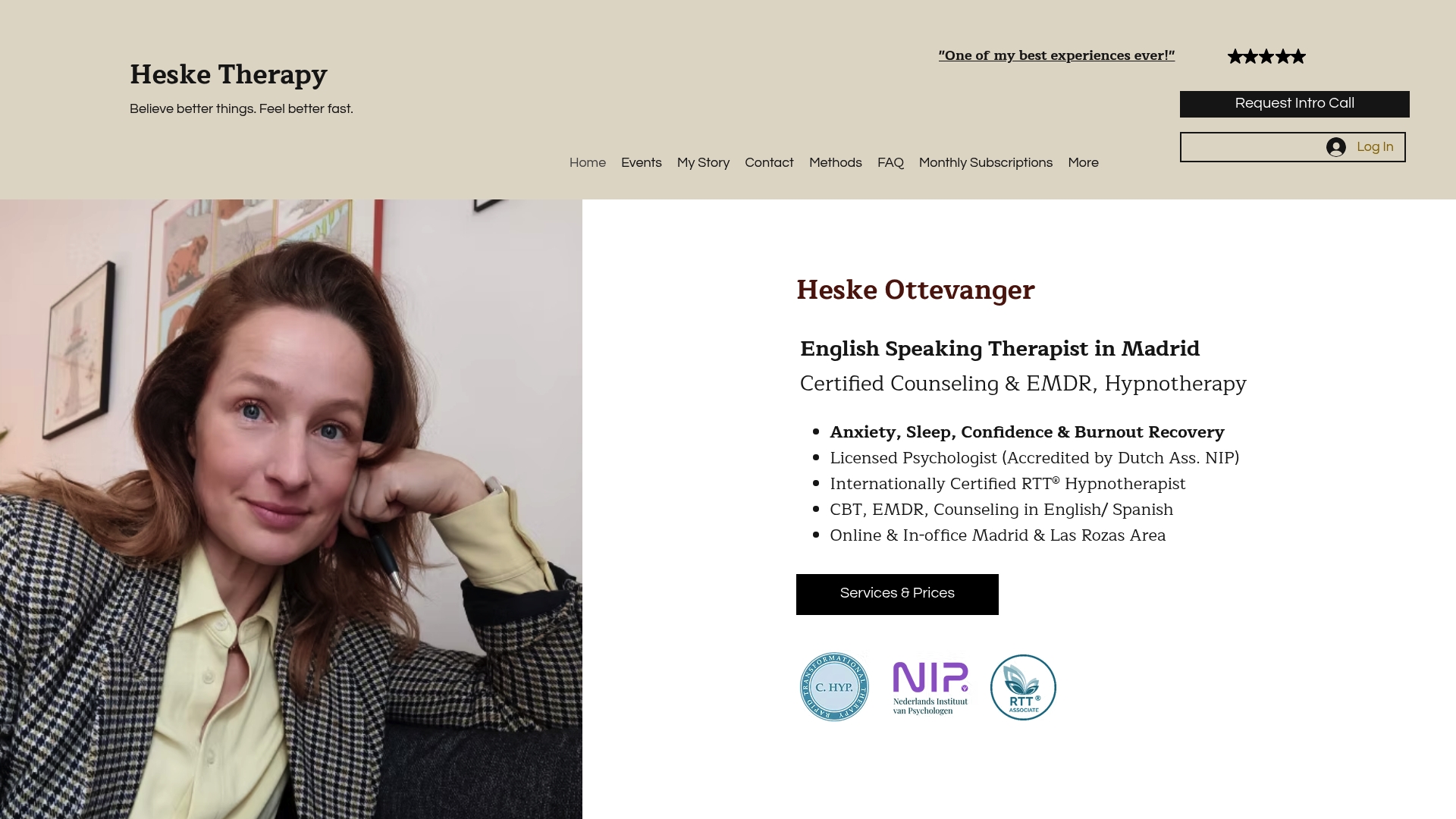
Hesketherapy specializes in approaches that translate powerfully to the online format, including EMDR and hypnotherapy for anxiety, burnout, trauma, and sleep issues. A free discovery call is available to help you decide whether the approach fits before committing to a full session. The booking process is straightforward and designed to get you into a session quickly, without unnecessary paperwork or delays.
FAQ
What internet speed do I need for online therapy?
A minimum of 5 Mbps upload and download speed is recommended for clear video therapy. Test your connection at least 24 hours before your session and restart your router if the speed falls short.
How long does an online therapy session last?
Online therapy sessions typically last between 45 and 60 minutes. The session begins when you join a secure, HIPAA-compliant link that leads to a virtual waiting room.
What should I do if I have no private space at home?
A parked car is a practical and effective alternative. It provides sound isolation and visual privacy that many shared indoor spaces cannot offer.
How do I prepare mentally before a virtual therapy session?
Write down a short list of topics or a single intention before the session. Give yourself a 10-minute buffer away from screens and stressful activity to let your mind settle before the session begins.
Is online therapy as effective as in-person therapy?
Research consistently supports the effectiveness of telehealth for a wide range of mental health concerns. The therapeutic relationship and the quality of the work are not diminished by the virtual format when both client and therapist are well prepared.
Recommended
Comments