Step by Step Anxiety Relief: A Practical Daily Guide

TL;DR:
Structured anxiety relief involves daily physiological, cognitive, and behavioral techniques that build lasting responses. Consistent practice, especially when calm, reduces baseline anxiety over two to three weeks and prevents escalation during stressful moments. Combining these methods with professional support enhances long-term recovery and coping skills.
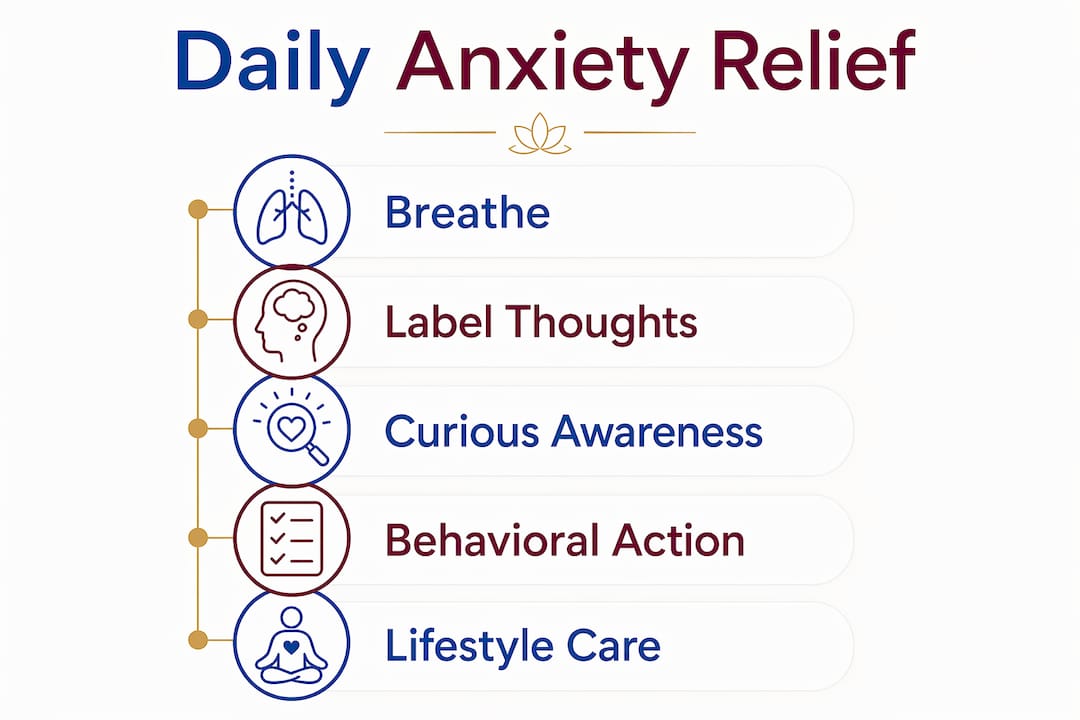
Step by step anxiety relief is a structured process that calms your body and mind using proven physiological, cognitive, and behavioral techniques you can practice every day. Anxiety management, the clinical term for this process, builds on frameworks like Cognitive Behavioral Therapy (CBT) and the Anxiety Reset model to address symptoms at their root. The goal is not to eliminate fear entirely. The goal is to build a reliable set of responses so anxiety no longer controls your decisions. This guide walks you through each layer of that process in sequence, from body to mind to daily habits.
What do you need before starting step by step anxiety relief?
The single most important preparation step is practicing techniques when you are calm, not only when anxiety spikes. Daily rehearsal outside of crisis strengthens automatic use of these tools when you need them most. Think of it like a fire drill. You practice when there is no fire so the response becomes automatic when there is one.
Three simple tools form the foundation:
A breathing anchor. A specific breathing pattern you return to when anxious, practiced daily until it is automatic.
A worry journal. A notebook or phone note where you write anxious thoughts rather than letting them loop in your head.
Scheduled worry time. A fixed 15–20 minute window each day dedicated to worrying, so worry does not bleed into the rest of your hours.
The mindset shift that makes all of this work is curiosity. Most people fight their anxiety, which amplifies it. Suppressing anxious thoughts actually strengthens the anxiety response. Approaching worry with curiosity, asking “What is this thought trying to tell me?” instead of “Why won’t this stop?”, disrupts the neural loop without adding fuel to it.
Expect a two to three week adjustment period before you notice a calmer baseline. Matching techniques to your specific anxiety type and trialing each for at least two weeks gives you an honest read on what works for you.
Pro Tip: Set a daily two-minute reminder on your phone to practice your breathing anchor. Consistency at low-stakes moments builds the habit that holds under pressure.
How do physiological techniques reduce anxiety fast?
The body is the fastest entry point into the anxiety cycle. These steps work within minutes and require no equipment.
Paced breathing with an extended exhale. Breathe in for four counts, hold for one, and breathe out for six to eight counts. The longer exhale activates the parasympathetic nervous system. Physiological regulation, including a slowed heart rate, can occur within 2–5 minutes of this technique. Practice this twice daily, not just during anxious moments.
The 5-4-3-2-1 grounding method. Name five things you can see, four you can touch, three you can hear, two you can smell, and one you can taste. This sensory scan pulls attention out of the future, where anxiety lives, and into the present moment. It works especially well during panic or racing thoughts.
Progressive muscle relaxation (PMR). Starting from your feet and moving upward, tense each muscle group for five seconds, then release. The contrast between tension and release teaches your body what “relaxed” actually feels like. PMR is most effective practiced at bedtime, where it also supports sleep quality.
Cold water exposure. Splashing cold water on your face or holding your wrists under cold running water triggers the dive reflex, which slows heart rate rapidly. This is a fast-acting tool for acute anxiety spikes and requires no preparation.
Daily practice, not crisis-only use. Run through steps 1 and 2 every morning for five minutes. The goal is to make these responses automatic so they are available when anxiety is high.
Pro Tip: Pair paced breathing with a specific physical cue, like pressing your thumb and forefinger together. Over time, the physical cue alone begins to trigger the calming response.
How do you apply cognitive steps to calm anxious thoughts?
Cognitive techniques address the thought patterns that keep anxiety running. The most effective approach combines containment, restructuring, and defusion.
Scheduled worry time is the starting point. Limiting daily worry to a strict 15–20 minute window reduces total worry duration without requiring you to suppress thoughts. When a worry arises outside that window, write it down and tell yourself you will address it at the scheduled time. This trains your brain to defer rather than ruminate.
Cognitive restructuring is the process of examining whether a worried thought reflects reality or catastrophizing. Ask three questions about any anxious thought:
What is the evidence for and against this thought being true?
What is the most realistic outcome, not the worst one?
What would I tell a close friend who had this same thought?
Writing the answers down matters. Seeing thoughts on paper creates distance between you and the worry, which makes evaluation easier and more accurate.
Defusion techniques take that distance further. Rather than arguing with an anxious thought, label it. “I notice I am having the thought that something will go wrong.” This phrasing, drawn from Acceptance and Commitment Therapy (ACT), positions you as an observer of the thought rather than a participant in it. The thought loses urgency without requiring you to prove it wrong.
Curiosity-based awareness updates the brain’s reward system by replacing the anxiety loop with a different neural pathway. When you get genuinely curious about what an anxious thought feels like in your body, rather than reacting to its content, the loop weakens over time. The brain’s habit-forming system can be retrained to produce new anxiety responses rather than repeat old ones. That is not a metaphor. It is how neuroplasticity works in practice.
What behavioral and lifestyle steps sustain long-term anxiety relief?
Physiological and cognitive tools manage anxiety in the moment. Behavioral and lifestyle changes lower your baseline anxiety so there is less to manage.
Gradual exposure is the most evidence-based behavioral tool for anxiety. Avoidance feels like relief but maintains and often worsens anxiety over time. Gradual exposure means approaching feared situations in small, manageable steps rather than all at once. For CBT-based exposure techniques, a structured hierarchy works best: list feared situations from least to most distressing, then work up the list systematically.
Behavioral activation and social engagement counter the withdrawal that anxiety encourages. Scheduling one social or meaningful activity per day, even a short walk with a friend, breaks the isolation cycle that feeds anxious thinking.
Sleep hygiene is non-negotiable. Sleep deprivation increases amygdala reactivity by up to 60%, which means a poor night’s sleep makes every anxiety trigger hit harder the next day. Consistent sleep and wake times, no screens in the hour before bed, and a cool, dark room are the three highest-impact changes. For additional support, evidence-based sleep strategies can complement the behavioral work you are already doing.
The table below summarizes the key behavioral and lifestyle interventions and their primary mechanism:
Intervention | Primary mechanism | Timeframe for effect |
Gradual exposure | Reduces avoidance and fear response | 2–6 weeks |
Behavioral activation | Breaks withdrawal and isolation cycle | 1–2 weeks |
Sleep hygiene | Lowers amygdala reactivity | 1–2 weeks |
Aerobic exercise | Reduces cortisol and improves mood | 2–4 weeks |
Reducing caffeine and alcohol | Lowers baseline sympathetic arousal | 1–2 weeks |
Reducing caffeine and alcohol deserves specific attention. Even moderate caffeine intake before noon raises anxious arousal in sensitive individuals. Alcohol creates rebound anxiety as it clears the system, often peaking the morning after drinking. Cutting both, or reducing them significantly, lowers the physiological floor your anxiety starts from each day.
Regular aerobic exercise, 30 minutes most days, reduces cortisol and produces endorphins that directly counter anxiety. It also improves sleep quality, which compounds the benefit. You do not need a gym. A brisk daily walk qualifies.
Key Takeaways
Effective anxiety relief requires a layered approach: daily physiological practice, structured cognitive tools, and consistent behavioral and lifestyle changes working together over two to three weeks.
Point | Details |
Practice when calm | Rehearse breathing and grounding daily so they work automatically during anxiety spikes. |
Use scheduled worry time | Limit worry to a strict 15–20 minute daily window to reduce total rumination. |
Apply curiosity, not suppression | Approaching anxious thoughts with curiosity disrupts the neural loop more effectively than fighting them. |
Protect sleep | Sleep deprivation raises amygdala reactivity significantly, amplifying every anxiety trigger. |
Layer your tools | Combine physiological, cognitive, and behavioral strategies for sustained, long-term relief. |
What I have learned from working with anxiety every day
The clients who make the fastest progress are rarely the ones who try the hardest to stop being anxious. They are the ones who get curious about it instead. That shift, from fighting anxiety to observing it, is the most consistent predictor of progress I see in practice.
Anxiety management is not about eliminating fear. It is about building enough skill that fear stops making your decisions for you. Self-help tools are genuinely powerful for mild to moderate anxiety. But persistent anxiety that significantly impairs your work, relationships, or sleep is a signal to seek professional evaluation, not a sign that you have failed at self-help.
Psychotherapy combined with medication often achieves the best outcomes for generalized anxiety disorder. CBT is the most effective psychotherapy form for anxiety, and it works best when it is personalized to your specific patterns. Self-help and clinical care are not competing options. They reinforce each other. The daily practices in this guide become more effective when a therapist helps you identify the specific thoughts and behaviors maintaining your anxiety.
If you have been practicing these steps consistently for three to four weeks and your anxiety remains disruptive, that consistency itself is valuable information. It tells you that a more personalized approach is the right next step, not a longer solo effort.
— Heske
Anxiety relief support at Hesketherapy
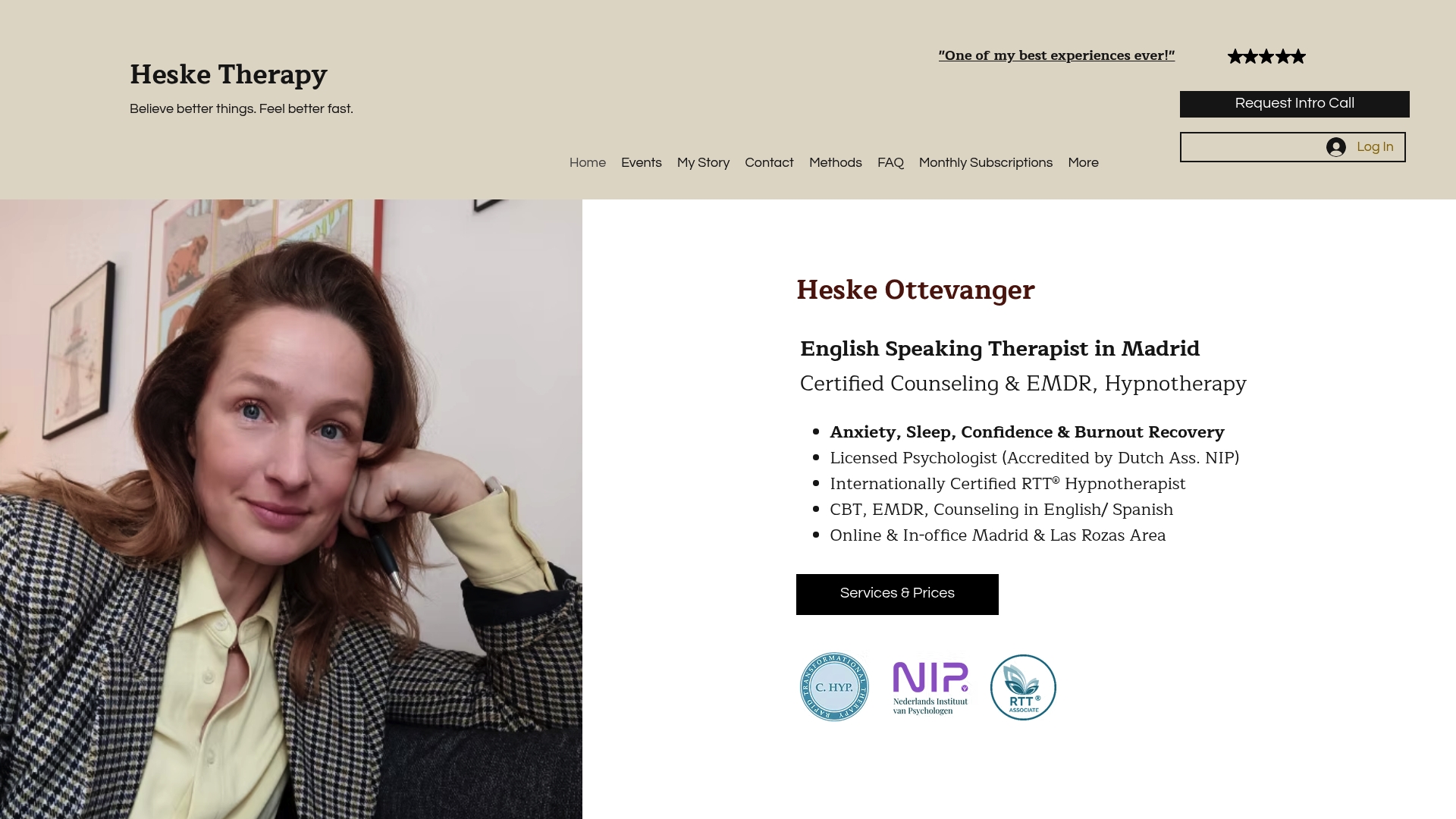
Hesketherapy works with English-speaking clients in Madrid and online, using an integrative approach that combines Rapid Transformational Therapy, EMDR, CBT, and hypnotherapy to address anxiety at its root. For people who want a guided, structured path rather than working through techniques alone, a personalized therapy plan accelerates what self-help starts.
The Self Hypnosis: Perfect Relaxation program from Hesketherapy is a practical complement to the physiological and cognitive steps in this guide, supporting deeper relaxation between sessions. For those ready to explore professional support, a free discovery call is available to discuss your specific situation and find the right fit. You can also find rapid relief methods and therapy options explained in detail on the Hesketherapy site.
FAQ
How quickly does step by step anxiety relief work?
Physiological techniques like paced breathing can lower heart rate within 2–5 minutes. A calmer baseline anxiety level typically develops within two to three weeks of consistent daily practice.
What is the most effective cognitive tool for anxious thoughts?
Scheduled worry time, limited to 15–20 minutes daily, is one of the most effective tools for reducing total worry duration. Combining it with cognitive restructuring and defusion techniques produces the strongest results.
When should I seek professional help for anxiety?
Seek professional evaluation when anxiety significantly impairs your work, relationships, or sleep despite consistent self-help practice over three to four weeks. Professional-led combination therapy provides a personalized path that supports and extends self-help efforts.
Does avoiding anxious situations make anxiety worse?
Avoidance provides short-term relief but maintains and often worsens anxiety over time. Gradual exposure, approaching feared situations in small steps, is the evidence-based alternative and a core component of CBT and exposure therapy.
How does sleep affect anxiety levels?
Sleep deprivation increases amygdala reactivity by up to 60%, making anxiety triggers hit harder the following day. Consistent sleep and wake times are among the highest-impact lifestyle changes for anxiety management.
Recommended
Comments