Role of Hypnotherapy in Emotional Healing

Hollywood myths and unfamiliar environments can leave English-speaking expatriates in Madrid feeling lost when anxiety or trauma strikes. Relocation stress multiplies when the only images of hypnotherapy involve dramatic trances and mind control. In truth, hypnotherapy is a powerful, evidence-based approach using focused attention and guided suggestions for emotional healing without surrendering control or awareness. This introduction unpacks what hypnotherapy really is and how it gently supports rapid transformation during difficult transitions.
Table of Contents
Key Takeaways
Point | Details |
Understanding Hypnotherapy | Hypnotherapy is a therapeutic technique involving focused attention and guided suggestions for positive change, contrary to common misconceptions. |
Session Structure | A typical hypnotherapy session includes induction, deepening, therapeutic suggestions, and emergence phases, allowing for collaborative goal achievement. |
Types of Hypnotherapy | Different approaches, like Rapid Transformational Therapy and Cognitive Hypnotherapy, cater to various needs, ensuring personalized treatment. |
Potential Benefits and Risks | Hypnotherapy can effectively address anxiety and trauma, but results may vary by individual; not everyone responds favorably, and practical participation is essential for success. |
Defining Hypnotherapy and Common Misconceptions
Hypnotherapy often gets a bad reputation. Hollywood movies show a therapist waving a pocket watch while someone falls into an uncontrollable trance. Reality is quite different. Hypnotherapy is a therapeutic technique that uses focused attention and guided suggestions to help your mind access deeper levels of awareness where positive change becomes possible. Unlike the dramatized version, you remain conscious throughout the entire process. You’re not asleep, not under someone’s control, and you can stop anytime you choose to.
The scientific understanding of hypnosis has evolved significantly from outdated theories. Early misconceptions linked hypnosis to concepts like animal magnetism and supernatural influence. Today, research clarifies that hypnosis is a focused state of attention rather than a special altered state involving reduced consciousness. Your defenses don’t suddenly disappear. Your willpower doesn’t vanish. Instead, your mind enters a state of heightened focus where it becomes more receptive to therapeutic suggestions that align with your goals. This distinction matters enormously for English-speaking expatriates in Madrid who have been exposed to years of movie portrayals and need clarity about what actually happens in a session.
Common misconceptions about hypnotherapy persist even among those considering treatment. Many people believe they need to be “deep” enough for results to occur or that they might get stuck in a hypnotic state. Others worry they’ll reveal secrets they don’t want to share or that a therapist can make them do things against their will. None of these align with how hypnotherapy actually works. The diverse applications of hypnosis include relaxation techniques, imagery work, and strategic interventions tailored to your specific emotional or psychological needs. You maintain full control throughout. You decide what you’re comfortable exploring. The therapist acts as a guide, not a puppet master.
When seeking hypnotherapy as an expatriate navigating stress, anxiety, or trauma in a new country, understanding what actually happens removes fear-based barriers to healing. Your mind is capable of remarkable transformation when given the right conditions and skilled guidance. The relationship between hypnosis and meditation offers another helpful comparison for those seeking to understand the mechanics better.
Pro tip: When scheduling your first session, ask your therapist specifically how they’ll explain each step and what to expect during induction so you feel informed and in control from the moment you arrive.
How Hypnotherapy Sessions Work Step by Step
A hypnotherapy session typically unfolds in a predictable, structured way that helps you move from your everyday awareness into a state of focused attention where change becomes possible. Understanding each phase removes the mystery and helps you approach your first session with confidence rather than anxiety. The entire process is collaborative, with you and your therapist working together toward your specific goals. Most sessions last between 50 and 90 minutes, though the actual therapeutic work often concentrates in the middle portions of that time.
The session begins with the induction phase, where your therapist guides you into a relaxed state through verbal cues and imagery. Think of it like settling into a comfortable chair at the end of a long day, except your therapist is actively helping you deepen that relaxation. You might be asked to focus on your breathing, visualize a peaceful place, or notice sensations in your body. This isn’t about becoming unconscious. You remain aware of everything around you and can open your eyes anytime you choose. What changes is your level of focus. The world around you becomes less interesting, and your attention narrows inward. After 5 to 15 minutes of induction, your therapist moves into the deepening phase, using additional techniques to help you settle even more comfortably into this focused state. This might involve counting, progressive relaxation, or visualization deepening.
Once you’ve reached an appropriate level of focus, your therapist delivers tailored therapeutic suggestions designed specifically for your situation. The hypnotherapist uses mental imagery and suggestion to modify sensations, perceptions, feelings, and behaviors related to your goals, whether that’s reducing anxiety, breaking a habit, or processing trauma. If you’re an expatriate struggling with relocation stress or anxiety about your new life in Madrid, these suggestions would address your particular concerns rather than generic issues. The suggestions work because your critical, analytical mind is quieter now, and your mind becomes more receptive to ideas that align with what you actually want to change. Finally, the emergence phase gently brings you back to full awareness. Your therapist counts you back up, perhaps suggesting that you’ll feel refreshed and alert when you fully open your eyes. You’ll emerge feeling rested, mentally clear, and often with a sense of lightness.
Your responsiveness to hypnotherapy depends partly on your openness, your ability to relax, and your willingness to engage with the imaginative process. Some people experience dramatic results in a single session. Others notice gradual shifts over several sessions as new patterns take root. What matters is showing up with genuine openness and working collaboratively with your therapist to clarify what you want to achieve.
Pro tip: Before your session, write down three specific issues or changes you want to address so you can communicate them clearly to your therapist during the initial consultation, ensuring the suggestions are perfectly tailored to your needs.
Types of Hypnotherapy and Their Distinct Uses
Hypnotherapy isn’t one-size-fits-all. Different approaches have evolved over decades to address specific challenges and work with different thinking styles. Your therapist might use one primary method or blend several depending on your situation. Understanding which type suits your needs helps you have a more informed conversation when scheduling your first session. For expatriates managing anxiety, trauma, or adjustment challenges in Madrid, knowing your options empowers you to find the right fit.
Rapid Transformational Therapy (RTT) focuses on identifying and rapidly shifting the root beliefs driving your current patterns. If you’re struggling with anxiety about your expat status or trauma from major life transitions, RTT works by accessing the moment when your mind formed the belief that keeps triggering your anxiety today. The therapist helps you understand why your mind created that protective pattern, then rapidly updates it with new, resourceful beliefs. Many clients experience significant shifts in just a few sessions. Cognitive hypnotherapy integrates hypnosis with cognitive behavioral principles, helping you recondition learned responses like specific phobias or habits. If you developed anxiety about public speaking or social situations, a cognitive hypnotherapist works with your conscious and unconscious mind together to break that automatic fear response. Ericksonian hypnotherapy uses indirect suggestions, metaphors, and storytelling to work around conscious resistance. This approach feels less formal and works beautifully for people who are skeptical or analytical. Your therapist tells a story that carries the therapeutic message indirectly, allowing your unconscious mind to extract exactly what it needs without your critical mind arguing against it.
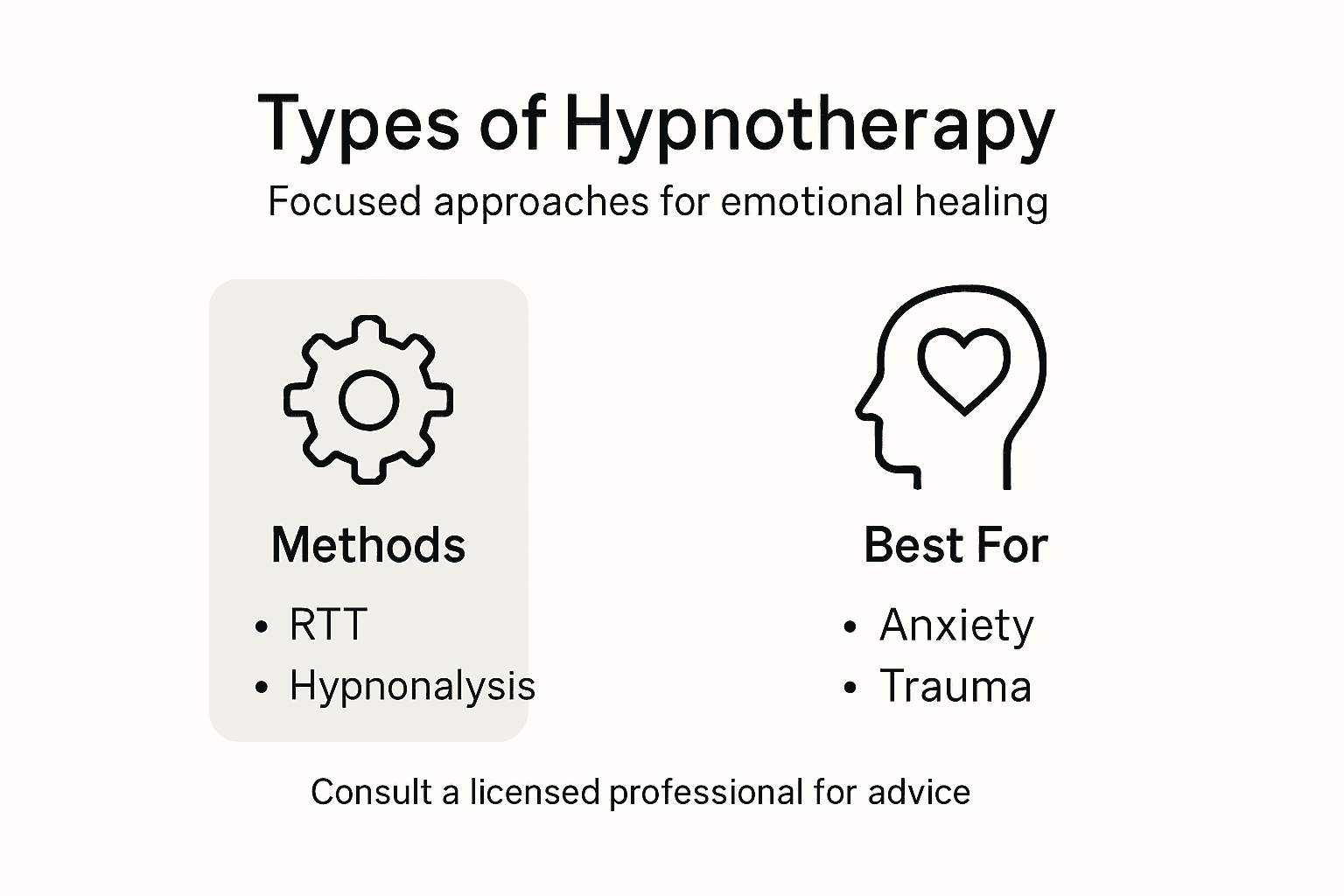
Hypnoanalysis digs deeper, using hypnosis to access unconscious conflicts or memories that might be driving current emotional patterns. This approach suits those ready for more exploratory work who want to understand the roots of their challenges, not just change the surface behavior. Expatriates processing old trauma or working through complex adjustment issues sometimes benefit from this method’s depth. The specific type your therapist recommends depends on your goals, your personality, and what research shows works best for your particular situation. Understanding how hypnotherapy differs from traditional talking therapy helps clarify whether hypnotic approaches align with your preferences and needs.
Here’s how some common hypnotherapy types compare for expatriate needs:
Type of Hypnotherapy | Core Technique | Best For | Typical Approach |
Rapid Transformational (RTT) | Root belief reprogramming | Deep-seated anxiety, trauma | Quick shifts, few sessions |
Cognitive Hypnotherapy | Cognitive-behavioral integration | Specific fears, habits | Collaborative, structured work |
Ericksonian Hypnotherapy | Metaphors and storytelling | Analytical or resistant clients | Indirect, conversational style |
Hypnoanalysis | Unconscious conflict exploration | Past trauma, complex issues | In-depth, insight-focused work |
What matters most is finding a skilled therapist trained in methods suited to your challenges and someone you trust to guide the process. Your comfort level with the approach matters. If indirect storytelling appeals to you more than direct suggestion, an Ericksonian therapist fits better. If you want rapid, concrete results addressing limiting beliefs, RTT may suit you. The therapeutic relationship itself becomes part of your healing.
Pro tip: During your discovery call with a potential therapist, ask specifically which type of hypnotherapy they use most and why they recommend it for your particular situation, ensuring you understand the approach before committing to sessions.
Real-World Benefits for Anxiety and Trauma
If you’re an English-speaking expatriate in Madrid managing anxiety or processing trauma from relocation, loss, or major life disruption, hypnotherapy offers concrete, measurable relief. This isn’t theoretical. Real people in your exact situation have found their way back to stability and peace through hypnotic approaches. The benefits extend beyond simply feeling calmer. You regain agency, sleep better, and stop being held hostage by automatic worry patterns or intrusive memories.

Anxiety often operates in layers. The surface symptom is the panic attack or racing thoughts, but underneath sits a protective belief your mind formed years ago. Maybe you internalized that the world is unpredictable, so your nervous system stays hypervigilant. Maybe past experiences taught you that you need to control everything or chaos erupts. Hypnotherapy accesses these deeper patterns directly. Hypnotherapy has demonstrated effectiveness as a complementary treatment for anxiety disorders, improving emotional regulation and cognitive restructuring beyond what traditional talk therapy achieves alone. Rather than spending months analyzing why you feel anxious, hypnotherapy helps your mind update the protective belief that created the anxiety in the first place. Expatriates report that after hypnotherapy sessions, situations that previously triggered panic now feel manageable. A work presentation no longer sends your heart racing. Social gatherings feel less like navigating a minefield.
Trauma manifests differently than general anxiety. Your body remembers what your conscious mind tries to dismiss. Hypervigilance, nightmares, emotional numbness, or sudden flashbacks keep you trapped in the past moment even when you’re physically safe in Madrid. Hypnosis serves as an adjunctive therapy for PTSD symptoms, reducing hyperarousal and promoting new coping skills. When combined with skilled trauma work, hypnotherapy helps your nervous system recognize that the threat has passed. Your mind can process the memory without being overwhelmed by it, and your body can finally relax. Clients report sleeping through the night for the first time in years, or no longer flinching at unexpected sounds. The goal isn’t to erase what happened. It’s to metabolize it so it no longer controls your present moment.
The timeline matters too. Some anxiety responds to a handful of sessions. Deeper trauma typically requires more consistent work. What makes hypnotherapy stand out is speed compared to conventional therapy. You’re not rehashing stories endlessly. You’re directly accessing and updating the neural patterns maintaining your symptoms. Combined with a therapist who understands expat challenges and cultural transition stress, hypnotherapy becomes precisely tailored to your situation.
Pro tip: Start with a consultation focused on identifying your specific anxiety triggers or trauma patterns so your therapist can explain exactly how hypnotherapy will address your unique situation, helping you feel confident about the approach before your first formal session.
Potential Risks, Limitations, and Alternatives
Hypnotherapy is safe when practiced by trained professionals, but it’s not a magic solution and won’t work equally well for everyone. Being honest about limitations helps you make an informed choice and set realistic expectations. Some people respond dramatically to hypnotherapy within a few sessions. Others see gradual progress over time. A small percentage find it doesn’t click for them at all, and that’s okay. Understanding what might limit your results prevents disappointment and helps you decide if this approach suits your situation.
Not everyone enters a trance state easily. Hypnotizability varies significantly among individuals, and your natural responsiveness to hypnotic suggestions influences outcomes. If you’re highly analytical or deeply skeptical about hypnosis, you might take longer to relax into the process. This doesn’t mean hypnotherapy won’t work for you, but it may require patience and a skilled therapist who understands how to work with resistant minds. Additionally, hypnotherapy requires active participation and motivation from you, not passive reception. You must genuinely want to change and be willing to engage with the process. If you’re coerced into hypnotherapy or attend sessions without real commitment, results suffer. The other consideration is memory work. Occasionally, deeply accessing unconscious material can bring up distress. A trained trauma therapist manages this carefully, but it’s worth knowing that processing difficult memories sometimes feels uncomfortable before it feels better. Working with a qualified professional minimizes these risks.
Alternative approaches may suit you better depending on your situation. Cognitive behavioral therapy (CBT) works directly with thought patterns and behaviors and suits people who prefer structured, cognitive approaches. You learn to identify unhelpful thoughts and systematically change them through homework and practice. Unlike hypnotherapy, CBT requires no trance state and appeals to those skeptical about hypnosis. Medication prescribed by a psychiatrist helps many people manage anxiety and trauma symptoms, especially severe cases. Medications work alongside therapy and can provide stability while you engage in deeper healing work. Other relaxation techniques like meditation, yoga, or progressive muscle relaxation offer gentler entry points if you’re uncertain about hypnotherapy. The key is finding what resonates with you.
The following table summarizes key differences between hypnotherapy and common alternatives:
Approach | Primary Focus | Typical Use | Unique Advantage |
Hypnotherapy | Suggestion and imagery | Anxiety, trauma, habit change | Accesses unconscious patterns |
Cognitive Behavioral Therapy (CBT) | Thought restructuring | Anxiety, depression | Highly structured, evidence-based |
Medication | Neurochemical balance | Severe symptoms | Fast symptom relief |
Relaxation Techniques | Mind-body calming | Stress, mild anxiety | No side effects, self-practice |
When performed by trained professionals using evidence-based practices, risks from hypnotherapy remain minimal, though comprehensive understanding optimizes outcomes. Many therapists blend approaches. You might use hypnotherapy as your primary tool while incorporating CBT techniques or maintaining medication if prescribed. Think of it not as hypnotherapy versus alternatives, but as finding the right combination for your specific needs.
Pro tip: Before committing to hypnotherapy, discuss your skepticism level, any previous therapy experiences, and whether you prefer cognitive or experiential approaches during your initial consultation so your therapist can adjust their strategy accordingly.
Unlock Emotional Healing with Expert Hypnotherapy in Madrid
The article highlights how hypnotherapy can gently transform deep-seated anxiety, trauma, and emotional blocks by accessing unconscious patterns through focused attention and tailored suggestions. As an English-speaking expatriate facing relocation stress or emotional challenges in Madrid, you deserve a compassionate and skilled guide who understands your unique needs. Heske Therapy specializes in integrative hypnotherapy methods such as Rapid Transformational Therapy alongside CBT and EMDR to provide rapid, lasting relief from anxiety, burnout, and trauma symptoms. Their personalized approach ensures you remain in full control while receiving support designed specifically for your experience.
Whether you want to overcome persistent worry, process complex trauma, or reclaim peace after drastic life changes, Heske Therapy offers both online and in-office options with multilingual therapists ready to listen and guide you every step of the way. Visit Heske Therapy to discover how focused hypnotherapy sessions can help you break free from limiting beliefs and regain emotional balance in your new home.
Ready to take control of your healing journey today
Schedule your free discovery call at Heske Therapy to explore personalized hypnotherapy options tailored to your specific emotional needs. Learn more about how Rapid Transformational Therapy and expert hypnotherapy techniques can quickly bring relief and renewed clarity to your life in Madrid.
Frequently Asked Questions
What is hypnotherapy and how does it work for emotional healing?
Hypnotherapy is a therapeutic technique that uses focused attention and guided suggestions to help individuals access deeper levels of awareness, promoting positive changes in their emotional and psychological states. It works by helping clients relax and become more open to therapeutic suggestions aligned with their healing goals.
What are some common misconceptions about hypnotherapy?
Many misconceptions include the beliefs that a person can get stuck in a trance, that the therapist has complete control over them, or that they must reach a deep level of hypnosis for it to work. In reality, clients remain aware and in control throughout the process, and various levels of hypnosis can still yield therapeutic results.
How can hypnotherapy help with anxiety and trauma?
Hypnotherapy helps address the underlying beliefs and patterns associated with anxiety and trauma, allowing clients to process experiences without being overwhelmed. It promotes emotional regulation and coping skills, often leading to significant improvements in symptoms and overall well-being.
Is hypnotherapy safe for everyone?
Hypnotherapy is generally safe when performed by trained professionals. However, individual responsiveness to hypnosis varies, and some may require more time or a specific approach to achieve desired outcomes. Being open to the process and willing to engage is important for effective results.
Recommended
Comments