Individual Treatment Plans: Your Guide to Personalized Care


An individual treatment plan is a written, collaborative roadmap that connects your assessment findings to measurable goals, specific interventions, and a clear timeline for review. The role of individual treatment plans in mental health care is straightforward: they give both you and your clinician a shared, documented direction so that every session has a purpose and progress can be tracked. Three things to know right now:
Insist on measurable goals. Vague aims like “feel better” are not enough. Ask for SMART goals with a specific timeframe.
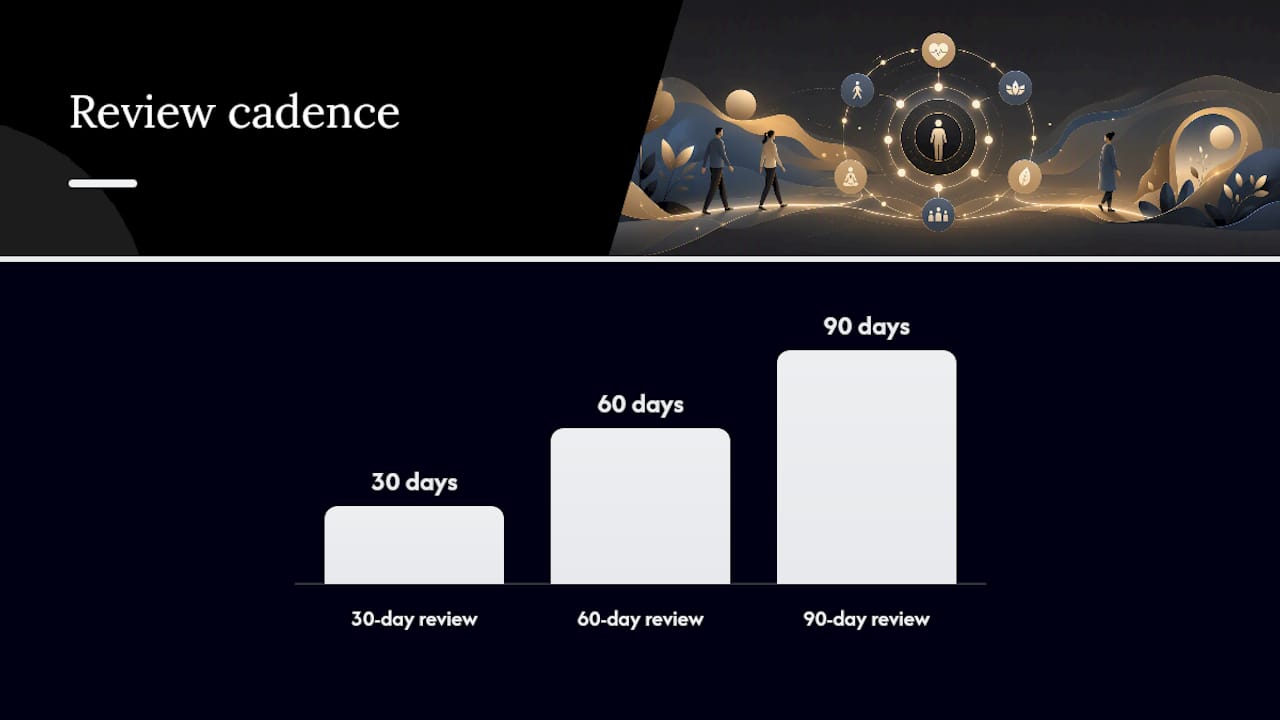
Expect regular reviews. A plan that never gets updated is not serving you. Reviews at 30, 60, and 90 days are standard in many systems.
Bring your preferences to the first appointment. Your values, cultural background, and practical constraints belong in the plan from day one.
Both research evidence and clinician judgment shape a well-built plan. That combination, known as evidence-based practice (EBP), is what separates a meaningful roadmap from a generic checklist.
Key Takeaways
Individualized treatment plans improve outcomes because they connect your specific assessment findings to measurable goals, chosen interventions, and a structured review process that keeps care responsive to you.
Point | Details |
Plans influence delivered care | Listing targets in a plan is linked to roughly threefold higher odds those targets are addressed in treatment. |
SMART goals are non-negotiable | Goals must be specific, measurable, and time-bound; vague aims cannot be tracked or revised meaningfully. |
Preference-matching reduces dropout | Clients unmatched to their preferred treatment were about 1.79 times more likely to leave therapy early. |
Reviews should be scheduled in advance | Formal checkpoints at 30, 60, and 90 days keep goals current and create a clear trigger for plan revision. |
Hesketherapy builds plans collaboratively | Assessment, co-designed SMART goals, integrative methods, and routine monitoring form the foundation of every Hesketherapy engagement. |
Table of Contents
What an individual treatment plan actually contains
A treatment plan is more than a list of sessions. Government guidance from NCBI describes it as a document derived from a comprehensive assessment that guides coordinated services across providers and should be revised as client needs change. Regulatory standards, such as those in Maryland’s clinical regulations, specify that a complete plan must include measurable goals, a strengths-and-weaknesses profile, discharge planning, and required reassessment frequencies.
Every component serves a distinct function: clinical guidance, coordination across providers, informed consent, and a written record for legal and administrative purposes.
Component | What it contains | Example in practice |
Comprehensive assessment | Presenting concerns, history, functioning, strengths, risk factors | “Client reports panic attacks three times weekly, triggered by work deadlines” |
Problem list / diagnosis | Prioritized clinical concerns with diagnostic codes where applicable | “Generalized Anxiety Disorder (F41.1); secondary sleep disturbance” |
Measurable goals (SMART) | Specific, time-bound targets tied to each problem | “Reduce panic frequency from three to one episode per week within eight weeks” |
Interventions | Modalities, techniques, frequency, and responsible provider | “Weekly CBT sessions; EMDR bi-weekly for trauma processing” |
Service intensity / timeline | Session frequency, expected duration, and milestone checkpoints | “Two sessions per week for the first month, then weekly from week five” |
Roles and responsibilities | What the client, clinician, and any caregivers each commit to | “Client completes thought records between sessions; clinician reviews at each appointment” |
Progress indicators | Outcome measures and functioning scales used to track change | “PHQ-9 administered at intake and every four weeks” |
Discharge and aftercare planning | Criteria for ending formal treatment and next steps | “Discharge when panic frequency is zero for four consecutive weeks; referral to peer support group” |
How each core component is written and used day to day
Assessment: the foundation everything else rests on
A thorough assessment gathers clinical, psychological, social, and cultural information before a single goal is written. Clinicians typically collect presenting symptoms, personal and family history, prior treatment responses, current medications, social supports, and any practical constraints such as work schedules or language needs. That information directly shapes which problems get prioritized and which interventions are realistic. Skipping depth at this stage produces goals that miss the mark.
Writing SMART goals that actually work
SMART goals are the clearest signal that a plan is built for you, not for a generic patient. Use this fill-in pattern:
Specific: Name the exact behavior or symptom. “I will reduce the number of nights I wake before 3 AM.”
Measurable: Attach a number or frequency. “From five nights per week to two nights per week.”
Achievable: Confirm it is realistic given your current baseline. “Based on sleep diary data from the past two weeks.”
Relevant: Tie it to your stated priority. “So I can function at work without relying on caffeine.”
Time-bound: Set a review date. “To be reassessed at the 30-day checkpoint.”
A complete SMART goal sounds like: “By week eight, I will sleep through the night at least five out of seven nights, as tracked by a daily sleep diary, so that I can sustain focus during morning meetings.”
Choosing and documenting interventions
Interventions are chosen based on the evidence for a given diagnosis, the clinician’s training, and your stated preferences. A well-documented intervention entry names the modality (e.g., EMDR, CBT, Rapid Transformational Therapy), the frequency (weekly, bi-weekly), the session format (individual, online), and the responsible provider. When multiple approaches are combined, the plan notes how they sequence or complement each other. You can read more about how combining therapy methods works in practice.
Timelines and service intensity
Most plans use 30/60/90-day checkpoints. At 30 days, the clinician checks whether the initial goals are realistic and whether the intervention is tolerable. At 60 days, early outcome data guides any adjustments. At 90 days, a formal review determines whether the plan continues, shifts focus, or moves toward discharge. Minnesota’s Department of Human Services recommends reviews at least every 90 days to keep goals current and measurable.
Service intensity refers to how often you are seen and for how long. A client in acute distress may need two sessions per week initially; someone consolidating gains may move to bi-weekly. The plan should state this explicitly rather than leaving it to informal agreement.
Pro Tip: When multiple problems compete for attention, ask your clinician to rank them by urgency and impact. Treating the problem that most limits your daily functioning first often produces the fastest sense of relief and builds momentum for the rest of the plan.
How clinicians personalize a plan for you
Personalization is not a style preference. It is a clinical decision shaped by several concrete variables, each of which should be visible in your plan.

Clinical presentation and diagnostic complexity. A client with a single phobia needs a different plan than someone managing co-occurring anxiety, burnout, and a history of trauma. Complexity determines sequencing: stabilization before trauma processing, for example.
Past treatment response. If a previous course of CBT produced limited change, a clinician using evidence-based practice models will factor that in. Research, clinician expertise, and your preferences are integrated together, not applied in isolation.
Cultural background and language. Cultural values shape how distress is expressed, what goals feel meaningful, and which therapeutic relationship styles feel safe. A multilingual, multicultural practice can adapt not just the language of sessions but the framing of goals. Multicultural therapy considerations are especially relevant for expats navigating identity and belonging alongside clinical symptoms.
Social supports and practical constraints. A client with a demanding travel schedule needs a plan that accounts for session continuity online. A client without family support may need more frequent contact during high-stress periods.
Client preferences and stated goals. This is where many plans fall short. Clinicians often prioritize symptom reduction; clients often prioritize functioning, relationships, or returning to work. High-quality planning explicitly negotiates that gap through collaborative goal planning, which research links to better engagement and satisfaction.
Coexisting conditions and accommodations. Chronic pain, neurodivergence, or medication interactions all affect which interventions are appropriate and at what intensity.
To see how this plays out: two clients both presenting with anxiety may receive very different plans. One, with a clear trauma history and strong social support, might begin with EMDR and weekly sessions. Another, with no identified trauma but significant avoidance patterns and work-related burnout, might start with CBT-based behavioral activation and psychoeducation before any deeper processing work begins.
Pro Tip: Before your first appointment, write down three things you want to be able to do that you cannot do now. Bring that list. Clinicians who see your functional priorities from the start are better positioned to build a plan that actually fits your life.
How a treatment plan is created with you, step by step
A good plan is built with you, not handed to you. Here is the typical sequence:
Intake assessment. The clinician gathers clinical, social, and personal history. You share your presenting concerns, priorities, and any previous treatment experience.
Problem formulation. Together, you identify and rank the problems to address. The clinician explains their clinical reasoning; you confirm whether the framing matches your experience.
Goal co-design. Goals are written collaboratively. You review draft goals and adjust wording until they reflect what matters to you, not just what is clinically convenient.
Intervention selection. The clinician proposes modalities based on evidence and their training. You ask questions, state preferences, and agree on the approach. Reviewing a list of therapy approaches beforehand can help you arrive informed.
Documentation and consent. The plan is written up and you sign it, confirming you understand the goals, the methods, and your rights. This is not a formality; it is a clinical and legal record.
Scheduling and review cadence. Session frequency is agreed upon, and review dates are set in advance, typically at 30, 60, and 90 days.
Ongoing monitoring. Between reviews, outcome measures are collected. The plan is a living document, not a one-time form.
Roles in the process:
You (the client): Share honest information at intake, state your priorities, ask questions, complete any between-session tasks, and flag when something is not working.
Your clinician: Conduct the assessment, propose and explain clinical options, document the plan accurately, administer outcome measures, and initiate reviews.
Caregivers or family members (when relevant): Provide collateral history, support between-session goals, and participate in family sessions if included in the plan.
Other providers: Share relevant records, coordinate on medication or medical care, and receive updates when the plan changes.
Pro Tip: Ask for shared decision-making explicitly. Say: “I’d like my preferences to be documented in the plan.” Clinicians who practice collaboratively will welcome this. Those who resist it are telling you something important about how they work.
How progress is measured and when plans get revised
Measurement-based care: why it matters
Measurement-based care (MBC) means collecting standardized outcome data at regular intervals and using it to guide clinical decisions. Without it, a clinician is relying on impression alone, which research consistently shows is less accurate than structured monitoring. MBC is the mechanism that turns a treatment plan from a static document into a responsive tool.
Commonly used measures include:
PHQ-9 (Patient Health Questionnaire): tracks depression severity across nine items; scored 0–27.
GAD-7 (Generalized Anxiety Disorder scale): measures anxiety severity; scored 0–21.
Session Rating Scale (SRS): a brief, four-item measure of therapeutic alliance completed at the end of each session.
Outcome Rating Scale (ORS): a four-item functioning measure completed at the start of each session.
Work and Social Adjustment Scale (WSAS): tracks functional impairment across five life domains.
Each measure serves a different purpose. The PHQ-9 and GAD-7 track symptom change over time. The SRS and ORS catch alliance ruptures and functioning dips early, before they become dropout. The WSAS connects symptom change to real-world functioning, which is often what clients care about most.
When a plan should be revised
A plan is not a contract. It is a working hypothesis about what will help you, and it should change when the evidence says it is not working. Practical revision triggers include:
No meaningful improvement on outcome measures after four to six weeks of consistent engagement
A safety concern or crisis that shifts clinical priorities
A significant life change (job loss, relocation, relationship change) that alters goals or constraints
New information from assessment (a diagnosis that was missed, a trauma disclosure that reframes the presenting problem)
A shift in your preferences or stated goals
Completion of a goal, which opens space for the next priority
Personalization research recommends combining pretreatment characteristics with routine monitoring to guide these decisions, though it also notes that prospective trials are still needed to standardize switching rules. The practical implication: early identification of “off-track” cases through routine monitoring gives clinicians the signal they need to adjust before weeks of ineffective treatment accumulate.
What the research says about individualized treatment planning
The evidence for individualized treatment planning is meaningful, though it is worth understanding what it actually shows rather than overstating it.
A community-based study published in PMC found that listing targets and practices in treatment plans was associated with roughly a threefold increase in the odds that those targets were later addressed in care, and a twofold increase in the odds that listed practices were implemented. That is a substantial signal. It also noted that overall adherence to any single plan element varied over time, which is why revision cadence matters.
A systematic integrative review in Frontiers in Psychiatry concluded that collaborative, individualized goal planning increases engagement and satisfaction and is recommended practice, though standardization and practitioner training vary across settings. Notably, the review found that collaborative goal planning can be therapeutically active in itself: clients who co-design their goals often report better engagement and adherence even when primary symptom change is similar to those who did not.
On the question of matching clients to treatments, a meta-analysis cited in the Stumpp and Sauer-Zavala review found that clients whose treatment did not match their preferences were about 1.79 times more likely to terminate prematurely. Dropout is one of the most reliable predictors of poor outcomes, so preference-matching is not a luxury.
The theoretical foundation is the evidence-based practice model, which integrates three domains: the best available research, clinician expertise, and the client’s own preferences and values. No single domain is sufficient alone. A plan built only on research ignores the person sitting in the room. A plan built only on client preferences ignores what the evidence says works. The EBP model holds these in productive tension.
Where the evidence is still developing: prospective trials validating specific data-driven rules for switching or sequencing treatments are limited. The field knows that personalization matters; it is still refining exactly how to operationalize it at scale.
Concrete templates and examples you can bring to your clinician
Two brief clinical vignettes
Vignette 1: Anxiety and panic
A client presents with panic attacks occurring three times weekly, linked to workplace performance pressure. The plan includes:
Goal: Reduce panic frequency from three episodes per week to one or fewer within eight weeks, tracked by a daily symptom log.
Intervention: Weekly CBT sessions focusing on cognitive restructuring and interoceptive exposure; breathing regulation techniques practiced daily between sessions.
Measure: GAD-7 administered at intake and every four weeks; panic frequency logged by client.
Vignette 2: Burnout and return to work
A client on extended sick leave due to burnout wants to return to part-time work within three months. The plan includes:
Goal: Attend work for two mornings per week by week ten, with no more than two sick days in the final two weeks of the plan period.
Intervention: Bi-weekly counseling sessions addressing boundary-setting and values clarification; one RTT session targeting core beliefs about performance and worth.
Measure: WSAS administered monthly; client self-rates energy and confidence on a 0–10 scale at each session.
Copyable SMART-goal template
Example: “By week eight, I will sleep through the night at least five out of seven nights, as tracked by a daily sleep diary, so that I can sustain focus during morning meetings.”
30/60/90-day checkpoint overview
Checkpoint | What gets reviewed | Who is responsible |
30 days | Goal relevance, intervention tolerability, early outcome data, any safety concerns | Clinician leads; client confirms |
60 days | Progress on outcome measures, goal adjustment if needed, session frequency review | Clinician and client together |
90 days | Full plan review, discharge readiness or continuation decision, aftercare planning | Clinician, client, and any involved providers |
For more on how personalized treatment plans translate into real-world outcomes, the Hesketherapy resource library covers this in practical terms.
Ethical and confidentiality considerations you should know
Your treatment plan is a clinical and legal document. Understanding your rights around it protects both your care and your privacy.
Core patient rights:
You have the right to access your own records, including your treatment plan, in most jurisdictions. Ask your clinician how to request a copy.
Informed consent means you agree to treatment based on a clear explanation of goals, methods, risks, and alternatives. Signing a plan without understanding it is not genuine consent.
Confidentiality has limits. Clinicians are typically required to break confidentiality when there is a credible risk of harm to you or others, or when legally compelled. Your plan should document these limits explicitly.
You can request that your plan not be shared with other providers without your written consent, though coordinated care often requires some information exchange.
The “golden thread” concept refers to the documented chain linking assessment findings to goals, goals to interventions, and interventions to measured outcomes. A plan with a clear golden thread is clinically defensible, easier for other providers to follow, and more useful for payer justification when insurance or funding is involved. Maryland’s regulatory framework makes this thread explicit in its documentation requirements.
Pro Tip: At the end of your intake appointment, ask: “Can I have a written summary of my treatment plan, including my goals and the review schedule, signed by both of us?” A clinician who practices transparent, collaborative care will have this ready or will prepare it within a session or two. If the request is met with resistance, that is worth noting.
How to request a treatment plan and what to ask your clinician
You do not have to wait for a clinician to offer you a written plan. You can ask for one directly, and knowing the right questions makes that conversation far more productive.
At intake, say:
“I’d like a written treatment plan with measurable goals. Can we build that together?”
“I want my preferences and priorities documented in the plan.”
“Can we set review dates now, so I know when we’ll check progress?”
Questions to bring to your first appointment:
“How will we measure whether this is working?”
“What outcome measures do you use, and how often?”
“When will the plan be reviewed, and what happens if I’m not improving?”
“What are my options if the first approach doesn’t work?”
“Who else will have access to my plan, and under what circumstances?”
“What are my goals in this plan, and how were they chosen?”
Red flags that suggest a plan is not serving you:
Goals are vague (“improve mood,” “reduce stress”) with no measurable target or timeframe.
No outcome measures are mentioned or used.
You were not involved in writing the goals.
The plan has not been reviewed or updated after several months.
You cannot get a copy of your own plan.
The clinician cannot explain why a particular intervention was chosen for your specific situation.
Preparing for sessions thoughtfully makes a real difference. The online therapy session preparation guide from Hesketherapy covers practical steps for arriving ready to engage.
Pro Tip: If a clinician presents you with a pre-filled plan at your first session and asks you to sign it without discussion, pause. A genuine individual treatment plan cannot be completed before the clinician has assessed you. A plan handed to you rather than built with you is a documentation exercise, not a clinical one.
Why collaboration in treatment planning changes everything
When I explain a treatment plan to a new client, I frame it this way: this document is not something I write about you. It is something we write together, and it only works if it reflects what you actually want your life to look like.
That framing matters more than most people realize. There is often a gap between what clinicians prioritize, typically symptom reduction, and what clients care most about, typically functioning, relationships, and being able to do the things that make life feel worth living. A plan that only targets symptom scores can leave a client feeling technically improved but still stuck. Closing that gap requires explicit negotiation, not assumption.
I have seen this shift the entire arc of a therapeutic relationship. A client who arrives feeling like a passive recipient of treatment, someone things are being done to, becomes an active participant the moment their own words appear in the goals section of a plan. That shift in ownership tends to carry into sessions: they come more prepared, they notice more between appointments, and they are more willing to raise it when something is not working. Collaborative goal planning is not just ethically sound. It is clinically effective in its own right, as the research on engagement and retention consistently shows.
Working across languages and cultures adds another layer. When a client’s first language is not the language of therapy, and when their cultural background shapes how they understand distress and recovery, the plan has to account for that explicitly. Goals that make sense in one cultural frame may feel alien or even shaming in another. That is why multilingual, multicultural practice is not a convenience feature. It is a clinical necessity for the clients it serves.
Hesketherapy’s approach to personalized treatment planning
Hesketherapy offers something specific that generic therapy directories cannot: a clinician who builds your plan from a real assessment of your situation, not a template pulled from a drawer. The process begins with a structured intake that maps your presenting concerns, history, cultural context, and practical constraints before a single goal is written. From there, goals are co-designed with you, written in SMART format, and tied to outcome measures that are reviewed at regular intervals throughout your engagement.
The integrative methods available, including Rapid Transformational Therapy, EMDR, CBT, counseling, and clinical hypnotherapy, mean the intervention selection is genuinely flexible. Sessions are available in English, Spanish, and Dutch, in-person in Madrid or online, which matters when your life does not fit a standard clinic’s schedule. The typical engagement is a three-month minimum commitment, structured to give the plan enough time to produce measurable change rather than stopping just as momentum builds.
If you want a plan that is built around your life, not a generic protocol, a free discovery call is the place to start. Book your discovery call and find out what a personalized plan could look like for your specific situation.
Sources
The sources below are reliable starting points if you want to verify claims, read the original research, or bring evidence to a conversation with your clinician.
This article is general information, not a substitute for advice from a qualified doctor. Consult a qualified healthcare professional about your own circumstances before acting on anything here.
Recommended
Comments