Role of RTT in Healing Emotional Trauma

Adjusting to life in Madrid can be overwhelming for many English-speaking expatriates, especially when anxiety or trauma feels impossible to shake. The struggle to find quick relief often leads people to seek therapy methods that promise deep and lasting change. Rapid Transformational Therapy empowers you to address emotional pain by uncovering and resolving subconscious patterns within just one to three sessions, offering a powerful path toward rapid healing and renewed self-confidence.
Table of Contents
Key Takeaways
Point | Details |
Innovative Therapeutic Approach | Rapid Transformational Therapy (RTT) combines hypnotherapy, CBT, and NLP for quick emotional healing. |
Subconscious Focus | RTT targets subconscious patterns to help clients transform deeply ingrained limiting beliefs. |
Rapid Results | Sessions typically achieve significant results in just one to three meetings, promoting lasting change. |
Safety Considerations | Clients should consult qualified practitioners and assess their mental health history before engaging in RTT. |
Defining Rapid Transformational Therapy (RTT) and Healing
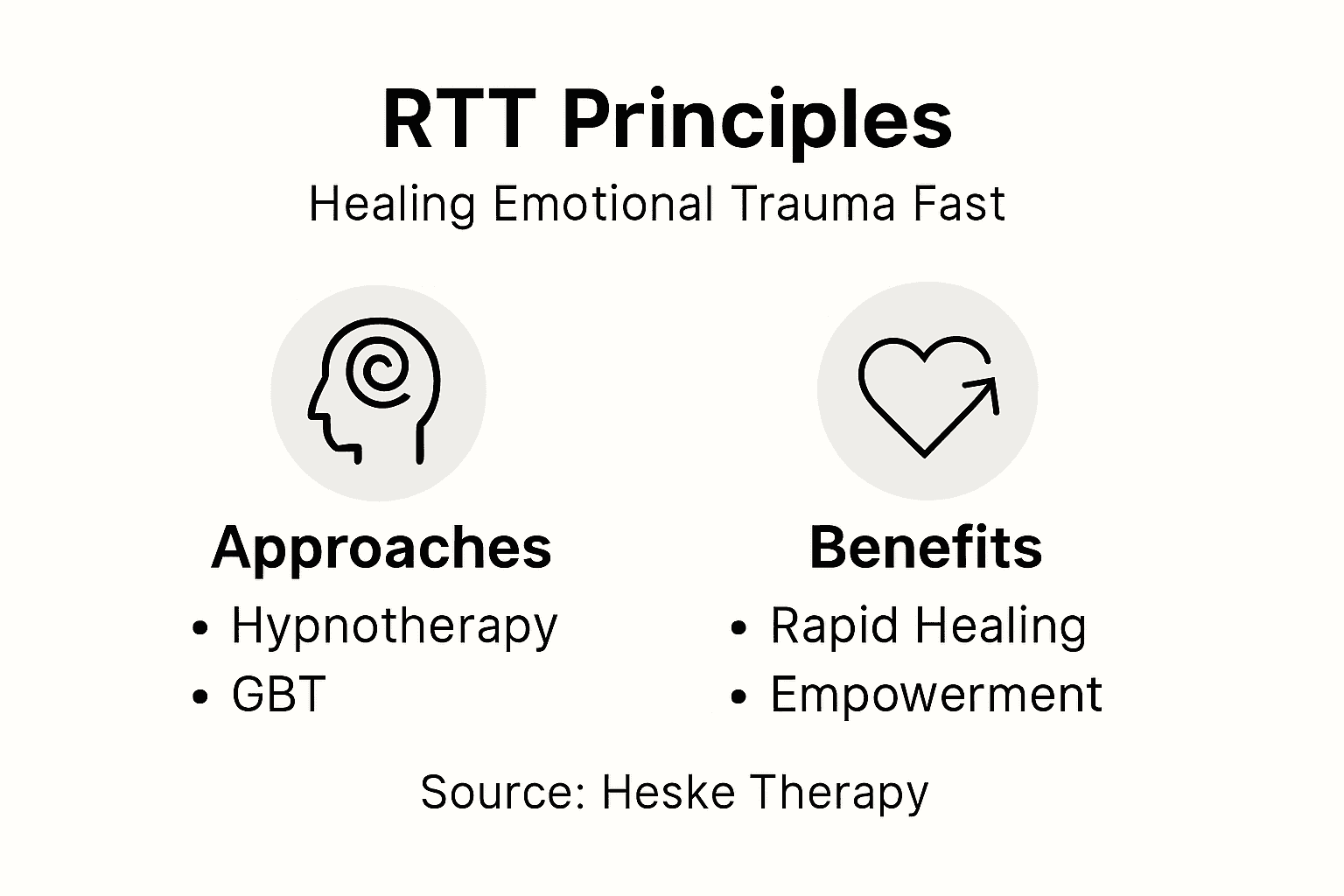
Rapid Transformational Therapy (RTT) represents an innovative therapeutic approach designed to address deep-seated emotional challenges quickly and effectively. Developed as a hybrid therapeutic modality, RTT combines multiple psychological techniques to facilitate rapid healing and transformation.
At its core, RTT integrates three powerful therapeutic approaches: hypnotherapy, cognitive behavioral therapy (CBT), and Neuro-Linguistic Programming (NLP). This comprehensive method enables practitioners to access the subconscious mind, uncovering and resolving the root causes of emotional trauma. By targeting underlying psychological patterns, RTT helps clients break free from negative thought cycles and emotional blockages that have potentially hindered their personal growth and mental well-being.
The distinctive aspect of RTT lies in its solution-focused methodology, which aims to deliver substantial therapeutic results within one to three sessions. Unlike traditional long-term therapy approaches, RTT offers rapid and lasting changes by directly addressing the subconscious drivers of emotional distress. Practitioners utilize regression techniques and therapeutic dialogue to help clients reframe negative beliefs, release emotional pain, and develop healthier psychological responses.
Emotional healing through RTT involves a structured process of identifying, understanding, and transforming deeply ingrained psychological patterns. Clients are guided to recognize how past experiences have shaped their current emotional landscape, empowering them to make conscious choices about their mental health and personal development.
Pro Tip: When considering RTT, prepare to be an active participant in your healing journey by maintaining an open mind and willingness to explore your subconscious patterns.
Core Principles of RTT in Emotional Recovery
Rapid Transformational Therapy (RTT) operates on a fundamental understanding that emotional challenges are deeply rooted in the subconscious mind. Emotional patterns originate from childhood experiences and create long-lasting psychological imprints that shape our adult behaviors and responses. These subconscious narratives often develop as protective mechanisms during early life stages, but can ultimately become limiting beliefs that obstruct personal growth and emotional well-being.
At the core of RTT are three primary subconscious patterns that significantly impact emotional health: feelings of inadequacy, emotional unavailability, and profound disconnection. Identifying and transforming these core beliefs becomes crucial in facilitating genuine emotional recovery. Practitioners utilize specialized hypnotherapy techniques to help clients access and reframe these deeply embedded psychological constructs, enabling individuals to understand the origin of their emotional challenges and develop healthier cognitive responses.
The therapeutic approach emphasizes a structured process of emotional healing that goes beyond traditional talk therapy. By directly engaging with the subconscious mind, RTT allows individuals to confront and recalibrate long-standing emotional patterns. This method involves a combination of regression techniques, therapeutic dialogue, and strategic reframing, which collectively work to dismantle negative belief systems and replace them with empowering, constructive narratives.
Through this comprehensive approach, RTT provides a pathway for individuals to break free from repetitive emotional cycles. Clients learn to recognize how past experiences have shaped their current psychological landscape, ultimately gaining the tools to make conscious, intentional choices about their emotional well-being and personal development.
Pro Tip: Approach RTT with curiosity and openness, understanding that your subconscious mind holds the key to transformative emotional healing.
How RTT Sessions Address Deep-Rooted Issues
RTT sessions are designed to penetrate the deepest layers of psychological functioning by uncovering root causes of emotional challenges. Unlike traditional therapy approaches that often focus on surface-level symptoms, RTT employs specialized hypnosis techniques to access the subconscious mind, where fundamental emotional patterns and limiting beliefs are stored. This approach allows clients to explore and understand the origins of their psychological struggles in a profound and transformative manner.
The therapeutic process involves a structured methodology of regression and reinterpretation. Clients revisit formative memories and emotional triggers through guided hypnosis, enabling them to understand how past experiences have shaped their current emotional landscape. By examining these critical moments with adult perspective and therapeutic support, individuals can deconstruct long-standing negative narratives and replace them with empowering, constructive beliefs.

During RTT sessions, practitioners utilize a combination of therapeutic dialogue, regression techniques, and strategic reframing to help clients dismantle deeply embedded psychological barriers. This approach goes beyond traditional talk therapy by directly engaging with the subconscious mind, allowing for rapid and lasting emotional transformation. Clients learn to identify the root sources of their emotional challenges, understand their origin, and develop healthier cognitive and emotional responses.
The ultimate goal of RTT is to facilitate a comprehensive emotional healing process that empowers individuals to break free from repetitive psychological patterns. By providing tools for self-understanding and emotional recalibration, RTT enables clients to move beyond past traumas and create more fulfilling, authentic life experiences. The therapy emphasizes personal agency, helping individuals recognize their capacity for internal change and psychological resilience.
Pro Tip: Approach your RTT session with openness and curiosity, understanding that your subconscious mind holds the key to transformative emotional healing.
Comparing RTT With EMDR and Traditional Therapy
RTT represents a distinctive therapeutic approach that fundamentally differs from traditional psychological treatment methods. Scientific evaluation reveals significant methodological variations between RTT, EMDR, and conventional talk therapies. While traditional therapies often involve extended treatment periods spanning months or years, RTT positions itself as a solution-focused intervention designed to achieve transformative results within one to three sessions.
When comparing therapeutic modalities, key distinctions emerge in treatment philosophy and methodology. Traditional cognitive behavioral therapy typically emphasizes gradual cognitive restructuring through repeated sessions, whereas RTT and EMDR utilize more direct interventions targeting subconscious psychological mechanisms. EMDR has established stronger scientific validation for trauma treatment, particularly in addressing post-traumatic stress disorder, while RTT remains relatively newer with more limited empirical research supporting its efficacy.
The primary differentiating factor among these approaches lies in their fundamental treatment strategies. EMDR focuses on bilateral stimulation to process traumatic memories, traditional therapy emphasizes verbal exploration and insight development, and RTT leverages hypnosis to directly reframe subconscious beliefs. RTT’s unique methodology involves rapid belief transformation, attempting to bypass lengthy therapeutic processes by accessing and reprogramming deep-seated psychological patterns more immediately than conventional methods.
Here’s a concise comparison of RTT, EMDR, and traditional therapy approaches:
Therapy Type | Core Technique | Typical Session Count | Best Suited For |
RTT | Hypnosis & belief reframing | 1–3 | Rapid emotional transformation |
EMDR | Bilateral stimulation | 6–12 | Trauma and PTSD treatment |
Traditional Talk | Verbal insight development | 12+ | Ongoing support and complex cases |
While each therapeutic approach offers distinct advantages, potential clients should carefully consider their individual needs and consult professional practitioners. RTT’s promise of rapid transformation must be balanced against the established track records of traditional therapies and the robust scientific documentation supporting EMDR’s effectiveness. The emerging nature of RTT suggests both excitement about its potential and a need for continued rigorous scientific investigation to substantiate its long-term clinical outcomes.
Pro Tip: Approach therapy selection with an open mind, understanding that individual healing journeys are unique and what works brilliantly for one person might differ for another.
Potential Challenges and Safety Considerations
Rapid Transformational Therapy (RTT) presents unique therapeutic opportunities alongside important safety considerations that potential clients must carefully evaluate. Scientific skepticism surrounds its methodological approach, highlighting the critical need for informed decision-making and professional guidance when exploring this therapeutic modality.
The primary challenges of RTT stem from its relatively limited scientific validation compared to established therapeutic practices. Mental health professionals express concern about the potential risks associated with rapid trauma uncovering, particularly for individuals with complex psychological histories. Emotional intensity during treatment requires careful professional management, as the quick-access hypnosis techniques might trigger unexpected psychological responses that demand skilled intervention.
Key safety considerations include comprehensive client screening and practitioner expertise. Individuals with severe mental health conditions, recent traumatic experiences, or underlying psychiatric disorders require particularly careful assessment before engaging with RTT. The therapy’s rapid intervention style means that emotional releases can be intense and potentially destabilizing without proper professional support and integration strategies. Practitioners must demonstrate advanced skills in managing potential psychological vulnerabilities that emerge during deep subconscious exploration.
Ethical practitioners of RTT recognize the importance of transparent communication about the therapy’s experimental nature. Clients should be fully informed about the potential limitations, receive clear expectations about outcomes, and understand that individual experiences can vary significantly. Establishing robust pre-treatment assessments, maintaining ongoing communication, and having comprehensive follow-up support mechanisms are essential to mitigating potential risks associated with this innovative therapeutic approach.
The following table summarizes key safety considerations for RTT candidates:
Consideration | Importance for RTT | Professional Recommendations |
Client mental health history | Critical for screening | Comprehensive intake assessment |
Practitioner hypnosis expertise | Ensures safe intervention | Only work with certified specialists |
Emotional intensity management | Prevents distress escalation | Provide pre/post session supports |
Pro Tip: Always conduct thorough research and have detailed consultations with qualified RTT practitioners to understand your personal suitability for this therapeutic method.
Unlock Lasting Emotional Healing with Expert RTT Care at Heske Therapy
The article highlights how Rapid Transformational Therapy (RTT) effectively addresses deep-rooted emotional trauma by uncovering and reframing subconscious beliefs that hold you back. If you are struggling with feelings of inadequacy, emotional blockages, or patterns that affect your well-being, you deserve a compassionate and personalized approach that honors your unique journey. Heske Therapy in Madrid specializes in integrating RTT with proven methods like EMDR and CBT to deliver rapid and lasting transformation tailored for English-speaking expatriates and international clients.
Experience the power of combining advanced techniques with a culturally sensitive, professional environment. Our therapists guide you through safe subconscious exploration to break free from limiting emotional patterns while managing treatment intensity with expert care. Whether you face anxiety, burnout, trauma, or related physical symptoms such as migraines or IBS, we can create the right integrative plan for you.
Begin your healing journey today and discover why so many find hope and resilience with our support at Heske Therapy.
Ready to transform your emotional wellness quickly and safely?
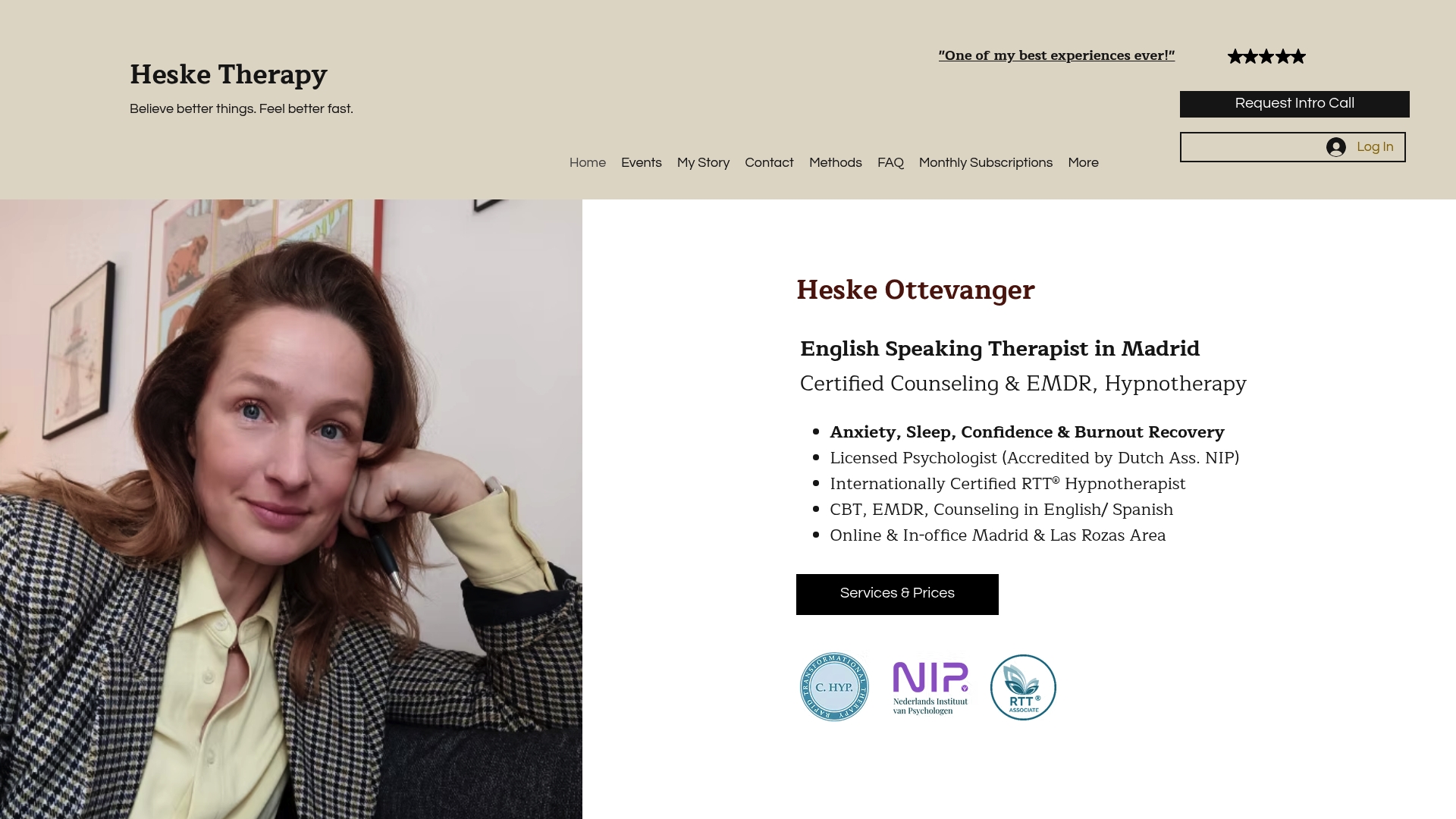
Take the first step now by scheduling your free discovery call on our website. Learn more about how Rapid Transformational Therapy and related treatments at Heske Therapy can help you reclaim your emotional health with proven, expert guidance.
Frequently Asked Questions
What is Rapid Transformational Therapy (RTT)?
Rapid Transformational Therapy (RTT) is a therapeutic approach that combines hypnotherapy, cognitive behavioral therapy (CBT), and Neuro-Linguistic Programming (NLP) to address and resolve deep-seated emotional challenges quickly and effectively.
How does RTT help in healing emotional trauma?
RTT helps in healing emotional trauma by accessing the subconscious mind to uncover the root causes of emotional distress, allowing clients to reframe negative beliefs and develop healthier psychological responses in just one to three sessions.
What makes RTT different from traditional therapy methods?
RTT differs from traditional therapy methods by its solution-focused approach, achieving significant results in fewer sessions, as opposed to long-term commitments often associated with conventional therapy. RTT directly targets subconscious beliefs for rapid transformation.
Are there any risks associated with RTT?
Yes, there are potential risks associated with RTT, especially for individuals with complex psychological histories. It is essential to consult with a qualified RTT practitioner for a proper assessment to ensure safety and manage emotional intensity during treatment.
Recommended
Comments