RTT Practitioner Training Explained: Your 2026 Guide


TL;DR:
RTT practitioner training certifies individuals to deliver therapy sessions that combine hypnotherapy, regression, and reframing techniques. The program covers session structure, clinical integration, and follow-up practices, preparing practitioners to work confidently. Both online and in-person paths lead to different professional titles, with in-person training involving more mentorship and higher fees.
Rapid Transformational Therapy (RTT) practitioner training is the structured certification program through which individuals learn to deliver RTT sessions professionally, combining hypnotherapy, cognitive behavioral techniques, NLP, and regression work into a single method. Developed by Marisa Peer, RTT is recognized as a complementary, trauma-informed tool that integrates with clinical approaches like CBT to address anxiety, addiction, and depression at the subconscious level. With rtt practitioner training explained in full here, you will understand the curriculum, certification distinctions, session structure, and exactly what it takes to practice this method with confidence.
What does RTT practitioner training actually cover?
RTT practitioner training is a structured educational program, not a personal therapy experience. The RTT School’s official certification pathway allows candidates to complete training from home on a flexible schedule, making it accessible to working professionals and career changers alike. The curriculum covers hypnosis induction techniques, regression methods, reframing scripts, client session management, and the creation of personalized audio recordings for post-session use.
The training is delivered in two primary formats:
Live Online: A remote program that leads to the title of RTT Certified Practitioner. This format suits candidates who need scheduling flexibility and prefer self-paced study alongside live instruction.
Live In-Person: An intensive format led by Marisa Peer that results in the title of RTT Therapist. This path includes additional training days and more intensive mentorship.
Practice sessions: Both formats include supervised practice with fellow learners to build session confidence and refine technique.
Mentorship support: Candidates receive guidance from experienced practitioners to troubleshoot real session challenges before working with paying clients.
Audio recording skills: Training dedicates specific attention to creating the personalized recordings clients use daily after sessions, since this follow-up phase is central to the method’s results.
The integrative therapeutic approach covered in training is what sets RTT apart from standard hypnotherapy courses. Students learn to draw on psychotherapy, NLP, and CBT within a single session framework rather than applying one modality in isolation.
Pro Tip: Before enrolling, read through the RTT School’s published curriculum in detail and compare it against your existing qualifications. Candidates with a background in counseling or CBT often find the regression and reframing modules the steepest learning curve, so allocating extra study time there pays off.

How does an RTT session work, and how does training prepare you?
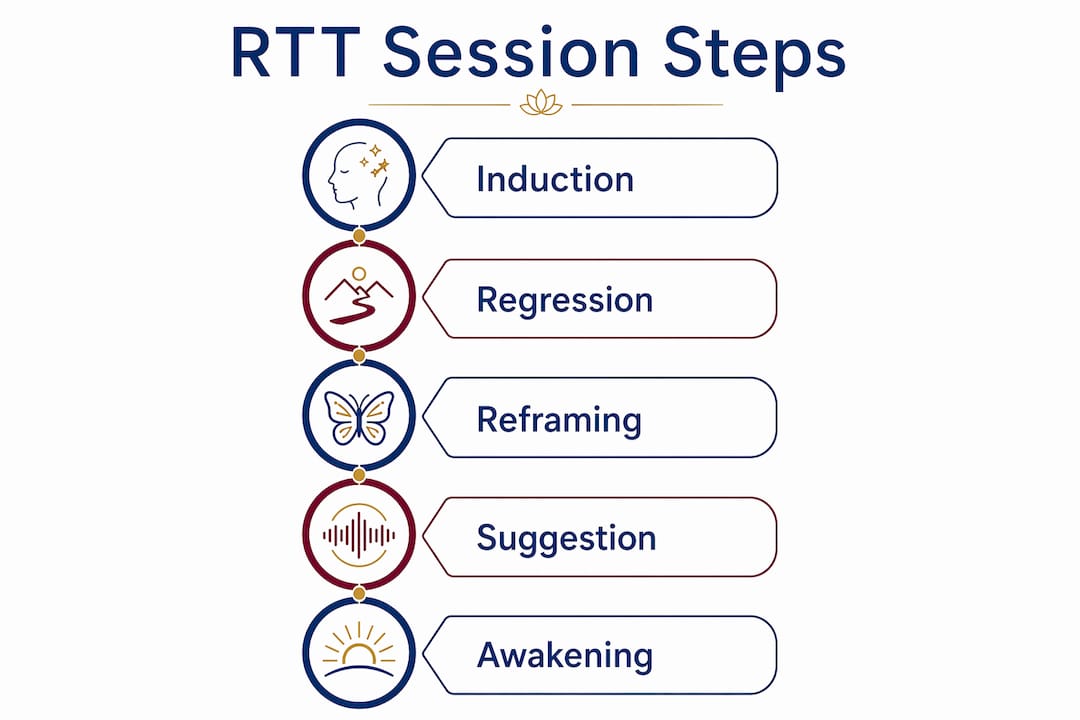
Understanding the session structure is the fastest way to grasp what training actually prepares you to do. A typical RTT session lasts 90–120 minutes and moves through five distinct phases. Training teaches you to execute each phase with precision and adapt when a client’s responses do not follow the expected pattern.
Here is how a standard session unfolds:
Induction: The practitioner guides the client into a deeply relaxed, focused state using hypnosis. Training covers multiple induction scripts so you can match the approach to the client’s personality and responsiveness.
Regression: The client revisits formative memories to identify the root belief driving their current issue. Practitioners learn to facilitate this process without leading the client or projecting interpretation onto what surfaces.
Reframing: The practitioner helps the client reinterpret those memories and update the meaning attached to them. This is the most skill-intensive phase and the one most heavily practiced during training.
Suggestion: New, empowering beliefs are installed while the client remains in the relaxed state. Training covers language patterns drawn from NLP and hypnotherapy to make suggestions land effectively.
Personalized audio recording: The session closes with a recording the client takes home. Clients listen daily for approximately 21 days to reinforce new neural pathways formed during the session.
A critical point that training addresses directly: clients remain fully conscious and in control throughout the session. The practitioner guides a relaxed, focused state. They do not control the client’s mind. This distinction matters enormously for how you explain the method to new clients and manage their expectations before the first session.
Training also covers the follow-up process in depth. Practitioners learn to coach clients through the 21-day listening period, recognize signs of resistance, and schedule check-ins that support integration without creating dependency.
Pro Tip: Record yourself delivering the reframing phase during practice sessions and listen back critically. Most trainees discover they rush this phase under pressure. Slowing down and using deliberate pauses is one of the most effective adjustments you can make before working with real clients.
RTT Practitioner vs. RTT Therapist: what is the difference?
The RTT certification program uses two distinct professional titles, and the difference between them affects your pricing, scope of practice, and client perception. Live Online training produces RTT Practitioners; Live In-Person training with Marisa Peer produces RTT Therapists, with the latter involving additional training days and more intensive mentorship. Both titles are issued through the official RTT School.
Feature | RTT Practitioner | RTT Therapist |
Training format | Live Online | Live In-Person with Marisa Peer |
Mentorship intensity | Standard support | More intensive, extended mentorship |
Professional title | RTT Certified Practitioner | RTT Therapist |
Typical pricing | Standard market rate | Higher, reflecting additional training |
Accessibility | Flexible, remote | Fixed schedule, in-person attendance required |
The title you hold signals your training depth to prospective clients. RTT Therapists typically command higher session fees because their credential reflects a more intensive training path. That said, RTT Practitioners are fully qualified to deliver sessions and build a professional practice.
One preparation step that applies to both paths: experiencing RTT as a client before training is strongly recommended by experts. Sitting in the client’s chair gives you a visceral understanding of the session’s emotional depth that no textbook description can replicate. It also helps you explain the experience to your own future clients with genuine authority rather than theoretical description.
How to prepare for RTT training and avoid common mistakes
Preparation for RTT training starts well before the first module. The most common mistake candidates make is treating the training itself as a form of personal therapy. RTT training is primarily educative. Practice sessions with fellow learners build skill, not personal resolution. If you have unresolved issues you want to address, work with an RTT practitioner as a client first.
Here are the preparation steps that make the biggest difference:
Book a client session before enrolling. Experiencing the method firsthand gives you context for every technique you will later learn to deliver. It also confirms whether RTT is the right fit for your practice goals.
Audit your schedule honestly. Training costs and time commitments vary significantly by format. Live In-Person training requires blocks of consecutive days. Live Online training is more flexible but still demands consistent study time alongside any existing work commitments.
Build a study support system. Connect with other trainees before the program starts. Peer practice is a core part of the curriculum, and having a reliable practice partner accelerates your progress through the reframing and regression modules.
Understand the financial investment. Weigh the cost of the certification level you are targeting against your realistic timeline for building a client base. RTT Therapist status costs more upfront but may justify higher session pricing sooner.
Research how RTT fits your existing practice. If you already work in counseling, CBT, or another modality, read about RTT’s clinical integration with traditional approaches. Understanding where RTT adds value to your current toolkit helps you position your services clearly after certification.
One misconception worth addressing directly: RTT training does not make you a licensed psychologist or clinical therapist in most jurisdictions. The certification qualifies you to practice RTT as a complementary method. If you plan to work with clients presenting complex trauma, reviewing trauma-informed best practices alongside your RTT training is a responsible step.
Key Takeaways
RTT practitioner training is a structured certification program that equips candidates with hypnosis, regression, reframing, and post-session coaching skills through the official RTT School.
Point | Details |
Two certification levels exist | Live Online training certifies RTT Practitioners; Live In-Person training certifies RTT Therapists with more intensive mentorship. |
Sessions follow a five-phase structure | Induction, regression, reframing, suggestion, and personalized audio recording are the five phases practitioners must master. |
Post-session follow-up is non-negotiable | Clients listen to their personalized audio daily for 21 days; practitioners are trained to guide this integration phase. |
Training is not personal therapy | Practice sessions build skill only; candidates should experience RTT as a client before enrolling to understand its emotional depth. |
Preparation determines outcomes | Auditing your schedule, budget, and existing qualifications before enrolling significantly improves your training experience and post-certification results. |
What I have learned from working inside RTT
The most underestimated part of becoming an RTT practitioner is not the technique. It is the shift in how you listen. Before training, most people assume the hypnosis induction is the hard part. In practice, the regression and reframing phases are where sessions succeed or stall. A practitioner who rushes the reframing phase because they feel time pressure will consistently produce weaker results, regardless of how polished their induction sounds.
I have also seen candidates arrive at training expecting it to resolve their own emotional blocks. That expectation sets them up for frustration. The training is a skill-building program. It is rigorous, experiential, and genuinely demanding. But it is not a substitute for doing your own therapeutic work first. The practitioners who get the most from the program are the ones who arrive having already experienced RTT as a client and having done enough personal work to hold space for others without their own material getting in the way.
The other thing worth saying plainly: RTT’s growing acceptance as a trauma-informed complementary tool within mental health settings is real, but it comes with responsibility. Practitioners who combine RTT with solid knowledge of CBT, EMDR, or counseling deliver meaningfully better outcomes than those who treat it as a standalone fix. The method is powerful. The practitioner’s broader clinical judgment is what makes it safe and sustainable for clients with complex presentations.
If you are exploring this path seriously, read the RTT success guide before committing to a training format. The clearer you are about what the method demands, the better positioned you will be to use it well.
— Heske
Ready to explore RTT therapy with Hesketherapy?
Hesketherapy offers RTT therapy sessions online and in-person in Madrid, giving you direct access to an experienced RTT practitioner who works with anxiety, burnout, trauma, and sleep issues. Whether you are exploring RTT as a potential training path or looking to experience the method as a client first, starting with a session is the most grounded way to understand what the training actually prepares you to deliver.
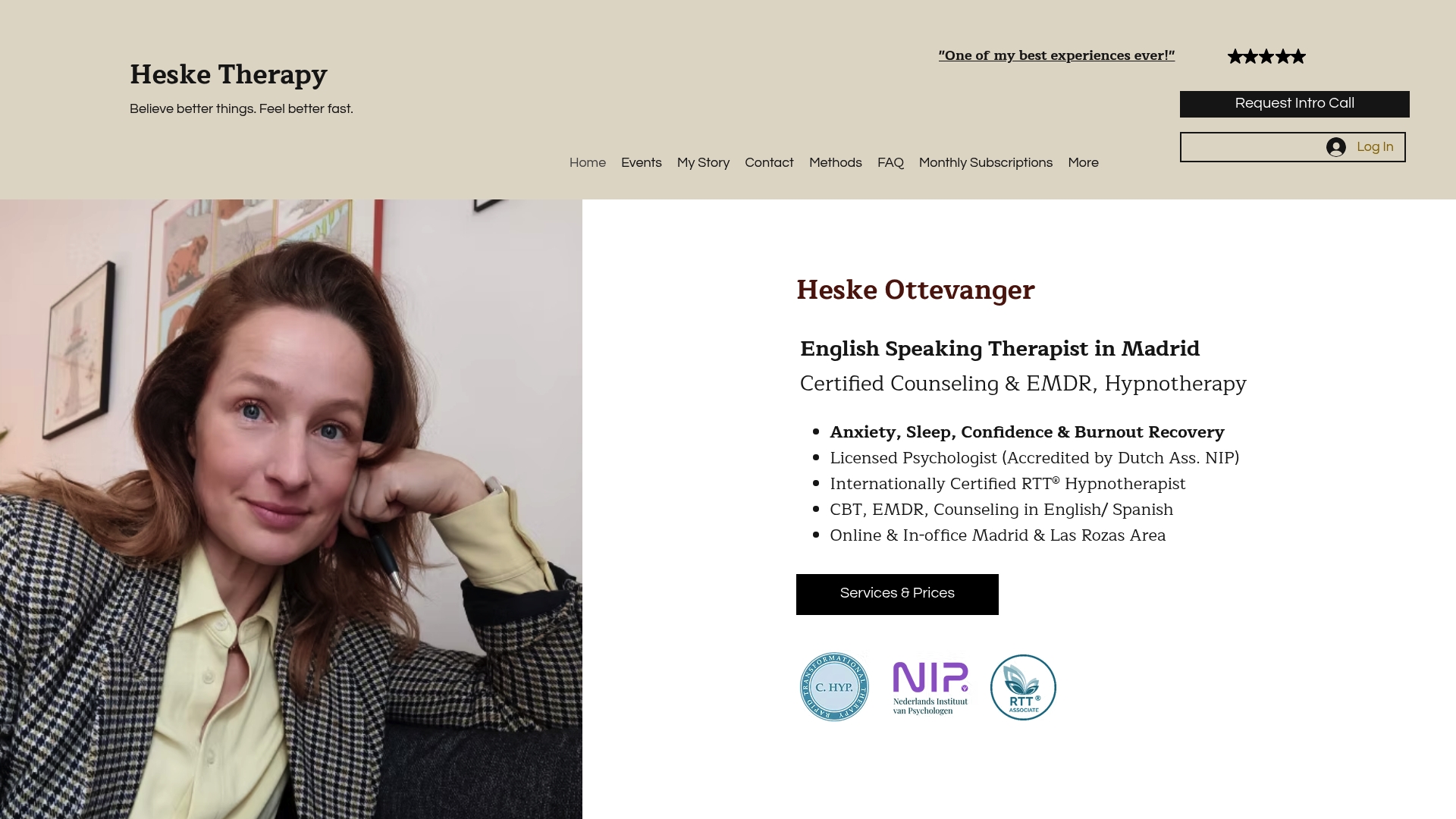
Hesketherapy works with English-speaking clients across Europe and internationally, with sessions available in English, Spanish, and Dutch. If you want to understand what RTT therapy involves before committing to a training program, a free discovery call is the right first step. You can also explore the 21-day RTT package to see exactly how the post-session integration phase works in practice. Reach out to Hesketherapy directly to discuss your goals and get clear on whether RTT is the right fit for your professional or personal path.
FAQ
What is RTT practitioner training?
RTT practitioner training is a certification program that teaches individuals to deliver Rapid Transformational Therapy sessions using hypnosis, regression, reframing, and personalized audio recordings. The official RTT School offers both Live Online and Live In-Person formats leading to different professional titles.
How long does an RTT session last?
A standard RTT session lasts 90–120 minutes and covers five phases: induction, regression, reframing, suggestion, and personalized audio recording. Clients then listen to their recording daily for approximately 21 days to reinforce the session’s results.
What is the difference between an RTT Practitioner and an RTT Therapist?
RTT Practitioners complete Live Online training through the RTT School, while RTT Therapists complete Live In-Person training with Marisa Peer, which includes additional training days and more intensive mentorship. Therapists typically charge higher session fees reflecting their more intensive credential.
Do I need to experience RTT as a client before training?
Experts strongly recommend experiencing at least one RTT session as a client before enrolling in training. This gives you firsthand understanding of the session’s emotional depth and helps you explain the method to future clients with genuine authority.
Is RTT training recognized as a clinical therapy qualification?
RTT certification qualifies practitioners to deliver RTT as a complementary method, not as a licensed clinical therapy in most jurisdictions. Practitioners working with complex trauma or mental health presentations are advised to combine RTT with additional clinical training such as CBT or EMDR.
Recommended
Comments